







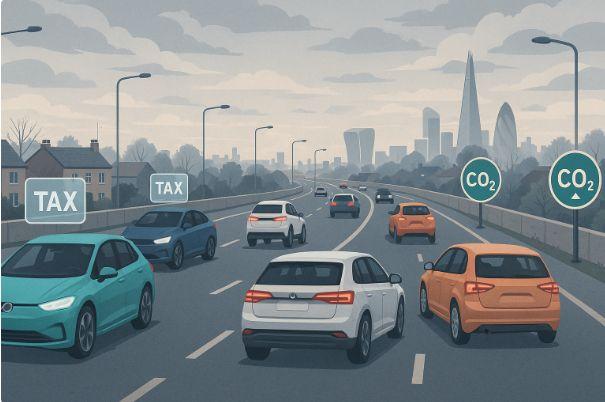
In December 2025, the UK government will implement a significant round of car tax reforms. These changes, announced as part of broader green transport policies, reflect the government’s intention to update taxation models in line with increasing electric vehicle (EV) adoption and environmental goals.
From new Vehicle Excise Duty (VED) rates to adjustments in Benefit-in-Kind (BIK) taxation and the future introduction of mileage-based EV charges, UK drivers must prepare for a reshaped financial landscape. This blog outlines what you need to know about the December car tax changes, how they will affect your vehicle choices, and what steps you can take now.
What Are the Key December Car Tax Changes UK Drivers Should Know?

The upcoming changes will alter how cars are taxed across the board impacting petrol, diesel, hybrid, and electric vehicles alike. The most notable updates include:
- Ending the VED exemption for electric vehicles from April 2025.
- Increasing the standard rate of VED for hybrids and low-emission vehicles.
- Revising BIK rates for company car users.
- Phasing out incentives tied to emissions-based vehicle classifications.
These updates are intended to make the UK’s vehicle taxation system more sustainable and balanced as EV ownership continues to grow.
How Will the Vehicle Excise Duty (VED) Be Affected in December?
Vehicle Excise Duty (VED) will undergo a considerable overhaul in December 2025. Previously exempt from VED, electric vehicles will be brought into the tax net. From April 2025, all battery-electric cars registered after April 2017 will pay the standard annual VED rate, projected to be £190 by that time.
Additionally, plug-in hybrids and alternative fuel vehicles will no longer benefit from the current £10 discount on VED. They will be subject to the same standard rate as petrol and diesel vehicles. Petrol and diesel vehicles will continue to be taxed based on CO₂ emissions, but the band thresholds are expected to tighten further, meaning more vehicles could be pushed into higher tax brackets.
Are There New Tax Rules for Electric and Zero-Emission Vehicles?
Yes, and these changes signal a turning point for EV taxation. Starting April 2025, electric vehicles will no longer be exempt from VED. This applies to all zero-emission vehicles registered from April 2017 onwards.
In addition to the new VED obligations, electric vehicles will also face a new mileage-based tax from April 2028, known as electric Vehicle Excise Duty (eVED) details of which are covered later in this blog.
Despite these changes, EVs remain relatively tax-efficient due to lower running costs and reduced company car taxation. However, the gap in cost advantage is narrowing, and drivers will need to factor in new taxes when evaluating long-term savings.
How Will Company Car Drivers Be Impacted by the New BIK Rates?
The Benefit-in-Kind (BIK) tax, which affects employees who use a company-provided car for personal use, will rise gradually for electric and plug-in hybrid vehicles over the next few years. These changes are part of the government’s strategy to align vehicle taxation with evolving environmental policies while ensuring fairness across all vehicle types.
From 2025 onwards, BIK rates will increase annually by 1% for zero-emission and low-emission cars, eventually plateauing by the end of the decade.
The table below illustrates the projected BIK rates for different vehicle types from the 2024/25 to 2027/28 tax years:
| Tax Year | Electric Vehicles (0g CO₂) | Plug-in Hybrids (1–50g CO₂) | Petrol/Diesel Vehicles (51g+ CO₂) |
| 2024/25 | 2% | 5% – 14% | 22% – 37% |
| 2025/26 | 3% | 6% – 15% | 23% – 37% |
| 2026/27 | 4% | 7% – 16% | 24% – 37% |
| 2027/28 | 5% | 8% – 17% | 25% – 37% |
These increases remain modest for electric and ultra-low-emission vehicles, especially when compared to the much higher rates applied to traditional internal combustion engine (ICE) cars. However, the difference is slowly narrowing.
For businesses, these changes mean that while EVs continue to offer tax efficiency, the total cost of providing a company car will gradually rise. Fleet managers should reassess vehicle allocations, tax forecasts, and employee benefit strategies to ensure they remain cost-effective under the new BIK structure.
Will Hybrid and Low-Emission Vehicles Still Receive Tax Benefits?

The incentives that once made hybrid and low-emission cars attractive are being phased out. As of December 2025, the Alternative Fuel Discount, which offered a modest £10 reduction in VED for hybrids, will be removed.
Moreover, as emission thresholds tighten, some plug-in hybrids may no longer qualify for the most favourable tax bands unless they deliver very low CO₂ output. The changes aim to simplify the tax system and reduce the administrative burden but result in fewer perks for hybrid drivers going forward.
What Does This Mean for First-Time Car Buyers in the UK?
First-time buyers will feel the financial implications of these reforms most directly. Electric cars, which previously came with long-term tax savings, will now carry the same VED responsibilities as petrol and diesel cars. Similarly, newly registered petrol or diesel vehicles with higher emissions will face steep first-year tax charges.
The total cost of ownership for any new car EV or not will now need to include tax obligations that weren’t previously a concern for zero-emission vehicles. As a result, buyers may choose smaller, more efficient cars or even turn to the second-hand market for better affordability.
How Will the December Changes Affect Annual Car Tax Costs?
Here’s how annual VED costs are expected to change:
| Vehicle Type | Annual VED (Before) | Annual VED (From Dec 2025) |
| Battery Electric Car | £0 | £190 |
| Plug-in Hybrid | £155 | £190 |
| Petrol (low emissions) | £180 | £200+ |
| Diesel (high emissions) | £210–£500+ | £230–£520+ |
These increases mean that even environmentally friendly vehicle owners will now face higher annual ownership costs, reducing the financial advantage EVs and hybrids once enjoyed.
Is There an Increase in Fuel Duty or Clean Air Zone Charges?

Although fuel duty has been frozen in recent years, the Treasury has hinted at possible increases in future budgets. The Office for Budget Responsibility (OBR) suggests that fuel duty may rise to help offset the revenue loss from falling petrol and diesel usage. If implemented, it will add further pressure on internal combustion engine (ICE) vehicle owners.
Clean Air Zones (CAZs), already active in cities like Birmingham, Manchester, and London, are also expanding. Vehicles that don’t meet emissions standards particularly older diesel models may be subject to daily charges between £8 and £50, depending on the zone and vehicle type.
How Will the New Mileage-Based EV Tax (eVED) Introduced in the Autumn Budget Affect Drivers?
In the 2025 Autumn Budget, Chancellor Rachel Reeves announced a mileage-based tax for electric and plug-in hybrid vehicles, known as electric Vehicle Excise Duty (eVED). Set to begin in April 2028, this marks a dramatic shift in how zero-emission vehicles are taxed in the UK.
Under eVED, electric car owners will be required to pay 3p per mile, while plug-in hybrid drivers will be taxed at 1.5p per mile during the 2028–2029 financial year. This new system is designed to address lost revenue from declining fuel duty as more people switch to EVs.
The OBR estimates that a typical EV driver travelling 8,500 miles annually will pay around £255 per year, equivalent to roughly half the fuel duty paid by a petrol or diesel driver.
To comply, drivers will self-report their estimated mileage and pay either in full or monthly via Direct Debit. The actual mileage will be verified each year through MOT tests for existing vehicles or a new check system likely to be carried out at MOT centres for newer cars.
This tax is expected to generate £1.1 billion in its first year, increasing to £1.9 billion by 2030. While it may deter some buyers OBR forecasts a potential reduction of 440,000 EV sales over five years incentives such as an increased Expensive Car Supplement threshold are expected to reclaim about 320,000 of those potential losses.
What Are the DVLA Guidelines for Drivers Following These Changes?
The DVLA recommends that all drivers check their vehicle’s VED band and ensure their registration details are accurate. Tax can be paid monthly, every six months, or annually, with Direct Debit options available to ease budgeting.
Mileage declarations for eVED will become mandatory from 2028, and drivers should familiarise themselves with self-reporting tools and mileage tracking. Keeping up with MOT requirements will be even more important, as mileage checks will be tied into annual assessments.
How Should Drivers Prepare for the December 2025 Car Tax Reforms?
With increased costs on the horizon, drivers should consider the emissions and tax implications of their current or intended vehicle. Electric vehicles will still provide savings in BIK and fuel, but those benefits are being narrowed by new taxes.
Staying informed about Clean Air Zones, VED rates, and fuel duty changes can help drivers plan smarter. Whether switching to a newer vehicle or managing a company fleet, proactive planning will be key to avoiding unexpected costs.
Conclusion
The December car tax changes and the upcoming mileage-based eVED system represent a broader shift in the UK’s approach to vehicle taxation. With rising costs for EVs and tighter regulations on emissions, drivers must rethink the total cost of ownership.
While incentives remain in place for electric and low-emission vehicles, the financial gap between green and conventional cars is narrowing. Now is the time for UK motorists to re-evaluate their vehicle choices, plan ahead for future tax liabilities, and stay compliant with DVLA and HMRC guidelines.
FAQs
Will hybrid car drivers still get a tax discount?
No. From December 2025, most hybrid cars will be taxed at the same standard VED rate as petrol and diesel vehicles.
Are electric cars still cheaper to own under the new rules?
Despite new taxes, EVs still offer savings on fuel, maintenance, and BIK—but the advantage is shrinking.
What is eVED and when will it start?
eVED is a mileage-based tax for EVs and plug-in hybrids, starting in April 2028.
How is eVED mileage calculated?
Drivers estimate their annual mileage and pay monthly or upfront; the figure is verified during MOTs or new annual checks.
Will older petrol and diesel cars face new penalties?
They may be subject to higher VED and Clean Air Zone charges depending on emissions and local regulations.
Can I avoid the EV mileage charge by using a van or bike?
Yes, electric vans, trucks, and motorcycles will initially be exempt from eVED.
Where can I check my vehicle tax band?
Visit the DVLA site at gov.uk/check-vehicle-tax to find your vehicle’s current tax status.