







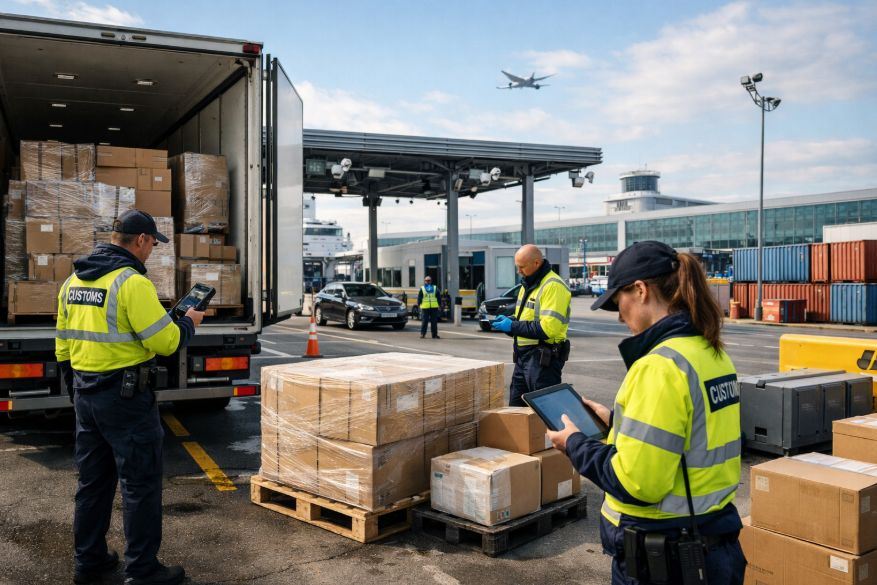
Customs clearance in the UK typically takes from a few hours to up to several days after goods arrive depending on shipment type, documentation accuracy and inspections. If paperwork has issues or inspections are required, clearance can extend to one or more weeks or more.
What Is Customs Clearance in the UK?
 Customs clearance is the legal process of declaring, inspecting and releasing goods that enter the UK from another country. This process ensures:
- All duties and UK import VAT are correctly calculated and paid
- Goods comply with UK safety, licensing and regulatory rules
- Prohibited or restricted items are identified and controlled
Every shipment from a small online order to a 40‑foot shipping container must clear customs before it can be delivered or released for business use.
For UK businesses, the pace of customs clearance directly affects inventory planning, cash flow, and delivery commitments. For individuals, delays at customs often lead to unexpected waiting times and extra charges.
How Long Does Standard Customs Clearance Usually Take?
There is no fixed time defined by law, but typical UK clearance timeframes fall into broad categories:
Online Parcels & Courier Shipments
Most courier or express parcels that arrive with complete documentation can clear customs in a few hours to 24 hours.
Air Freight Shipments
Air freight generally clears within 24–48 hours if import declarations are correct and all duties are paid.
Sea Freight / Container Imports
For cargo arriving by sea, clearance from the port can take 2–5 business days, or longer, due to physical handling and inspections.
Road Freight (EU/UK)
If paperwork is pre‑lodged before arrival (e.g., GVMS, T1, CDS entries), clearance can happen same day. Without pre‑lodgement it may take 1–2 days or more.
These are typical ranges but real‑world cases, especially those involving incomplete paperwork, often go beyond these estimates.
What People Report Happens in Practice?
Real Experiences:
Shippers on community forums report parcels stuck in customs for weeks when documentation is missing or incorrect. One person described a parcel being held in the UK International Hub for 14 days with no movement.
This highlights that although the system can clear quickly, actual experience depends on how well the shipment was prepared and how customs handle inspections.
What Factors Most Influence Customs Clearance Time?
 Customs clearance time is not random it depends on several measurable factors:
1. Documentation Preparation
Incomplete, missing or inaccurate paperwork is the #1 cause of delays. Typical required documents include:
- Commercial invoice (with correct value and HS tariff codes)
- Packing list
- Transport documentation (Air Waybill, Bill of Lading)
- EORI number (Economic Operator Registration & Identification)
If key fields (like commodity code or value) are wrong, customs may hold goods until corrected.
2. Duties, VAT and Payments
HMRC calculates customs duties and import VAT based on tariff classification, origin and goods value. These fees must be paid or accounted for before customs will release the goods.
Delays in payment authorisation often mean clearance cannot complete even if documentation is perfect.
3. Inspections & Compliance Checks
Some goods trigger physical inspections by customs or other UK authorities (food safety, pharmaceuticals, plant products). These additional checks can add days or more to the process.
Common examples include:
- Food and plant products
- Electronics requiring CE/UKCA compliance review
- Hazardous materials
- High‑value imports
4. Shipment Type and Volume
Higher shipment volumes (e.g., holiday season) can slow processing as customs offices manage backlogs. Even with perfect documentation, timing improves when workloads are lighter.
5. Use of Pre‑Lodged Declarations
Pre‑submission of import declarations before arrival (via UK Customs Declaration Service CDS) allows authorities to process paperwork ahead of time often speeding clearance significantly.
How Brexit Changed UK Customs Clearance?
Post‑Brexit, every import from the EU now requires a full customs declaration just like imports from outside the EU. This has added steps and data requirements to the clearance process.
From 31 January 2025, mandatory safety and security declarations are required for all EU imports a procedural change that, while improving border controls, also raises documentation complexity.
This means businesses and individuals must plan their import documentation more carefully than before.
How to Achieve the Fastest Possible Customs Clearance
Prepare Accurate Documentation Upfront
- Verify HS tariff codes
- Include correct values and EORI number
- Ensure packing list matches invoice exactly
Accuracy reduces the likelihood of customs queries or holds.
Pre‑Lodge Declarations Before Arrival
For freight and high‑value shipments, submit CDS/ENS/GVMS entries before goods land. This gives HMRC time to review in advance.
Choose Carriers Experienced with UK Customs
Couriers like DHL, FedEx and Royal Mail routinely file import entries and manage duties promptly, reducing hold times. Many aim to clear parcels while goods are in transit.
Keep Communications Open
Respond immediately to customs or carrier requests for missing data delays often widen when responses are slow.
What Happens When Your Parcel Is Held at Customs?
 If a shipment is held:
- Your carrier or broker will contact you with instructions
- You may be asked to provide missing paperwork
- Duties/VAT must be settled before release
Delays can extend to multiple weeks if issues aren’t addressed promptly.
Common Mistakes That Lead to Delays
| Issue | Impact on Clearance Time |
| Missing EORI number | Customs will hold goods until number is supplied |
| Incorrect HS codes | Duty miscalculation leads to queries and delay |
| Incomplete invoices | Triggers customs review and hold |
| Failure to pre‑submit declarations | Adds processing time post‑arrival |
Avoiding these mistakes upfront often means the difference between hours and days or weeks of delay.
Typical Customs Clearance Timeframes (UK)
| Shipment Type | Typical Clearance Time |
| Express Parcels | Minutes to <24 hours |
| Air Freight | 24–48 hours |
| Sea Freight | 2–5 days (or longer) |
| Road Freight (EU/UK with pre‑lodgement) | Same day to 1–2 days |
These ranges assume accurate documentation and no inspections. Delays can extend if conditions above are not met.
UK Customs Clearance: Compliance and Practical Reality
According to UK government import regulations, businesses may also delay making certain declarations (for EU goods) under specific schemes for up to six months under controlled conditions but this is a business‑specific advanced process not relevant to most personal or e‑commerce shipments.
The National Clearance Hub requires original documents to be submitted post‑clearance within three working days, or penalties may apply so record‑keeping matters.
What Are the Key UK Customs Changes in 2026 That Affect Clearance Speed?
In 2026, several updates are reshaping customs clearance in the UK:
Single Trade Window
Now fully in use, this central platform allows importers to submit all customs and regulatory documents in one place, streamlining the clearance process.
ICS2 Enforcement
All imports, including from the EU, now require detailed electronic pre-arrival safety declarations under ICS2. Missing data can trigger automatic delays.
Trusted Trader Scheme Expansion
Compliant importers benefit from faster processing, fewer inspections, and simplified declarations under the enhanced scheme.
Digital Compliance Checks
Many inspections are now conducted remotely using digital scanning and data analysis, speeding up clearance for traders with a clean record.
Keeping up with these changes is essential for fast, frictionless border clearance in 2026.
How Do Different UK Ports and Airports Affect Customs Clearance Times?
Where your shipment enters the UK can significantly influence clearance speed. Major UK ports and airports are not all equally efficient, and their systems for customs processing may vary:
- London Heathrow (LHR): Handles a high volume of international air freight and parcels. Known for fast clearance when pre-arrival declarations are filed, but delays can occur during peak periods.
- Felixstowe & Southampton (Sea Ports): Among the busiest container ports in the UK. Sea freight clearance often takes longer due to container unloading, groupage breakdown, and physical inspections.
- Dover (Road Freight): A critical EU entry point. Vehicles using the Goods Vehicle Movement Service (GVMS) and pre-lodgement systems can often clear same-day if paperwork is in order.
Choosing the right port or airport for entry based on volume, processing history, and carrier experience is an often-overlooked part of accelerating customs clearance. Businesses should also consider using ports with robust infrastructure for refrigerated goods, special product handling, or fast-track customs procedures.
Conclusion
Customs clearance time in the UK is not fixed. It can be:
- Very fast : minutes if everything is pre‑lodged and accurate
- Typical :24–72 hours for most shipments
- Long : several days to weeks if documentation, inspections or compliance issues arise
It’s essential to prepare customs paperwork meticulously, submit declarations early, choose carriers with strong clearance capabilities and respond quickly to any requests. With good practices, many shipments clear customs within a day or two, even after Brexit’s added requirements.
FAQs About How Long Does Customs Clearance Take in the UK
What’s the fastest way to clear UK customs?
Using accurate pre-lodged documentation and a trusted carrier enables near-instant clearance.
Do weekends and holidays affect customs clearance time?
Yes, shipments arriving on weekends or public holidays may face processing delays.
Who pays duties and taxes for UK imports?
Usually the importer or buyer, unless the seller offers Delivered Duty Paid (DDP) terms.
How do customs clearance times compare pre- and post-Brexit?
Clearance now takes longer due to added checks and full declarations for EU imports.
Is customs clearance required for all international shipments?
Yes, every shipment entering the UK from abroad must go through customs.
What does “awaiting customs clearance” mean in tracking?
It means your parcel is waiting for customs review, documentation, or duty payment.
Can I speed up customs clearance by providing extra documents?
Yes, submitting correct and complete documents in advance helps avoid delays.