







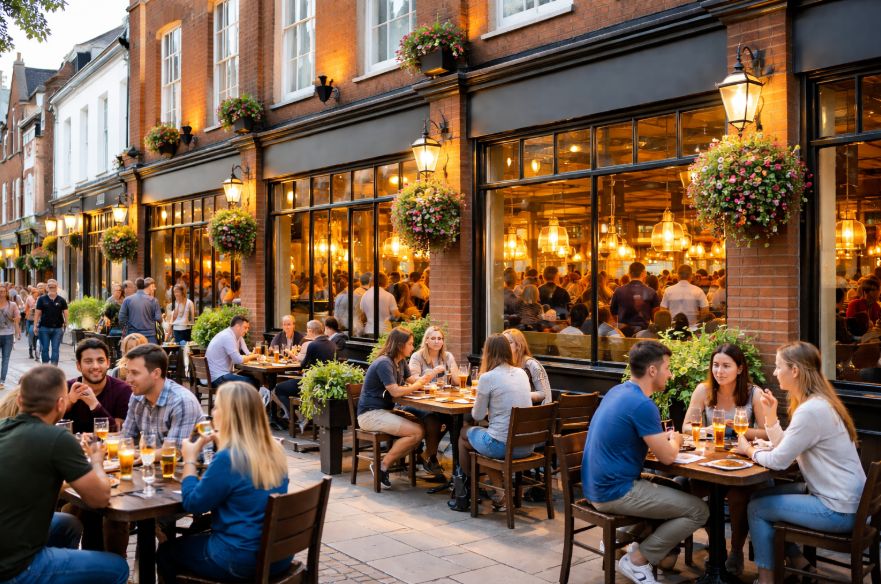
The latest trading update from JD Wetherspoon signals a notable JD Wetherspoon sales boom in 2026, with like-for-like (LFL) sales rising by 6.1%. In a year where the UK hospitality sector continues to navigate wage increases, inflationary pressures and cautious consumer spending, this performance stands out.
For business leaders, investors and hospitality professionals across the UK, the figures provide more than just a headline number. They offer insight into consumer behaviour, pricing resilience, operational efficiency and the wider trajectory of the pub industry. Understanding what sits behind the 6.1% LFL growth helps clarify whether this is a temporary uplift or a sustainable recovery trend.
What Is Driving the JD Wetherspoon Sales Boom in 2026?
 Several interlinked factors appear to be contributing to the JD Wetherspoon sales boom.
1. Value-Led Pricing Strategy
Wetherspoon has long positioned itself as a value-driven pub operator. During periods of economic pressure, consumers often shift spending towards brands that offer affordability without sacrificing experience. In 2026, that value proposition appears to be resonating strongly with cost-conscious customers.
2. Strong Like-for-Like Food and Drink Sales
Growth has been supported by steady performance in both drink and food categories. While premiumisation continues across parts of the market, many customers are prioritising accessible price points an area where Wetherspoon maintains competitive strength.
3. High Street Footfall Stabilisation
Although UK high streets have faced structural challenges in recent years, footfall trends have shown signs of stabilising in key locations. Pubs that serve as community hubs often benefit when consumers seek affordable social experiences close to home.
4. Operational Discipline
Cost control measures and operational efficiencies have helped maintain margins despite higher input costs, reinforcing investor confidence.
What Does 6.1% Like-for-Like Sales Growth Actually Mean?
Like-for-like (LFL) sales compare revenue from the same sites over a consistent period, excluding new openings or closures. This metric provides a clearer view of underlying trading performance.
Why LFL Matters?
- It removes distortion from expansion activity
- It reflects genuine consumer demand
- It is closely watched by analysts and investors
LFL vs Total Revenue Comparison
| Metric | What It Measures | Why It Matters |
| Like-for-Like Sales | Revenue from existing pubs only | Shows organic growth |
| Total Revenue | All sales including new sites | Reflects overall scale expansion |
| Operating Profit | Earnings after costs | Indicates financial health |
| Profit Margin | Percentage profitability | Shows efficiency |
A 6.1% LFL increase suggests that existing pubs are generating significantly more revenue than the previous comparable period a strong indicator of demand strength.
How Is the UK Pub Industry Performing in 2026?
The wider UK hospitality sector has experienced a gradual recovery following years of volatility. However, performance remains uneven.
Confirmed Trends
- Wage costs have risen due to increases in the National Living Wage
- Energy costs, while more stable than previous peaks, remain elevated
- Consumers remain price sensitive
Sector Dynamics
Many managed pub groups are reporting modest growth, though not all operators are experiencing the same level of like-for-like momentum. Competitive positioning, property portfolio quality and pricing flexibility continue to separate outperformers from the rest.
Addressing Misinformation
There is sometimes a perception that UK pubs are universally in decline. While some independent operators face pressures, larger managed groups with strong cost control and scale efficiencies are demonstrating resilience. The JD Wetherspoon sales boom illustrates that growth is still achievable within the sector.
How Has JD Wetherspoon Managed Cost Pressures and Wage Inflation?
 Operating in 2026 requires careful navigation of rising employment and supply chain costs.
Wage Inflation
The National Living Wage increase has materially impacted labour-intensive sectors such as hospitality. Wetherspoon has responded by:
- Improving scheduling efficiency
- Leveraging technology for ordering and payments
- Maintaining high sales volumes to offset wage impact
Supplier and Energy Costs
Long-term supplier relationships and centralised purchasing have supported cost management. Energy price volatility has eased compared to earlier peaks, though remains above pre-2020 levels.
Maintaining margin discipline amid cost pressures has strengthened confidence in the sustainability of the JD Wetherspoon sales boom.
Is JD Wetherspoon Expanding or Consolidating in 2026?
Expansion strategy remains measured rather than aggressive.
Portfolio Strategy
Wetherspoon continues to:
- Review underperforming sites
- Invest in refurbishments
- Open selected new locations where demand is clear
This balanced approach reduces risk while maintaining growth opportunities.
Importantly, like-for-like growth suggests performance improvements are not solely dependent on expansion a positive signal for long-term stability.
How Are Investors Reacting to the Wetherspoon Trading Update?
Financial markets typically respond favourably to sustained LFL growth in consumer-facing businesses.
Investor Considerations
- Sales momentum consistency
- Margin sustainability
- Debt levels
- Cash flow resilience
While short-term share price movements can fluctuate, a 6.1% LFL increase generally strengthens earnings outlook expectations.
Investors are particularly attentive to whether this growth reflects temporary post-inflation adjustments or structural demand recovery.
What Does This Sales Boom Mean for UK Consumers?
 For consumers, the JD Wetherspoon sales boom suggests continued demand for accessible, value-led social venues.
Practical Example
Consider a London-based office worker choosing a venue for after-work drinks. With household budgets still under pressure, choosing a competitively priced pub chain allows social engagement without significant financial strain. Multiply this behaviour across thousands of customers nationwide, and the cumulative effect becomes visible in LFL growth.
Consumer Implications
- Stable pricing environment
- Continued menu affordability
- Broad geographic accessibility
This performance does not necessarily indicate widespread discretionary spending increases. Instead, it reflects selective, value-driven choices.
What Risks Could Affect Future Sales Growth?
While current performance is strong, several risks remain.
Confirmed Risks
- Further wage increases
- Changes in alcohol duty
- Consumer confidence fluctuations
Potential External Factors
- Macroeconomic slowdown
- Regulatory changes
- Increased competition from discount dining operators
Clear separation between confirmed pressures (such as wage rises) and potential risks helps avoid exaggerated conclusions. The JD Wetherspoon sales boom exists within a broader economic context that still requires careful management.
What Is the Outlook for JD Wetherspoon Beyond 2026?
Short-term outlook remains cautiously positive if consumer demand remains steady and cost pressures stabilise.
Key Outlook Drivers
- Continued value positioning
- Operational efficiency
- Balanced expansion
- Consistent footfall
Long-term growth will depend on maintaining brand relevance and adapting to evolving consumer habits.
For UK business observers, the 2026 figures highlight how disciplined execution and clear market positioning can generate measurable results even during economic uncertainty.
Conclusion
The JD Wetherspoon sales boom in 2026, marked by a 6.1% like-for-like sales surge, reflects more than a short-term uplift. It signals the impact of value-led strategy, operational discipline and steady consumer demand within the UK hospitality landscape.
While risks remain, confirmed performance data suggests that well-managed pub groups can still achieve growth despite economic headwinds. For investors, operators and business professionals, the figures provide a measured but encouraging snapshot of sector resilience in 2026.
FAQs
How do like-for-like sales differ from revenue growth?
Like-for-like sales exclude new site openings and closures, offering a clearer view of organic trading performance.
Why is 6.1% growth considered strong in hospitality?
In a mature market with rising costs, mid-single-digit LFL growth signals robust consumer demand.
Does sales growth automatically mean higher profits?
Not necessarily. Profitability depends on cost management alongside revenue increases.
Are UK pubs recovering overall?
Many managed pub groups are stabilising, though performance varies by operator and region.
Could inflation slow future growth?
Yes, prolonged inflation may reduce discretionary spending, though value-led operators may remain competitive.
Is expansion necessary for continued success?
Not always. Strong like-for-like growth demonstrates that existing sites can drive performance without rapid expansion.
What makes Wetherspoon competitive in 2026?
Its value positioning, operational scale, cost control and widespread UK presence contribute to resilience.