







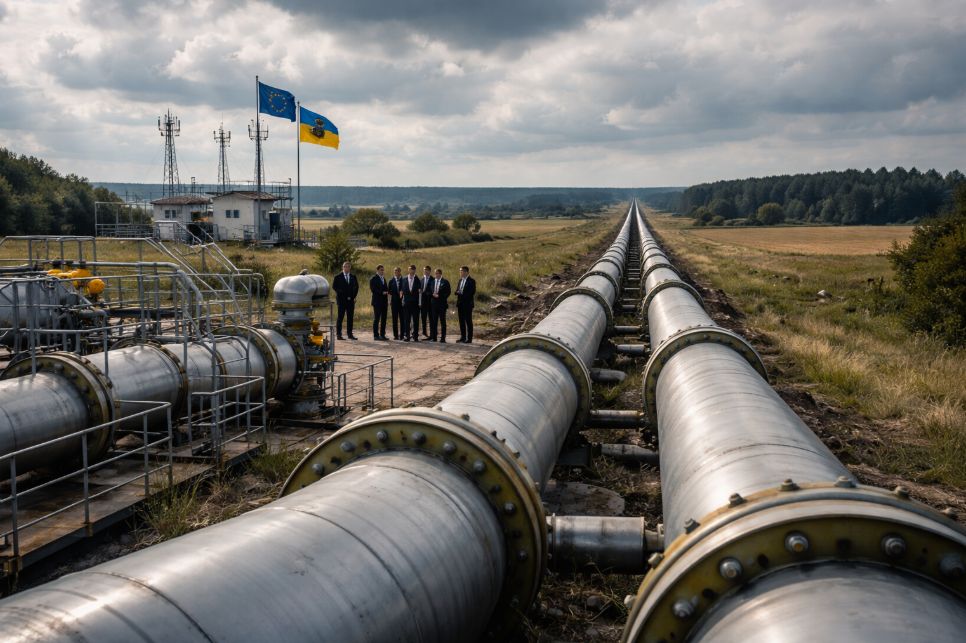
Key Takeaways: EU Asks Zelensky to Repair Druzhba Pipeline Amid €90bn Ukraine Aid Deadlock
The dispute over the Druzhba pipeline has become one of the most politically sensitive issues in Europe’s current energy and aid negotiations.
As the EU asks Zelensky to repair the pipeline, Ukraine has pushed back strongly, arguing that the request places wartime security, national sovereignty, and moral responsibility in direct conflict with European economic needs.
At the same time, Hungary and Slovakia are blocking a vital €90bn EU aid package, increasing pressure on Brussels and Kyiv to find a solution.
Why this story matters?
- The EU is pressuring Ukraine to repair the Druzhba oil pipeline so that Russian crude can once again reach refineries in Central Europe, particularly in Hungary and Slovakia.
- A €90bn EU aid package for Ukraine remains blocked as Budapest and Bratislava reportedly link their support to the restoration of pipeline flows.
- Ukraine has rejected the demand, with President Volodymyr Zelensky describing the request as “blackmail” and arguing that repairing a route for Russian oil exports during wartime is both dangerous and politically unacceptable.
- The shutdown has increased energy uncertainty across Central Europe, where some refineries remain dependent on Russian crude grades delivered through Soviet-era infrastructure.
- The standoff is not just about oil infrastructure; it is also shaping wider debates around EU solidarity, sanctions policy, Ukraine funding, regional fuel prices, and geopolitical risk for investors.
- Independent EU inspections may become the next step, as Brussels considers sending neutral experts to assess whether the damaged section of the pipeline can be repaired safely in an active conflict environment.
- For readers in the UK, this dispute matters because prolonged instability in European oil transport routes can affect market sentiment, Brent crude volatility, investor confidence, and broader European economic stability.
Europe and Ukraine are facing a sensitive diplomatic standoff centred on one of the continent’s most important pieces of energy infrastructure the Druzhba oil pipeline.
On 15 March 2026, Ukrainian President Volodymyr Zelensky publicly criticised pressure from European leaders to repair the pipeline, calling the demand “pure blackmail.” His response came as negotiations around a €90 billion EU financial aid package for Ukraine stalled.
Several EU member states, particularly Hungary and Slovakia, have linked their approval of the funding package to the restoration of oil flows through the Druzhba pipeline. The pipeline, which transports Russian crude oil into Central Europe, has been offline since January 2026 after sustaining damage in a region affected by ongoing military activity.
For Ukraine, the situation raises a difficult question. Should Kyiv prioritise regional energy stability and unlock the EU aid package, or should it refuse to repair infrastructure that facilitates Russian oil exports while the war continues?
For European governments, the question is equally complex. The shutdown has created energy supply concerns across Central Europe, increasing pressure on leaders to find a solution.
This dispute illustrates how energy infrastructure, wartime politics, and economic stability are now deeply intertwined in Europe’s geopolitical landscape.
Why Is the EU Pressuring Ukraine to Repair the Druzhba Pipeline?
 European officials view the restoration of the Druzhba pipeline as a practical step to stabilise energy supplies in parts of Central Europe. The pipeline has historically transported Russian crude oil across Belarus and Ukraine into EU markets, particularly Hungary and Slovakia.
With the pipeline currently inactive, energy markets in the region are facing higher transport costs, increased fuel price volatility, and logistical challenges.
Several EU leaders believe restoring the pipeline could reduce these pressures while maintaining broader European economic stability.
“Energy infrastructure disruptions do not remain local problems. When a major pipeline stops operating, the ripple effects spread across the entire European energy market.”
— European energy policy analyst
However, this perspective has sparked debate among policymakers and analysts.
Confirmed Facts
- The Druzhba pipeline is one of the largest oil pipeline networks in the world.
- It has historically transported Russian crude to several European countries.
- Damage in early 2026 halted oil transit through parts of the network.
Ongoing Policy Debate
Some EU policymakers argue that restoring oil transit is necessary to protect regional economies.
Others warn that repairing the pipeline may conflict with broader EU efforts to reduce reliance on Russian energy exports.
The Hungarian Veto and the €90bn Deadlock
Hungary has emerged as the most prominent political actor in the dispute. Prime Minister Viktor Orbán has reportedly used the pipeline issue as leverage in negotiations over the EU’s financial assistance package for Ukraine.
Hungary and Slovakia rely heavily on pipeline-delivered Russian crude because their refineries were historically designed to process Urals-grade oil.
Without Druzhba, these countries must rely on alternative routes that are more expensive and less efficient.
“Central European refineries were built around specific pipeline infrastructure. Changing supply routes overnight is technically possible but economically difficult.”
— European refinery logistics specialist
This dependence explains why Hungary and Slovakia have tied the restoration of oil flows to their approval of the EU aid package.
Energy Security in Central Europe
Energy security concerns are a central part of the debate.
Refineries in Budapest and Bratislava depend on the Druzhba pipeline to receive affordable crude oil. While alternative supply routes exist, they present practical limitations.
The Adria pipeline, which connects Croatia’s Adriatic coast to Central Europe, provides one possible alternative. However, its current capacity cannot fully replace Druzhba’s supply volumes.
Using alternative oil sources also increases costs due to:
- longer shipping distances
- different crude oil grades
- refinery adaptation requirements
“Energy diversification is achievable, but infrastructure realities mean transitions take years, not months.”
— International Energy Agency market report
As a result, the Druzhba shutdown has created short-term supply challenges across Central Europe.
Why Does Zelensky Call the EU Demand “Blackmail”?
Ukraine’s leadership has rejected the idea that the country should prioritise pipeline repairs under current security conditions.
President Zelensky has framed the issue as a contradiction between European economic interests and Ukraine’s wartime security needs.
“Ukraine cannot be asked to repair infrastructure that benefits Russia while Russian missiles continue to target our country.”
— President Volodymyr Zelensky
From Kyiv’s perspective, repairing the pipeline would effectively restore a route for Russian oil exports, which could generate revenue for the Russian state.
This position has turned the pipeline into a symbolic issue of sovereignty and wartime strategy.
Confirmed Position from Ukraine
Ukraine maintains that:
- repairing the pipeline during active conflict could expose workers to danger
- restoring oil transit may contradict sanctions aimed at reducing Russian energy influence
Policy Debate
Some European analysts argue that maintaining economic stability in EU member states is also critical to sustaining long-term support for Ukraine.
Others believe Ukraine’s position reflects legitimate wartime concerns.
The “Safety First” Argument
What Economic Impact Has the Druzhba Pipeline Shutdown Created?
The shutdown has produced measurable economic effects across energy markets and government budgets. Energy supply disruptions can affect oil prices, refining costs, and regional fuel markets.
Below is a snapshot of the current situation.
| Metric | Current Status | Economic Implication |
|---|---|---|
| Oil Transit Volume | 0 Barrels/Day (Since Jan 2026) | Increased regional fuel price volatility |
| EU Aid Status | €90bn Package Blocked | Budget uncertainty for Ukraine |
| Estimated Repair Timeline | 4–6 Months | Prolonged supply uncertainty |
| Estimated Repair Cost | ~€450 Million | Significant investment risk |
If the pipeline remains offline for an extended period, governments may need to expand alternative supply networks or provide subsidies to stabilise fuel prices.
How Could the Pipeline Dispute Affect London Investors?
 Although the pipeline is located in Eastern Europe, the dispute carries broader implications for global energy markets.
Financial markets closely monitor disruptions involving Russian oil transport routes, as they can influence expectations about global oil supply.
Market Volatility
The standoff may influence:
- Brent crude price movements
- European refining margins
- energy infrastructure investment sentiment
When major pipeline systems stop operating, traders often react due to concerns about future supply reliability.
For investors in the United Kingdom, such developments can affect:
- oil and gas company shares
- energy exchange-traded funds
- commodity trading strategies
Diplomatic Friction Inside Europe
Could EU Inspections Help Resolve the Pipeline Dispute?
In an effort to break the political deadlock, the European Commission has proposed sending independent inspectors to the damaged pipeline site.
Their objective would be to determine:
- whether repairs are technically possible
- whether the site remains unsafe due to military threats
- how long restoration would realistically take
Independent assessments are commonly used in international disputes to separate technical facts from political claims.
“Neutral technical inspections can clarify whether infrastructure problems are solvable or genuinely constrained by security conditions.”
— EU infrastructure advisory expert
If inspectors conclude that the site remains too dangerous, EU governments may reconsider linking financial aid to pipeline repairs.
Is the Druzhba Pipeline Dispute a Test of European Solidarity?
The debate over repairing the Druzhba pipeline highlights the complex relationship between energy security, wartime politics, and economic stability across Europe.
For several EU member states, restoring oil flows represents a practical step to stabilise regional energy markets and protect domestic economies. For Ukraine, however, repairing infrastructure that facilitates Russian oil exports raises significant political, ethical, and security concerns during an ongoing conflict.
The dispute illustrates a broader challenge for European policymakers as they attempt to balance economic needs with evolving geopolitical realities. Decisions surrounding energy infrastructure now carry implications that extend beyond supply chains and into questions of security, diplomacy, and long-term strategy.
Ultimately, the outcome will not only determine the fate of the €90 billion EU aid package but may also influence how Europe approaches energy infrastructure decisions during future geopolitical crises.
FAQs
Why is the €90bn EU aid package being delayed?
Hungary and Slovakia have linked their approval of the funding package to the restoration of oil transit through the Druzhba pipeline, which stopped operating in early 2026.
What exactly is the Druzhba pipeline?
The Druzhba pipeline is one of the largest oil pipeline networks globally, transporting Russian crude oil to multiple European countries through Belarus and Ukraine.
Why does Ukraine oppose repairing the pipeline now?
Ukraine argues that restoring the pipeline could facilitate Russian oil exports during wartime and expose Ukrainian workers to safety risks.
Do Hungary and Slovakia have alternative oil supply routes?
Yes. The Adria pipeline provides an alternative route, although it has limited capacity and may increase transportation costs.
Could the EU force Ukraine to repair the pipeline?
No. Ukraine controls infrastructure within its territory, so any repair decision ultimately rests with the Ukrainian government.
How long would pipeline repairs take?
Energy analysts estimate repairs could require four to six months, depending on security conditions and technical access.
Does this dispute affect global oil markets?
Indirectly, yes. Major pipeline disruptions can influence market sentiment and contribute to volatility in global oil prices.