







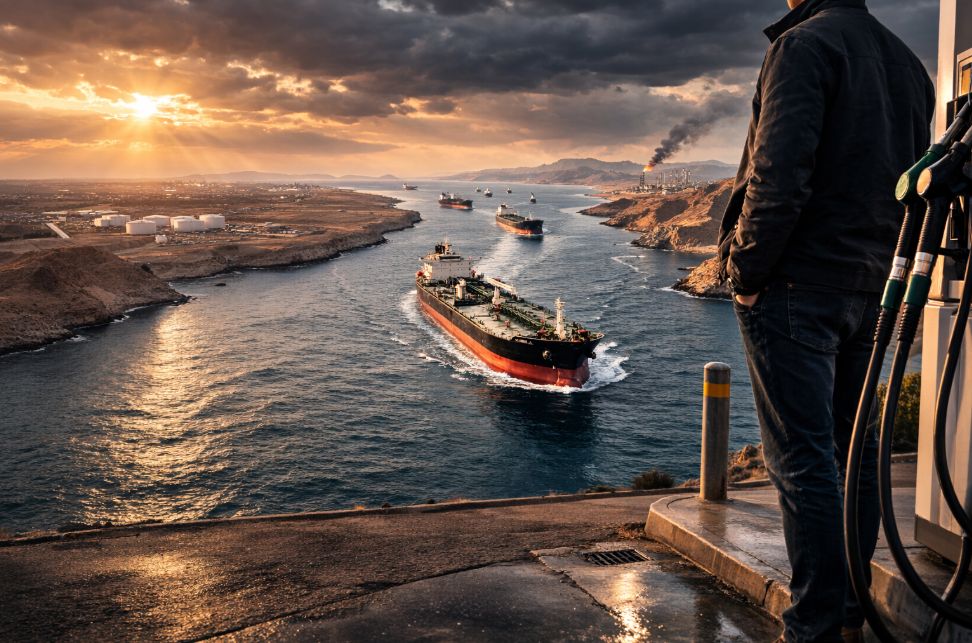
Fuel prices are once again under scrutiny in 2026, with many across the UK asking a pressing question: are gas prices going up because of Iran? As tensions in the Middle East resurface, concerns about rising petrol costs, business expenses and household budgets are growing.
This article provides a clear and balanced assessment of how global oil markets respond to geopolitical developments and what those movements truly mean for UK consumers and businesses.
Is Iran Causing Gas Prices to Rise in the UK in 2026?
 In 2026, renewed geopolitical tensions in the Middle East have prompted a pressing question for UK households and businesses: are gas prices going up because of Iran? With fuel costs influencing everything from commuting expenses to delivery charges and inflation, even modest price changes attract national attention.
The short answer is that Iran-related tensions are contributing to upward pressure on global oil prices. However, they are not the sole reason for rising fuel costs in the UK. Energy pricing is shaped by a combination of global supply and demand, currency fluctuations, production decisions by oil-producing nations, and domestic regulatory structures.
How Do Global Oil Markets Affect UK Petrol Prices?
The UK operates within a globally interconnected energy market. Although it produces oil from the North Sea, domestic petrol prices are influenced primarily by international crude benchmarks, particularly Brent crude.
Brent crude is priced in US dollars. This means UK petrol prices are influenced by two major variables:
First, the global oil price itself.
Second, the GBP to USD exchange rate.
If oil prices rise due to geopolitical risk and the pound weakens at the same time, UK fuel costs increase more sharply.
Energy markets also react to expectations. Traders often adjust prices based on perceived risk before actual supply disruptions occur. This mechanism, known as a “risk premium”, plays a central role in explaining why gas prices may rise even if oil continues flowing normally.
Why Does Iran Matter to Global Energy Pricing?
 Iran is strategically important to global oil markets for both geographic and political reasons.
The Importance of the Strait of Hormuz
One of the world’s most critical oil transit routes is the Strait of Hormuz. Around one-fifth of global oil shipments pass through this narrow corridor between the Persian Gulf and the Gulf of Oman.
When tensions escalate involving Iran, energy markets monitor developments closely. Concerns typically centre on:
- Maritime security
- Tanker traffic disruption
- Increased insurance costs
- Naval activity in the region
Even if shipping continues uninterrupted, the possibility of disruption can increase oil prices due to heightened uncertainty.
Iran’s Role in OPEC
Iran is also a member of OPEC. OPEC’s collective production decisions significantly influence global supply levels. Although sanctions have limited Iran’s exports at times, geopolitical tension involving Iran can affect broader OPEC strategy and market confidence.
However, it is important to note that in 2026 there has been no confirmed large-scale supply removal directly attributable to Iran.
Are There Confirmed Supply Disruptions in 2026?
At present, there is no verified closure of the Strait of Hormuz. There is no confirmed global oil shortage. UK fuel supply remains operational and stable.
What has occurred is market volatility. Brent crude prices have experienced upward fluctuations during periods of heightened tension. Maritime insurance premiums in Gulf shipping routes have risen. Futures markets have priced in geopolitical uncertainty.
These developments contribute to modest increases in wholesale petrol pricing. However, volatility should not be mistaken for collapse.
What Other Factors Are Influencing Gas Prices in 2026?
 To determine whether gas prices are going up because of Iran, it is essential to examine broader market forces.
Global Demand Trends
Economic activity in Asia and parts of Europe has strengthened in 2026. Higher industrial output and transportation demand increase global oil consumption, placing upward pressure on prices.
OPEC Production Management
OPEC production targets influence supply levels. Managed output strategies can stabilise prices, even during geopolitical uncertainty.
US Shale Output
US shale production remains a balancing force in global markets. When prices rise significantly, US producers often increase output, which can temper further price spikes.
Currency Movements
A slightly weaker pound increases the cost of oil imports. Even if Brent crude remains stable, currency fluctuations can raise UK pump prices.
Seasonal Refinery Maintenance
Refinery shutdowns for maintenance can temporarily reduce supply of refined products such as petrol and diesel, contributing to short-term price increases.
These overlapping factors demonstrate that gas prices are shaped by a complex economic ecosystem rather than a single geopolitical event.
How Much Have UK Petrol Prices Changed in 2026?
The following table summarises the key influences affecting UK petrol prices this year:
| Market Factor | 2026 Status | Effect on UK Prices |
| Brent Crude | Moderate volatility | Upward pressure |
| Strait of Hormuz Risk | Elevated monitoring | Risk premium added |
| OPEC Output | Managed supply | Stabilising influence |
| GBP/USD Exchange Rate | Slight pound weakness | Increased import cost |
| UK Fuel Supply | Stable | No shortage |
This overview indicates that Iran-related tensions contribute to pricing pressure but are not the sole driver.
Are Household Gas Bills Affected in the Same Way?
It is important to distinguish petrol prices from domestic natural gas bills.
Household gas pricing in the UK is regulated and influenced primarily by wholesale gas markets rather than crude oil. The energy regulator, Ofgem, sets an energy price cap to protect consumers from extreme volatility.
Oil price fluctuations do not directly translate into equal changes in domestic gas tariffs. While both markets are linked to global energy systems, they operate differently.
What Does This Mean for UK Businesses?
 For businesses reliant on transport, such as logistics firms, delivery services, and tradespeople, even modest increases in fuel prices affect operating costs.
For example, a London-based catering company operating multiple vans may see monthly fuel expenses rise if pump prices increase by several pence per litre. Over a quarter, this could reduce profit margins unless operational efficiencies are introduced.
However, current price movements remain incremental rather than extreme. There is no evidence of sudden doubling of fuel costs.
Is There Misinformation About Fuel Prices in 2026?
Periods of geopolitical tension often generate exaggerated claims. Some commentary has suggested that the UK could face fuel shortages or dramatic overnight price spikes.
There is no verified evidence supporting these claims.
The UK maintains diversified supply sources, storage reserves, and regulatory oversight mechanisms. Market volatility does not equate to system failure.
Distinguishing between confirmed developments and speculative commentary is essential to avoid unnecessary concern.
What Could Happen to Gas Prices Later in 2026?
Several possible scenarios may unfold.
If diplomatic tensions ease, oil prices could stabilise or decline as the risk premium diminishes.
If tensions persist but do not escalate, markets may continue reflecting moderate uncertainty, leading to ongoing but manageable volatility.
A severe disruption affecting major shipping routes would likely cause sharper price increases. However, such an outcome remains speculative at present.
Current evidence suggests moderate volatility rather than crisis-level escalation.
Conclusion
Gas prices in 2026 are experiencing upward pressure partly due to tensions involving Iran. Concerns surrounding the Strait of Hormuz and regional security have contributed to increased market uncertainty.
However, gas prices are not rising solely because of Iran. Broader factors including global demand, OPEC production strategy, currency movements, and refinery operations are also influencing prices.
For UK households and businesses, the present impact is measured rather than severe. Fuel supply remains stable. Price increases reflect market risk assessment rather than confirmed shortage.
Understanding the structure of global oil markets provides reassurance: volatility does not necessarily signal crisis. While monitoring developments remains prudent, current data indicates a manageable pricing environment rather than an emergency.
FAQs
How quickly do Brent crude changes affect UK pump prices?
Typically within one to three weeks, depending on wholesale contracts and retailer pricing cycles.
Does the UK rely heavily on oil imports from Iran?
No. The impact of Iran-related tensions is indirect through global market pricing mechanisms.
Could the Strait of Hormuz closure immediately halt UK fuel supply?
While it would affect global markets, the UK has diversified supply chains and reserves to mitigate immediate disruption.
Why does the exchange rate matter for petrol prices?
Oil is priced in US dollars. A weaker pound increases the cost of imported crude oil.
Are natural gas bills tied directly to crude oil prices?
Not directly. Domestic gas pricing depends more on wholesale gas markets and regulatory caps.
Is there evidence of fuel shortages in Britain in 2026?
There is no confirmed shortage. Supply chains remain operational.
Should consumers expect petrol prices to double this year?
There is no credible evidence suggesting a doubling of petrol prices under current conditions.