






📌 Key Takeaways
- The Scottish Parliament rejected the bill on 17 March 2026 by 69 votes to 57.
- About 12 MSPs switched their stance between the earlier and final votes.
- Key objections centred on safeguards, coercion, and vulnerability.
- Late changes to pharmacist protections became a major concern.
- Public support remains strong at around 75%–80%.
- The Scottish Government is now focusing on palliative care improvements.
- The wider debate over assisted dying in Scotland is not over.
📰 Quick Summary
The Assisted Dying for Terminally Ill Adults (Scotland) Bill was rejected after a closely watched final vote in Holyrood. Although the legislation had previously cleared an earlier stage, a number of MSPs changed their minds as concerns grew over legal safeguards and the protection of vulnerable people.
This assisted dying bill Scotland update shows the gap between strong public support and parliamentary caution. Assisted dying remains illegal in Scotland, and attention is now shifting towards better palliative care and future policy discussions.
On 17 March 2026, the Scottish Parliament reached a decisive moment in its legislative history, delivering its final verdict on the Assisted Dying for Terminally Ill Adults (Scotland) Bill. In a closely watched vote, MSPs rejected the bill by 69 votes to 57, marking a significant turning point in the ongoing debate around end-of-life choices in Scotland.
This assisted dying bill Scotland update highlights a complex and emotionally charged issue. While public support for assisted dying remains consistently high polling between 75% and 80% many MSPs ultimately voted against the legislation due to concerns over safeguards, coercion, and the protection of vulnerable individuals.
The decision reflects a careful balancing act between compassion, ethics, and legal responsibility one that continues to shape policy discussions across the UK.
What Happened in the Holyrood Vote on the Assisted Dying Bill?
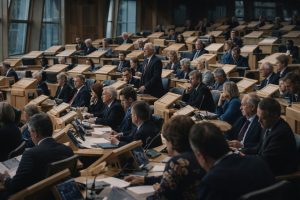
The Scottish Parliament rejected the assisted dying bill on 17 March 2026 by a vote of 69 to 57.
The debate at Holyrood was intense, respectful, and deeply personal. Unlike most legislation, this was a free vote, meaning MSPs were not required to follow party lines. This allowed individual beliefs, ethical considerations, and constituency views to play a decisive role.
Voting Results by Party
The absence of party discipline led to cross-party divisions, making the final outcome less predictable and more reflective of individual judgement.
Why Did the Assisted Dying Bill Fail in Scotland?
The bill failed primarily due to concerns about safeguarding vulnerable individuals and the risk of coercion.
Despite years of debate and multiple revisions, a significant number of MSPs remained unconvinced that the legislation provided sufficient protection.
The “12-MSP Swing”: A Dramatic Reversal
One of the most striking aspects of this assisted dying bill Scotland update was the reversal in support.
- At Stage 1 (May 2025): Passed 70–56
- Final vote: Rejected 69–57
Around 12 MSPs switched their position, moving from support to opposition.
Why did this happen?
Many cited what has been described as “safeguard fatigue” a growing concern that even after hundreds of amendments, the bill still failed to adequately protect vulnerable people.
Concerns About a “Slippery Slope” and Coercion
A central argument against the bill focused on the risk that:
- Elderly individuals might feel pressured to end their lives
- Disabled people could perceive themselves as a burden
- Subtle coercion might go undetected
“Today’s vote reflects the deep-seated concerns that many MSPs held regarding the protection of the most vulnerable in our society. While the debate was respectful, the risks of coercion could not be overlooked.”
— Dr. Gordon Macdonald
These concerns were particularly influential in persuading undecided MSPs.
The Pharmacist Protections Conflict
A critical late-stage issue significantly impacted the final vote.
What changed?
- A “conscience clause” (Section 18) was removed
- This clause would have protected pharmacists who chose not to participate
Why did this matter?
The removal created uncertainty:
- Pharmacists could face professional or legal risks
- Medical bodies like the Royal Pharmaceutical Society raised concerns about a legal grey area
This late development unsettled previously neutral stakeholders and contributed to wavering political support.
Record-Breaking Legislative Scrutiny
The bill underwent extraordinary levels of scrutiny, making it one of the most debated pieces of legislation in Scottish history.
- Over 300 amendments considered
- 175 amendments debated in the final week alone
- Eligibility criteria tightened to:
- Only patients with six months or less to live
While intended to strengthen safeguards, the sheer volume of changes also raised concerns about the bill’s clarity and practicality.
Focus on Strengthening Palliative Care Instead
Many MSPs argued that the priority should be improving existing care systems rather than introducing assisted dying legislation.
This perspective gained traction, especially among senior political figures who emphasised:
- Expanding access to high-quality palliative care
- Ensuring dignity without changing the law on assisted dying
What Did Liam McArthur Say After the Bill Was Rejected?
Liam McArthur MSP expressed disappointment but emphasised that the debate is far from over.
As the proposer of the bill, McArthur had spent years advocating for change. Following the vote, he acknowledged the setback while highlighting ongoing concerns.
“This is a disappointing day for those who want more choice at the end of life, but this conversation is far from over. The status quo is currently failing too many terminally ill Scots.”
— Liam McArthur MSP
His response reflects a broader movement that continues to push for reform across the UK.
Does Public Opinion Support Assisted Dying in Scotland?

Yes. public support for assisted dying in Scotland remains high, at approximately 75–80%.
Polling data from organisations such as YouGov and Dignity in Dying consistently shows strong backing for:
- Greater end-of-life choice
- Legal frameworks for assisted dying
- Safeguards alongside autonomy
The Gap Between Public and Parliament
This assisted dying bill Scotland update reveals a clear disconnect:
This gap highlights the complexity of translating public opinion into law especially on ethically sensitive issues.
What Happens Next After the Assisted Dying Bill Scotland Update?
The bill cannot be reintroduced in the same form during the current parliamentary session.
Because the legislation failed at Stage 3, it has reached a procedural dead end.
The Legislative “Cool-Down”
- The bill must restart from scratch in any future attempt
- It cannot be revived in its current form
Political Developments
- Liam McArthur has indicated he will not reintroduce the bill immediately
- He stated it is time to “pass the baton” to future advocates
Shift Towards Palliative Care
The Scottish Government has pledged to:
- Make palliative care universally accessible
- Ensure it is fully funded and prioritised
This signals a clear policy direction following the vote.
How Did Healthcare and Medical Bodies Influence the Assisted Dying Bill Scotland Update?
Healthcare organisations played a crucial role in shaping MSPs’ final decision, particularly through concerns about legal clarity and professional responsibility.
Throughout the legislative process, major medical and healthcare bodies maintained a cautious or neutral stance. However, in the final stages, their input became more decisive especially following changes to key provisions within the bill.
One of the most influential developments was the removal of specific legal protections for healthcare professionals, particularly pharmacists. This raised important questions about how the law would be applied in practice.
Concerns Raised by Medical Organisations
The Royal Pharmaceutical Society (RPS) warned of a potential legal grey area
- Healthcare professionals feared:
- Unclear guidance on participation
- Risk of disciplinary action
- Ethical conflicts in patient care
These concerns added pressure on MSPs who were already undecided. For many, the absence of clear, enforceable protections made it difficult to support the bill in its final form.
Why This Mattered in the Final Vote?
In legislation involving life-and-death decisions, clarity and enforceability are critical. The late-stage changes created uncertainty at a time when MSPs were seeking reassurance.
As a result, the input from healthcare bodies contributed directly to the shift in votes, reinforcing the perception that the bill required further refinement before becoming law.
What Does This Assisted Dying Bill Scotland Update Mean for Patients and Families?

The rejection of the bill means that assisted dying remains illegal in Scotland, leaving patients to rely on existing palliative and end-of-life care services.
For many individuals and families, this decision has practical and emotional implications. It affects how end-of-life care is planned, discussed, and experienced.
Real-Life Impact: A Patient Scenario
Consider a patient diagnosed with a terminal illness and given less than six months to live. Under the proposed bill, they might have had the option to request medically assisted dying under strict conditions.
However, following the bill’s rejection:
- That option is not legally available
- The patient must rely on:
- Palliative care
- Pain management
- Emotional and psychological support
While palliative care in Scotland is highly regarded, some individuals feel it does not fully address their desire for control and autonomy at the end of life.
What Support Options Are Available Now?
Patients and families can still access a range of support services:
- Specialist palliative care teams
- Hospice care services
- NHS pain management programmes
- Counselling and bereavement support
The Scottish Government’s renewed focus on improving these services aims to ensure that individuals receive dignified, compassionate care, even without changes to assisted dying laws.
Balancing Choice and Protection
This assisted dying bill Scotland update highlights a central tension:
- Patient perspective: Desire for choice and control
- Legislative perspective: Duty to protect vulnerable individuals
Understanding this balance is key for readers trying to make sense of the decision and its wider implications.
Conclusion
This assisted dying bill Scotland update marks a pivotal moment in Scotland’s legislative and ethical landscape. While the bill itself has been rejected, the broader conversation surrounding assisted dying is far from over.
The vote revealed deep divisions not just within Parliament, but across society between the desire for personal autonomy and the responsibility to protect vulnerable individuals.
For now, the focus has shifted towards strengthening palliative care, ensuring that those nearing the end of life receive compassionate and comprehensive support. However, with strong public backing and continued advocacy, the issue of assisted dying is likely to return to the political agenda in the years ahead.
FAQs: Scotland Assisted Dying Bill Update
Did the Assisted Dying Bill pass in Scotland?
No, the Scottish Parliament rejected the bill on 17 March 2026 by 69 votes to 57.
Who proposed the Assisted Dying Bill in Scotland?
The bill was introduced by Liam McArthur MSP, representing the Liberal Democrats.
Why did MSPs vote against the bill?
Many MSPs were concerned about safeguards, potential coercion, and protecting vulnerable individuals.
Was there public support for the bill?
Yes, around 75–80% of the Scottish public supported the principle of assisted dying.
What is a “free vote” in the Scottish Parliament?
A free vote allows MSPs to vote based on personal judgement rather than party instructions.
Can the bill be brought back in the future?
Yes, but it must start again from the beginning of the legislative process.