







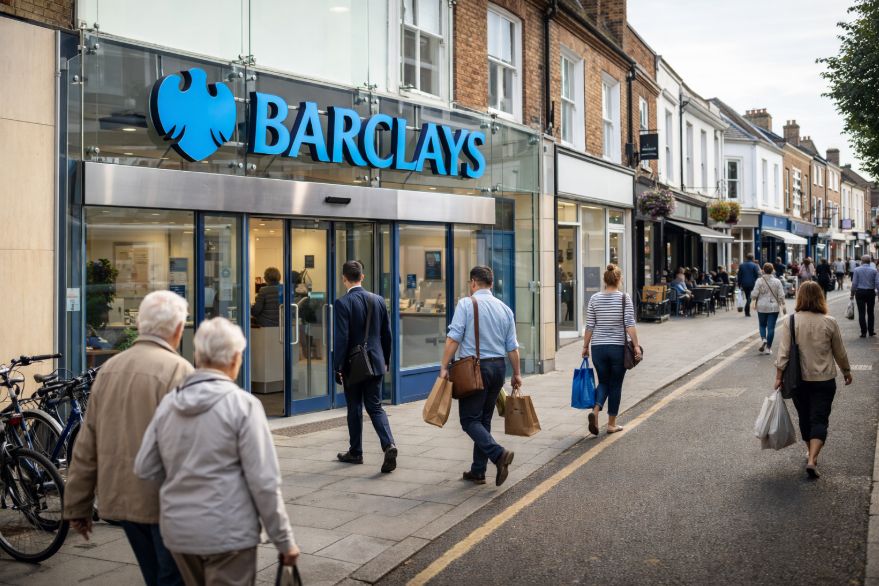
{ "@type": "BlogPosting", "headline": "Barclays New Bank Branches 2026: Strategy U-Turn to Save the UK High Street", "description": "Barclays new bank branches 2026 mark a major UK strategy shift, blending digital and human banking to revive high streets and improve access.", "image": "https://www.londonbusinessmag.co.uk/wp-content/uploads/2026/04/barclays-new-bank-branches-768x512.jpg",
"author": { "@type": "Person", "name": "Camilla Lawson" },
"publisher": { "@type": "Organization", "name": "London Business Mag", "url": "https://www.londonbusinessmag.co.uk", "logo": { "@type": "ImageObject", "url": "https://www.londonbusinessmag.co.uk/wp-content/uploads/2022/06/London-Business-Mag-Logo.png" } },
"datePublished": "2026-04-06", "dateModified": "2026-04-06",
"mainEntityOfPage": { "@type": "WebPage", "@id": "https://www.londonbusinessmag.co.uk/barclays-new-bank-branches/" },
"articleSection": "Banking", "inLanguage": "en-GB", "isAccessibleForFree": true },
{ "@type": "FAQPage", "mainEntity": [
{ "@type": "Question", "name": "Is Barclays opening new bank branches in 2026?", "acceptedAnswer": { "@type": "Answer", "text": "Yes, Barclays has confirmed plans to expand its branch network after halting closures." } }, { "@type": "Question", "name": "Why is Barclays reopening branches now?", "acceptedAnswer": { "@type": "Answer", "text": "The decision addresses customer demand, financial inclusion, and gaps created by digital-only services." } }, { "@type": "Question", "name": "Will all closed Barclays branches reopen?", "acceptedAnswer": { "@type": "Answer", "text": "No, Barclays is focusing on selective expansion rather than reopening all previous locations." } }, { "@type": "Question", "name": "What are Barclays Local sites?", "acceptedAnswer": { "@type": "Answer", "text": "They are flexible, community-based banking locations offering essential services." } }, { "@type": "Question", "name": "How do branches help small businesses?", "acceptedAnswer": { "@type": "Answer", "text": "They provide in-person support, cash handling, and financial advice." } }, { "@type": "Question", "name": "Are digital banks replacing traditional banks?", "acceptedAnswer": { "@type": "Answer", "text": "Digital banks are growing, but physical branches still serve important needs." } }, { "@type": "Question", "name": "How can I check if a new branch is opening near me?", "acceptedAnswer": { "@type": "Answer", "text": "Use Barclays’ official branch finder tool for updates." } }
] }
] }
Barclays New Bank Branches 2026: At a Glance
Before diving into the full analysis, here is a quick overview of why Barclays’ branch strategy U-turn matters for customers, local businesses, and the future of the UK high street.
Key Takeaways
- Barclays is pausing years of branch closures and shifting towards expansion in 2026.
- The strategy aims to address “banking deserts” and improve face-to-face access.
- New branches support both retail customers and small businesses that still rely on in-person banking.
- The bank is combining digital tools with a stronger human service model.
- This move could help restore confidence in the UK high street banking experience.
Quick Snapshot
Summary Table
| Area | What It Means | Why It Matters |
|---|---|---|
| Branch Expansion | Barclays is moving from closures to selective new branch openings. | Signals a major strategic reversal in UK retail banking. |
| Customer Experience | The bank is bringing back more human-led support alongside digital tools. | Helps customers who are frustrated by automated or app-only service journeys. |
| High Street Impact | Branches can increase local footfall and support nearby businesses. | Strengthens community confidence and supports local economies. |
| Banking Deserts | New locations are expected to focus on areas with little or no banking access. | Improves financial inclusion for underserved communities. |
| 2026 Strategy | Barclays is adopting a hybrid “digital + human” banking model. | Creates a more balanced and accessible experience for UK customers. |
Barclays’ decision in 2026 to halt branch closures and begin expanding its physical network marks one of the most significant strategic reversals in UK retail banking in recent years. After closing more than 800 branches since 2018 reducing its footprint to roughly 206 locations the bank is now re-evaluating the role of in-person services.
This shift comes at a time when concerns about “banking deserts”, reduced access to cash, and growing dissatisfaction with digital-only customer service have reached a critical point. Many customers, particularly small business owners and older individuals, have found themselves navigating complex issues through automated systems, often described as frustrating “chatbot loops”.
Barclays’ new direction introduces a hybrid model combining advanced digital tools with accessible, human-led services. According to statements made in April 2026 by Barclays UK CEO Vim Maru, the goal is to deliver “a combination of great digital touch and great human touch.”
This article provides a clear, fact-based breakdown of Barclays’ strategy, what it means for customers, and its broader implications for the UK high street.
Why is Barclays Opening New Bank Branches in 2026?
 Barclays is reopening and expanding its branch network to address gaps created by rapid digital transformation and to respond to evolving customer expectations.
The shift from digital-first to hybrid banking
Over the past decade, Barclays like many UK banks prioritised digital channels to improve efficiency and reduce operational costs. While this approach successfully increased mobile banking adoption, it also created service gaps.
The new hybrid model aims to:
- Retain the speed and convenience of digital banking
- Reintroduce human support for complex or sensitive issues
- Improve accessibility for customers less comfortable with technology
Customer frustration with chatbot-led services
Digital banking has not fully replaced the need for human interaction. Customers frequently report challenges such as:
- Difficulty resolving complex queries via automated systems
- Long navigation paths before reaching a human adviser
- Lack of personalised financial guidance
These issues have been particularly impactful for:
- Small business owners managing cash flow
- Elderly customers unfamiliar with apps
- Individuals dealing with mortgages or financial hardship
The growing issue of UK “banking deserts”
A key driver behind Barclays’ decision is the rise of areas with no physical banking access. These “banking deserts” have become more common as branches closed across the country.
Is Barclays Reversing Its 800+ Branch Closures?
Barclays is not fully reversing past closures, but it is clearly moving away from its previous strategy of rapid reduction.
Timeline of closures since 2018
Between 2018 and 2024:
- Over 800 Barclays branches were closed
- The network shrank by nearly 80%
- Closures were concentrated in smaller towns and less profitable areas
This reflected a broader industry trend, with most major UK banks reducing physical presence.
Current branch network and limitations
By 2024, Barclays operated approximately 206 branches nationwide. While efficient from a cost perspective, this limited:
- Geographic coverage
- In-person support availability
- Access for vulnerable communities
The strategic pause and expansion decision
In 2026, Barclays announced:
- A halt to further large-scale closures
- Plans to open new branches in targeted areas
- Investment in redesigning branch functionality
This marks a confirmed strategic shift, not a temporary adjustment.
How Will Barclays New Bank Branches Support the UK High Street?
The return of physical branches is expected to have wider economic and social benefits.
Impact on local economies and footfall
Bank branches act as anchor institutions on the high street. Their presence:
- Increases daily foot traffic
- Encourages visits to nearby shops and cafes
- Supports overall retail activity
Support for SMEs and retail businesses
Small and medium-sized enterprises (SMEs) benefit from:
- Easier cash deposits and withdrawals
- Access to lending advice
- Relationship-based banking support
For many businesses, especially in retail and hospitality, digital-only banking does not fully meet operational needs.
Restoring community trust in banking
Branch closures have often been perceived as a withdrawal of services. Reopening branches helps:
- Rebuild trust
- Demonstrate long-term commitment
- Strengthen community engagement
What Are “Banking Deserts” and Why Do They Matter?
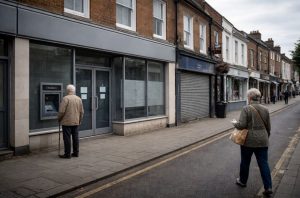 “Banking deserts” are areas where residents and businesses lack access to physical banking services.
Definition and real UK examples
These areas typically include:
- Rural towns where all major banks have closed
- Urban outskirts with limited infrastructure
- Communities with high reliance on cash
Effects on elderly and vulnerable populations
Certain groups are disproportionately affected:
- Older individuals who prefer face-to-face interactions
- People without reliable internet access
- Individuals requiring assistance with financial decisions
Challenges for cash-dependent communities
Cash remains essential in many sectors. Without local branches:
- Businesses must travel long distances to deposit cash
- Security risks increase
- Operational efficiency declines
What Is Barclays’ New Branch Strategy in 2026?
Barclays is not simply reopening branches it is redefining their purpose.
Standalone branches versus shared banking hubs
Barclays is focusing on:
- Fully branded, standalone branches
- Expanded service offerings beyond basic transactions
This differs from shared banking hubs, which provide limited services.
Expansion beyond Post Office partnerships
While Post Office services remain part of the ecosystem, Barclays is investing in:
- Dedicated locations
- Enhanced customer experience
- Broader financial services
Focus on long-term physical presence
This strategy suggests a sustained shift rather than a short-term correction.
Why Is Barclays Bringing Back the “Bank Manager” Role?
The reintroduction of the “bank manager” role reflects a broader emphasis on human connection.
Return to human-centred customer service
Customers often prefer dealing with a known individual who understands their financial history.
Simplifying roles for customer clarity
Modern banking titles can be unclear. Traditional roles:
- Are easier to understand
- Reinforce accountability
- Improve communication
Building trust through familiar banking structures
This move aligns with Barclays’ goal of rebuilding trust and accessibility.
Where Will Barclays New Bank Branches Open in the UK?
 Exact locations are still being confirmed, but the strategy is clear.
Targeting underserved banking desert regions
Priority will be given to areas with:
- No existing bank branches
- High demand for in-person services
- Limited digital adoption
Balancing urban centres and rural towns
Barclays aims to:
- Maintain presence in major cities
- Reintroduce services in underserved rural areas
The role of Barclays Local pop-up formats
“Barclays Local” sites provide:
- Temporary or flexible service locations
- Access within community centres or shared spaces
- A bridge between digital and permanent branches
What Will a 2026 Barclays Branch Look Like?
Modern branches are designed to combine efficiency with personalised service.
Advanced self-service technology for daily transactions
Branches will include:
- Automated machines for deposits and withdrawals
- Digital kiosks for account management
- Reduced waiting times
Private consultation spaces for financial advice
Customers will have access to:
- Mortgage consultations
- Loan discussions
- Business banking advice
Accessibility features for inclusive banking
Design considerations include:
- Step-free access
- Staff support for vulnerable customers
- Simplified service processes
What Do the Latest Data Trends Reveal About Barclays’ Strategy?
Barclays’ transition can be clearly understood through its branch network data.
Branch network evolution from 2018 to 2026
| Year | Estimated Branch Count | Net Change | Strategic Phase | Key Characteristics |
|---|---|---|---|---|
| 2018 | 1,000+ | — | Traditional Network | High street dominance, full-service branches |
| 2020 | ~800 | -200 | Early Digital Shift | Increased mobile banking adoption |
| 2022 | ~500 | -300 | Accelerated Closures | Cost-cutting, reduced physical footprint |
| 2024 | 206 | -294 | Minimal Presence | Heavy reliance on digital channels |
| 2026 | 206+ | + (Expansion Begins) | Hybrid U-Turn | Balanced digital + human strategy |
Confirmed Fact: Barclays has significantly reduced its branch network over the past decade.
Proposed Strategy: Expansion through selective new openings.
Misconception: Barclays is not reopening all closed branches it is targeting specific locations.
How Does Barclays Compare to Other UK Banks in 2026?
 Barclays’ approach contrasts with much of the industry.
Continued closures by Lloyds and NatWest
Many banks continue to:
- Reduce branch networks
- Focus on cost efficiency
- Prioritise digital services
Nationwide’s branch stability approach
Nationwide has committed to maintaining its branch presence, offering consistency rather than expansion.
Competition from digital-only banks like Monzo and Revolut
Digital banks:
- Offer convenience and low costs
- Lack physical support
- Appeal to younger, tech-savvy users
Barclays’ hybrid model aims to differentiate itself in this landscape.
What Are Experts and Barclays Leadership Saying?
Barclays leadership has clearly communicated the reasoning behind this shift.
Key statements from CEO Vim Maru
Emphasis on combining digital and human service
The strategy focuses on integration, not replacement.
How Are Investors and Consumer Groups Reacting?
The response has been cautiously positive.
Market response to increased operational costs
Expanding branches increases costs, but may:
- Improve customer retention
- Strengthen brand loyalty
- Support long-term growth
Views from financial inclusion and consumer advocacy groups
Advocacy groups highlight:
- Improved access for vulnerable users
- Reduced financial exclusion
- Greater community support
How Can Customers Find Barclays New Bank Branches?
Barclays is making it easier for customers to access updated information.
Using the Barclays branch finder tools
Customers can:
- Search by postcode
- View opening hours
- Check service availability
Booking in-person appointments with bank managers
Appointments can be scheduled for:
- Financial advice
- Business support
- Complex account issues
What Does This Mean for the Future of UK High Street Banking?
Barclays’ strategy may signal a broader shift in the industry.
The rise of hybrid banking models
Future banking is likely to combine:
- Digital efficiency
- Human interaction
- Flexible service delivery
Long-term implications for high street recovery
Bank branches can:
- Increase footfall
- Support local businesses
- Enhance community engagement
Competitive positioning against fintech challengers
Physical presence may become a key differentiator.
Conclusion
The introduction of Barclays new bank branches in 2026 represents a meaningful shift in strategy. While digital banking remains dominant, the renewed focus on human interaction reflects changing customer needs.
Rather than abandoning technology, Barclays is redefining its role by balancing innovation with accessibility. This hybrid approach may not only reshape its own future but also influence the direction of the wider UK banking sector.
For customers considering a Barclays bank switch, this evolving model offers a more balanced experience combining the convenience of digital tools with the reassurance of in-person support. As competition across UK banks intensifies, this blend of human and digital service could become a key factor in customer decision-making.
FAQs About Barclays New Bank Branches in 2026
Is Barclays opening new bank branches in 2026?
Yes, Barclays has confirmed plans to expand its branch network after halting closures.
Why is Barclays reopening branches now?
The decision addresses customer demand, financial inclusion, and gaps created by digital-only services.
Will all closed Barclays branches reopen?
No, Barclays is focusing on selective expansion rather than reopening all previous locations.
What are Barclays Local sites?
They are flexible, community-based banking locations offering essential services.
How do branches help small businesses?
They provide in-person support, cash handling, and financial advice.
Are digital banks replacing traditional banks?
Digital banks are growing, but physical branches still serve important needs.
How can I check if a new branch is opening near me?
Use Barclays’ official branch finder tool for updates.