







📊 Diesel Price UK Surge: Quick Snapshot (April 2026)
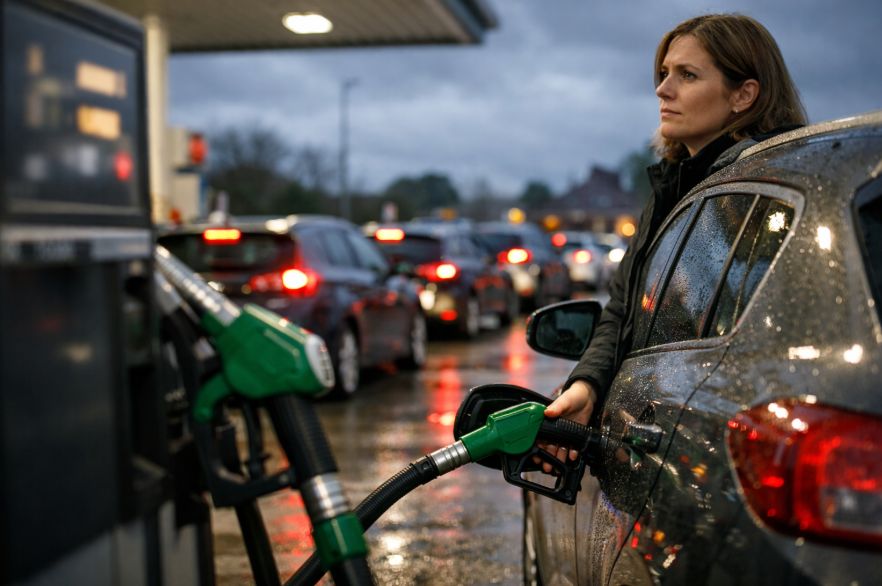
UK diesel prices have surged to 191.1p per litre, pushing the average fill-up cost to £105 for a standard 55-litre tank.
This sharp rise is driven by global supply disruptions, rising crude oil prices, and ongoing geopolitical tensions.
🔑 Key Takeaways
- Diesel prices in the UK have reached 191.1p per litre in April 2026.
- A full tank now costs around £105, up from £78 in January.
- The surge is largely due to Middle East supply disruptions and rising crude oil prices.
- Diesel prices are rising faster than petrol due to high industrial demand.
- Drivers can save up to £10–£15 per tank by choosing supermarkets or fuel apps.
📈 Fuel Price Overview
| Fuel Type | Average Price | Price Change | Cost to Fill (55L) |
|---|---|---|---|
| Diesel | 191.11p | +48.73p | £105.11 |
| Petrol | 158.01p | +25.18p | £86.91 |
British motorists are currently facing a sharp and sustained increase in fuel costs, with diesel prices rising at an unprecedented pace since late February 2026. A standard 55-litre family car now costs over £105 to fill up significantly from just £78 at the start of the year.
This diesel price UK surge reflects a combination of global supply disruptions, geopolitical tensions, and domestic pricing structures. For many households and businesses, the impact is immediate and financial.
This guide explains what is driving the surge, how it affects different groups, and where drivers can still find the cheapest diesel across the UK.
Why Is the UK Diesel Price Surging in April 2026?
 The current rise in diesel prices is primarily linked to global energy disruptions and supply constraints that have rapidly pushed wholesale costs higher.
Impact of the Strait of Hormuz Closure
The Strait of Hormuz plays a critical role in global oil transportation, carrying roughly one-fifth of the world’s oil supply. Since late February 2026, disruptions in this region have significantly reduced oil flow.
As a result, Brent crude prices surged beyond $110 per barrel, directly increasing the cost of refined fuels such as diesel.
Global Refining Constraints
Diesel is more sensitive to supply disruptions than petrol due to its industrial demand.
- It powers freight transport, logistics fleets, and heavy machinery
- Demand increases during global uncertainty
- Refining capacity is limited compared to petrol
This explains why diesel prices have risen faster and more sharply.
What Do the Latest UK Fuel Price Data Reveal?
The scale of the diesel price UK surge becomes clearer when examining recent data trends.
UK Fuel Prices Comparison Table
Diesel has nearly doubled the price increase seen in petrol, highlighting its vulnerability to global shocks.
What This Means for Drivers
For the average motorist:
- Weekly fuel costs have increased noticeably
- Monthly budgets are under pressure
- Long-distance commuters are most affected
A driver covering 1,000 miles per month could now spend significantly more compared to just a few months ago.
How Are Experts Interpreting the Current Fuel Crisis?
Industry experts have described the recent price surge as historically significant and difficult for consumers to absorb.
— Simon Williams, RAC Head of Policy
This rapid escalation has raised concerns about affordability and economic impact.
Industry Concerns and Policy Pressure
Experts are also highlighting the role of government taxation in fuel pricing.
— Edmund King, AA President
These perspectives underline growing calls for intervention to ease the burden on motorists.
Where Can Drivers Find the Cheapest Diesel in the UK?
 Despite the nationwide increase, there are still ways for drivers to reduce fuel costs through strategic choices.
Supermarket Pricing Advantage
Major supermarket fuel stations consistently offer lower prices due to higher volumes and competitive strategies.
Drivers can often save around 7.5p per litre compared to independent stations.
Membership-Based Fuel Savings
Membership-based retailers, such as wholesale clubs, frequently provide even lower prices than supermarkets.
These savings can become substantial over time, especially for frequent drivers.
Tools to Locate Cheap Fuel
To find the best prices locally, drivers can use:
- Fuel comparison apps
- Online fuel trackers
- Government-supported tools
These platforms provide real-time pricing and help avoid overpaying.
How Does the £105 Fill-Up Impact UK Households and Businesses?
The financial consequences of the diesel price UK surge are being felt across both households and commercial sectors.
Comparing Diesel Costs: 2024 vs. 2026
This sharp increase represents a significant jump in monthly transport costs.
Why Small Businesses and Couriers Are Feeling the Pinch
Businesses that rely on diesel vehicles are particularly vulnerable.
- Delivery firms face higher operational costs
- Tradespeople see reduced profit margins
- Logistics companies must adjust pricing structures
For example, a courier fleet operating multiple vans could see fuel expenses rise by thousands of pounds monthly.
Why Are There Regional Diesel Price Differences Across the UK?
Fuel prices are not uniform across the UK, and location plays a major role in determining cost.
The “Motorway Premium”: Avoiding the £2.10 Per Litre Trap
Motorway service stations often charge significantly higher prices due to:
- Convenience factor
- Higher operating costs
- Limited nearby competition
Drivers can reduce costs by refuelling before entering motorways.
Rural vs. Urban Fuel Prices: The Postcode Lottery Explained
Fuel pricing varies based on location:
- Rural areas: Higher prices due to limited supply
- Urban areas: Lower prices due to competition
This creates a postcode-based disparity that affects millions of drivers.
Is the UK Government Planning Any Fuel Duty Changes?
 Government taxation plays a major role in fuel pricing, and any changes can directly impact pump costs.
Current UK Fuel Duty Rates and VAT Explained
A significant portion of fuel costs comes from taxation rather than the fuel itself.
What the Chancellor’s Latest Statement Means for Motorists
Confirmed facts:
- Fuel duty remains frozen until at least August 2026
Proposed discussions:
- Temporary tax relief measures
- Possible VAT adjustments
Uncertain outcomes:
- No confirmed timeline for further intervention
This uncertainty makes it difficult for drivers to plan long-term expenses.
What Are the Most Effective Ways to Reduce Diesel Costs in the UK?
While prices remain high, drivers can take practical steps to minimise their fuel spending.
Top-Rated Fuel Finder Apps for Android and iOS
Fuel comparison apps allow drivers to quickly locate the cheapest stations nearby, helping avoid overpriced locations.
Hypermiling Techniques: How to Get 10% More from Every Tank
Driving habits have a direct impact on fuel efficiency.
- Smooth acceleration and braking
- Maintaining consistent speeds
- Avoiding unnecessary idling
These techniques can improve fuel economy by up to 10%.
Cashback Credit Cards and Loyalty Schemes
Some financial products offer cashback on fuel purchases, providing small but consistent savings over time.
When Are UK Diesel Prices Expected to Drop?
Predicting fuel prices depends largely on global market stability and geopolitical developments.
Brent Crude Projections for Q3 and Q4 2026
If supply routes stabilise and tensions ease, prices may begin to level off.
However, continued disruption could push prices closer to previous highs.
The Role of Electric Vans in Reducing Diesel Dependency
The gradual shift towards electric vehicles is expected to reduce long-term reliance on diesel.
While this transition will take time, it may help stabilise demand and pricing in the future.
How Do UK Diesel Prices Compare to the Rest of Europe?
The diesel price UK surge has also raised questions about how UK fuel costs compare internationally. While global factors affect all countries, local taxes and supply chains create noticeable differences.
UK vs Europe Diesel Price Comparison
Why the UK Often Pays More?
Several structural reasons explain higher UK diesel prices:
- Higher fuel duty compared to many EU countries
- Greater reliance on imported diesel
- Currency fluctuations affecting oil purchases
For UK drivers, this means they are often more exposed to global disruptions than their European counterparts.
How Is the Diesel Price Surge Affecting Inflation and the Cost of Living?
 Rising diesel prices do not just affect drivers they contribute to broader economic pressures across the UK.
The Link Between Fuel Prices and Inflation
Diesel plays a critical role in:
- Transporting goods across the country
- Powering agricultural and industrial machinery
- Supporting logistics and delivery networks
As fuel costs rise, businesses pass these costs on to consumers.
Real-Life Impact on Everyday Expenses
For example, a supermarket delivery chain facing higher fuel costs may increase:
- Grocery prices
- Delivery charges
- Service fees
This creates a ripple effect across the economy, contributing to the overall cost of living crisis.
Key Areas Affected
What Should UK Drivers Expect Over the Next 12 Months?
Looking ahead, drivers are keen to understand whether current prices are temporary or part of a longer trend.
Short-Term Outlook (Next 3–6 Months)
In the near term, prices are expected to remain volatile due to:
- Ongoing geopolitical uncertainty
- Fluctuations in crude oil supply
- Market reactions to global events
Even small disruptions can lead to noticeable price changes.
Medium-Term Outlook (6–12 Months)
If supply routes stabilise and global tensions ease, diesel prices may begin to level off.
However, several factors could keep prices elevated:
- Continued reliance on fossil fuels
- Limited refining capacity
- Seasonal demand increases
Long-Term Considerations
Over the next decade, structural changes may reshape fuel pricing:
- Increased adoption of electric vehicles
- Government policies promoting greener transport
- Investment in alternative energy sources
Conclusion
The diesel price UK surge has pushed fuel costs to over £105 per tank, creating significant financial pressure for drivers and businesses alike. While global factors are the primary cause, there are still practical ways to reduce costs at a local level.
By choosing competitive fuel stations, improving driving efficiency, and staying informed about market trends, motorists can better manage the impact of rising diesel prices.
FAQs About UK Diesel Price UK Surge
Why has diesel increased more than petrol recently?
Diesel is more affected by global supply disruptions and is widely used in industrial and transport sectors, increasing demand pressure.
Will diesel prices return to normal levels soon?
Prices may stabilise if global supply chains recover, but short-term volatility is likely to continue.
How much does tax contribute to fuel prices in the UK?
A large portion comes from fuel duty (52.95p per litre) and VAT at 20%.
Are there reliable ways to find cheaper diesel locally?
Yes, fuel comparison apps and supermarket stations are among the most effective options.
Why are motorway fuel prices so high?
Motorway stations have higher costs and limited competition, allowing them to charge more.
Can better driving habits really reduce fuel costs?
Yes, efficient driving can improve fuel economy by up to 10%.
Is switching to electric vehicles a practical solution now?
It depends on individual needs, but adoption is increasing as infrastructure improves.