







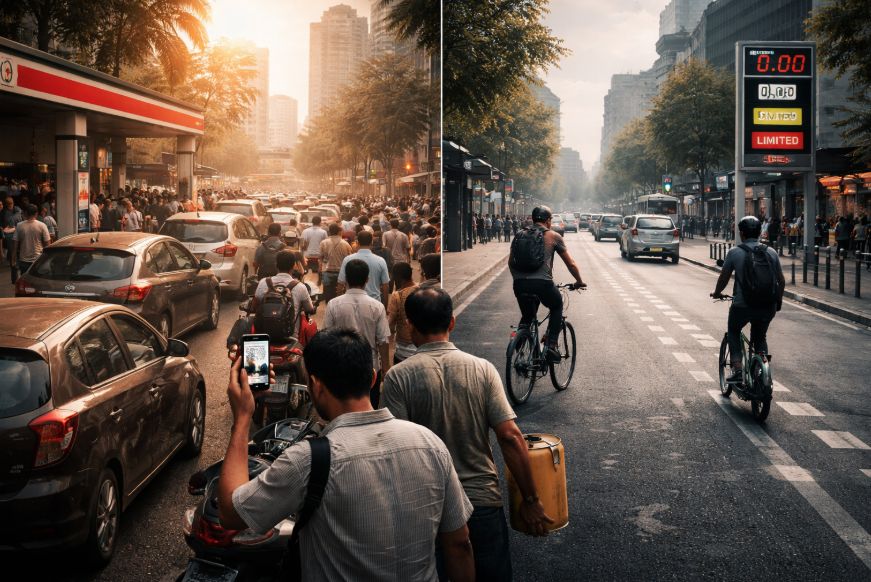
As of April 2026, the global energy landscape has shifted from “market volatility” to a direct supply emergency. The effective closure of the Strait of Hormuz on March 4 has disrupted nearly 25% of global oil shipments and 20% of liquefied natural gas (LNG) flows, creating the most severe energy shock in modern history.
While Asian nations have already implemented strict fuel rationing systems, European governments are rapidly preparing for similar outcomes. Emergency planning meetings are underway, and policy shifts are accelerating.
This article explains how fuel rationing in Asia and Europe is unfolding, what it means for households and businesses, and what actions you should consider now.
How is the Fuel Rationing Crisis Unfolding Differently in Asia vs Europe?
 Asia’s Immediate “Direct Rationing” Model
Asia’s reliance on imports through the Strait of Hormuz has forced governments into immediate action. In many countries, the disruption translated directly into shortages within days.
In Sri Lanka and Myanmar, fuel access is now controlled through digital systems that allocate fixed weekly quotas. India and Thailand have taken a slightly different approach by reducing industrial gas usage and prioritising essential household consumption.
This model is best described as “direct rationing”, where governments strictly control how much fuel individuals and industries can consume.
A practical example illustrates the impact clearly. A small transport business owner in Colombo now depends entirely on a weekly QR-based fuel allowance. Once the quota is exhausted, operations halt, directly affecting income and supply chains.
Europe’s Transition from “Soft Demand” to Hard Caps
Europe initially relied on high storage reserves built during the winter. However, those reserves are declining faster than expected due to ongoing supply disruptions.
Governments are currently focused on reducing demand rather than restricting supply outright, but this is changing rapidly. Slovenia has already introduced a 50-litre weekly cap for private vehicles, signalling the beginning of enforced rationing in Europe.
Countries like the UK and Germany are introducing intermediate steps such as reduced speed limits and car-free days to curb fuel usage before implementing stricter controls.
— Wael Sawan, CEO of Shell (March 2026)
This progression shows that Europe is not avoiding rationing it is delaying its full implementation.
How Severe is the 2026 Energy Supply Shock?
The current disruption is widely considered the largest coordinated supply shock in modern energy history.
Key Comparative Data
- Around 11 million barrels per day have been removed from global supply
- LNG flows have been significantly disrupted
- Fuel prices have surged globally
Proposed or Ongoing Measures
- Expansion of rationing systems across Europe
- Increased use of strategic reserves
Common Misinformation
- “The crisis will resolve quickly” This is inaccurate
Most expert projections indicate a multi-month or longer disruption
Why Does Fuel Rationing Trigger Global Inflation?
Logistics and Food Security:
Fuel is not just another commodity it is the foundation of global logistics. When diesel prices rise, the cost of transporting goods increases almost immediately. This creates a ripple effect across the entire supply chain, from farms to supermarket shelves.
Across Europe, supermarkets are already experiencing noticeable cost pressures due to:
- Higher transportation costs for imported goods
- Increased expenses in fresh produce distribution
- Rising energy costs for warehousing, refrigeration, and storage
These cost increases are rarely absorbed by businesses for long. Instead, they are gradually passed on to consumers, resulting in steady and persistent food price inflation.
Practical impact:
Households may not see sudden spikes overnight, but weekly grocery bills steadily increase, making inflation feel continuous rather than temporary.
The Manufacturing Halt in SE Asia:
Southeast Asia plays a critical role in global manufacturing, particularly for electronics, automotive components, and industrial goods. However, fuel shortages are now forcing many factories to reduce output or temporarily shut down operations.
This disruption has direct global consequences:
- Delays in electronics production (smartphones, appliances)
- Reduced availability of automotive parts
- Increased production costs passed down to consumers
Unlike local shortages, manufacturing disruptions in Asia affect global supply chains, meaning consumers worldwide experience delays and price increases.
Real-world effect:
A consumer in Europe ordering electronics may face longer delivery times and higher prices due to fuel shortages thousands of kilometres away.
Currencies in Crisis:
Fuel shortages do not just affect physical goods they also impact financial systems. Countries that rely heavily on fuel imports face rising costs when energy prices surge, increasing their trade deficits.
This puts pressure on national currencies such as:
- The Euro
- The Indian Rupee
These currencies are already experiencing volatility due to:
- Higher import bills
- Slower industrial output
- Reduced investor confidence
As currencies weaken, the cost of imports increases further, creating a self-reinforcing cycle of inflation and economic pressure.
What Geopolitical Factors Are Driving the 2026 Energy Crunch?
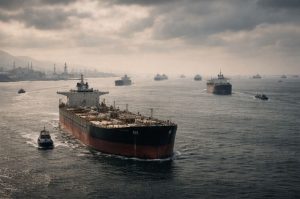 The Strait of Hormuz Factor
The Strait of Hormuz remains one of the most critical energy chokepoints in the world. A significant portion of global oil and LNG shipments pass through this narrow corridor.
Its disruption has removed a substantial share of global supply, making it the primary trigger of the 2026 energy crisis.
- A major percentage of global oil and LNG flows depend on this route
Key Insight:
Even a partial disruption creates disproportionate global impact due to the lack of alternative routes.
Russia’s Role:
Is the redirected Siberian pipeline enough to save Asian markets?
Russia has attempted to redirect energy exports toward Asia through existing pipeline networks. While this provides some relief, infrastructure limitations prevent it from fully replacing lost supply.
The key constraints include:
- Limited pipeline capacity
- Long transport distances
- Existing contractual obligations
Russia acts as a partial buffer, not a complete solution to the crisis.
US Strategic Petroleum Reserve (SPR):
The United States has released oil from its Strategic Petroleum Reserve to stabilise global markets. While this provides short-term relief, it does not address the structural supply gap.
Key limitations include:
- Finite reserve volumes
- Temporary market impact
- Inability to replace ongoing supply disruptions
Reality check:
SPR releases reduce immediate pressure but cannot resolve the underlying shortage.
OPEC’s Response:
OPEC nations have attempted to increase production to stabilise global supply. However, several constraints limit their effectiveness:
- Limited spare production capacity
- Infrastructure and logistical challenges
- Political coordination complexities
As a result, even increased production has failed to close the estimated 11-million-barrel supply gap.
How Are Businesses and Households Adapting to Fuel Rationing?
The Surge in “Micro-Mobility”:
Consumers are rapidly shifting toward alternative transportation methods such as e-bikes and electric scooters. These options provide a practical solution for short-distance travel without relying on fuel.
In major cities, this shift is becoming visible through:
- Increased bike lane usage
- Higher demand for electric mobility products
- Reduced dependency on personal vehicles
This represents not just adaptation, but a behavioural shift in urban mobility.
Industrial Fuel Switching:
Industries facing fuel shortages are exploring alternatives such as coal and LPG. While this may provide temporary relief, the transition is not straightforward.
Challenges include:
- Infrastructure modifications
- Environmental regulations
- Cost and efficiency trade-offs
Important distinction:
This is a short-term survival strategy, not a sustainable long-term solution.
Digital Rationing Apps:
Digital fuel rationing systems, such as QR-based allocation models, are enabling governments to manage limited supply more efficiently.
These systems help:
- Prevent panic buying
- Ensure fair distribution
- Monitor consumption patterns
Countries in Asia have already implemented such systems, and Europe may follow if shortages worsen.
How Do Mandatory and Voluntary Rationing Policies Compare?
The “Slovenian Model”:
Slovenia has introduced a strict 50-litre weekly cap for private vehicles, making it one of the first European countries to implement mandatory rationing.
This approach ensures:
- Immediate reduction in fuel consumption
- Predictable distribution of limited supply
Japan’s “Cool Biz” 2026:
Japan has adopted a different strategy by focusing on reducing energy usage in commercial environments. Offices are required to limit energy consumption, preserving fuel for critical sectors such as transportation.
This approach demonstrates how demand-side management can delay stricter rationing.
Public Transport Subsidies:
Countries like Germany and France are encouraging reduced fuel usage by making public transport more accessible and affordable.
The goal is simple:
- Reduce private vehicle usage
- Lower overall fuel demand
- Maintain mobility without increasing consumption
Does the 2026 Crisis Accelerate the Global Shift to Green Energy?
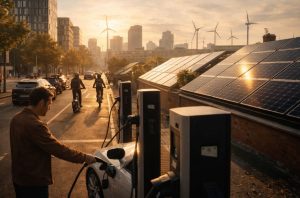 EV Adoption Spikes:
Rising fuel prices are accelerating interest in electric vehicles. Consumers are increasingly looking for alternatives that reduce dependence on volatile fuel markets.
This trend reflects:
- A shift toward energy independence
- Long-term cost considerations
- Increased awareness of fuel vulnerability
Solar Infrastructure:
For many businesses, especially in Asia, rooftop solar is becoming an immediate investment priority.
This is driven by:
- Unreliable fuel supply
- Rising energy costs
- Need for operational stability
Solar is no longer just a sustainability choice it is becoming an economic necessity.
When Will Fuel Rationing End?
The Summer Forecast:
The upcoming summer travel season is expected to increase fuel demand significantly. This will place additional pressure on already strained supply systems.
Short-term outlook:
- Increased demand
- Higher prices
- Greater risk of expanded rationing
Worst-Case Scenario:
If the disruption continues into 2027, fuel rationing may transition from a temporary emergency measure into a long-term structural reality.
This could lead to:
- Permanent changes in consumption patterns
- Long-term economic adjustments
- Accelerated energy transition policies
Conclusion
The fuel rationing crisis in Asia and Europe is no longer theoretical it is actively reshaping economies, industries, and daily life.
Asia is already operating under strict rationing systems, while Europe is rapidly approaching similar conditions. The difference is no longer if, but when and how deeply rationing will impact each region.
The key takeaway is clear:
Reduce dependence, adapt early, and prepare for a prolonged period of energy uncertainty.
FAQs About Fuel Rationing Asia vs Europe
Could fuel rationing impact public transport availability?
Yes, although governments prioritise public transport, shortages can still affect service frequency and reliability.
Why are developing countries affected faster than developed ones?
They typically have lower reserves and higher dependency on imports, making them more vulnerable to supply shocks.
Can alternative fuels fully replace oil in the short term?
No, alternative fuels cannot scale quickly enough to replace oil during sudden disruptions.
How do governments decide rationing limits?
Limits are usually based on available supply, essential service needs, and consumption patterns.
Will remote work become permanent due to fuel shortages?
It may become more common, especially in sectors where reducing commuting helps conserve fuel.
Is this crisis linked to climate policies?
Indirectly. While climate policies influence energy transitions, this crisis is primarily caused by supply disruption.
How can households reduce fuel dependency effectively?
By minimising travel, using public transport, and adopting energy-efficient alternatives.