







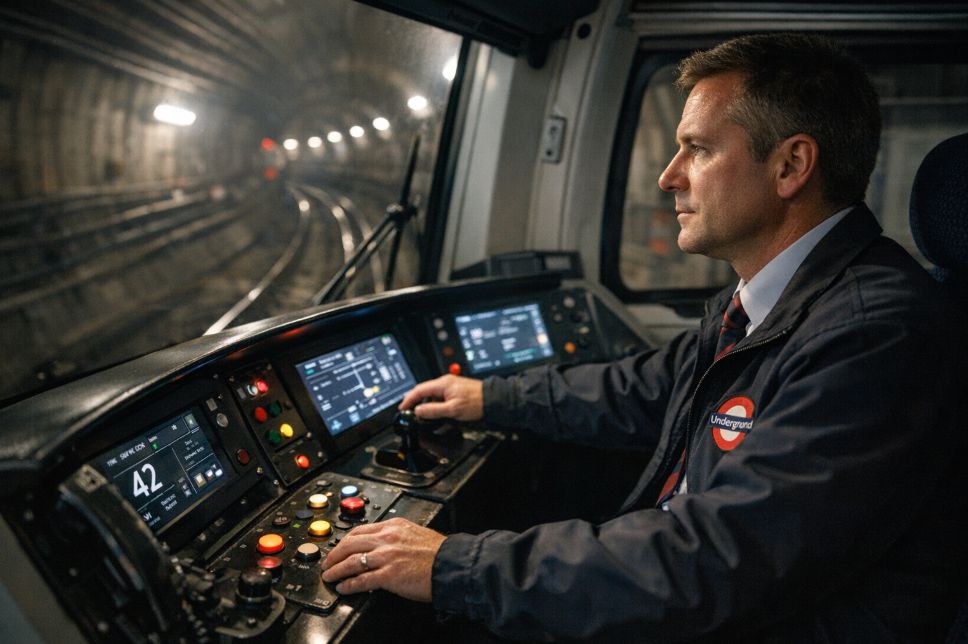
At a Glance: Tube Driver Pay 2026
Current Base Salary: £71,170
Estimated Total Pay: £75,000 – £82,000 (inc. overtime)
Next Pay Rise: April 2026 (RPI Linked)
Working Hours: 35 Hours / Week
Annual Leave: 43 Days
Pension Type: Final Salary (Defined Benefit)
Key Updates for 2026:
- The 3-Year Deal: Following the late 2025 agreement, salaries are guaranteed to rise by RPI + 0.2% through 2027 [1].
- Recruitment: External vacancies remain rare; 90%+ of drivers are promoted from internal TfL roles like CSA [2].
- Night Tube: Shift allowances for Night Tube duties can add £2,500+ to the base salary.
- 4-Day Week: Ongoing trials for a 4-day working week are being rolled out across specific lines.
How much do tube drivers earn in the UK? It is one of the most searched salary questions in Britain, especially whenever London Underground pay deals or strike discussions appear in the news.
As of 2026, the basic salary for a full London Underground train driver is about £71,170 per year. However, the final amount many drivers take home can be significantly higher due to shift allowances, overtime, and additional premiums.
The role of a Tube driver is often viewed as one of the best-paid transport jobs in the UK, combining a strong salary with generous benefits such as free travel, long annual leave, and a secure pension scheme.
This guide explains:
- The current salary for Tube drivers in 2026
- How the TfL pay deal affects future earnings
- Working conditions and benefits
- The career path required to become a London Underground driver
Understanding how much Tube drivers earn also helps explain why the role remains highly competitive and rarely recruits externally.
Current Tube Driver Salary: The 2026 Figures
How Much Do Tube Drivers Earn Right Now?
 The basic salary for a London Underground Tube driver is approximately £71,170 per year as of 2025–2026.
This figure represents the standard base pay after completing driver training.
However, the actual earnings can vary depending on:
- Shift patterns
- Overtime
- Night work allowances
- Weekend working
Because of these additional payments, many drivers report total annual earnings between £75,000 and £80,000.
What Increases a Tube Driver’s Salary Beyond the Base Pay?
Several factors influence the final income of a London Underground driver.
Shift Allowances
Drivers working unsocial hours receive extra pay for:
- Early morning shifts
- Night shifts
- Weekend operations
Overtime Payments
Overtime is often available during:
- Staff shortages
- Engineering works
- Special events in London
Overtime shifts can significantly increase annual earnings.
Experience and Line Allocation
Although the base salary is standardised, experienced drivers may earn more through overtime opportunities and operational duties.
Salary Progression (2025–2027)
| Year (from April) | Basic Salary (Minimum) | Pay Deal Basis |
|---|---|---|
| 2025 | £71,170 | Initial base |
| 2026 | £73,305* | RPI Inflation (Est. 3%) |
| 2027 | £77,692* | RPI + 0.2% |
*Projected based on the current TfL and ASLEF multi-year agreement.
These projections show that Tube driver pay may continue rising gradually in line with inflation agreements.
Why Do Tube Drivers Earn Relatively High Salaries?
Tube driver pay often attracts attention because it is higher than many UK professions that require university degrees.
There are several reasons for this.
Safety responsibility
Tube drivers are responsible for the safety of thousands of passengers every day.
The London Underground is one of the busiest metro systems in the world, and any operational mistakes could have serious consequences.
Because of this, drivers must undergo extensive training and assessments.
Highly specialised training
Becoming a Tube driver requires learning:
- Route knowledge
- Train systems
- Emergency procedures
- Signalling systems
Training can take 6–12 months before full qualification.
Shift work and unsocial hours
Many drivers work:
- Early mornings
- Late nights
- Weekends
- Rotating shift schedules
Higher salaries partly compensate for these demanding working patterns.
London’s cost of living
Working in London often requires higher wages due to the capital’s high housing and living costs.
What is Included in the 2025–2027 TfL Pay Deal?
 The latest salary agreement between Transport for London (TfL) and driver unions provides a multi-year pay framework.
Which unions negotiated the agreement?
Two major unions represent Tube drivers:
- ASLEF (train drivers’ union)
- RMT (National Union of Rail, Maritime and Transport Workers)
These unions negotiate pay agreements with TfL on behalf of drivers.
What salary increases are included?
The current agreement includes guaranteed minimum pay increases.
- 2026: Minimum 3% salary increase
- 2027: Minimum 2.5% salary increase
These increases are linked to Retail Price Index (RPI) inflation, ensuring wages maintain purchasing power.
Why are multi-year pay deals important?
Multi-year agreements help provide:
- Income stability for employees
- Budget predictability for TfL
- Reduced strike disputes
A TfL spokesperson explained the intention behind the deal:
What Are the Working Hours of a Tube Driver?
Tube drivers typically work a 35-hour week.
However, those hours are structured into rotating shift patterns.
Typical shift schedules
Drivers may work:
- Early morning starts
- Late evening finishes
- Weekend shifts
- Rotating weekly schedules
Shift patterns vary depending on the Underground line and depot.
How demanding is the job?
The role requires:
- Long periods of concentration
- Strict adherence to safety rules
- Working alone in the driver cab
Although automation assists train operation, drivers remain responsible for monitoring safety systems and responding to incidents.
Is London Underground Testing a Four-day Working Week?
One recent development attracting attention is the trial of a four-day working week.
What is the purpose of the pilot?
The trial aims to improve:
- Work-life balance
- Staff retention
- Recruitment appeal
The idea is that drivers could work longer shifts across fewer days.
How does this affect the value of the salary?
If implemented widely, a four-day week could increase the perceived value of the job because employees would have more personal time without losing income.
However, as of 2026, the programme remains experimental and limited to certain areas.
What Benefits Do Tube Drivers Receive Beyond Salary?
 The base pay is only one part of the compensation package.
In reality, the benefits can significantly increase the total value of the job.
Annual leave entitlement
Tube drivers can receive up to 43 days of paid leave each year, including bank holidays.
This level of leave is significantly higher than the UK average of around 28 days.
Free travel perks
London Underground employees receive free travel across the TfL network.
Benefits include:
- Free Oyster travel for the employee
- Free travel for a nominated person living at the same address
For commuters in London, this can save thousands of pounds per year.
Pension scheme
Another major advantage is the final salary pension scheme.
This type of pension is rare in the UK private sector today.
It provides retirement income based on:
- Final salary level
- Years of service
Because of this, many drivers view the job as a long-term career rather than a temporary role.
How Can Someone Become a Tube Driver in 2026?
Many people searching how much Tube drivers earn also want to know how to get the job.
The recruitment process is different from most railway roles.
Does TfL recruit drivers directly?
Direct recruitment is extremely rare.
Instead, most drivers are promoted internally within the organisation.
This means candidates usually begin in entry-level operational roles.
Career Path to £70k+ Tube Driver Salary
| Role | Estimated Salary | Requirements |
|---|---|---|
| Customer Service Assistant (CSA) | £30,000 – £35,000 | Customer service experience |
| Train Driver (Trainee) | ~£30,000 during training | Internal application |
| Full Tube Driver | £71,170+ | Completed driver training |
The promotion process involves:
- Internal assessments
- Medical tests
- Safety evaluations
- Driver training programme
Training typically takes several months before qualification.
How Competitive is the Tube Driver Job?
Tube driver roles are highly competitive for several reasons.
Limited vacancies
London Underground has relatively low staff turnover.
Because of this, new positions rarely appear.
Internal promotion system
Since most positions are filled internally, external applicants may first need to join TfL in another role.
High demand
Whenever recruitment campaigns do open, thousands of candidates may apply.
Is Being a Tube Driver a Good Career in the UK?
 For many people, the role offers an attractive combination of:
- Strong salary
- Job security
- Excellent benefits
- Defined pension
However, the job also includes responsibilities such as:
- Working irregular shifts
- Maintaining constant concentration
- Handling operational disruptions
Overall, many drivers consider it a stable and rewarding long-term career.
Conclusion
So, how much do Tube drivers earn in the UK?
As of 2026, a full London Underground driver earns around £71,170 per year as a base salary, with total earnings often reaching £75,000–£80,000 when overtime and allowances are included.
The role remains one of the best-paid public transport jobs in Britain, supported by strong benefits such as free travel, generous leave, and a secure pension scheme.
Although the salary attracts attention, becoming a Tube driver requires extensive training, strict safety standards, and often years of experience within TfL.
With the current 2025–2027 pay deal guaranteeing further salary increases, Tube driving is likely to remain a highly desirable career within the UK transport sector.
FAQs About Tube Drivers Earn
Do Tube drivers earn more than train drivers?
Not always. Many National Rail drivers working for operators such as Avanti West Coast or LNER can earn £65,000–£85,000, depending on experience and overtime. However, Tube driver salaries are generally competitive with these roles.
What is the highest salary a Tube driver can earn?
With overtime and additional allowances, some drivers may earn around £80,000 or slightly more per year. However, the official base salary remains about £71,170.
Are Tube driver salaries public information?
Yes. Transport for London pay structures are often publicly discussed because they are negotiated with unions and funded through public transport revenues.
How long does it take to become a Tube driver?
Training typically takes 6–12 months once accepted into the driver programme. However, most candidates spend several years working in other TfL roles before applying.
Do Tube drivers receive bonuses?
Tube drivers do not typically receive traditional bonuses. Instead, additional earnings usually come from shift allowances and overtime payments.
Do Tube drivers work night shifts?
Yes. London Underground operates extended hours, so drivers often work early morning, evening, or overnight shifts.
Is the Tube driver job stressful?
The role requires high levels of concentration and responsibility. However, structured training and strict safety systems help drivers manage operational pressures.
{ "@type": "Question", "name": "Do Tube drivers earn more than train drivers?", "acceptedAnswer": { "@type": "Answer", "text": "Not always. Many National Rail drivers working for operators such as Avanti West Coast or LNER can earn £65,000–£85,000 depending on experience and overtime. However, London Underground Tube driver salaries are generally competitive with these roles." } },
{ "@type": "Question", "name": "What is the highest salary a Tube driver can earn?", "acceptedAnswer": { "@type": "Answer", "text": "With overtime and additional shift allowances, some London Underground drivers may earn around £80,000 or slightly more per year. However, the official base salary remains approximately £71,170." } },
{ "@type": "Question", "name": "Are Tube driver salaries public information?", "acceptedAnswer": { "@type": "Answer", "text": "Yes. Transport for London salary structures are often publicly discussed because they are negotiated with unions and funded through public transport revenues." } },
{ "@type": "Question", "name": "How long does it take to become a Tube driver?", "acceptedAnswer": { "@type": "Answer", "text": "Training typically takes between 6 and 12 months once accepted into the London Underground driver programme. However, most candidates spend several years working in other Transport for London roles before applying." } },
{ "@type": "Question", "name": "Do Tube drivers receive bonuses?", "acceptedAnswer": { "@type": "Answer", "text": "Tube drivers do not typically receive traditional bonuses. Additional earnings usually come from shift allowances, night work premiums, and overtime payments." } },
{ "@type": "Question", "name": "Do Tube drivers work night shifts?", "acceptedAnswer": { "@type": "Answer", "text": "Yes. London Underground operates extended hours, so Tube drivers often work early morning, evening, and overnight shifts depending on their rota." } },
{ "@type": "Question", "name": "Is the Tube driver job stressful?", "acceptedAnswer": { "@type": "Answer", "text": "The role requires high levels of concentration and responsibility because drivers are responsible for passenger safety. However, structured training and strict safety systems help manage operational pressures." } }
] }