







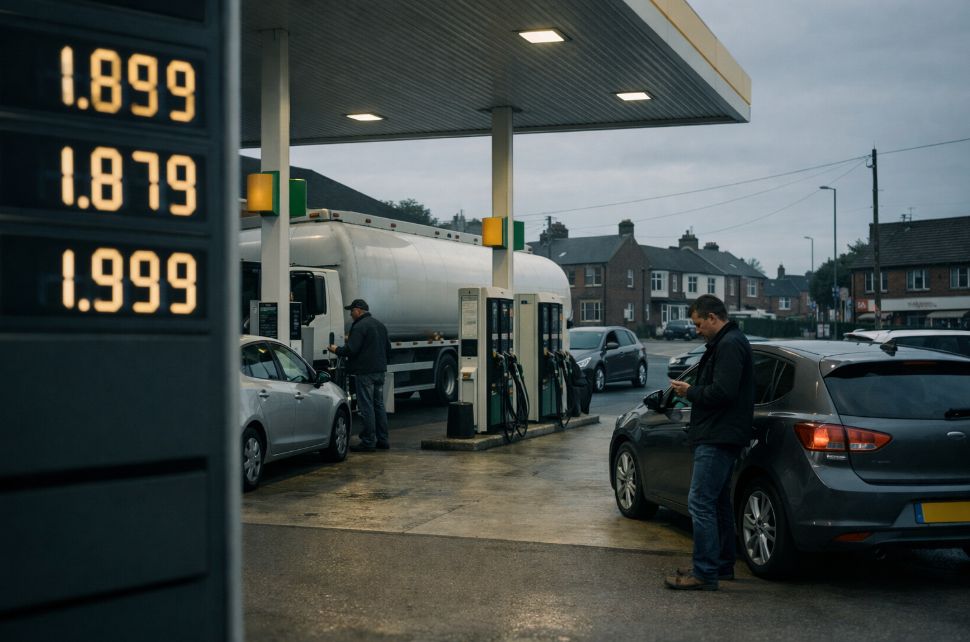
In early 2026, renewed global tensions and oil market volatility have prompted many motorists and businesses to ask the same question: is there going to be a petrol shortage in the UK? With headlines discussing potential price spikes, refinery pressures and geopolitical risks, concern is understandable.
However, it is important to separate three distinct issues:
- Rising petrol prices
- Short-term regional disruption
- A sustained nationwide petrol shortage
They are not the same. This guide examines expert warnings from March 2026, confirmed supply data, and realistic risk factors affecting the UK fuel market.
Graham Hiscott (Mirror Business Editor) reported on 2 March 2026 that experts warn petrol prices could “leap 20p a litre” if global oil prices hit $100 a barrel due to escalating conflict.
This highlights the central issue facing UK motorists in 2026: price risk, not confirmed physical scarcity.
Why Are People Asking “Is There Going to Be a Petrol Shortage” in 2026?
 Public concern tends to rise during periods of economic instability or energy market volatility. Fuel is a visible and essential commodity. When prices increase or headlines mention supply issues, uncertainty spreads quickly.
Several factors have contributed to renewed searches in 2026:
- Ongoing geopolitical tensions affecting global oil markets
- Fluctuations in crude oil prices
- Industrial disputes in parts of Europe
- Social media speculation about supply disruptions
- Continued cost-of-living pressures in the UK
It is important to distinguish between price increases and a physical petrol shortage. Higher pump prices do not automatically mean the UK is running out of fuel. Often, price spikes reflect global oil markets rather than domestic supply failure.
What Happened During Previous UK Petrol Shortages?
The most recent significant disruption occurred in 2021. At that time, the UK did not run out of petrol at refineries. Instead, the issue centred on a shortage of tanker drivers, which temporarily disrupted distribution.
Panic buying played a major role. As motorists rushed to fill tanks, demand surged beyond normal patterns, causing forecourts to run dry in certain regions. This created a self-reinforcing cycle.
- The UK had adequate fuel stocks overall.
- Distribution bottlenecks caused localised shortages.
- Media coverage accelerated public reaction.
- Once panic buying subsided, supply normalised quickly.
The 2021 experience demonstrated that perceived shortages can escalate faster than actual supply issues.
How Does the UK Petrol Supply Chain Actually Work?
Understanding how petrol reaches forecourts helps answer the question: is there going to be a petrol shortage in 2026?
The UK fuel system operates across several stages.
Overview of the Supply Chain
| Stage | What Happens | Risk Level |
| Crude Oil Production & Imports | Oil sourced from the North Sea and international suppliers | Moderate (global price exposure) |
| Refining | Crude oil processed into petrol and diesel at UK refineries | Low–Moderate |
| Distribution | Tanker drivers transport fuel to storage depots and petrol stations | Moderate (logistics sensitive) |
| Retail | Forecourts sell petrol to consumers | Low (unless panic buying occurs) |
UK Refining Capacity
The UK maintains several operational refineries and imports refined products when needed. While domestic refining capacity has reduced over the past two decades, diversified supply chains and established import routes provide resilience.
Strategic Reserves
Under international agreements, the UK is required to maintain emergency oil stocks equivalent to at least 90 days of net imports. These reserves are designed to protect against major global disruptions.
Is There Going to Be a Petrol Shortage in the UK in 2026 Based on Current Data?
 Confirmed Facts
- The UK continues to meet its international oil stockholding obligations.
- Refinery output and import channels remain active.
- No official government announcement indicates a national fuel shortage risk.
- Supply chain infrastructure remains operational.
Potential Risk Factors
- Global oil supply disruptions due to geopolitical tensions
- Industrial action in refining or transport sectors
- Extreme weather affecting logistics
- Sudden spikes in global demand
These are risks, not confirmed disruptions.
Common Misconceptions
- “Petrol is running out permanently.”
- “The UK has no reserves left.”
- “Electric vehicle policies are causing shortages.”
There is currently no credible evidence that the UK is close to running out of petrol in 2026.
What Could Potentially Cause a Petrol Shortage?
Although there is no confirmed national crisis, it is useful to understand possible triggers.
Could Global Oil Disruptions Affect the UK?
Yes, but typically through pricing rather than physical unavailability. The UK imports a significant portion of crude oil and refined fuels. Major disruptions in oil-producing regions could tighten global supply.
However, diversified sourcing reduces dependency on any single country.
Could Industrial Action Impact Fuel Distribution?
Industrial action among tanker drivers or refinery workers could create temporary regional shortages. As seen in 2021, the issue is often logistical rather than supply-based.
Could Panic Buying Create Temporary Shortages?
Yes. Panic buying is one of the most immediate and impactful causes of temporary petrol shortages. When motorists fill tanks unnecessarily, normal distribution cycles are disrupted.
A realistic scenario: If a rumour spreads online suggesting an impending shortage, and even 20% of drivers top up early, demand could spike by millions of litres in days. Forecourts might run dry temporarily, despite adequate national reserves.
Petrol Shortage vs Petrol Price Increases – What’s the Difference?
Many people equate higher pump prices with shortage. These are separate issues.
Supply Shortage
- Physical lack of fuel at stations
- Typically caused by logistics or extreme global disruption
- Often temporary
Price Increase
- Driven by crude oil prices
- Influenced by currency exchange rates
- Affected by fuel duty and VAT
- Linked to inflation
In 2026, the greater likelihood remains price volatility rather than widespread physical shortage.
How Is the UK Preparing for Future Fuel Disruptions?
 The UK continues to strengthen energy resilience through:
- Diversified import partners
- Infrastructure investment
- Emergency stockholding compliance
- Gradual transition to electric vehicles
The move towards EV adoption may gradually reduce petrol demand over time, which could ease supply pressure rather than intensify it.
Importantly, the transition away from petrol vehicles is scheduled progressively, not abruptly. Petrol vehicles remain legal and widely supported in 2026.
What Should Motorists Do If They Are Worried?
For individuals concerned about whether there is going to be a petrol shortage, practical steps are simple:
- Avoid topping up unnecessarily.
- Follow official government or industry updates.
- Maintain fuel-efficient driving habits.
- Plan journeys realistically.
Real-Life Example
Consider two commuters in London:
- Driver A fills their tank immediately after seeing a rumour online.
- Driver B checks official updates and continues normal refuelling habits.
If enough people act like Driver A, temporary shortages appear. If most act like Driver B, supply remains stable.
Calm consumer behaviour plays a major role in fuel stability.
What About Supply Risks in 2026?
 Global Transit Disruption Risk
Around 20% of the world’s oil supply passes through the Strait of Hormuz. A prolonged closure would likely trigger a sharp rise in crude prices. However, while this would affect UK pump prices quickly, it would not automatically result in empty petrol stations unless disruption was severe and sustained.
Reduced UK Refining Capacity
The closure of the Grangemouth refinery in 2025 reduced domestic refining output. With potential uncertainty around other UK refining sites, the country is increasingly reliant on imported refined fuel. This increases exposure to global shipping and wholesale market volatility, though it does not indicate immediate shortage conditions.
Emergency Oil Reserves
Under International Energy Agency rules, the UK must hold emergency oil stocks equivalent to at least 90 days of net imports. The UK remains compliant with this requirement, providing a substantial buffer against severe global supply shocks.
Fuel Distribution Stability
Since the 2021 disruption caused largely by tanker driver shortages, distribution systems have been strengthened. There is currently no official evidence of widespread logistics strain in 2026.
Demand Pressures
Petrol demand growth remains stable rather than surging, partly due to improved vehicle efficiency and gradual electric vehicle adoption. Stable demand reduces the likelihood of system overload.
Conclusion
Based on current evidence, there is no confirmed indication that there will be a nationwide petrol shortage in the UK in 2026.
While global energy markets remain sensitive and localised disruptions are always possible, the UK maintains strategic reserves, diversified supply chains, and established logistics infrastructure.
In short, the question “is there going to be a petrol shortage” reflects understandable concern, but current data does not support the likelihood of a sustained national crisis.
Motorists should remain informed but not alarmed.
FAQs
Will petrol completely run out in the UK?
No credible data suggests that the UK is at risk of permanently running out of petrol. Emergency reserves and diversified imports protect against extreme scenarios.
How long would a fuel shortage last if it occurred?
Most UK fuel disruptions historically last days or weeks rather than months, particularly when linked to logistics rather than supply exhaustion.
Does the UK rely heavily on imported oil?
The UK produces some oil domestically but imports a substantial portion. However, imports come from multiple countries, reducing dependency risk.
Are diesel supplies more vulnerable than petrol?
Diesel markets can sometimes be tighter globally, but both fuels operate within the same supply framework. Risk levels are comparable.
Can electric vehicles significantly reduce petrol demand by 2026?
EV adoption is increasing, but petrol vehicles still dominate UK roads. Any demand reduction is gradual rather than sudden.
How reliable are social media reports about fuel shortages?
Social media often amplifies unverified claims. Official government and industry statements provide more accurate information.
What government body monitors UK fuel security?
Fuel security falls under UK government energy and transport departments, which monitor supply resilience and emergency stock compliance.
Could extreme weather cause petrol shortages?
Severe weather could temporarily disrupt distribution networks, but contingency planning usually limits prolonged impact.