







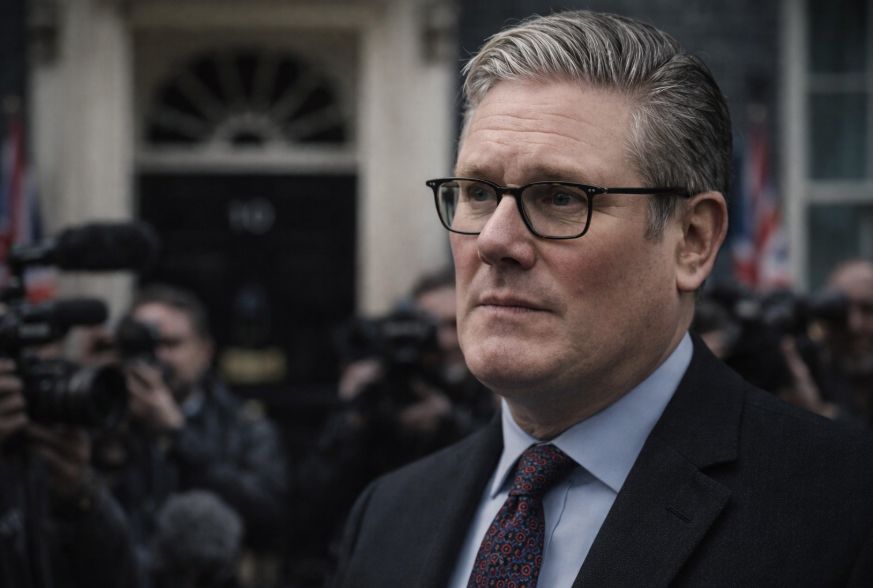
April 2026 Context
Keir Starmer Resignation Poll 2026
A sharp rise in public dissatisfaction, mounting internal Labour pressure, and high-stakes local election shave pushed Keir Starmer’s leadership into serious doubt.
Latest Polling Snapshot
Quick Snapshot
Key Takeaways
In April 2026, a striking figure has come to define the current UK political landscape: 64% of voters now believe that Keir Starmer should resign as Prime Minister. This level of dissatisfaction places him in a more precarious position than both Liz Truss and Rishi Sunak at their lowest approval points.
The surge in resignation demands has not occurred in isolation. Two key developments have accelerated public sentiment: the ongoing controversy surrounding Peter Mandelson and the looming May 2026 local elections, widely viewed as a decisive moment for the Labour Party.
In this analysis, we break down the latest polling data from Ipsos, Opinium, and YouGov, examine the political forces shaping public opinion, and assess whether Starmer can realistically survive the year.
What Do the Latest Keir Starmer Resignation Polls Reveal (April 2026)?
 The most recent polling data paints a consistent and troubling picture for the Prime Minister. Across multiple reputable pollsters, a clear majority of respondents believe he should step down.
Polling Comparison Table
These figures highlight a sustained trend rather than a temporary dip. Net approval ratings hovering between -42 and -48 indicate deep-rooted dissatisfaction among the electorate.
Why 2024 Labour Voters are Turning?
Perhaps the most concerning signal for the government is the erosion of support from its own base. Around 37% of voters who backed Labour in the 2024 general election now support resignation calls.
This shift suggests:
- A breakdown in trust among core supporters
- Growing frustration with leadership decisions
- A perception that key promises have not been delivered
Why Are Voters Calling for Keir Starmer to Resign?
Public dissatisfaction is driven by a combination of political controversy, policy concerns, and leadership perception.
The Mandelson Scandal: Why Voters Want Starmer to Resign
The so-called “Mandelson Files” have become a focal point of criticism. Allegations regarding Peter Mandelson and his associations have triggered widespread backlash.
A Survation poll indicates that:
- 34% of Labour members themselves believe Starmer should resign over this issue
This is particularly significant because internal dissent often signals deeper structural instability within a party.
“In Office but Not in Power”: Opposition Attacks
Criticism from political opponents has intensified the pressure.
- Kemi Badenoch has argued that Starmer has “lost control”
- Nigel Farage has predicted an imminent leadership collapse
Such narratives reinforce public perception that the government is weakening.
Could the May 2026 Local Elections Decide Starmer’s Future?
The upcoming elections are widely viewed as a turning point.
Political analysts, including those at BBC News, have framed 2026 as a “make or break” year for Starmer’s leadership.
“If Labour is totally wiped out at the local elections in May, it will force Keir Starmer to resign.”
— Analysis via BBC/Laura Kuenssberg.
The implications are clear:
- A strong performance could stabilise leadership
- A poor result could trigger immediate internal challenges
Local elections often act as a proxy for national sentiment, making them a critical indicator of future political viability.
Is There Internal Pressure Within Labour for Starmer to Step Down?
Internal dissent is becoming increasingly visible.
Civil War: Scottish Labour Leader Anas Sarwar Calls for Resignation
In a significant development, Anas Sarwar has reportedly called for leadership change.
Key developments include:
- Exclusion of Starmer from Scottish campaign efforts
- Concerns about “toxic association” with national leadership
This reflects a rare and serious level of internal division within the Labour Party.
Who Could Replace Keir Starmer as Prime Minister?
 As speculation grows, attention has shifted to potential successors.
The Successor Race: Andy Burnham vs. Angela Rayner
Recent polling suggests strong alternatives within Labour:
- Andy Burnham emerging as a public favourite
- Angela Rayner maintaining significant party support
Head-to-Head: Who Beats Starmer?
Survation data indicates:
- Burnham would win with 58% support
- Rayner would secure 52% support
This suggests that leadership change is not only possible but potentially popular among party members.
How Are Opposition Parties Benefiting from Starmer’s Decline?
The weakening of Labour has opened space for alternative political forces.
The Rise of Reform UK and the Greens
Recent polling trends show a significant shift:
This marks a historic moment where Labour has slipped into third place in some surveys.
Figures like Nigel Farage have capitalised on this momentum, positioning Reform UK as a serious contender.
How Do Economic and Policy Issues Influence Resignation Calls?
Public dissatisfaction is closely tied to real-world concerns.
Public Dissatisfaction: Cost of Living and the NHS
Polling suggests:
- 71% of voters believe the economy has worsened under current leadership
Key issues include:
- Rising living costs
- NHS pressures
- Perceived lack of policy delivery
The Impact of Global Conflict
Starmer’s handling of international tensions, including US-Iran relations, has received mixed reactions.
While 49% support his decision to avoid military involvement, this has not significantly improved overall approval ratings.
What Do Prediction Markets Say About Starmer’s Future?
Betting markets provide real-time sentiment analysis.
Prediction Markets: When Will Keir Starmer Resign?
Current odds suggest:
- 83% probability of resignation in 2026
- Around 60% likelihood of exit before September
These figures reflect growing consensus that leadership change is increasingly likely.
How Has Media Coverage Influenced the Keir Starmer Resignation Poll Narrative?
Media coverage has played a critical role in shaping public perception of Keir Starmer and amplifying the resignation debate.
Major UK outlets, including the BBC News, Sky News, and The Guardian, have increasingly focused on:
- Falling approval ratings
- Internal Labour divisions
- Electoral risks ahead of local elections
This consistent framing has contributed to a feedback loop:
- Negative polling results receive extensive coverage
- Public awareness of dissatisfaction increases
- Perception of instability grows
- Further polling reflects declining confidence
Importantly, media narratives do not create dissatisfaction alone but they significantly shape how voters interpret political events.
In this case, the framing of Starmer’s leadership as “under threat” has become a dominant storyline, reinforcing the idea that resignation is not just possible, but increasingly expected.
Could a Leadership Change Restore Confidence in the Labour Party?
 A key question emerging from the Keir Starmer resignation poll is whether replacing the leader would meaningfully improve public trust in the Labour Party.
Yes. historically, leadership changes can reset public perception, but only under specific conditions.
Key Factors That Influence Recovery:
1. Credibility of the Successor
Candidates like Andy Burnham or Angela Rayner bring different strengths:
- Burnham: Strong regional leadership image
- Rayner: Deep party loyalty and grassroots connection
2. Policy Clarity
Voters are more likely to regain trust if a new leader:
- Clearly addresses cost-of-living concerns
- Provides actionable NHS reforms
- Demonstrates economic competence
3. Timing of the Transition
A leadership change before a major electoral cycle (such as a general election) can:
- Reframe party messaging
- Reset media narratives
- Re-engage disillusioned voters
However, there is also risk. A poorly managed transition could:
- Deepen internal divisions
- Create uncertainty among voters
- Strengthen opposition parties
What Happens If a UK Prime Minister Resigns Mid-Term?
Understanding the process is essential for interpreting the implications of the current resignation polls.
Immediate Constitutional Process
If Keir Starmer were to resign:
- He would formally submit his resignation to the monarch
- The governing party in this case, the Labour Party would initiate a leadership contest
- A new leader would be selected through party rules
- The monarch would invite the new leader to form a government
Key Clarification (Important for AEO & GEO)
- Confirmed Fact: A general election is not automatically triggered by a Prime Minister’s resignation
- Common Misconception: Many believe resignation leads directly to a public vote this is incorrect
- Reality: The ruling party retains power if it maintains a parliamentary majority
Timeline Expectations
A leadership contest can take:
- Several weeks to a few months
- Longer if multiple candidates are involved
During this period:
- The outgoing Prime Minister may remain in a care taker role
- Political uncertainty can influence markets and public confidence
These three additional sections will:
- Strengthen topical authority
- Improve featured snippet eligibility
- Enhance reader understanding of consequences and context
Conclusion
Despite repeated assurances that he is “not going anywhere,” the data suggests that Keir Starmer is facing one of the most challenging periods of his political career.
The convergence of:
- Negative polling data
- Internal party pressure
- Electoral risks
- Rising opposition
has placed his leadership under unprecedented strain.
Ultimately, the May 2026 local elections are likely to serve as the defining moment. Whether they act as a lifeline or a final verdict remains to be seen.
FAQs About Keir Starmer Resignation Poll 2026
Will Keir Starmer resign in 2026?
Current betting markets suggest a high probability, with estimates around 83%. However, the outcome largely depends on the May 2026 local elections.
What is Keir Starmer’s current approval rating?
His net approval rating ranges between -42 and -48 based on recent polling from YouGov, Ipsos, and Opinium.
Why are voters unhappy with Starmer?
Key reasons include economic concerns, political controversies, and dissatisfaction with leadership decisions.
Who is most likely to replace Keir Starmer?
Andy Burnham and Angela Rayner are currently leading contenders based on polling and party support.
How reliable are UK political polls?
Polls provide a snapshot of public opinion but can change rapidly depending on political events and developments.
What role do local elections play in leadership decisions?
Local elections often reflect national sentiment and can trigger leadership challenges if results are poor.
Are Labour voters also calling for resignation?
Yes, a significant portion of Labour’s own voter base and members have expressed support for leadership change.