







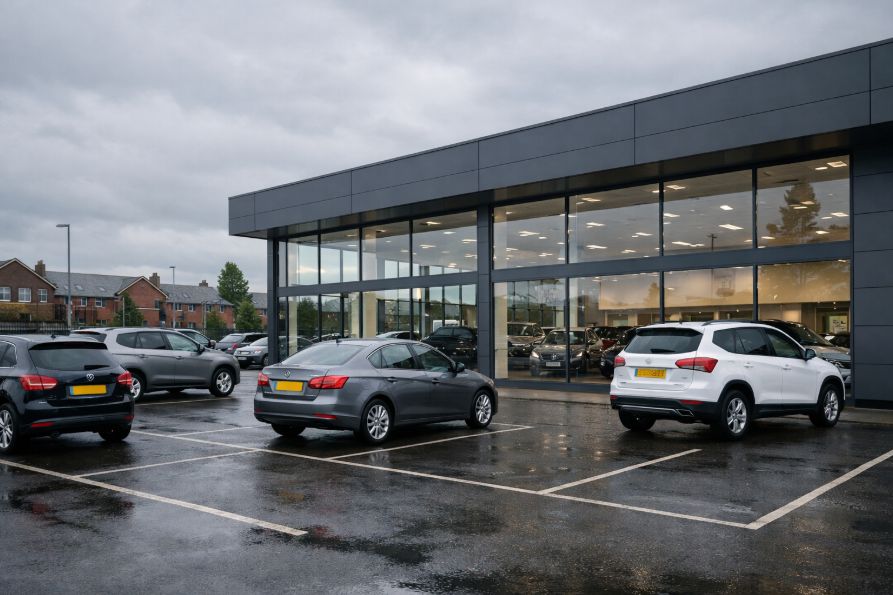
Is the UK Automotive Sector Facing Another Period of Dealership Restructuring? The news surrounding Marshall Motor Group dealerships closing UK has prompted questions across the automotive retail sector. For customers, employees and local communities, dealership closures can create uncertainty. For the wider market, they often signal broader structural shifts rather than isolated events.
Marshall Motor Group has long been one of the UK’s most recognisable automotive retail groups, representing multiple manufacturer brands across England. Recent developments reflect a changing retail landscape shaped by consolidation, digital transformation, evolving consumer behaviour and cost pressures.
This guide explains what is confirmed, what is part of wider industry restructuring, and what it means in practical terms for customers across the UK.
Who Is Marshall Motor Group and What Has Changed?
 Marshall Motor Group is a long-established UK automotive retailer founded in 1909. The company has operated franchised dealerships representing brands such as Audi, BMW, Ford, Jaguar Land Rover, Mercedes-Benz and Volkswagen, among others.
In 2022, the group was acquired by Constellation Automotive Group, the parent company behind major automotive platforms including Cinch and WeBuyAnyCar. The acquisition marked a significant moment in UK dealership consolidation.
Since then, restructuring across parts of the network has taken place. It is important to distinguish between:
- Confirmed closures of specific branches
- Strategic site consolidations
- Brand representation changes
- Operational restructuring
Not every site change means a complete shutdown of services in a region. In some cases, operations are merged into nearby dealerships or restructured under different branding arrangements.
Why Are Marshall Motor Group Dealerships Closing in the UK?
The phrase Marshall Motor Group dealerships closing UK has gained traction due to a combination of factors affecting the automotive retail sector.
1. Industry Consolidation
The UK motor retail market has been consolidating for over a decade. Larger groups increasingly acquire regional operators to streamline operations and reduce overheads.
2. Rising Operational Costs
Energy prices, staffing costs, property overheads and regulatory requirements have significantly increased operating expenses for large showroom sites.
3. Shift Towards Online Sales
More customers now research, reserve and even purchase vehicles online. This reduces reliance on high-footfall showroom networks.
4. Electric Vehicle Transition
The transition to electric vehicles requires investment in charging infrastructure, technician training and upgraded facilities. Not every legacy site is suitable for this transformation.
Confirmed Facts vs Speculation
Confirmed:
- Ownership under Constellation Automotive Group.
- Ongoing strategic restructuring across parts of the dealership network.
Speculative:
- Claims that all Marshall dealerships are closing nationwide.
- Assumptions that customer warranties are automatically invalidated.
There is no evidence to suggest a complete UK-wide shutdown of all Marshall operations. Closures tend to be site-specific rather than total network termination.
Which Marshall Motor Group Dealerships Are Affected?
Dealership closures within large automotive groups are typically announced locally or via brand communications. Affected sites may include:
- Underperforming branches
- Locations geographically close to sister dealerships
- Properties requiring significant capital investment
Customers are usually informed directly if their servicing centre or sales branch is impacted.
Importantly, closures do not necessarily mean the brand disappears from the region. Often, representation is transferred to another authorised dealer nearby.
What Does Marshall Motor Group Dealerships Closing UK Mean for Customers?
 For most customers, the immediate concerns are practical:
- What happens to existing vehicle orders?
- Are service bookings still valid?
- Is finance still secure?
- Does the manufacturer warranty remain intact?
In most cases:
- Vehicle orders are transferred to an alternative branch.
- Manufacturer-backed warranties remain valid nationwide.
- Finance agreements are administered by finance providers, not the physical dealership.
- Service plans can typically be honoured at other approved centres.
Real-Life Scenario
Consider a driver in Birmingham who booked a service at a Marshall branch scheduled to close. In practice, the appointment would either be honoured before closure or transferred to a nearby authorised dealership representing the same manufacturer. The customer’s warranty and digital service record remain valid, as they are registered with the manufacturer’s national system.
The closure of a physical site does not invalidate manufacturer support.
What Happens to Warranties and Service Plans After a Dealership Closes?
This is one of the most searched concerns linked to Marshall Motor Group dealerships closing UK.
Manufacturer Warranty
If a vehicle is under a manufacturer-backed warranty (for example, BMW, Ford or Volkswagen), the warranty is honoured at any authorised dealership nationwide.
Extended Warranty
If purchased through a third-party or manufacturer-approved extended warranty scheme, coverage remains in place according to policy terms.
Service Plans
Prepaid service plans are usually transferable within the manufacturer’s authorised network.
Below is a simplified overview:
| Customer Concern | What Typically Happens |
| Manufacturer warranty | Valid at any authorised UK dealer |
| Prepaid service plan | Transferable within network |
| Finance agreement | Unaffected – contract with lender |
| Parts orders | Redirected or refunded if necessary |
| MOT booking | Can be rescheduled elsewhere |
Customers are advised to keep documentation and confirm arrangements directly with the brand’s customer service team.
How Is the Wider UK Automotive Market Changing?
The developments around Marshall Motor Group dealerships closing UK reflect broader sector trends.
Digital-First Car Buying
Online reservation systems, remote finance approval and home delivery are increasingly standard.
Agency Sales Models
Some manufacturers are transitioning to agency-style retail models, reducing dealer margin structures and altering physical network requirements.
Property Rationalisation
Large showroom footprints are being reassessed, especially in high-rent urban areas.
Electric Vehicle Investment
Retailers are concentrating investment in strategically important sites equipped for EV servicing and charging infrastructure.
These structural changes are not unique to Marshall. Similar patterns have been observed across other UK dealership groups.
What Is the Impact on Local Communities and Employment?
 Dealership closures inevitably affect local employment and supply chains. Staff may face redundancy, redeployment or transfers to nearby sites.
Economic effects depend on:
- The size of the dealership
- Availability of alternative employers in the region
- Whether the site is repurposed
In some cases, dealership properties are redeveloped into mixed-use commercial or residential sites, particularly in high-demand urban areas.
However, it is important to avoid overstating the impact. Automotive retail remains a major UK employment sector, and consolidation does not equate to industry collapse.
What Should Customers Do If Their Local Marshall Dealership Closes?
Customers concerned about Marshall Motor Group dealerships closing UK can take the following practical steps:
- Check official communication from the dealership or manufacturer.
- Confirm future servicing location with the brand directly.
- Retain all service records and finance documentation.
- Verify warranty status via the manufacturer’s customer portal.
Minimal action is usually required beyond confirming where future appointments will take place.
Are All Marshall Motor Group Dealerships Closing Across the UK?
No confirmed information suggests a complete nationwide shutdown.
Large automotive groups regularly restructure. Closures tend to involve:
- Specific underperforming sites
- Overlapping regional branches
- Brand portfolio changes
Statements implying that every Marshall dealership is permanently closing are not supported by official announcements.
Conclusion
The discussion around Marshall Motor Group dealerships closing UK reflects broader structural change in the automotive retail sector rather than a sudden industry crisis.
Confirmed facts point towards strategic restructuring under new ownership and market adaptation. There is no confirmed evidence of a full UK network collapse. Manufacturer warranties, finance agreements and service plans generally remain protected.
For customers, the key takeaway is reassurance: dealership closures can be inconvenient, but they rarely invalidate contractual protections or manufacturer support.
As the UK automotive sector evolves towards digital retail and electric vehicle integration, consolidation is likely to continue. Staying informed through official sources remains the most reliable approach.
FAQs
Can a car still be serviced if the original dealership has closed?
Yes. Manufacturer-authorised dealerships across the UK can carry out servicing while maintaining warranty validity.
Does dealership closure affect part-exchange valuations?
No. Part-exchange values are market-based and can be obtained from other authorised retailers.
Will vehicle recalls still be honoured?
Yes. Safety recalls are manufacturer-led and remain valid regardless of individual dealership closures.
Can customers cancel a service plan if their branch shuts down?
Terms vary, but most service plans are transferable within the brand network rather than cancelled automatically.
Are electric vehicle services impacted by site closures?
EV servicing can be completed at any authorised centre equipped for electric vehicles within the manufacturer network.
What happens to dealership gift cards or deposits?
Deposits are typically protected and either honoured or refunded. Customers should contact the dealership group directly.
Is this a sign that the UK car market is declining?
Not necessarily. Sales models are evolving, but overall vehicle demand and manufacturer investment in the UK remain active.