







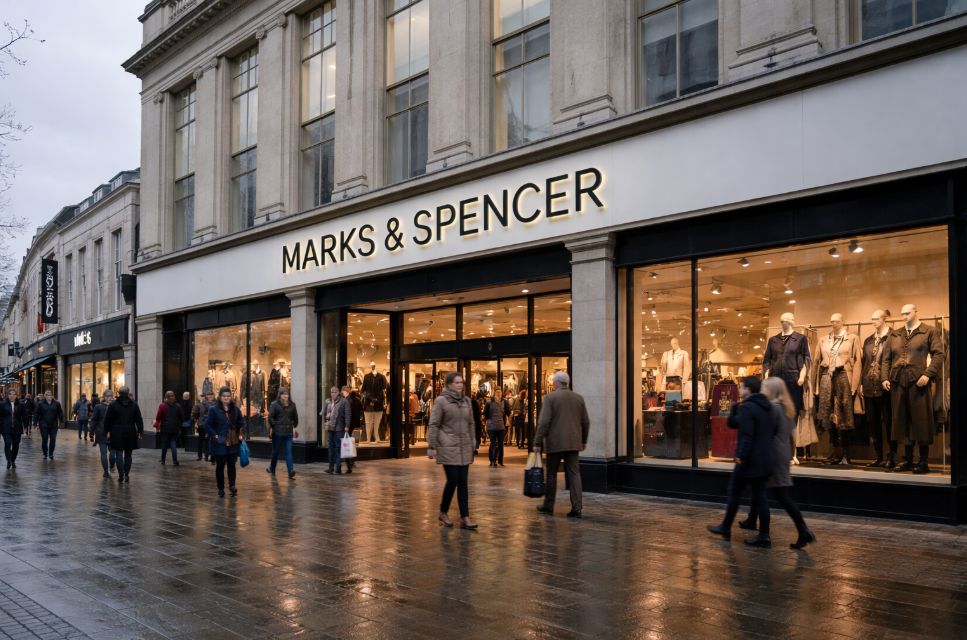
On 24 February 2026, Marks & Spencer confirmed that its 69-year-old flagship store on Oxford Street in Swansea city centre will close in late 2026. The announcement has significant implications for employees, shoppers and the wider retail landscape in South Wales.
The M&S store closing Swansea decision comes after what the company described as a sustained decline in sales over the past decade, combined with operational challenges associated with the ageing building. Approximately 92 members of staff have been informed and will now enter a consultation period.
Despite the impending closure of the Oxford Street branch, the retailer has made clear that its presence in Swansea is not necessarily ending. Working alongside Swansea Council, the company is currently assessing potential sites that could accommodate a purpose-built, modern full-line store better suited to current retail demands.
This article explains what has been confirmed, what remains under discussion, and what the closure could mean for Swansea’s retail future.
What Has Been Confirmed About the M&S Store Closing Swansea?
 The Announcement
The Oxford Street branch, which has operated for nearly seven decades, will close in late 2026. An exact date has not yet been finalised, but the store will continue trading in the interim.
Employment Impact
Approximately 92 staff members have been affected. They will enter a formal consultation process, during which the company will explore:
- Redeployment opportunities within the region
- Alternative roles within the business
- Redundancy support where necessary
No immediate redundancies have been finalised at this stage.
The Stated Reasons
Marks & Spencer cited two primary factors:
- A sustained decline in sales over 10 years
- Significant operational challenges linked to the existing building
The company also noted that the property would require “substantial investment” to modernise and bring it in line with current retail standards.
There has been no indication that the closure is linked to short-term financial distress. Instead, it aligns with the retailer’s long-term transformation strategy.
Why Is M&S Restructuring Its UK Store Portfolio?
The decision surrounding the M&S store closing Swansea should be viewed within the context of a comprehensive UK-wide estate review.
A Shift in Retail Strategy
Over recent years, Marks & Spencer has prioritised:
- Fewer but more modern full-line stores
- Expansion of food-led retail formats
- Investment in digital and online operations
- Relocation from traditional high streets to retail parks
Retail parks offer easier access, parking convenience and lower operational costs compared to older high street properties.
Long-Term Sales Trends
Many large, multi-floor high street stores have experienced:
- Reduced footfall
- Higher energy and maintenance costs
- Structural limitations preventing refurbishment
In Swansea’s case, the company confirmed a decade-long sales decline, making further investment difficult to justify under its current strategy.
What Does This Mean for Swansea City Centre?
Anchor stores such as M&S traditionally drive footfall. When a flagship closes, ripple effects can follow.
Short-Term Considerations
- Reduced visitor traffic to Oxford Street
- Potential impact on neighbouring retailers
- Increased vacancy within a large retail unit
However, closures do not automatically signal long-term decline.
Regeneration Opportunities
Large properties can be repositioned for:
- Mixed-use residential and retail schemes
- Leisure and hospitality conversion
- Subdivided commercial units
- Flexible office space
Swansea has ongoing regeneration ambitions, and redevelopment of the Oxford Street site could align with broader city-centre transformation plans.
Could M&S Open a New Store in Swansea?
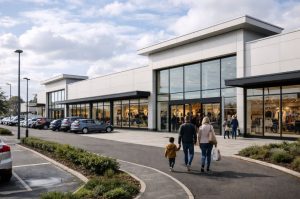 One important distinction must be made: the company is closing the current building, not necessarily withdrawing from the city.
Both the company and local authority representatives have confirmed that conversations are ongoing regarding a potential relocation within the city. The objective is to identify a space that offers improved accessibility, operational efficiency and a format consistent with the brand’s updated retail model.
What a Modern Replacement Might Look Like?
A new format store could include:
- Updated clothing and home layouts
- Integrated food hall
- Energy-efficient design
- Improved accessibility and parking
This would reflect the company’s “fewer, bigger, better” store model.
At present, no site has been confirmed.
What Alternatives Do Swansea Shoppers Have?
While the Oxford Street branch will close, customers still have access to M&S services locally.
Existing Foodhall Locations
Shoppers can visit:
- Fforestfach Retail Park
- Mumbles
These branches primarily offer food products.
Online and Regional Access
Customers can also:
- Shop clothing and homeware online
- Use home delivery services
- Travel to alternative full-line stores in South Wales
Although the physical high street presence will reduce, access to M&S products remains available.
Employment Impact: What Happens Next for Staff?
The consultation period is a legally required process designed to provide clarity and support.
Likely Next Steps
During consultation, the company typically:
- Reviews redeployment opportunities
- Assesses nearby store vacancies
- Provides redundancy terms where necessary
In similar closures elsewhere in the UK, some employees have transferred to foodhall sites or retail park stores. Outcomes in Swansea will depend on available roles and individual circumstances.
Importantly, consultation does not automatically mean job losses for every affected employee.
How Does This Reflect Wider UK High Street Trends?
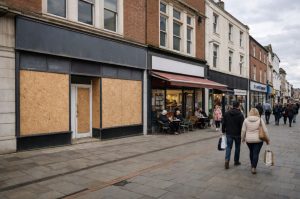 The M&S store closing Swansea is consistent with national retail developments.
Across the UK, high streets are experiencing:
- Structural shifts towards online shopping
- Greater emphasis on convenience
- Decline of traditional department store models
- Increased mixed-use redevelopment
City centres are evolving from purely retail environments into broader lifestyle and service hubs. Retail remains part of the mix, but not the sole focus.
Confirmed Facts vs Speculation
To maintain clarity, it is important to separate what is known from what is not.
Confirmed
- The store will close in late 2026
- 92 staff members are entering consultation
- Sales have declined over a decade
- The building requires substantial investment
- A new Swansea location is being explored
Not Confirmed
- An exact closure date
- A confirmed relocation site
- Full redundancy numbers
- A confirmed redevelopment plan for Oxford Street
Clear communication in the coming months will be essential for both staff and the wider business community.
Conclusion
The M&S store closing Swansea signals a notable shift for Oxford Street, bringing to a close nearly 70 years of continuous trading at the current site. While the decision affects 92 employees and changes the immediate retail landscape, it forms part of a broader repositioning taking place across the UK retail sector.
Rather than indicating decline in isolation, the closure reflects evolving commercial priorities, property considerations and long-term structural change in how major retailers operate. For Swansea, the focus now moves to what follows from potential relocation plans to the future use of a prominent city centre building.
The coming months will provide greater clarity. What remains clear is that Swansea’s retail environment is entering a new phase, shaped not only by store closures, but by adaptation and strategic redevelopment.
FAQs
Will the Swansea M&S close immediately?
No. The closure is scheduled for late 2026, and the store continues to trade normally until further notice.
Are all 92 staff members guaranteed to lose their jobs?
No. Staff are entering consultation, during which redeployment and alternative roles may be explored.
Is M&S leaving South Wales entirely?
There is no confirmation of a full regional withdrawal. The company is exploring a new Swansea location.
Why does the building require investment?
Older high street properties often require structural, energy-efficiency and layout upgrades to meet modern retail standards.
Could another major retailer take over the Oxford Street site?
This has not been confirmed. Any future tenant would depend on commercial negotiations and redevelopment plans.
Are the Fforestfach and Mumbles stores closing?
There has been no announcement suggesting closure of those foodhall locations.
Does this signal further high street closures across the UK?
Retail restructuring continues nationally, but each store decision is assessed individually.