







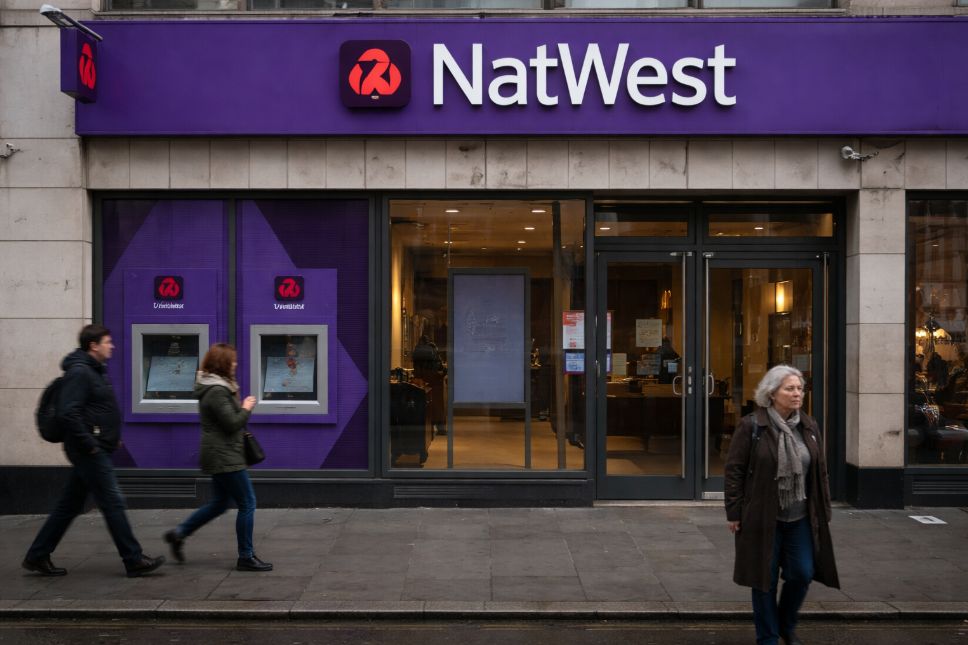
A total of 39 NatWest branches are confirmed to close across 2026 and early 2027, including 32 new locations announced in late January 2026. Most of these NatWest bank closures will take place between May 2026 and June 2026, with a final scheduled closure set for February 2027.
The confirmed figures are based on reporting from MoneyWeek and official closure updates issued by NatWest. For customers searching whether their local branch is affected, this guide provides:
- The confirmed closure list
- Regional breakdowns (London, Manchester, Northern England)
- Regulatory protections in place
- Practical next steps
The aim is to provide clear, verified information without speculation or alarm.
What Is the Full List of Confirmed NatWest Bank Closures for 2026–2027?
Below is a structured, searchable table of confirmed closures so customers can quickly locate their branch.
| Branch Location | Address | Closure Date |
| Barnet | 120 High Street EN5 5XQ | 11 May 2026 |
| Manchester – Cheetham Hill | 64 Bury Old Road M8 5NW | 12 May 2026 |
| Brentwood | 46 High Street CM14 4AJ | 13 May 2026 |
| London – Tooting | 30–34 Tooting High Street SW17 0RG | 18 May 2026 |
| Boston | 10 Market Place PE21 6EJ | 11 June 2026 |
| London – West End | 246–250 Regent Street W1B 3BN | 30 September 2026 |
| Godalming | 77 High Street GU7 1AR | 23 February 2027 |
These are part of the broader programme of NatWest bank closures confirmed for 2026–2027. Customers are encouraged to check the official NatWest closure guide online for additional updates, support sessions, and alternative branch information.
Why Is NatWest Closing More Branches in 2026?
 The Shift to Digital Banking
NatWest has confirmed that 87% of its customers now use online or mobile banking services. In-branch transactions have steadily declined over the past decade, particularly for routine activities such as:
- Balance enquiries
- Transfers between accounts
- Bill payments
- Direct debit setup
- Card management
Digital adoption accelerated during the pandemic and has remained high. For many customers, banking has become primarily app-based.
From a commercial perspective, maintaining underused branches is increasingly costly. This behavioural shift is the central reason behind the latest wave of NatWest bank closures.
Investment in Community Banking Alternatives
Importantly, branch closures are not being implemented without replacement measures. NatWest has announced a £4 million investment in community pop-ups and shared banking hubs. These hubs allow customers of multiple banks to access:
- Counter services
- Cash deposits
- Cheque processing
- Face-to-face assistance on designated days
In many towns, these hubs operate within community buildings or shared high street premises.
Confirmed Facts vs Public Concerns
It is important to distinguish verified information from speculation.
Confirmed facts:
- 39 closures scheduled
- Majority between May–June 2026
- Final closure February 2027
- 87% digital usage rate
- Investment in community alternatives
Common misconceptions:
- NatWest is not leaving the UK market
- Current accounts remain unaffected
- Digital banking services are expanding, not reducing
This restructuring reflects operational changes rather than financial instability.
Which NatWest Branches Are Closing in London?
London is experiencing several closures as part of the 2026 programme.
Confirmed London locations include:
- Fulham Broadway
- Spitalfields
- Tooting
- West End
The Tooting branch is scheduled to close on 18 May 2026, while the West End branch will close on 30 September 2026.
What This Means for London Customers?
London typically has higher branch density than rural areas, meaning alternative branches are often within reachable distance.
However, footfall patterns in central London have changed significantly post-pandemic, with fewer in-person transactions recorded.
Customers are advised to:
- Locate their nearest alternative branch
- Explore local banking hubs
- Register for online and mobile services
London remains one of the most digitally active banking regions in the UK.
Which NatWest Branches Are Closing in Manchester?
Manchester is also affected by the 2026 NatWest bank closures.
Confirmed branches include:
- Cheetham Hill (closing 12 May 2026)
- Chorlton
Greater Manchester has seen consistent digital banking uptake, particularly among younger customers and small businesses.
Regional Considerations
Manchester remains a major financial hub, and customers typically have access to:
- Alternative city centre branches
- Business banking centres
- Shared banking hubs
For business account holders, NatWest has confirmed that relationship managers and digital services remain fully operational.
Which Northern England Branches Are Affected?
Northern England locations impacted include:
- Hartlepool
- Sheffield (Attercliffe)
- South Shields
In lower-density areas, closures can feel more significant due to travel distances.
Access and Mitigation Measures
NatWest has stated that areas with fewer nearby branches will be prioritised for:
- Community pop-up sessions
- Shared banking hubs
- Enhanced telephone support
In addition, most Post Offices across the UK provide basic banking services, including cash withdrawals and deposits.
What Do the New FCA Rules Mean for NatWest Customers in 2026?
As of April 2026, updated requirements from the Financial Conduct Authority require banks to:
- Provide at least 90 days’ notice before account-related closures
- Issue detailed written explanations
- Assess community impact
These rules apply across the UK banking sector.
Why This Matters
For customers affected by NatWest bank closures, this means:
- Advance warning
- Clear communication
- Time to make alternative arrangements
The changes strengthen consumer protections, particularly for vulnerable customers or communities with limited financial infrastructure.
What Should Customers Do If Their NatWest Branch Is Closing?
 While closures can cause concern, there are structured steps customers can take.
1. Register for Online and Mobile Banking
Setting up digital access allows customers to:
- Transfer funds instantly
- Freeze or replace cards
- Apply for products
- View statements securely
2. Identify Alternative Physical Services
Customers can:
- Visit nearby NatWest branches
- Use shared banking hubs
- Deposit cash at Post Offices
3. Seek Support If Needed
NatWest offers:
- Community pop-up sessions
- Telephone guidance
- In-branch staff support prior to closure
Real-Life Scenario
Consider David, a small business owner in Sheffield. When notified of his branch closure, he attended a support session where staff helped him:
- Set up mobile cheque deposits
- Schedule cash deposit visits to a local hub
- Transition payroll payments online
Within weeks, his business operations continued without disruption.
This example demonstrates that although NatWest bank closures reduce physical presence, practical alternatives are in place.
How Do NatWest Bank Closures Compare to Other UK Banks?
NatWest is part of a broader industry trend.
Across the UK:
- High street branch numbers have declined year-on-year
- Digital banking app usage continues to rise
- Banking hubs are expanding nationwide
Major banking groups have cited similar reasons changing customer behaviour and cost efficiency.
The 2026 closures align with national banking transformation rather than representing an isolated event.
What Does the Future Hold for High Street Banking in the UK?
The future of UK banking appears to be hybrid rather than purely digital.
Expected trends include:
- Fewer traditional branches
- Increased shared hubs
- Appointment-based advisory services
- Stronger regulatory oversight
Access-to-cash protections remain a national priority. Physical banking is evolving, not disappearing.
What Do the NatWest Bank Closures Mean for 2026 and Beyond?
 The confirmed 39 NatWest bank closures scheduled for 2026–2027 reflect a strategic restructuring driven by digital adoption.
Key points:
- Majority closing May–June 2026
- Final closure February 2027
- 87% digital customer usage
- £4 million investment in community alternatives
- FCA safeguards protecting consumers
For most customers, day-to-day banking will continue uninterrupted through digital platforms, hubs, and alternative branches. The transition represents adaptation to modern banking habits rather than a withdrawal of services.
Conclusion
The confirmed 39 NatWest bank closures across 2026 and early 2027 reflect a continued shift towards digital banking rather than a withdrawal from the UK market. With most branches closing between May and June 2026, customers have advance notice and access to alternative services, including online banking, shared banking hubs, and Post Office facilities.
While physical branch numbers are reducing, NatWest services remain fully operational. Regulatory safeguards from the Financial Conduct Authority ensure customers receive clear communication and sufficient time to adapt.
For most people, the impact will be manageable with preparation. The key takeaway is that UK banking is evolving becoming more digital, more centralised, and increasingly supported by shared community solutions.
FAQs
Is NatWest closing all its UK branches?
No. Only 39 branches are confirmed to close during 2026–2027. Many branches remain operational.
How can customers deposit cash after a branch closes?
Cash deposits can be made at Post Offices, shared banking hubs, or nearby NatWest branches.
Will online banking change because of the closures?
No. Digital banking services continue to expand and remain fully functional.
Are vulnerable customers protected during branch closures?
Yes. FCA rules require advance notice and impact assessments, and NatWest provides community support sessions.
Can customers switch to another branch automatically?
Accounts remain active. Customers may use any operational branch within the network.
Is this linked to financial trouble?
No evidence suggests financial instability. The closures are linked to digital usage trends.
How often does NatWest review its branch network?
Banks regularly assess branch performance and customer usage before making restructuring decisions.