







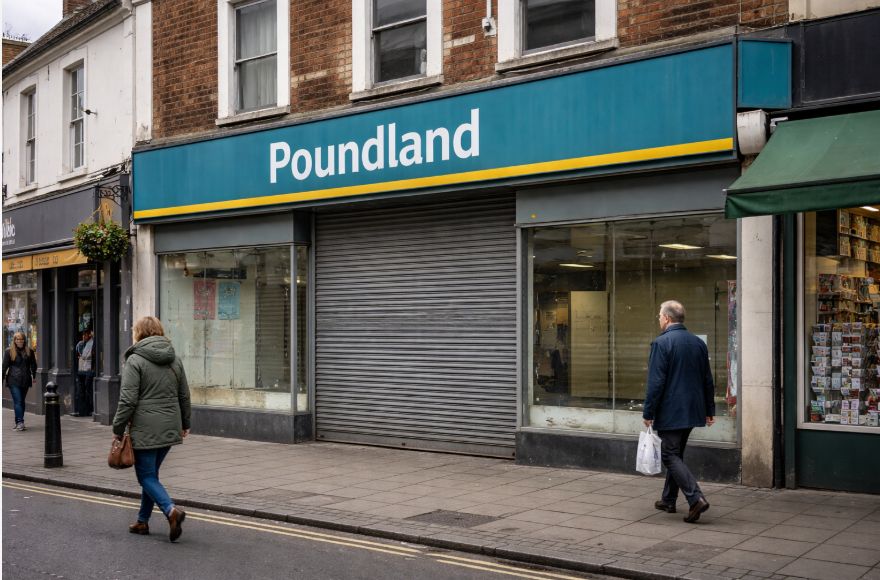
The closure of multiple Poundland stores across the UK has sparked concern among shoppers, retail analysts, and high street landlords alike. As a long-standing name in Britain’s discount retail landscape, Poundland’s decision to shut several locations raises questions about what’s going wrong and whether these changes point to deeper issues within the UK retail sector.
While some closures are due to expiring leases or commercial decisions, others reflect broader economic and strategic challenges. This article explores the reasons behind these closures, their impact, and what the future may hold for both Poundland and British high streets.
How Has Poundland Positioned Itself in the UK Retail Market?
 Poundland has been a cornerstone of value retailing since its launch in 1990. Originally known for its fixed £1 price point, the brand gradually diversified its pricing model and product range to meet evolving consumer needs.
Its acquisition by Pepco Group, a pan-European discount retailer, gave it access to greater resources and a broader product catalogue through the integration of Pep&Co fashion and homeware lines.
Despite these expansions, Poundland remains heavily reliant on physical footfall in high streets and shopping centres areas increasingly challenged by modern consumer habits and operational costs.
Which Poundland Stores Have Closed in 2023–2025? (As of 1 January 2026)
Between 2023 and 2025, Poundland underwent a strategic consolidation of its UK store portfolio. These closures, carried out by parent company Pepco Group, were primarily driven by rising operational costs, shifting consumer habits, and the need to streamline underperforming locations.
While Poundland continues to operate across the UK, the business has been closing stores selectively, often where leases expired, commercial rents rose significantly, or footfall declined.
Poundland Store Closures by Region (2023–2025)
| Location | Region | Closure Date | Reason |
| Coventry (Market Way) | West Midlands | Dec 2023 | Lease not renewed |
| Cramlington | North East | Nov 2023 | Strategic portfolio review |
| Romford (Liberty Centre) | Greater London | Jan 2024 | Declining footfall |
| Birkenhead (Grange Rd) | North West | Dec 2023 | Store overlap |
| Maidenhead (Nicholsons) | South East | Mar 2024 | Commercial rent increase |
| East Kilbride (Shopping Centre) | Scotland | Jul 2024 | Redevelopment of retail space |
| Hereford (Commercial Street) | West Midlands | Oct 2024 | Trading performance review |
| Plymouth (New George St) | South West | Aug 2024 | Shift to retail park model |
| Clacton-on-Sea | East England | Feb 2025 | Reduced demand and site maintenance |
| Wrexham (Eagles Meadow) | Wales | May 2025 | Lease terminated early |
| Stockton-on-Tees (High Street) | North East | Sep 2025 | High street decline |
| Crawley (County Mall) | South East | Nov 2025 | Shopping centre restructuring |
These closures reflect Poundland’s broader move to focus on profitable, modern locations, often in retail parks or shopping centres with high and stable footfall. The company is also investing in store upgrades and the continued rollout of its multi-price model, fashion range (Pep&Co), and seasonal products.
Despite the closures, Poundland remains operational nationwide, and in some regions, new stores have opened where there’s demand and favourable lease terms. However, further reviews are expected in 2026, particularly in areas with persistent retail decline.
What Economic Challenges Are Affecting UK Retailers?
The UK’s retail environment has been under increasing pressure since the pandemic, and 2023 saw continued struggles due to inflation, rising interest rates, and the cost-of-living crisis. Retailers across the board are facing falling consumer confidence, with shoppers becoming more selective about where and how they spend.
Discount stores like Poundland typically fare well during economic downturns. However, even these retailers are now squeezed by supplier cost increases, rising business rates, and elevated energy bills. These pressures limit their ability to maintain slim margins and in some cases, make individual store operations unviable.
How Are Rising Operational Costs Forcing Store Closures?
 Operational overheads have become a major hurdle for many high street stores. In several cases, the decision to close a Poundland store has come down to unsustainable costs associated with rent, utilities, and business rates.
Landlords in key locations have raised lease renewal prices, often beyond what retailers can justify. On top of that, running costs such as staffing, security, maintenance, and energy continue to rise. For a discount chain that depends on high volume, even small margin reductions can lead to tough decisions about which stores stay open.
Why Are Shopping Habits Shifting Away from the High Street?
Consumer behaviour has changed significantly over the past decade, accelerated by the pandemic. More people now shop online for convenience, and many have reduced their in-person visits to town centres. When they do go out, they often prefer retail parks with easier parking and multiple large-format stores in one place.
Poundland, like many traditional high street retailers, is grappling with this trend. Though it has introduced multi-price items and fashion ranges, its heavy reliance on high street footfall makes it vulnerable in a digital-first economy.
What Strategic Decisions Are Behind Poundland’s Closures?
The closures aren’t simply reactive. Pepco Group is pursuing a restructuring plan across Europe, which includes refining its store estate and focusing resources on higher-performing locations. Rather than keeping all stores open, the company appears to be concentrating on sites with better long-term commercial potential.
Some closures have occurred where two Poundland stores operated within close proximity. In other cases, the decision followed internal reviews of profit margins, customer numbers, and local competition. The strategy is clear: optimise for profitability, not just presence.
How Are Communities Reacting to Poundland Closures?
 The local impact of store closures is often felt deeply, particularly in towns where few affordable retailers remain. Many customers have expressed disappointment on social media and review platforms, describing the closures as the loss of a convenient and budget-friendly option.
In places like Birkenhead and Cramlington, shoppers noted the store’s role as a community fixture somewhere to grab essentials without needing to travel far. These closures also represent job losses and reduced part-time employment opportunities, further straining local economies.
Are Discount Retailers Struggling Across the UK?
Poundland isn’t the only discount brand facing challenges. The collapse of Wilko in 2023 was a clear warning that even well-known low-cost chains aren’t immune to modern retail pressures. At the same time, competitors like B&M, Home Bargains, and Savers continue to expand, but with a greater focus on larger stores, retail park locations, and mixed-format models.
Some discounters are adapting more quickly to changing customer demands, particularly by embracing digital strategies or integrating groceries a category where Poundland has limited reach.
What Can Poundland Shoppers Expect in 2024 and Beyond?
Looking ahead, more store closures are likely, but that doesn’t mean Poundland is disappearing. The brand is expected to focus on modernising its store formats, improving range variety, and possibly expanding its digital presence.
Shoppers can also expect the continued rollout of Pep&Co fashion and seasonal products. While some towns may lose their Poundland branch, others may see refurbishments or relocations as part of a broader network review.
What Is the Future of the UK High Street with Poundland Downsizing?
The high street continues to evolve, and the reduction of anchor stores like Poundland will undoubtedly have consequences. Empty retail units contribute to declining footfall and loss of vibrancy, especially in towns already struggling with closures of banks, post offices, and local businesses.
Rebuilding the high street will require coordinated efforts from councils, retailers, and landlords. That includes rethinking space usage, offering flexible leases, and supporting mixed-use developments that combine retail with housing and services.
FAQs About Poundland Store Closures
Why are Poundland stores closing across the UK?
Closures are primarily driven by operational cost pressures, lease issues, and strategic decisions by Pepco Group to optimise performance.
Which Poundland locations are confirmed to close in 2023–2024?
Several stores including Coventry, Romford, Cramlington, Birkenhead, and Maidenhead have closed due to commercial decisions and lease challenges.
Is Poundland going out of business?
No, Poundland is still operating across the UK, but selectively closing underperforming locations as part of a strategic review.
How are other discount retailers affected by UK economic issues?
Retailers like B&M and Savers have adapted more successfully, but others like Wilko have collapsed, highlighting challenges across the sector.
What is Pepco Group’s role in the closures?
As Poundland’s parent company, Pepco is managing the brand’s European portfolio and streamlining stores to boost profitability.
Will my local Poundland store be affected in 2024?
That depends on the location’s lease status, performance, and local competition. More closures may be announced as reviews continue.
Are there alternatives to Poundland for low-cost shopping in the UK?
Yes, B&M, Home Bargains, Savers, Aldi and Lidl all provide value-driven shopping options, often with larger store formats or better accessibility.