







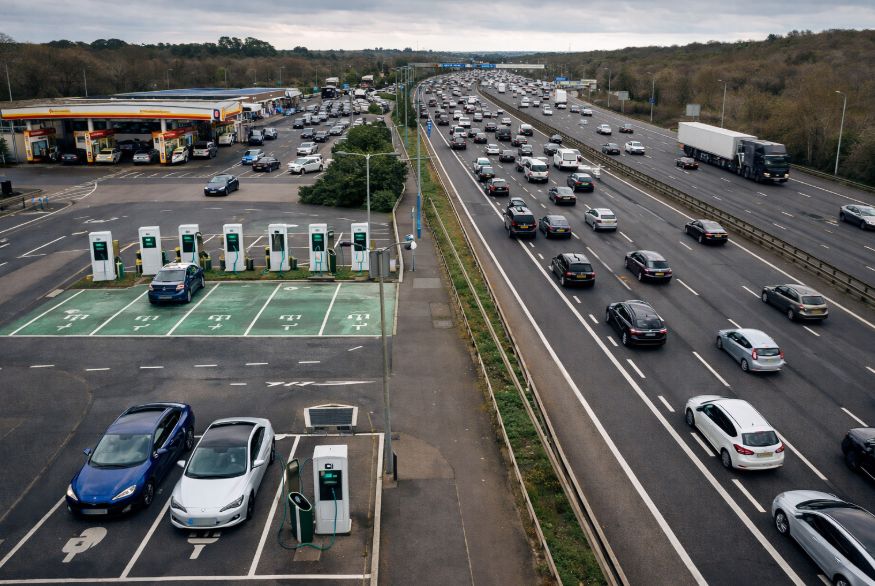
The transition to electric vehicles (EVs) has been one of the most discussed shifts in UK transport policy over the past decade. As the UK Government pursues its legally binding Net Zero 2050 ambition and implements the Zero Emission Vehicle (ZEV) Mandate, many expected British motorists to embrace EVs rapidly.
Yet, despite clear environmental imperatives and rising sales of battery electric vehicles (BEVs), a meaningful portion of UK drivers remains hesitant to switch from petrol and diesel‑powered cars. According to the latest 2026 consumer adoption report, cost perceptions, charging confidence issues and policy uncertainty are among the main factors slowing the EV transition.
“I feel a little duped… EVs aren’t the environmental silver bullet we were promised.”
“It’s not enough to build the cars. We must build confidence.”
What’s Driving the Delay in the UK’s Electric Vehicle Transition?
 Overall car sales in the UK reached their highest levels in six years in early 2026, with nearly 1.44 million new vehicles sold in January alone. However, while overall sales rose by 3.4 %, EV sales barely budged, increasing by just 0.1 %.
This suggests that although interest in greener options has climbed, a sizeable segment of drivers continues to delay full electrification. Recent perception surveys indicate that 65 % of drivers still believe the total cost of owning an EV is higher than a petrol or diesel car, even when they often underestimate longer‑term savings on fuel and maintenance.
How the 2026 ZEV Mandate Targets Are Shaping Buyer Decisions?
The UK’s Zero Emission Vehicle (ZEV) Mandate sets increasing annual targets for manufacturers’ sales of zero‑emission cars and vans including a requirement for about 33 % of new passenger car sales to be zero‑emission by 2026, rising steeply towards 80 % by 2030.
While this mandate aims to ensure a robust supply of EVs in showrooms, it does not directly compel drivers to buy them. This supply‑side focus means that even though more models are available, many shoppers remain reluctant. Recent policy debates including proposals to relax or extend hybrid sales into the early 2030s have added to confusion and hesitancy.
Is the Cost of Electric Vehicles Still a Barrier in 2026?
One of the most cited reasons drivers delay switching to EVs is cost. Even with falling battery prices and competitive finance deals, new EVs tend to carry higher upfront purchase prices compared with equivalent petrol or diesel cars. A survey reported average new EV prices in the UK above £59,000 significantly more than many traditional alternatives.
In recent years, Vehicle Excise Duty (VED) adjustments have added complexity to ownership costs, particularly with changes such as:
- A standard EV road tax rate that shifts after the first year.
- Additional surcharges for expensive EVs (commonly referred to as the Expensive Car Supplement), which apply if a vehicle’s value exceeds around £50,000 something that affects many popular premium models.
Even though EVs typically benefit from lower running costs, many drivers focus on short‑term expenses rather than total cost of ownership (TCO), causing lingering hesitation.
How Charging Infrastructure Is Slowing Down the EV Shift?
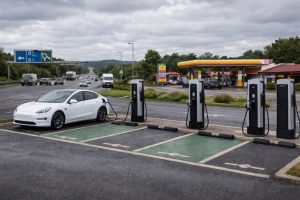 Charging confidence remains a critical issue for drivers considering a switch to electric. While the UK now has tens of thousands of public chargepoints, growth remains uneven: rural areas, smaller towns and remote regions often face longer waits for ultra‑rapid chargers, and reliability issues still draw concern.
In early 2026, many Electric Vehicle charging firms were reported to be seeking mergers or strategic buy‑outs due to rising costs and competition, indicating stress in the infrastructure market itself.
Home charging access also varies widely. Many urban residents without private off‑street parking still struggle to install convenient chargers, which makes everyday EV ownership less straightforward and adds to range anxiety among potential buyers.
What Role Does Range Anxiety and Battery Life Play in Driver Hesitation?
Despite improvements in battery technology, range anxiety remains a common concern. Many drivers overestimate the frequency with which they will run low on charge, even though most daily journeys fall well within typical EV ranges.
Misconceptions about battery degradation and replacement costs also persist. Better education and direct experience such as test drives or peer recommendations significantly reduce fear and uncertainty, yet some drivers remain reluctant to take the leap.
Are Used EVs and the Second‑Hand Market Helping or Hurting?
The used EV market in the UK has grown, but some drivers are wary of second‑hand EVs due to perceived uncertainty about battery health and residual values. This is despite evidence that well‑maintained EVs can offer strong long‑term value, especially when warranty coverage is clear.
Price comparisons also show that used EVs often command a premium relative to comparable petrol cars, which can dissuade cost‑conscious buyers.
How Do Policy and Incentive Gaps Affect the EV Transition?
 Government support including purchase grants and tax incentives has played a role in encouraging early adopters. However, some incentives have been reduced or shifted over time, leaving drivers less certain about future support. Meanwhile, policy uncertainty including debates around the 2030 phase‑out of combustion engines can dampen consumer confidence.
The Office for Zero Emission Vehicles (OZEV) continues to manage grants and infrastructure support, but awareness remains uneven. Clearer, more consistent incentives and communication could help reduce consumer hesitation.
Real‑Life Example: A UK Driver’s EV Buying Journey in 2026
Consider the case of Claire, a 42‑year‑old London commuter who has been contemplating an EV for over two years. She acknowledges the environmental benefits, but worries about:
- Upfront cost vs her current petrol car
- Reliability of public chargers in her area
- Uncertainty about resale value
Claire’s experience mirrors that of many drivers: practical concerns often outweigh long‑term savings in their decision‑making process.
What Needs to Change to Accelerate the UK’s EV Adoption?
To help overcome these delays, several measures could make a real difference:
- Faster and more reliable rollout of public charging points, especially ultra‑rapids.
- More transparent cost comparisons that highlight total cost of ownership advantages.
- Stronger consumer education campaigns about EV benefits and real‑world performance.
- Consistent and predictable incentives to reduce policy uncertainty.
Conclusion
The UK’s EV transition may be progressing, but it is not happening as quickly as many policymakers had hoped. Delays driven by cost concerns, infrastructure gaps and consumer uncertainty risk slowing progress toward long‑term Net Zero 2050 targets. Continued collaboration between government, industry and the public will be essential to address these barriers and support broader EV adoption in 2026 and beyond.
FAQs
What is the ZEV Mandate and how does it affect car buyers in 2026?
The ZEV Mandate sets rising minimum percentages of zero‑emission vehicle sales for manufacturers, helping expand the range of EVs on sale. It doesn’t directly require individual drivers to buy EVs, but it influences industry supply.
Will EV drivers still pay lower vehicle taxes in 2026 compared to petrol cars?
EVs generally benefit from lower VED in the first year, but surcharges such as the Expensive Car Supplement apply above certain prices, which can affect ownership costs.
Is charging an EV at home cheaper and more reliable than public charging?
Home charging typically costs less per mile than public stations and is more convenient, but installation requires private parking access — something many urban residents lack.
Can used EVs be trusted for dependable ownership in the UK?
Used EVs can be dependable, especially with battery warranties. However, anxiety around battery health and uncertain resale values can deter some buyers.
Does range anxiety remain a real concern for UK drivers?
Range anxiety persists, but actual EV range on modern vehicles typically exceeds daily driving needs for most drivers. Proper planning and familiarity reduce this fear.
Are there enough public chargers in the UK to support mass EV adoption?
While the number of chargepoints has grown, rollout has not kept pace with projected EV numbers, leading to gaps particularly in rural and underserved regions.
Will future taxes, like a pay‑per‑mile EV levy, discourage EV adoption?
Proposals for a pay‑per‑mile tax from 2028 have raised concern among EV advocates, as they could influence future buyers’ cost perceptions and slow uptake