







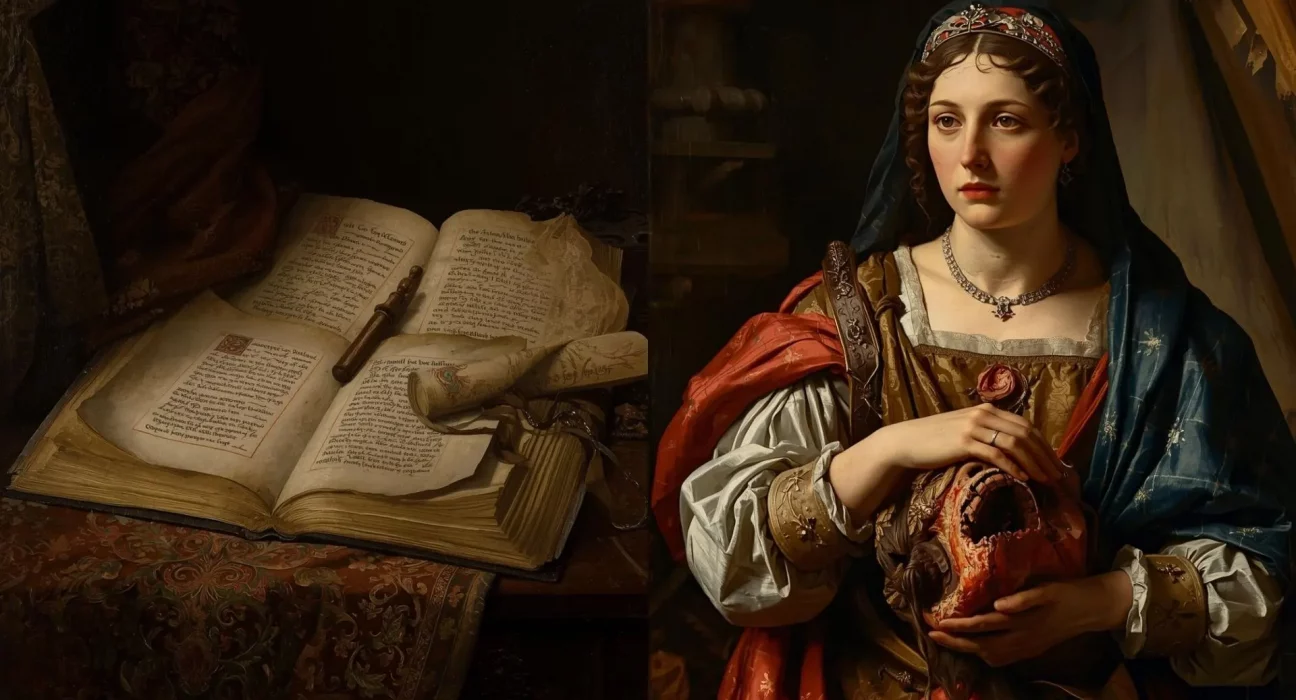
The term Apocrypha often evokes curiosity and confusion in discussions about biblical texts. Rooted in religious history, these writings have been the subject of theological debate for centuries. Some Christian traditions revere them; others reject them. But what are these books, where did they come from, and why do they continue to spark discussion?
This guide explores the Apocrypha’s origin, its contents, and its lasting influence across religious thought and tradition.
What Exactly Is the Apocrypha in Biblical Context?
 In a biblical context, the Apocrypha refers to a collection of ancient texts written primarily during the intertestamental period the span between the Old and New Testaments. These works, while respected in many Christian traditions, are not considered part of the Hebrew Bible.
The word “Apocrypha” originates from the Greek apokryphos, meaning “hidden” or “secret.” Early church communities often used the term to denote texts that were spiritually valuable, yet distinct from divinely inspired scripture.
While not universally accepted into the canonical Bible, many Apocryphal writings were included in early Greek translations of scripture, particularly the Septuagint, which was widely used in Hellenistic Jewish and early Christian circles.
Why Are These Books Considered ‘Apocryphal’?
The classification of certain books as “Apocryphal” often stems from a combination of linguistic, theological, and historical concerns. Most of these texts were written in Greek, not Hebrew or Aramaic the traditional languages of Jewish scripture. Additionally, many were composed outside the land of Israel, primarily in Alexandria, a hub of Jewish intellectual activity in the Hellenistic era.
Over time, Jewish scholars narrowed their canon, favouring texts rooted in Hebrew tradition. When early Christians adopted the Greek Septuagint, they inadvertently included texts that Jewish authorities had excluded. This divergence eventually led to disputes over what should be considered divinely inspired.
The Role of the Reformation in Defining the Apocrypha
The 16th-century Protestant Reformation significantly influenced the status of the Apocryphal texts. Reformers such as Martin Luther questioned their doctrinal integrity and removed them from the core canon, placing them in a separate section for optional reading. Luther did not completely discard their value but argued that these books should not serve as the foundation for doctrine.
The Catholic Church, however, reaffirmed the canonical status of many of these books at the Council of Trent in 1546, terming them Deuterocanonical (meaning “second canon”) rather than Apocryphal.
What Books Are Included in the Apocrypha?
The content of the Apocrypha can vary depending on the religious tradition, but most collections include a similar core of texts. These books provide historical accounts, wisdom literature, prayers, and theological insights that mirror or expand upon themes in the canonical Old Testament.
Here is a comparison of commonly included books and the traditions that accept them:
| Book Title | Theme | Accepted By |
| Tobit | Righteousness and divine guidance | Catholic, Orthodox |
| Judith | Faith and military heroism | Catholic, Orthodox |
| Wisdom of Solomon | Philosophical reflection on justiace | Catholic, Orthodox |
| Sirach (Ecclesiasticus) | Ethical teachings and maxims | Catholic, Orthodox |
| Baruch | Exile, repentance, and hope | Catholic, Orthodox |
| 1 & 2 Maccabees | Jewish resistance and martyrdom | Catholic, Orthodox |
| Additions to Daniel | Faith under persecution | Catholic, Orthodox |
| Additions to Esther | God’s unseen hand in deliverance | Catholic, Orthodox |
Protestant Bibles often exclude these books entirely or present them in a separate section marked “Apocrypha.”
Where Did the Apocryphal Books Come From?
 The Apocryphal writings emerged from a culturally rich and politically tumultuous era. Known as the Second Temple period, this era spans from the rebuilding of the Jewish temple in Jerusalem (around 516 BCE) to its destruction in 70 CE.
Influence of the Hellenistic World
During this time, Jewish communities found themselves deeply influenced by Hellenistic philosophy and language, particularly after Alexander the Great’s conquests. Many Jews lived outside of Israel, in cities like Alexandria, where Greek was the dominant language. This setting birthed a need for translations of sacred texts, culminating in the Septuagint a Greek translation of the Hebrew scriptures that also included other writings.
The Apocryphal texts were often included in this broader literary context. These books sought to preserve Jewish identity, wisdom, and theology while engaging with the surrounding Hellenistic world.
How Do Different Christian Traditions View the Apocrypha?
Diverging opinions on the Apocrypha are central to the distinctions between Christian denominations.
In the Catholic tradition, most of the Apocryphal books are embraced as Deuterocanonical, included within the canon of scripture. The Council of Trent solidified this position in the 16th century.
The Eastern Orthodox Church goes even further, recognising additional texts such as 3 Maccabees, Psalm 151, and 1 Esdras. These books are read in services and incorporated into theological discussions.
In contrast, Protestant denominations largely exclude the Apocrypha. Influenced by reformers like John Calvin and Martin Luther, many Protestant churches argue that the Apocryphal books lack the divine authority found in canonical scripture.
However, Anglican and some Lutheran traditions continue to value the Apocrypha for teaching and moral guidance, often including it in lectionaries and liturgical use.
How Did the Apocrypha Influence Religious Thought and Literature?
Despite the contested status of these books, their impact on religious literature and early Christian theology is undeniable. Themes such as martyrdom, divine justice, resurrection, and ethical living are prominent in many Apocryphal texts.
The story of the Maccabees, for instance, reflects heroic resistance against oppression and introduced theological notions such as the resurrection of the dead, which would later become central in Christian doctrine.
Similarly, the Wisdom of Solomon offers profound philosophical insights that parallel early Christian teachings on the soul, justice, and God’s nature.
These influences extended beyond theology into art, music, and literature, particularly in medieval and Renaissance Europe, where Apocryphal themes inspired paintings, plays, and religious hymns.
Is the Apocrypha Still Relevant Today?
 In modern times, the Apocrypha continues to be studied not only by theologians but also by historians, literary scholars, and lay readers interested in biblical history.
Modern Bible editions such as the New Revised Standard Version (NRSV) and the Revised English Bible include the Apocrypha as a separate section, enabling broader access for study and reflection. Many universities and seminaries incorporate Apocryphal books in biblical and historical curricula.
Beyond academia, the Apocrypha serves as a lens through which to understand the religious, political, and cultural struggles of ancient Jewish communities insights that remain relevant for interfaith dialogue and personal spiritual exploration today.
What Is the Difference Between the Apocrypha and the Pseudepigrapha?
A common point of confusion involves the terms Apocrypha and Pseudepigrapha. While both refer to ancient religious writings outside the accepted canon, their meanings differ significantly.
The Apocrypha includes books that are accepted by some Christian denominations but not others. These texts are often found in historical editions of the Bible and have been used in worship and theology for centuries.
In contrast, the Pseudepigrapha refers to a broader collection of writings falsely attributed to biblical figures, such as the Book of Enoch or the Testament of Abraham. These texts are not included in any major canon and are generally considered non-scriptural, though they offer valuable insights into early Jewish and Christian beliefs.
Conclusion
The Apocrypha represents more than just a set of disputed books. It captures a vital period in religious history, offering stories, teachings, and insights that continue to inform faith and scholarship. For those seeking a deeper understanding of biblical heritage, theology, and the evolution of scripture, the Apocrypha offers a compelling and often overlooked perspective.
Whether one views these texts as divinely inspired or historically intriguing, they undeniably enrich the broader narrative of Judeo-Christian tradition.
FAQs
Are the Apocryphal books part of the original Bible?
No, they were not included in the Jewish canon but were present in early Christian texts and translations such as the Septuagint.
Do all Catholic Bibles include the Apocrypha?
Yes, Catholic Bibles typically include the Deuterocanonical books, which are part of the Apocrypha.
Why do Protestant Bibles exclude the Apocrypha?
Protestant reformers believed these books lacked divine inspiration and were not consistent with Hebrew scripture.
Can the Apocrypha be quoted in church sermons?
In traditions like Catholicism and Orthodoxy, yes. In Protestant churches, it depends on the denomination.
Are there contradictions in the Apocrypha and the Bible?
Some scholars argue that theological differences exist, which is one reason for the books’ exclusion from certain canons.
Is it beneficial to read the Apocrypha?
Yes, especially for understanding historical and cultural contexts of biblical times and intertestamental beliefs.
Where can I find a Bible that includes the Apocrypha?
Versions like the NRSV, RSV, and REB often include the Apocryphal books as a separate section.