








Understanding what price is 500 litres of oil in Northern Ireland is essential for households managing heating costs, particularly in a region where domestic heating oil remains the primary fuel source for many homes. Unlike other parts of the UK that rely heavily on mains gas, Northern Ireland has a higher dependency on home heating oil, making price awareness crucial for budgeting and financial planning.
This guide provides a clear, evidence-based breakdown of current pricing, the factors influencing costs, and practical steps households can take to manage expenses. It separates confirmed market facts from speculation and addresses common misconceptions, ensuring readers can make informed decisions with confidence.
What Is the Current Price of 500 Litres of Heating Oil in Northern Ireland?

Consumer Council for Northern Ireland regularly publishes verified weekly domestic heating oil price surveys.
Confirmed Average Pricing
As of recent market data:
- Average price per litre: typically ranges between 60p and 75p per litre (this fluctuates weekly).
- Estimated cost for 500 litres: approximately £300 to £375.
Prices can vary depending on:
- Supplier
- Location within Northern Ireland
- Order size
- Seasonal demand
Important Clarification
- These figures represent average surveyed prices, not fixed rates.
- Suppliers update pricing frequently, sometimes daily.
- Market volatility can cause short-term spikes.
Households checking what price is 500 litres of oil in Northern Ireland should always compare multiple suppliers before ordering.
How Is the Price of 500 Litres of Oil Calculated in Northern Ireland?
The final price is based primarily on the per-litre cost, but several elements influence the total bill.
Example Price Breakdown
| Cost Component | Explanation | Estimated Impact |
|---|---|---|
| Base oil price per litre | Wholesale fuel cost | Main cost driver |
| Supplier margin | Covers storage & operations | Moderate |
| Delivery costs | Transport logistics | Usually included |
| VAT (5%) | Reduced domestic rate | Added to total |
| Order size discount | Bulk pricing advantage | Can reduce cost |
Unlike petrol prices, domestic heating oil in Northern Ireland is not regulated by a price cap. Instead, it reflects global wholesale trends and regional supply conditions.
Why Does the Price of Heating Oil in Northern Ireland Change So Frequently?
To properly understand what price is 500 litres of oil in Northern Ireland, it helps to look at the influencing factors.
1. Global Crude Oil Markets
OPEC production decisions can affect global supply. International Energy Agency reports also influence market sentiment. Crude oil is traded internationally in US dollars, so global events impact local pricing.
2. Exchange Rates
Heating oil imports are linked to USD pricing. When the pound weakens, costs can rise.
3. Seasonal Demand
Demand increases sharply during autumn and winter. Higher demand often means higher prices.
4. Distribution & Logistics
Northern Ireland’s reliance on road tanker deliveries means fuel transport costs also affect pricing.
Separating Facts from Misinformation
Confirmed Fact:
Heating oil prices track global crude markets and exchange rates.
Common Misconception:
“Suppliers increase prices randomly in winter.”
In reality, higher winter prices usually reflect increased wholesale demand.
Speculation:
Predictions of dramatic price collapses or spikes are often based on uncertain geopolitical events and should not be treated as guarantees.
How Long Does 500 Litres of Oil Last in a Typical Northern Ireland Home?

The answer depends on:
- Property size
- Insulation quality
- Boiler efficiency
- Household occupancy
- Outside temperatures
Typical Usage Estimates
- Small, well-insulated home: 500 litres may last 6–8 weeks in winter
- Larger or older property: could last 3–5 weeks
Real-Life Example
A family of four in a three-bedroom semi-detached home in Belfast might use approximately 1,500–2,000 litres annually. Ordering 500 litres during winter may provide around one month of heating, depending on weather severity.
This illustrates why understanding what price is 500 litres of oil in Northern Ireland is essential for budgeting throughout the colder months.
When Is the Best Time to Buy 500 Litres of Oil in Northern Ireland?
Historically, prices tend to be:
- Lower during late spring and summer
- Higher during peak winter demand
However, this is not guaranteed.
Practical Buying Strategies
- Monitor weekly price surveys
- Compare at least three suppliers
- Consider joining oil buying groups
- Avoid waiting until tanks are nearly empty
Planning ahead reduces the risk of emergency purchases at higher rates.
Comparing Northern Ireland Heating Oil Prices with the Rest of the UK
Ofgem regulates electricity and gas markets, but domestic heating oil remains largely outside direct price caps.
Northern Ireland differs from much of Great Britain because:
- Fewer homes are connected to mains gas
- Rural properties rely heavily on oil
- Market competition varies regionally
As a result, understanding what price is 500 litres of oil in Northern Ireland requires monitoring regional suppliers rather than relying on UK-wide averages.
How Can Households Reduce the Cost of 500 Litres of Oil?
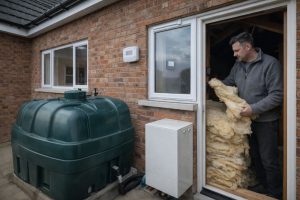 While market prices cannot be controlled, consumption can.
Energy Efficiency Improvements
- Loft insulation upgrades
- Draft-proofing
- Smart thermostats
- Annual boiler servicing
- Tank maintenance
Reducing consumption often has a greater financial impact than waiting for minor price fluctuations.
Is the Price of 500 Litres of Oil Likely to Rise or Fall?
Current Market Indicators
- Wholesale crude prices remain sensitive to geopolitical tensions.
- Exchange rate volatility continues to influence UK import costs.
- Energy transition policies may affect long-term fossil fuel demand.
Important Distinction
Forecasts are projections, not certainties. Households should avoid making purchasing decisions based purely on speculative headlines. The most reliable approach remains monitoring verified weekly averages and budgeting conservatively.
How Can Businesses and Landlords Manage the Cost of 500 Litres of Oil in Northern Ireland?
While most discussions focus on households, understanding what price is 500 litres of oil in Northern Ireland is equally important for small businesses, landlords, and rural commercial premises. Shops, guesthouses, farms, and rental properties often rely on heating oil where mains gas is unavailable.
Confirmed Considerations for Businesses
For commercial users:
- Consumption levels are usually higher than domestic households.
- Price sensitivity has a direct impact on operating margins.
- VAT treatment may differ depending on usage classification.
- Larger minimum order volumes are common.
A small rural guesthouse using 5,000–8,000 litres annually will be more exposed to price volatility than a single residential property. In such cases, even a 5p per litre change can significantly affect annual costs.
Risk Management Strategies
Businesses and landlords often adopt more structured purchasing strategies:
Bulk Purchasing Agreements
Negotiating larger volume deliveries can secure improved per-litre pricing.
Forward Planning and Storage Capacity
Investing in larger tanks allows purchasing during lower-demand seasons.
Energy Efficiency Investment
Upgrading to modern condensing oil boilers can improve efficiency by 10–15% compared to older systems.
Cost Allocation Planning
Landlords may factor projected oil costs into rental pricing or service charges, ensuring predictable budgeting.
Distinguishing Facts from Assumptions
Confirmed Fact:
Heating oil prices affect both residential and commercial users directly in Northern Ireland due to limited gas infrastructure in rural areas.
Common Misunderstanding:
Businesses can easily lock in fixed long-term oil contracts. In reality, most suppliers operate on prevailing market rates, though larger clients may negotiate terms.
Forward-Looking Consideration:
Long-term energy transition policies may gradually reduce oil dependency, but at present, oil remains a primary heating source in many Northern Ireland properties.
Conclusion
For households asking what price is 500 litres of oil in Northern Ireland, the realistic current range typically sits between £300 and £375, though weekly changes are normal.
Key takeaways:
- Prices fluctuate due to global and seasonal factors.
- Northern Ireland’s heavy reliance on oil makes monitoring essential.
- Buying strategically and improving energy efficiency offers long-term savings.
- Market predictions should be treated cautiously.
By understanding the drivers behind pricing rather than reacting to short-term headlines, households can approach heating costs with greater confidence and control.
FAQs About Northern Ireland Oil Prices
Is 500 litres of oil enough for winter in Northern Ireland?
It may cover part of winter, but most households require 1,000–2,000 litres annually depending on property size and insulation.
Do heating oil prices usually drop in summer?
Historically, prices often soften outside peak demand periods, though this is not guaranteed.
Are domestic heating oil prices regulated in Northern Ireland?
No. Unlike gas and electricity, heating oil pricing is not subject to a regulatory cap.
Can households fix or lock in heating oil prices?
Most suppliers sell at prevailing rates rather than offering long-term fixed contracts.
Does buying 1,000 litres reduce the price per litre?
Larger orders typically attract a lower per-litre rate due to economies of scale.
How frequently do suppliers update heating oil prices?
Many suppliers adjust prices daily in response to wholesale movements.
Is heating oil cheaper than mains gas in Northern Ireland?
Costs vary depending on global markets and gas tariffs. Oil can sometimes be competitive but fluctuates more directly with crude prices.