








Council tax remains one of the most debated elements of local finance in the United Kingdom. In recent years, growing inequalities in property value, inflation, and demand for fairer taxation have thrust the system into the political spotlight.
Rachel Reeves, Shadow Chancellor of the Exchequer and a prominent figure within the Labour Party, has proposed significant changes to how council tax bands are structured. With the next general election on the horizon, her plans could reshape how millions of households especially in areas like London are taxed.
This article explores Rachel Reeves’ stance on council tax reform, how the current system operates, and what potential impacts these changes could bring to homeowners, renters, and local authorities.
Who Is Rachel Reeves and Her Role in Council Tax Policy?

Rachel Reeves is a senior member of the Labour Party, serving as Shadow Chancellor since 2021. In this role, she is responsible for shaping Labour’s economic policies, including how local governments raise funds through taxes.
Known for advocating a more progressive and modern economic system, Reeves has frequently criticised the outdated nature of the UK’s tax infrastructure. Council tax reform, in particular, has become one of her focal points, signalling Labour’s intent to tackle inequality and modernise public funding models.
What Are Council Tax Bands and Why Are They Important in the UK?
Council tax bands determine how much households pay in council tax each year, based on the market value of their property. The system was introduced in 1993 and is still based on property valuations as of April 1991. There are eight bands A through H each linked to a specific value range. For example, Band A covers properties valued up to £40,000 in 1991, while Band H includes properties worth over £320,000.
This banding system is the foundation for how local authorities raise funds to support services such as waste collection, social care, and education. However, using decades-old property values to set modern-day taxes has led to an imbalanced system where owners of expensive homes, particularly in London, can pay a similar rate to those in more modest properties.
What Changes to Council Tax Bands Has Rachel Reeves Proposed?
Rachel Reeves has indicated that a Labour government would initiate a revaluation of council tax bands to better reflect today’s property market. The reform, although not yet finalised in detail, would likely aim to introduce updated valuations and potentially add new bands above the current Band H.
This would allow for more accurate assessments of high-value homes, particularly in areas where property prices have skyrocketed over the past 30 years.
Her proposals could include a move towards a more progressive taxation system, where households in wealthier areas contribute a fairer share towards local services. While specifics are still to be laid out in a full manifesto, the policy direction points towards correcting long-standing imbalances by adjusting tax obligations in line with current real estate values.
How Could These Council Tax Changes Affect London Homeowners?

If implemented, the impact on London residents could be considerable. Given the significant rise in property prices across the capital since 1991, many homes currently in mid-range bands might shift into higher ones under a new system. For example, a flat in Camden or Islington that was valued at under £100,000 in 1991 could now be worth over £1 million yet the council tax remains calculated on the outdated figure.
This means homeowners in high-value areas may see an increase in their annual council tax bills. On the other hand, those living in properties that haven’t experienced the same value surge could see their band remain unchanged or move downward. The goal of Reeves’ plan is not to penalise homeowners, but rather to align taxation with the economic realities of 2025, not those of 1991.
Why Is the Council Tax Band System Being Re-evaluated?
The main driver for council tax reform is fairness. The system’s foundation on 1991 valuations means that, in many cases, it no longer reflects the actual value of properties today. This creates significant regional inequalities. A small terraced house in northern England might fall into the same council tax band as a million-pound home in London, which clearly illustrates the unfairness.
Moreover, local authorities are facing increasing demands for public services, yet the current revenue from council tax often falls short. Updating the banding system could provide councils with a more stable and equitable stream of income while redistributing the tax burden more fairly across households.
Rachel Reeves has pointed out that the system, in its current form, disproportionately benefits owners of expensive properties and fails to generate sufficient revenue for underfunded local services. Reforming it could therefore bring both economic and social benefits, ensuring the tax system works for the many rather than the few.
When Could Rachel Reeves’ Council Tax Reforms Take Effect?
The timeline for implementing these reforms will depend on the outcome of the next general election. If Labour comes into power, a revaluation process could begin within their first term, potentially starting as early as 2026. However, the changes would not be immediate.
Such a project would require extensive data gathering, legal frameworks, and possibly the creation of new administrative systems. The Valuation Office Agency (VOA) would likely play a key role in reassessing property values nationwide. A public consultation period would also be expected to ensure transparency and stakeholder involvement before any legislation is passed.
How Does This Proposal Compare to Previous Council Tax Reforms?
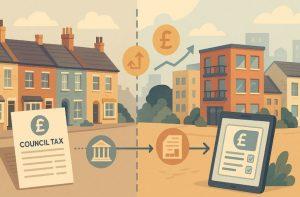
Successive governments have shied away from reforming council tax due to its political sensitivity. The last full-scale revaluation in England was proposed in the early 2000s but eventually abandoned. In contrast, Scotland and Wales have taken steps towards more modernised tax systems, with Wales conducting a revaluation in 2005 and Scotland introducing a higher rate for Band H properties.
What sets Rachel Reeves apart is her commitment to a more progressive and data-driven approach. Rather than simply adjusting rates or capping increases, her plan would tackle the root issue: the outdated valuations that currently underpin council tax. This sets the stage for a more substantial and lasting reform compared to past efforts.
What Are the Reactions from Experts and the Public on the Proposed Changes?
Reeves’ proposals have sparked a mix of enthusiasm and concern. Economists and policy experts, particularly from organisations like the Institute for Fiscal Studies and the Resolution Foundation, have welcomed the discussion around revaluation. They argue that updating council tax is essential for fairness and sustainability.
Among the general public, reactions vary depending on property values and political alignment. Some homeowners, especially those in London, fear increased tax bills, while others see the reform as a necessary correction of an outdated system. Local councils, many of which are struggling with tight budgets, are generally supportive of any move that could bring more predictable and equitable funding.
Could These Changes Lead to a More Progressive Tax System?
That’s certainly the aim. A progressive tax system ensures that those with greater financial means contribute more to the public purse. In its current form, council tax is seen by many as regressive, with lower-income households often paying a higher percentage of their income in tax than wealthier individuals.
Rachel Reeves’ approach could result in a more proportional contribution across income and property brackets. By updating property valuations and potentially adding new tax bands, the system could better reflect current economic conditions and distribute the financial burden more fairly.
How Should Property Owners Prepare for Council Tax Band Revaluation?
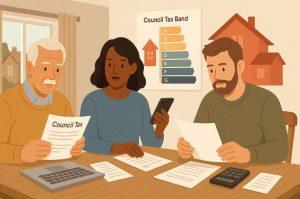 While no immediate action is required, property owners particularly in high-value areas like London should stay informed about potential changes. Understanding your property’s current market value compared to its 1991 banding could provide insight into how a revaluation might affect you.
Homeowners should also watch for public consultations or announcements from the Labour Party and local councils. If revaluation becomes policy, there may be support schemes or transitional relief for those who face sharp increases. Being financially prepared and engaged with the process will help residents navigate any changes with more confidence.
What Are the Long-Term Impacts of the Council Tax Bands Reform?
Over time, the proposed reforms could fundamentally reshape how local taxation supports public services. A fairer system based on accurate property values would improve public trust in the tax regime and provide councils with the resources they need to meet community needs.
For residents, this could lead to better-funded schools, improved local services, and more transparent taxation. However, success will depend on careful implementation and continued review to ensure the system remains responsive to market changes and regional differences.
Conclusion
Rachel Reeves’ proposed changes to council tax bands could mark one of the most significant overhauls of local taxation in decades. By addressing the outdated nature of property valuations and introducing a more progressive model, her plans aim to bring fairness and efficiency back into the system.
For Londoners, and indeed for all UK residents, these changes could mean a rebalanced relationship between property value and public contribution. Whether these ideas come to fruition will largely depend on Labour’s success at the ballot box but the debate around council tax reform is now well and truly alive.
FAQs
Will council tax increase for everyone under the new proposals?
No, not necessarily. While some households, particularly those in high-value properties, may see increases, others could remain unchanged or even benefit from a fairer system.
Are these changes guaranteed if Labour wins the election?
Although Rachel Reeves has indicated strong support for revaluation, final policy details will be confirmed in the party’s manifesto. Public consultations may also influence the implementation.
How long will a full revaluation take?
A nationwide revaluation is a complex task and could take several years to implement. Most estimates suggest it would not be completed before 2026 or 2027.
Can I challenge my current council tax band?
Yes, homeowners can appeal their current council tax band through the Valuation Office Agency if they believe it’s incorrect.
Will low-income households receive protection under the new system?
Rachel Reeves has hinted that relief measures or exemptions could be introduced to protect low-income residents, though full details are yet to be published.
How will landlords and renters be affected?
Landlords may face higher taxes if property values rise, and this could potentially be passed on to tenants in the form of increased rents.
What should I do if I’m concerned about rising council tax bills?
Keeping informed, reviewing your property’s market value, and participating in consultations are good first steps. Financial planning ahead of any changes is also advisable.