







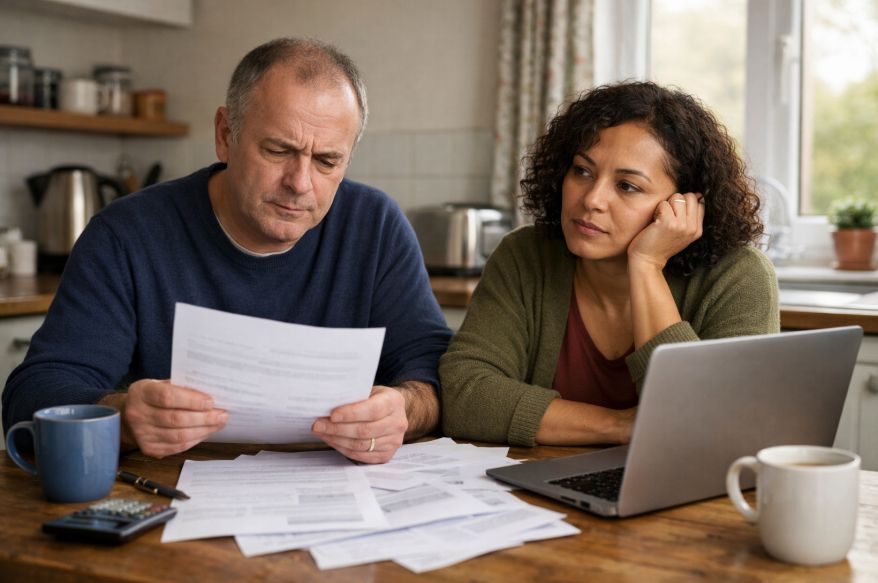
In 2026, the Department for Work and Pensions (DWP) will introduce new powers to monitor the bank accounts of benefits claimants across the UK. This initiative forms part of a broader effort to crack down on fraud, reduce overpayments, and ensure a fairer welfare system. As the government shifts towards more data-driven oversight, many are understandably concerned about what these changes mean in practice.
This blog explores what will be reviewed during the DWP’s upcoming bank account checks, who will be affected, how the process will work, and how claimants can prepare. With millions depending on benefits like Universal Credit and Housing Benefit, staying informed is vital for avoiding issues and maintaining eligibility.
Why Is the DWP Introducing Bank Account Checks in 2026?
 The DWP’s decision to introduce bank account checks is largely driven by the need to combat rising levels of fraud and error in the UK welfare system. According to government estimates, over £8 billion is lost annually due to misreported financial details, often involving undeclared income or savings above permitted thresholds.
These new checks are intended to make the system more efficient and accurate. By automatically flagging anomalies in claimant finances, the DWP aims to reduce the reliance on manual investigations and instead implement a streamlined, data-led process. This shift is not just about cost savings; it’s also about protecting public funds and reinforcing public trust in welfare distribution.
How Will the DWP Monitor Bank Accounts in 2026?
Rather than conducting full investigations into every claimant, the DWP will adopt a technology-driven approach that focuses on risk. Banks and financial institutions will use algorithmic systems to identify accounts with patterns that suggest non-compliance with benefit rules. These could include high balances, frequent large deposits, or income flows that haven’t been declared.
If any such flags are triggered, the DWP will be notified through a secure and automated channel. This will then prompt a more detailed review of the account or require the claimant to provide documentation supporting their financial position. This system is designed to minimise unnecessary intrusions while enabling early detection of fraud or unintentional errors.
Importantly, this isn’t blanket surveillance. The DWP will only receive specific data points and not full transaction histories unless an account is selected for further investigation. The monitoring will be ongoing and proactive, using technology to carry out continuous compliance reviews.
What Types of Benefits Will Be Affected by These Checks?
The DWP’s new monitoring system is expected to primarily affect means-tested benefits those that are determined based on a person’s income and savings. This includes widely claimed support like Universal Credit, Pension Credit, and Housing Benefit.
Here’s a breakdown of which benefits are likely to be subject to the 2026 checks:
| Benefit Type | Subject to Bank Checks |
| Universal Credit | Yes |
| Income Support | Yes |
| Jobseeker’s Allowance (Income-based) | Yes |
| Pension Credit | Yes |
| Housing Benefit | Yes |
| Personal Independence Payment (PIP) | No |
| Disability Living Allowance (DLA) | No |
It is important to note that benefits such as PIP and DLA, which are not means-tested, will not be subject to these bank account reviews. The focus remains on those benefits where financial eligibility plays a central role in determining entitlement.
What Financial Information Will the DWP Be Able to Access?
 The DWP will not have unrestricted access to personal financial details or daily transactions. Instead, banks will report specific financial markers to the DWP when certain thresholds or unusual behaviours are detected.
These might include a claimant’s account holding more savings than the permissible amount, frequent deposits suggesting undeclared earnings, or large one-time transactions that appear inconsistent with their stated financial situation. When these flags are raised, the DWP may request further evidence from the claimant and conduct a more comprehensive investigation if required.
What’s critical here is that the checks will be data-led and proportionate, focusing only on accounts that display potential discrepancies. The goal is not to intrude on every claimant but to ensure those receiving support are doing so within the legal framework.
Will the DWP Checks Violate Privacy Laws in the UK?
While the increased oversight has raised concerns about data protection, the DWP asserts that these bank account checks will fully comply with the UK General Data Protection Regulation (UK GDPR) and the Data Protection Act 2018. The system is designed to be minimally invasive and only collect the data necessary for ensuring benefit compliance.
The proposed legislation, which is expected to pass before the checks begin, will define the limits of data access and introduce safeguards. These may include audit trails, access logs, and legal oversight to ensure that personal financial data is handled appropriately.
Nevertheless, privacy advocacy groups have expressed strong opposition to the initiative. Critics argue that this level of surveillance risks eroding public trust and could lead to unjust penalties if data is misinterpreted. The government, however, maintains that the balance between privacy and accountability has been carefully considered in the system’s design.
Who Will Be Targeted by the DWP’s 2026 Compliance Checks?
Although the system is automated and not based on suspicion alone, it will focus on high-risk cases. These might include claimants with a history of benefit overpayments, irregular income patterns, or inconsistencies between declared income and bank activity.
The algorithmic models used by banks are expected to identify accounts where the financial activity significantly deviates from the information provided during the benefits application or reassessment process. This risk-based targeting is meant to avoid mass surveillance and instead concentrate resources where the potential for fraud is highest.
Most claimants who comply with benefit rules and accurately report their financial situation are unlikely to be flagged or affected.
How Can Claimants Prepare for the 2026 DWP Checks?
 Preparing for the DWP’s 2026 bank checks involves ensuring that your financial records accurately reflect the details you’ve provided in your benefits application. For example, if your benefits are means-tested, it’s crucial to ensure that your savings remain within the allowed threshold.
You should also update the DWP with any changes in your income, such as starting a part-time job, freelance work, or receiving pensions or support payments. If you maintain multiple accounts, make sure all are declared where relevant, as failure to do so could lead to unintended non-compliance.
Keeping records of your income and savings, as well as maintaining clear documentation for larger deposits or one-off payments, can also be helpful if you’re asked to verify your financial status.
What Are the Penalties for Fraud or Non-Compliance?
If a claimant is found to have received benefits they were not entitled to, whether through intentional fraud or misreporting, the DWP may take several actions. These could include the recovery of overpaid funds, suspension or reduction of benefits, civil penalties, and, in serious cases, criminal prosecution.
The DWP has ramped up its fraud enforcement efforts in recent years, and with the new bank check powers, it is expected that more cases will be identified and acted upon. In 2022–23, thousands of fraud cases led to prosecutions and recoveries, with the government aiming to further reduce losses under the 2026 system.
How Is the Government Justifying These New Powers?
The government’s primary justification for these new powers is to ensure fairness and accuracy in the distribution of welfare. Ministers argue that with billions lost annually to fraud and error, using technology to automate checks is both responsible and necessary.
They also claim that most claimants won’t be affected by the changes unless their financial activity is inconsistent with their benefit declarations. The intention, according to official statements, is to build a benefits system that is “robust, modern, and fair to both claimants and taxpayers.”
Despite criticism, the policy is part of a larger modernisation plan which includes greater use of real-time data across departments and improved digital infrastructure for benefits administration.
Are There Any Exemptions to DWP Bank Account Surveillance?
 Some groups may fall outside the scope of routine checks. These include claimants receiving non-means-tested benefits, individuals with severe disabilities, and potentially pensioners above a certain age. However, official guidance on exemptions has not yet been published.
Until further details are released, it is assumed that the core monitoring will target claimants whose eligibility is directly tied to income and savings, with others assessed on a case-by-case basis.
What Do Experts and Advocacy Groups Say About the 2026 DWP Checks?
The 2026 DWP bank account monitoring plans have sparked a significant public debate. While government officials emphasise efficiency and fraud reduction, advocacy groups and charities raise concerns about civil liberties, accuracy, and the potential for wrongful sanctions.
Organisations such as Citizens Advice warn that increased surveillance may discourage genuine claims or penalise individuals for simple mistakes. Others argue that automated systems, while efficient, may lack the nuance to understand individual financial circumstances and could trigger unnecessary investigations.
Despite these concerns, many agree that reform in the benefits system is necessary though opinions differ on the best way to achieve it.
What Changes Might Be Coming After 2026?
If the 2026 rollout is deemed successful, it’s likely that the DWP will extend its use of real-time data sharing and automated fraud detection. This could involve monitoring a broader range of financial products or integrating AI to detect more complex fraud patterns.
There’s also a possibility of expanding checks to include joint accounts, business accounts, and digital wallets as technology evolves. Additionally, benefit eligibility reviews could become more frequent, with automated prompts for reassessment based on changing financial circumstances.
As with any digital transformation, ongoing oversight and regulation will be essential to balance efficiency with fairness.
Conclusion
The DWP bank account checks set to begin in 2026 represent a significant evolution in how the UK welfare system enforces compliance. While the move promises greater efficiency and reduced fraud, it also raises important questions about privacy, fairness, and accuracy.
For claimants, the most important action is to stay informed and ensure that all financial information is reported accurately. By understanding what the DWP will review and how the process works, individuals can protect themselves from unnecessary stress or penalties.
As with all government initiatives, transparency, accountability, and proper guidance will be key to ensuring these checks serve their intended purpose without causing harm to those who rely on the system most.
FAQs
Can the DWP access my full bank account?
No, the DWP will only receive specific financial data points from banks, such as balances or unusual activity. Full transaction details are only requested if an account is flagged.
What triggers a DWP bank check?
Accounts may be flagged if savings exceed limits, frequent income is detected, or undeclared financial activity is found. Only those showing risk markers will be reviewed in depth.
Will these checks apply to everyone on benefits?
No. Only claimants of means-tested benefits such as Universal Credit or Housing Benefit will be affected. Non-means-tested benefits like PIP are not included.
Can I appeal a decision made due to these checks?
Yes. If you disagree with a decision based on a bank check, you have the right to appeal and provide additional evidence or clarification.
Will my partner’s bank account be reviewed too?
If you claim benefits jointly or if their income/savings affect your eligibility, their accounts may be considered. Otherwise, individual accounts are the focus.
How should I prepare for the new checks?
Ensure your declared income and savings match your actual finances. Report changes promptly and maintain clear records in case you are asked for evidence.
When will the checks start?
The DWP bank account checks are expected to begin in early 2026, following final legislation and setup of secure data-sharing protocols with financial institutions.
Leave feedback about this