







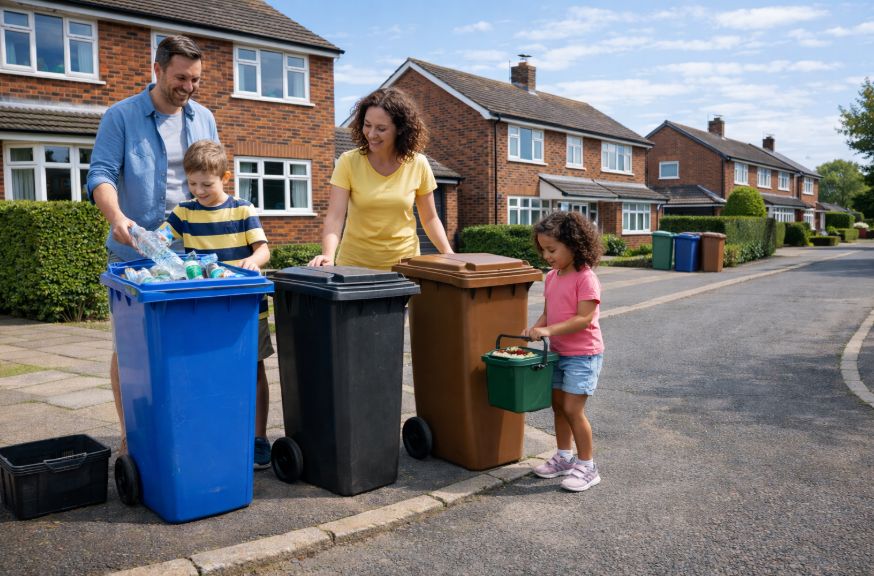
From 2026, every household in England will need to adapt to a new national standard for waste and recycling collections.
As part of the UK Government’s ongoing environmental strategy, the England bin collection rules 2026 introduce legally mandated changes that will reshape how residents manage household waste.
This reform, led by Defra and enforced through the Environment Act 2021, aims to streamline waste streams, reduce landfill use, and improve national recycling rates.
For many households, these changes will mean adjusting to new bins, learning updated sorting rules, and staying informed on local council collection schedules.
This guide explores what the changes involve, why they’re being introduced, and how they’ll affect day-to-day life for people across England from urban flats to rural cottages.
What Are the New Bin Collection Rules Coming to England in 2026?
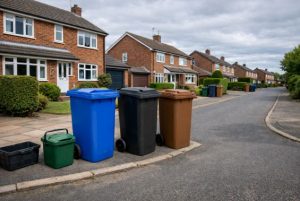 From 2026, households across England will see sweeping changes to how their rubbish and recycling are collected. The UK Government, through the Department for Environment, Food & Rural Affairs (Defra), is implementing a nationwide standard for waste collection under the Environment Act 2021, with full rollout expected by March 2026.
The new rules will require all households to separate waste into specific bins, including:
- Food waste
- Dry recyclables (glass, metal, paper, cardboard, plastic)
- Garden waste
- Non-recyclable (residual) waste
Previously, collection systems varied from council to council. But by 2026, the goal is consistency ensuring that whether you live in Manchester or Maidstone, the same categories of waste are separated and collected across England.
Why Are These Waste Collection Changes Being Introduced?
The 2026 bin reforms stem from the UK’s broader environmental goals, particularly its ambition to reduce landfill waste and meet Net Zero carbon targets by 2050. Research has shown that recycling rates in England have plateaued, with inconsistent local rules contributing to resident confusion and high levels of contamination in recyclable waste streams.
By requiring a national standard, the government intends to improve the quality of materials sent for recycling and reduce the carbon footprint associated with waste processing. A consistent system will also allow recycling companies to plan more efficiently, knowing what types of materials they will receive and how they are sorted.
These changes align England’s waste strategy with international best practices and enable the country to meet obligations under both domestic law and international agreements on climate and waste management.
How Will the 2026 Bin Collection Rules Impact Households?
For the average household, the most immediate effect will be the introduction of more bins or containers, particularly for food waste. Some councils, which currently collect mixed recycling or only general waste, will expand their services to include separate collections for different materials. This may lead to more containers being stored at homes, which could be challenging for those living in smaller properties or flats.
Residents will also need to adjust to new routines. Food waste, for example, will need to be separated daily and stored in a dedicated caddy, ready for weekly collection.
Materials such as plastic, paper, and metal packaging must be sorted more carefully to avoid contamination. For many, this will require greater attention to product labelling and a better understanding of what can and cannot be recycled under the new framework.
What Types of Waste Will Require Separate Bins?
The government’s guidelines lay out a clear framework for which waste materials must be collected separately. These requirements aim to ensure clean recycling streams and reduce waste sent to landfill.
| Waste Type | Is Separation Required? | Additional Details |
| Food Waste | Yes | Must be collected weekly for all households |
| Glass | Yes | Often combined with other dry recyclables |
| Paper and Card | Yes | Needs to be kept clean and free of food contamination |
| Plastic Packaging | Yes | Includes bottles, tubs, and in some areas, soft plastics |
| Metal Packaging | Yes | Includes cans, tins, foil trays, and aerosols |
| Garden Waste | Council Discretion | May be chargeable depending on local policy |
| Residual Waste | Yes | Non-recyclables only; will be collected less frequently |
While food waste separation is mandatory, other waste categories may be collected as part of mixed dry recycling depending on each council’s infrastructure.
How Often Will Bins Be Collected Under the New Rules?
Collection frequencies will be dictated partly by Defra’s guidelines and partly by each local authority’s capabilities. However, there are some universal standards.
Food waste must be collected weekly from all households. Other waste streams such as dry recycling and residual waste will typically be collected on a fortnightly basis. Garden waste collections, which remain optional for councils, may also follow a fortnightly pattern but are often subject to seasonal changes.
| Waste Stream | Recommended Collection Frequency |
| Food Waste | Weekly |
| Dry Recyclables | Fortnightly |
| Residual Waste | Fortnightly or Monthly |
| Garden Waste | Fortnightly (optional, may be paid) |
Some councils may increase collection frequency in areas with high population density or multi-occupancy housing.
Will These Rules Be the Same Across All Councils?
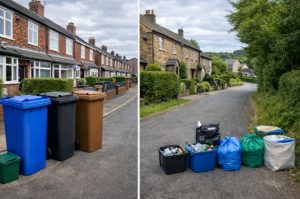 The core structure will be standardised, but some flexibility remains for local councils.
While the types of waste and minimum collection frequency are mandated, councils can decide:
- Bin sizes
- Collection days
- Whether garden waste is charged or free
- How flats and HMOs (houses of multiple occupancy) are handled
This allows local authorities to adapt based on population density, geography, and funding.
What Penalties Might Households Face for Non-Compliance?
Most councils already have enforcement policies in place, and these are likely to continue under the 2026 system. Households that fail to comply such as by placing the wrong items in recycling or contaminating food waste could face:
- Warning notices
- Refusal to collect bins
- Fines (typically issued after repeated violations)
However, education and communication will be the first step for councils, rather than immediate penalties.
How Can Residents Prepare for the 2026 Waste Collection Changes?
Residents don’t need to wait until 2026 to start adapting. Becoming familiar with proper waste separation now will make the transition easier when the new system is implemented. Many councils already offer food caddies, dry recycling bins, and educational leaflets to help households get used to sorting correctly.
It may also be worth reviewing storage arrangements, particularly for homes with limited outdoor space. Understanding which materials are currently accepted for recycling and starting to separate them correctly is a practical first step.
What Are the Environmental Benefits of These New Bin Rules?
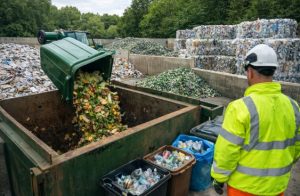 The environmental impact of this change is expected to be significant. Separating food waste alone can reduce greenhouse gas emissions substantially, as food that ends up in landfill produces methane a potent contributor to climate change.
Proper separation also ensures cleaner recycling streams, meaning more materials can be reused and fewer end up in landfill or incineration.
In the long term, the reforms should lead to higher recycling rates, less waste, and lower carbon emissions from the waste sector, contributing to broader environmental goals set by the UK Government.
What Do Local Councils and Residents Say About the Changes?
Local councils have expressed both support and concern. Urban councils appreciate the clarity and standardisation these reforms will bring, particularly in areas where residents move frequently and currently face confusion over bin rules.
However, rural and smaller councils have raised questions about logistics, funding, and whether their infrastructure can support the additional sorting and collection services.
Feedback from residents on public forums and review sites reflects a similar division. While many support the environmental goals, some express concern about having space for more bins and the potential for missed collections during busy weeks. Still, awareness appears to be growing, and councils are beginning to ramp up communication ahead of the full rollout.
What Is the Timeline for the 2026 Bin Rule Implementation?
The rollout will not happen all at once. Some councils have already begun testing new systems, while others are still preparing infrastructure.
| Year | Implementation Activity |
| 2024 | Pilot schemes begin; funding allocated to local authorities |
| 2025 | Bins distributed; communications ramp up |
| 2026 | Full implementation deadline across all English local authorities |
While some households may see changes in 2025, all councils are expected to meet the final deadline by March 2026.
How Do the 2026 Bin Rules Compare to Current Collection Methods?
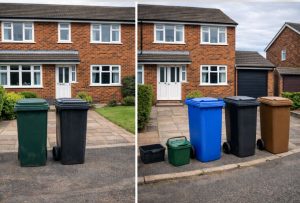 At present, England’s waste collection system is highly fragmented. Some councils collect just residual and mixed recyclables, while others offer separate food waste collection, garden bins, and more. The upcoming system will eliminate this patchwork approach by mandating the same core materials across the country.
Compared to the current inconsistent approach, the new rules should offer a clearer and more environmentally effective structure. It will also help new residents and tenants adapt faster, knowing that the categories remain the same regardless of location.
What Support Will Be Offered to Vulnerable or Elderly Residents?
The government has emphasised that no household should be left behind. Councils will continue to provide assisted collection services for those with physical or health-related difficulties. These services typically involve waste collectors retrieving and returning bins from a resident’s property, rather than expecting them to bring containers to the kerbside.
Information will also be made available in accessible formats, and residents can contact their council to request smaller containers or alternative solutions tailored to their needs.
Are Businesses Affected by These Changes Too?
While this guide focuses on households, it’s worth noting that businesses, schools, and public organisations will also be required to comply with similar waste separation regulations. Commercial properties will need to arrange collections through authorised waste carriers and ensure food waste and recyclable materials are separated at the source.
The government views this as essential in creating a consistent national waste strategy that includes both domestic and commercial contributors.
What Should Households Do Next?
 With implementation on the horizon, the most effective step households can take now is to stay informed. Councils are expected to publish more detailed guidance in the coming months, including specific changes relevant to each area. Households should look out for letters, bin labels, and community events aimed at improving understanding of the new system.
Those living in flats or high-density housing should contact their council to ask about how the new rules will apply in their buildings, particularly if storage space is an issue. Early preparation will make the transition to the new system easier and more efficient.
Conclusion
England’s 2026 bin collection reforms mark one of the most ambitious waste management overhauls in recent history. While they demand more effort from households, they also provide a much-needed standardisation that can help boost recycling and support the nation’s environmental goals.
If implemented carefully and with adequate public support, these changes could play a key role in transforming how England deals with its waste from kerbside to recycling centre.
FAQs
What is the legal basis for the 2026 bin rule changes?
The rules are part of the Environment Act 2021, which aims to improve waste management, reduce pollution, and meet sustainability targets.
Will flats have the same bin system as houses?
Not always. Councils will provide modified solutions for flats, including shared containers and space-efficient food waste bins.
What happens if my food waste bin is contaminated?
Contaminated bins may be left uncollected. Councils typically offer guidance before escalating to warnings or fines.
Can I opt out of using a food waste bin?
No. Food waste separation is mandatory under the new system and must be collected weekly from all homes.
Will extra bins be provided for free?
Most councils will supply the required bins at no charge, although garden waste bins may carry a fee in some areas.
Are these rules likely to change again after 2026?
While the core structure is designed for long-term use, updates may occur based on recycling technologies or environmental targets.
Do these changes affect recycling centres as well?
Yes. Recycling centres will also adjust to accept separately sorted materials, aligning with the new household collection streams.