







📊 SPRING STATEMENT UPDATE
Last Updated: March 3, 2026
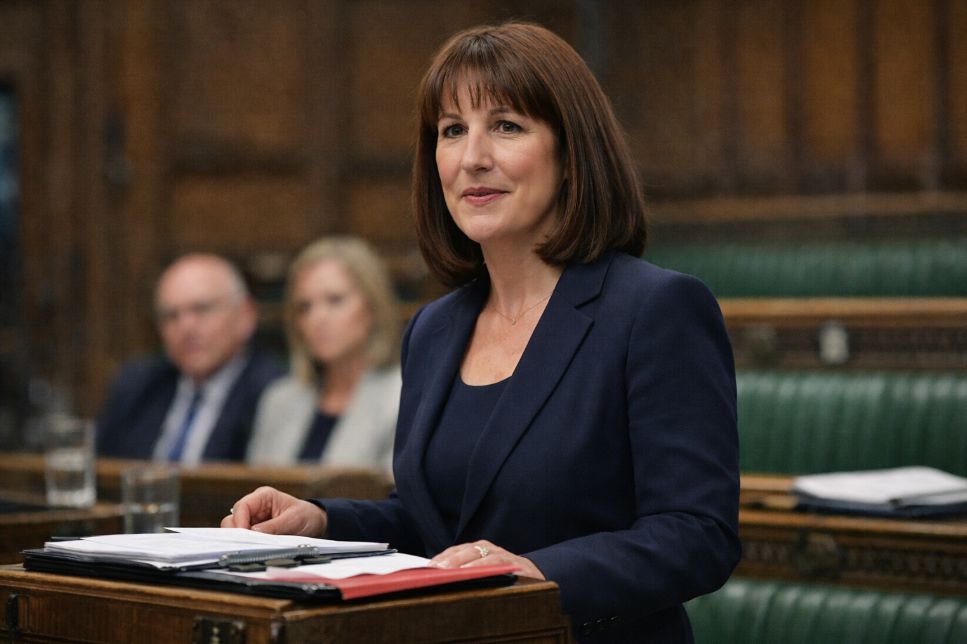
Following the latest Spring Forecast delivered by Chancellor Rachel Reeves, the Office for Budget Responsibility has revised several key economic projections affecting businesses and households across the UK.
Key highlights include a GDP growth downgrade to 1.1% for 2026, increased fiscal headroom of £23.6bn, and warnings that global geopolitical tensions could push inflation above the 2.3% forecast.
In March 2026, UK Chancellor Rachel Reeves delivered the latest Spring Statement, providing an updated picture of the UK’s fiscal outlook and economic prospects. While the Spring Statement traditionally includes fewer policy changes than the Autumn Budget, it remains an important update for businesses, investors, and policymakers.
This year’s statement focused heavily on economic stability, revised forecasts from the Office for Budget Responsibility (OBR), and the government’s strategy to manage borrowing while maintaining growth.
However, several developments have made the Spring Statement highlights for 2026 particularly significant. These include downgraded economic growth projections, rising geopolitical risks, a record tax burden trajectory, and targeted support for specific sectors such as hospitality.
For UK businesses particularly those operating in London the statement provides important insight into inflation risks, labour market trends, and potential policy shifts expected later in the year.
Stability is the single most important precondition for economic growth.
What Is the Spring Statement in 2026?
 The Spring Statement is an annual update delivered by the Chancellor of the Exchequer that outlines the government’s fiscal position and provides revised economic forecasts.
Unlike the Autumn Budget, which often introduces major tax changes or new spending commitments, the Spring Statement typically focuses on:
- Updated economic forecasts
- Progress toward fiscal targets
- Analysis of economic risks
In 2026, the statement arrives during a period of moderate economic growth and continuing global uncertainty. Businesses, investors, and policymakers closely monitor the announcement to understand how economic conditions may evolve.
What Are the Biggest Spring Statement Highlights from Reeves in 2026?
The Spring Statement 2026 contained several important developments affecting economic forecasts, public finances, and business conditions.
The key announcements included:
Growth Forecast Downgrade
The Office for Budget Responsibility (OBR) revised the UK’s GDP growth forecast for 2026 down to 1.1%, compared with the earlier estimate of 1.4% in November 2025. This downgrade reflects weaker global economic momentum and continued pressure on consumer spending. While the economy is still expected to grow, the slower pace signals a cautious outlook for businesses planning investment or expansion.
Inflation Risks from Global Geopolitical Tensions
The OBR warned that escalating tensions in the Middle East could impact global energy markets. Because the forecasts were finalised before the recent Iran–Israel conflict escalation, many analysts believe the 2.3% inflation forecast may already be outdated. Higher energy prices could push inflation upward and delay potential interest rate cuts from the Bank of England.
Increased Fiscal Headroom
Chancellor Reeves confirmed that the government now has £23.6 billion in fiscal headroom against its fiscal stability rules. This financial buffer gives the government greater flexibility to respond to economic challenges. Economists believe the increased headroom may allow the Chancellor to introduce tax cuts or spending measures in the Autumn Budget 2026.
Updated Employment Forecasts
According to the OBR, unemployment is expected to peak at 5.3% in 2026, representing approximately 1.9 million people. This would be the highest level since 2014. The rise reflects slower economic growth and adjustments in the labour market as businesses respond to higher costs and changing demand.
Business Rates Relief for Hospitality
The Spring Statement confirmed a 15% business rates discount for pubs and music venues in England starting April 2026. The measure aims to support hospitality businesses that have faced rising operating costs and changing consumer spending patterns in recent years.
Incentives to Support SME Investment
To encourage business investment, the government continues to promote the 40% First-Year Allowance for plant and machinery, introduced earlier in 2026. This allows companies to deduct a significant portion of investment costs from taxable profits immediately, helping SMEs expand operations and improve productivity.
These measures provide a clearer picture of the government’s economic strategy and the challenges facing the UK economy.
How Has the UK Economic Growth Forecast Changed?
The Office for Budget Responsibility revised the UK’s economic growth outlook for 2026.
GDP Growth Outlook
The OBR reduced the UK’s expected GDP growth to 1.1%, down from its previous 1.4% forecast issued in November 2025.
The downgrade reflects several pressures including:
- Slower international growth
- Continued household spending constraints
- The lingering effects of higher interest rates
While the revision suggests weaker growth than previously expected, the UK economy is still projected to expand rather than contract.
For businesses, this means planning for steady but modest economic conditions in 2026.
Why Are Analysts Warning That the Inflation Forecast May Already Be Outdated?
 One of the most significant developments surrounding the Spring Statement is the geopolitical risk factor that emerged shortly after the OBR finalised its forecasts.
“In an increasingly dangerous world, it is incumbent on this government to chart a course through uncertainty… to secure our economy against shocks and protect families.”
Middle East Volatility
The OBR’s economic projections were completed before the escalation of conflict in the Middle East involving Iran and Israel.
As a result, many economists now believe that the OBR’s 2.3% inflation forecast could quickly become outdated if energy prices rise significantly.
Higher oil and gas prices typically translate into:
- Increased transport costs
- Higher electricity and heating bills
- Rising production costs for businesses
For London businesses, this could mean energy expenses exceeding earlier expectations.
Another consequence may be a delay in interest rate cuts by the Bank of England, which had previously been anticipated if inflation continued to decline.
What Sector Support Was Announced for Businesses?
Although the Spring Statement did not introduce large-scale tax reforms, several sector-specific measures were confirmed.
Hospitality Relief
Pubs and music venues in England will receive a 15% business rates discount starting in April 2026.
The government says this support aims to help hospitality and cultural venues that have faced financial pressure from rising costs and reduced consumer spending in recent years.
SME Investment Incentives
Another key incentive remains the 40% First-Year Allowance for main-rate plant and machinery, which came into effect on 1 January 2026.
This policy allows businesses to deduct a large portion of investment costs immediately from taxable profits.
For London-based SMEs planning equipment upgrades or expansion, this allowance provides a meaningful incentive to invest.
Dividend Tax Changes
Business owners should also be aware of a tax change affecting dividends.
From April 2026, the dividend tax rate will rise by 2%, bringing the basic rate to 10.75%.
This increase could affect company directors and shareholders who rely on dividend income as part of their compensation structure.
Why Is the UK Tax Burden Still Expected to Reach Record Levels?
While the Chancellor announced no new taxes during the Spring Statement in order to maintain economic stability, the overall tax burden in the UK continues to rise.
According to official projections, the UK tax burden is expected to reach 38% of GDP by 2030–31, which would represent the highest level since the Second World War.
Fiscal Drag
A key reason for this increase is a phenomenon known as fiscal drag.
Fiscal drag occurs when income tax thresholds remain frozen while wages gradually increase.
As a result, more workers move into higher tax brackets without any formal tax rate increase.
For high-earning professionals in London, frozen income tax thresholds until 2031 could gradually increase their tax liabilities even without new tax legislation.
What Do the Latest Employment and Wage Forecasts Show?
 The Spring Statement also included updated labour market projections.
Unemployment Forecast
The OBR expects unemployment to peak at 5.3% in 2026, equivalent to roughly 1.9 million people unemployed.
This represents a rise from the previous forecast of 4.9%.
While higher unemployment could reflect slower economic growth, the labour market is still expected to remain relatively resilient compared with previous downturns.
National Living Wage Increase
Workers across the UK will also see a pay increase.
From April 2026, the National Living Wage will rise by 4.1% to £12.71 per hour.
For employees, this increase provides additional income support. For businesses, particularly in hospitality and retail, it may increase labour costs.
Why Does the Government’s Fiscal Headroom Matter?
One of the most closely watched metrics in the Spring Statement is the government’s fiscal headroom.
Fiscal Stability Position
Chancellor Reeves now has £23.6 billion in headroom against her fiscal stability rule, representing the largest margin since late 2022.
Fiscal headroom refers to the financial buffer available before the government breaches its borrowing targets.
This increase is significant because it gives the Chancellor greater flexibility for future policy decisions.
What It Means for the Autumn Budget?
Many economists believe this additional headroom provides Reeves with potential “policy ammunition” for the Autumn Budget 2026.
Possible future measures could include:
- Targeted tax cuts
- Additional investment spending
- Business incentives
As a result, many analysts expect major policy changes to be announced later in the year rather than in the Spring Statement.
What Are the Key Takeaways from the Spring Statement 2026?
The Spring Statement highlights reveal a government focused on maintaining stability while preparing for potential economic risks.
Key points include:
- GDP growth downgraded to 1.1%
- Inflation forecast of 2.3%, though analysts warn it may be outdated due to geopolitical tensions
- £23.6 billion fiscal headroom, the highest since 2022
- Unemployment expected to reach 5.3%
- 15% business rates discount for pubs and music venues
- 40% investment allowance encouraging SME investment
- UK tax burden projected to reach 38% of GDP
These factors will shape the economic environment for businesses and households throughout 2026.
How Do the Spring Statement 2026 Forecasts Compare at a Glance?
To make the Spring Statement highlights easier to digest, here’s a quick comparison table of the headline forecasts and policy measures that matter most for UK businesses and SMEs—especially those planning budgets, hiring, and investment decisions in 2026.
| Area | Spring Statement 2026 Figure | What It Could Mean for UK Businesses / SMEs |
|---|---|---|
| GDP growth (2026) | 1.1% (down from 1.4% in Nov 2025) | Slower demand growth; more cautious sales forecasts and investment planning. |
| Inflation outlook | 2.3% forecast (but risk of being outdated) | Potential for higher operating costs if energy prices rise; pricing strategies may need flexibility. |
| Unemployment peak (2026) | 5.3% (approx. 1.9m people) | Hiring could become easier in some sectors, but weaker demand may affect expansion plans. |
| Fiscal headroom | £23.6bn | More scope for tax/spend moves later—Autumn Budget 2026 becomes the key event to watch. |
| Hospitality business rates relief | 15% discount for pubs & music venues (England) from April 2026 | Targeted cost relief for eligible venues; may support cash flow and local footfall recovery. |
| SME investment incentive | 40% First-Year Allowance for main-rate plant & machinery (from 1 Jan 2026) | Encourages equipment upgrades and productivity investment—useful for London-based SMEs scaling operations. |
| Dividend tax change | +2% (basic rate to 10.75%) from April 2026 | Company owners using dividends may face higher personal tax bills—review profit extraction strategy. |
| National Living Wage | £12.71/hour from April 2026 | Higher wage costs for labour-heavy sectors; may require price, rota, or productivity adjustments. |
Conclusion
The Spring Statement 2026 provides a cautious but informative update on the UK’s economic direction.
While Chancellor Reeves introduced few major policy changes, the statement highlighted several critical developments: slower economic growth, rising geopolitical risks, a record projected tax burden, and targeted support for certain business sectors.
For London businesses in particular, the coming months may bring both opportunities and challenges. Rising wages and investment incentives could support growth, but higher energy costs and increased taxation through fiscal drag remain concerns.
With fiscal headroom now at £23.6 billion, attention is already shifting toward the Autumn Budget 2026, where more significant policy decisions are widely expected.
Source : https://www.gov.uk/government/speeches/spring-forecast-2026-speech
FAQs About Spring Statement Highlights 2026
What were the main Spring Statement highlights in 2026?
Key highlights included a GDP growth downgrade to 1.1%, rising fiscal headroom to £23.6bn, hospitality business rates relief, and warnings about geopolitical risks affecting inflation.
Why was UK economic growth downgraded?
The Office for Budget Responsibility lowered its growth forecast due to slower global demand, higher borrowing costs, and weaker consumer spending.
How could Middle East tensions affect UK inflation?
If geopolitical conflict raises energy prices, it could increase transport and production costs, pushing inflation higher than the 2.3% forecast.
What support was announced for the hospitality sector?
Pubs and music venues in England will receive a 15% business rates discount starting April 2026.
What is fiscal drag in the UK tax system?
Fiscal drag occurs when tax thresholds remain frozen while wages increase, causing more people to move into higher tax brackets.
How much fiscal headroom does the government currently have?
The government currently has £23.6 billion in fiscal headroom under its fiscal stability rule.
When will major economic policy changes likely happen?
Many economists expect larger fiscal policy changes to be announced during the Autumn Budget 2026.