





📌 Caramella Closure: Quick Snapshot
Mollie-May Rossi
Caramella
2017
1 June 2026
£12 Million
Prenton, Wirral
🔑 Key Takeaways
- Caramella closed on 1 June 2026 after nine years of independent trading.
- The fashion brand generated up to £12 million in annual revenue at its peak.
- Rising operational costs and financial losses contributed to the closure.
- The business faced increasing pressure from fast-fashion and social commerce platforms.
- The closure highlights wider challenges affecting UK independent fashion brands.
| Topic | Summary |
|---|---|
| What Happened? | Caramella officially ceased trading after nearly a decade in business. |
| Why Did It Close? | Unsustainable losses, rising costs, and changing retail market conditions. |
| How Big Was It? | A £12 million fashion brand with national recognition and celebrity support. |
| Industry Impact | Raises concerns about the future sustainability of independent UK fashion labels. |
| Founder’s Response | Mollie-May Rossi described the closure as heartbreaking and unexpected. |
On 1 June 2026, the UK independent fashion world woke up to news nobody saw coming. The Mollie-May Rossi Caramella closure was confirmed in a deeply personal statement posted directly to the brand’s loyal community and with it, nearly a decade of hustle, heart, and hard-won success came to an abrupt end. The Mollie-May Rossi Caramella closure sent an immediate shockwave through the UK independent fashion industry, sparking uncomfortable questions about the sustainability of even the most beloved homegrown labels.
Caramella was not a struggling startup. At its peak, the brand was generating £12 million in revenue a remarkable achievement for an independently owned, Wirral-based fashion label competing in a world dominated by fast-fashion giants and algorithm-driven e-commerce behemoths. Its sudden end is a cautionary tale that every independent retailer in Britain needs to hear.
Who Is Mollie-May Rossi and How Did She Build Caramella?
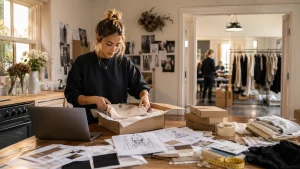
Few fashion success stories are as genuinely inspiring as Caramella’s. Back in 2017, a young Mollie-May Rossi was doing what most students do juggling university psychology studies and a part-time job to pay the bills. But she was also doing something far less ordinary: building a fashion brand from her mother’s kitchen table in Prenton, on the Wirral.
There was no venture capital, no glossy PR agency, and no industry connections. Just grit, taste, and a keen eye for what women in the UK actually wanted to wear. Caramella quickly developed a signature aesthetic glamorous, confident, and aspirationally priced that resonated far beyond the Wirral.
The brand earned co-signs from reality TV royalty. Stars from Love Island, TOWIE (The Only Way Is Essex), and The Real Housewives of Cheshire were spotted in Caramella pieces the kind of organic, star-powered exposure that money genuinely cannot buy. For an independent label, this was the equivalent of a Super Bowl ad.
Within a few years, Mollie-May had built a tight-knit team, bringing in family members alongside trusted staff at her Prenton base, growing the business into a fully operational, globally reaching brand. The kitchen table was long gone; in its place, a multi-million-pound operation peaking at a staggering £12 million in annual revenue.
How Big Did Caramella Actually Become Before It Closed?
Size matters when telling this story honestly, because the Caramella closure was not the fall of a fringe boutique. This was a brand operating at genuine commercial scale.
- Peak annual revenue of £12 million placing Caramella firmly in the top tier of UK independent fashion labels.
- A recognised brand with an established national and international customer base, built entirely without external investment.
- Celebrity and influencer credibility via Love Island, TOWIE, and The Real Housewives of Cheshire some of the UK’s most commercially powerful reality TV platforms.
- A real, people-first operation based in Prenton, Wirral, employing a close-knit team including family members.
- Nine years of continuous, independent trading a significant milestone in any retail sector, but particularly in the brutal world of online fashion.
This is the full context of what was lost on 1 June 2026. Not a startup that never found its feet but a proven, peak-performing brand that could not survive the forces stacked against it.
Why Did the Caramella Brand Shut Down Despite Its Success?
Successful brands do not fold overnight without reason. The Caramella closure reflects a painful convergence of pressures that have quietly been building across the UK’s independent fashion sector for years. Here is how it unravelled.
Devastating Financial Losses
At the heart of the closure lies a stark financial reality: the losses became unsustainable. In her statement, Mollie-May described the moment of “coming to terms with that reality” as heartbreaking. For a founder who had bootstrapped a business from nothing into a £12 million powerhouse, admitting that survival was no longer possible speaks to the severity of the financial situation.
- Revenue shortfalls against fixed operational costs create a widening gap that reserves cannot absorb indefinitely.
- A period of rebrand investment undertaken in late 2025/early 2026 front-loads significant costs before any return is realised.
- Without external investment or a credit lifeline, independent owners face impossible choices between paying staff, servicing stock, or marketing for growth.
A Changing and Challenging Retail Landscape
When Mollie-May launched Caramella in 2017, the e-commerce landscape was competitive but navigable for a brand with the right look and social media savvy. By 2025–2026, it had transformed into something altogether more brutal.
- Ultra-fast fashion platforms offering algorithmically optimised, near-zero-margin pricing have fundamentally altered consumer price expectations.
- Social commerce shopping directly via Instagram, TikTok Shop, and Pinterest has compressed the discovery-to-purchase journey in ways that disadvantage established independent websites.
- Consumer loyalty now demands continuous content output, influencer pipelines, and paid advertising at a scale that eats margin ferociously.
- Post-pandemic shifts in spending habits among the 18–35 demographic have become notoriously difficult to predict and harder still to serve profitably.
Escalating Overhead Costs
The unrelenting increase in operational overheads, which are charges that are mostly unseen to consumers but have a catastrophic effect on P&L, is arguably the most underrated challenge facing independent fashion firms.
- Supply chain costs: Global disruption, rising freight costs, and supplier minimum order quantities all disproportionately impact smaller brands who cannot leverage volume discounts.
- Logistics and returns: The UK consumer’s expectation of free, fast delivery and hassle-free returns creates a logistics overhead that can render individual orders unprofitable.
- Staff and premises costs: Running a real team in a real location carries wage bills, National Insurance contributions, and facility costs that do not flex downward when revenues soften.
Technology and platform fees: From website hosting to payment processing, marketplaces, and subscription tools, the digital operating cost of a fashion brand has risen sharply since 2017.
When combined, these costs create a structural squeeze that even strong revenue cannot always overcome particularly during a period of rebrand investment and market repositioning.
Who Is Emma Page and What Role Did She Play at Caramella?

After running Caramella independently for nine years, Mollie-May made a significant strategic move in late 2025 and early 2026: she brought in Emma Page as director and partner to help execute a full rebrand of the business.
This was not a sign of weakness it was the action of a confident, forward-thinking founder who recognised that scaling to the next level required fresh leadership and operational expertise alongside her own. Bringing in a director-level partner is a significant, costly step that signals genuine ambition.
That this bold move still was not enough to prevent the closure makes the story all the more painful. The rebrand effort was real, the investment was real, and the intention to build something greater was real. The financial headwinds, unfortunately, were greater still.
What Did Mollie-May Rossi Say in Her Closure Statement?
Mollie-May did not hide behind corporate language or legal boilerplate. On 1 June 2026, she addressed her community directly and with raw, unfiltered honesty.
That statement carries weight far beyond one brand. Every independent fashion founder in the UK who has invested their identity, family, and financial stability into a brand they created themselves will find resonance in this message.
The Caramella community built over nine years of authentic engagement deserved that honesty. And they received it. In a media landscape full of sanitised brand communications, Mollie-May’s willingness to be vulnerable was both courageous and deeply human.
What Does the Caramella Closure Mean for UK Independent Fashion?
The implications stretch far beyond Wirral. If a £12 million brand with celebrity backing, a passionate customer base, a founding story that media loves, and a founder willing to invest in new leadership cannot survive then the structural conversation about independent fashion in the UK is long overdue.
The Caramella closure is a signal, not an anomaly. Across Britain, independent fashion labels are facing the same convergence of pressures: rising costs, platform dependency, shifting consumer behaviour, and the brutal economics of competing against deep-pocketed global players.
- Independent labels need better access to growth capital before they reach crisis point not after.
- Government and industry bodies should address the disproportionate cost burden placed on small-to-medium fashion brands through logistics, returns, and digital infrastructure.
- Consumers who value independent fashion need to translate that sentiment into purchasing behaviour loyalty cannot survive on sentiment alone.
Caramella was not poorly run. It was caught in a tide that is sweeping across the entire sector. That distinction matters enormously when drawing lessons for what comes next.
What Is Caramella’s Legacy and What Comes Next for Mollie-May Rossi?
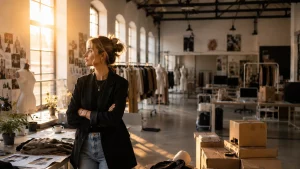
Mollie-May Rossi built something extraordinary. From a kitchen table in Prenton to a £12 million globally recognised fashion brand, her nine-year journey stands as one of the UK’s most remarkable independent entrepreneurial stories of the last decade. The Caramella closure does not erase that.
What it does do is shine an unflinching light on the structural challenges facing independent fashion in Britain. Rising costs, platform dependency, shifting consumer behaviour, and the brutal economics of modern retail are not problems that passion alone can solve.
Mollie-May Rossi built a brand that meant something to real people. That is an achievement no closure announcement can diminish. And if her story tells us anything, it is that her next chapter when it comes will be worth watching.
FAQs About the Caramella Closure
Will Caramella ever relaunch under a new name or ownership?
As of the closure announcement on 1 June 2026, there has been no confirmation of a relaunch, sale of the brand IP, or plans to continue trading under a new name. Mollie-May’s statement suggested a period of personal reflection rather than an immediate pivot. However, given her track record, many in the industry expect her entrepreneurial journey is far from over.
What will happen to outstanding Caramella customer orders and returns?
Customers with outstanding orders or pending returns should check any direct communications from the brand and monitor official social media channels for guidance. In cases of business closure, UK consumers may also be protected through chargeback rights via their credit or debit card provider if orders are undelivered.
Is the Caramella brand closure connected to the wider UK retail crisis in 2026?
While Caramella’s specific circumstances are unique to the business, the closure reflects broader market conditions affecting UK independent fashion brands in 2026 including pressure from ultra-fast fashion competitors, rising operational costs, and the rapid evolution of social commerce. Caramella is unfortunately not alone; dozens of UK independent labels have faced similar pressures in recent years.
How long had Caramella been trading before it closed?
Caramella traded for nine years, from its founding in 2017 through to its closure announcement on 1 June 2026. During that time, it grew from a one-person operation run from a kitchen table to a multi-million-pound brand with a national team, international customers, and celebrity recognition.
What lessons can other UK independent fashion brands learn from the Caramella closure?
The Caramella story offers several critical lessons for independent fashion founders. Diversifying revenue streams early including wholesale, physical retail, and collaborations can reduce reliance on direct-to-consumer e-commerce alone. Keeping a close eye on operating costs, particularly logistics and returns policies, is essential. And perhaps most importantly, seeking external investment or strategic partnerships before losses become critical can provide the runway needed to navigate difficult market conditions.