







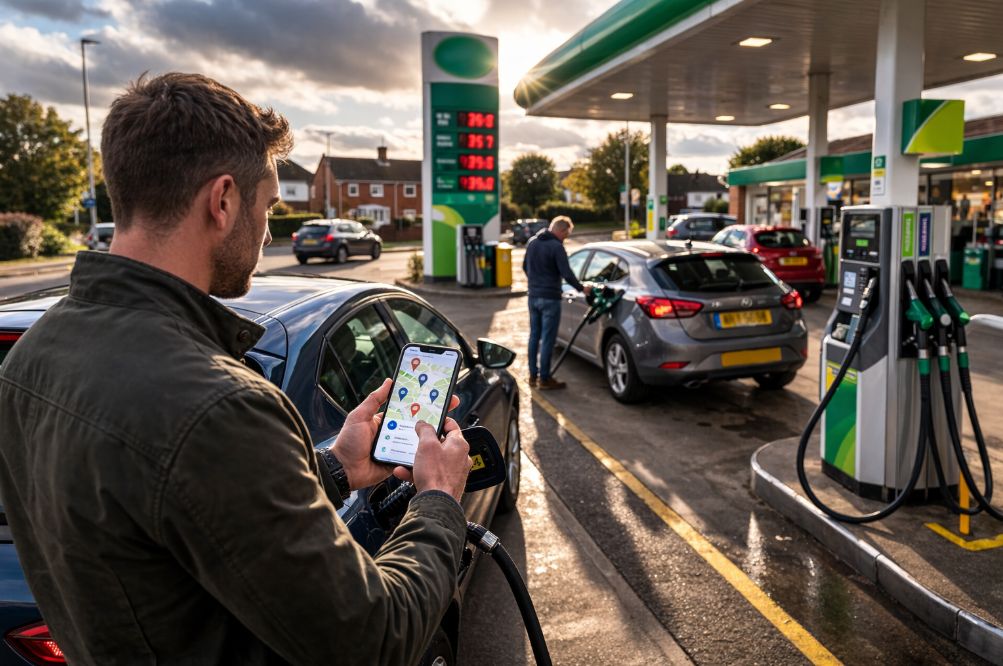
Government Fuel Finder App UK – Quick Overview
| Feature | Details |
|---|---|
| Scheme Name | UK Fuel Finder Transparency Scheme |
| Launched By | Competition and Markets Authority (CMA) |
| Purpose | Provide live petrol and diesel price data to drivers across the UK |
| How It Works | Fuel retailers share real-time pump prices through an open data system |
| Coverage | Approximately 95% of UK fuel retailers |
| Price Update Frequency | Within 30 minutes of a price change |
| Apps Using the Data | PetrolPrices, Waze, myRAC, Google Maps |
| Estimated Savings | £4–£6 per tank for drivers who compare fuel prices |
| Primary Benefit | Helps drivers find the cheapest petrol nearby |
Have you ever pulled into a petrol station only to discover that the price per litre is 10p or more higher than the station just a mile away?
For many UK drivers, this situation has become increasingly common over the past few years. Rising UK petrol prices, combined with controversial pricing behaviour often described as the “rocket and feather” effect, have left motorists feeling frustrated. Prices seem to rise quickly when oil costs increase, yet fall very slowly when wholesale prices drop.
To tackle this lack of transparency, the UK government introduced a major reform commonly known as the Government Fuel Finder App initiative. Although there isn’t a single official government mobile application, the government now requires most fuel retailers to publish live pricing data. This open data powers several apps and tools that help drivers find the cheapest petrol near them in real time.
The result is a new era of live fuel data transparency, helping drivers save money while encouraging fair competition between petrol stations across the country.
This guide explains how the system works, which apps use the data, and how you can save on fuel in 2026 and beyond.
What is the UK Government Fuel Finder Scheme?
The Government Fuel Finder App concept comes from a transparency initiative introduced after investigations into fuel pricing in the UK.
The Competition and Markets Authority (CMA) conducted a major market study into fuel pricing practices across the country. The investigation found that weak competition and poor price transparency allowed some retailers to charge significantly higher prices without consumers easily noticing.
To address this, regulators proposed a Fuel Finder scheme, which requires retailers to provide real-time pricing data.
The goal is simple:
- Give drivers access to accurate petrol prices
- Increase competition between petrol stations
- Reduce unfair price differences across regions
How the Open Data Mandate Works?
Under the Fuel Finder scheme, most fuel retailers in the UK must share their prices through an open data system.
Key aspects include:
- Around 95% of UK fuel retailers are required to participate.
- Petrol and diesel prices must be updated within 30 minutes of a change.
- Data is provided via a centralised open database.
- Developers and apps can access the data to display live fuel prices.
This creates a nationwide fuel price database that powers the modern Government Fuel Finder App ecosystem. For the first time, drivers can see near real-time pump prices across thousands of petrol stations.
Why There Isn’t One “Official” Government App?
A common misconception is that the government launched a single official mobile app.
In reality:
- The government provides the data infrastructure
- Technology companies build the apps
This approach encourages innovation while ensuring the data remains accurate and transparent. As a result, several well-known navigation and motoring apps now integrate live fuel data from the government system.
Top Apps Using Official Government Fuel Data
Several trusted apps already use the open data feed created through the Government Fuel Finder App scheme. These apps present the data in different ways, helping drivers quickly identify the cheapest fuel nearby.
| App Name | Key Feature | Best For |
|---|---|---|
| PetrolPrices | Large UK user community and price history tracking | Monitoring trends and verifying prices |
| Waze | Integrated navigation and route optimisation | Finding cheap fuel while driving long distances |
| myRAC | Built-in “Fuel Finder” for members | RAC users and roadside assistance integration |
| Google Maps | Simple interface and quick searches | Drivers needing fast location-based results |
PetrolPrices
PetrolPrices is one of the longest-running fuel comparison platforms in the UK. It combines live fuel data with community reporting, giving drivers detailed insights into pricing trends across the country.
Waze
Waze integrates petrol price data directly into its navigation system. When planning a route, the app can display nearby stations and highlight the cheapest petrol options along the journey.
myRAC
The RAC’s mobile app includes a Fuel Finder tool powered by real-time data. Drivers can quickly see nearby stations and compare prices within seconds.
Google Maps
Google Maps now displays petrol station prices in many UK locations. For many drivers, this is the simplest way to check fuel prices while already using navigation.
Data-Driven Insights: How Much Can You Save?
Fuel price transparency doesn’t just provide information – it can lead to real savings. According to industry analysis and CMA reports, drivers who regularly compare prices can save between £4.50 and £6.00 per tank. Over a year, that can easily add up to £200 or more in savings for regular drivers.
Motoring experts have highlighted the impact of increased transparency.
“The transparency provided by the Fuel Finder scheme isn’t just about saving pennies; it’s about forcing competitive pressure back into the market.”
In other words, when drivers can easily compare prices, petrol stations must compete more aggressively. This benefits consumers across the entire UK fuel market.
Real-Life Example
Consider a commuter driving from Croydon into Central London.
Two nearby petrol stations might charge:
- Station A: £1.52 per litre
- Station B: £1.64 per litre
For a 55-litre tank, choosing the cheaper station saves £6.60 instantly.
Without a Government Fuel Finder App powered by live data, most drivers would never know about this price difference.
Step-by-Step: How to Find the Cheapest Petrol Near You
Using the Government Fuel Finder data is simple. Most apps follow a similar process.
1. Download a Verified Fuel Price App
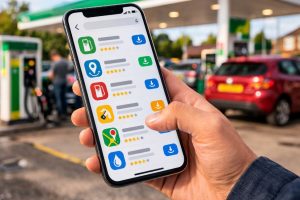 Start by installing a trusted fuel price comparison app that uses the UK government’s official fuel data feed. These apps collect live pricing information from petrol stations and display it in a simple map or list format.
Some of the most reliable apps used by UK drivers include:
- PetrolPrices – Known for its large community and historical price tracking.
- Waze – A navigation app that also shows petrol prices along your driving route.
- myRAC – Offers a built-in Fuel Finder feature for RAC members and drivers.
- Google Maps – Convenient for quick fuel searches while navigating.
Using a verified app ensures you are seeing accurate and regularly updated fuel prices, rather than outdated information.
2. Enable Location Services
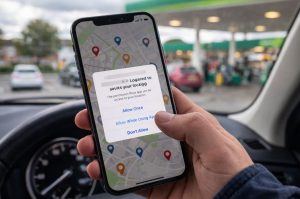 Once the app is installed, allow it to access your location on your smartphone.
This feature is essential because it allows the app to:
- Detect where you are currently located
- Display petrol stations within a nearby radius (typically around 5 miles)
- Show the closest and cheapest stations near you
Instead of manually searching different areas, location services instantly provide a local map of available fuel prices, making it much easier to find affordable options nearby.
3. Check the “Last Updated” Timestamp
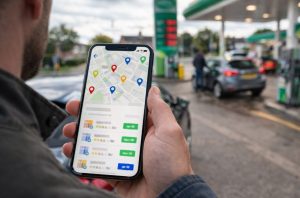 Fuel prices can change multiple times a day, especially during periods of market fluctuation.
Most fuel finder apps show a “last updated” timestamp beside each petrol station listing. This tells you when the price was most recently reported or updated.
When comparing prices:
- Prioritise stations with recent updates
- Be cautious if the price hasn’t been updated for several hours
- Choose stations where the information reflects current market conditions
Checking the timestamp helps ensure the price you see in the app is the same price you’ll likely pay at the pump.
4. Compare Supermarkets vs Major Brands
Many drivers assume that supermarket petrol stations always offer the cheapest fuel, but this isn’t always true.
With access to live fuel data, you can compare prices across different types of stations, including:
- Supermarket petrol stations
- Independent local stations
- Major fuel brands
In some areas, independent petrol stations may offer lower prices than large chains in order to attract more customers.
By checking multiple options before refuelling, you may discover unexpected savings just a few streets away.
Confirmed Facts vs Misconceptions About the Fuel Finder Scheme
To avoid confusion, it’s important to separate verified information from rumours circulating online.
Confirmed Facts
- The UK government introduced a fuel price transparency scheme.
- Retailers must provide near real-time pricing data.
- Apps can use this data to show live petrol prices.
- Drivers can use these apps to find cheaper fuel nearby.
Proposed or Ongoing Developments
- Improved nationwide data coverage and accuracy
- Potential integration with more navigation platforms
- Enhanced tools for comparing fuel costs over time
These improvements are expected as the system evolves through 2025–2026.
Misinformation
Some claims circulating online are incorrect, including:
- The government released one official Fuel Finder app
- The scheme forces stations to set lower prices
- Petrol prices are regulated or fixed by the system
In reality, the initiative only increases price transparency, allowing the market to become more competitive.
Internal and External Insights
The Government Fuel Finder App initiative is part of a broader conversation about cost of living and transport expenses in the UK.
Related topics include:
- UK inflation trends
- The future of electric vehicles
- The rising cost of urban transport
Understanding fuel pricing is becoming increasingly important for consumers and businesses alike.
As transparency improves, the UK fuel market may become more competitive and consumer-friendly.
Conclusion
FAQs About Government Fuel Finder App UK
Is there an official Government Fuel Finder app in the UK?
No. The government provides an open data system that shares live fuel prices, while third-party apps such as PetrolPrices, Waze, and myRAC display the information.
How accurate are petrol price apps in the UK?
Apps using the government fuel data feed are generally very accurate because retailers must update prices frequently, usually within 30 minutes of any change.
Can fuel price apps really save money?
Yes. Studies suggest drivers using price comparison apps can save around £4–£6 per tank by choosing cheaper stations nearby.
Are supermarket petrol stations always cheaper?
Not always. While supermarkets often offer lower prices, independent stations sometimes match or beat those prices depending on local competition.
Does the Fuel Finder scheme control petrol prices?
No. The scheme does not regulate prices. It only requires retailers to share price data so drivers can compare options.
Do all petrol stations participate in the scheme?
Most major fuel retailers and supermarkets are required to participate, covering roughly 95% of the UK market.
Will more apps use the fuel data in the future?
Yes. As the open data system expands, more navigation apps, car dashboards, and transport services are expected to integrate the information.