







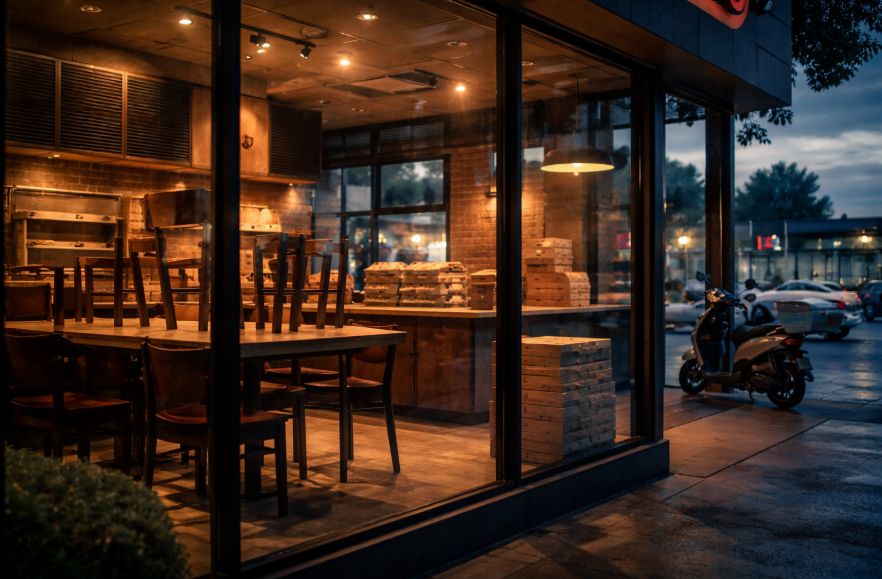
Why This Major Pizza Chain Closes US Locations in 2026
Rising labour costs, food inflation, declining dine-in demand, and changing consumer behaviour are forcing major pizza chains to rethink their footprint.
Main Issue
Closures driven by shrinking margins.
Cost Pressure
Labour and food costs rising steadily.
Consumer Shift
Move towards cheaper pizza options.
Future Trend
Smaller delivery-first stores.
Key Takeaways
- Chains are closing underperforming US stores.
- Rising costs are squeezing profit margins.
- Consumers are becoming more price-sensitive.
- Dine-in demand continues to decline.
- Technology and delivery are now essential.
- Lean store formats are the future.
At a Glance
| Topic | Pizza chain closures (US 2026) |
| Main Cause | Rising operational costs |
| Consumer Trend | Shift to cheaper options |
| Strategy | Delivery-first model |
| Future | Smaller tech-driven outlets |
In 2026, the American fast-food landscape is experiencing a notable transformation. Major brands that once dominated the delivery-first pizza market are now scaling back operations by closing hundreds of locations across the United States. This shift is not a sudden collapse but a strategic response to sustained financial pressures and evolving consumer behaviour.
Well-known chains such as Pizza Hut and Papa John’s are reassessing their physical footprint as rising operational costs, changing dining habits, and increased competition reshape the industry. For UK businesses and investors observing global trends, these developments offer valuable insights into how even established brands must adapt to survive.
This article explains why a major pizza chain closes US locations, the financial realities behind the 2026 profit crisis, and what this means for the future of the global pizza market.
The Numbers: Major Pizza Chain Closures in 2026
The scale of closures reflects a broader restructuring across the US pizza industry, particularly among legacy brands.
Pizza Hut’s “Hut Forward” Strategy
Pizza Hut’s parent company, Yum! Brands, has announced the closure of approximately 250 underperforming outlets in early 2026. This initiative, known as the “Hut Forward” strategy, focuses on modernising store formats and prioritising delivery and takeaway services over traditional dine-in experiences.
Many of the affected locations are older “Red Roof” restaurants, which are costly to maintain and no longer align with current consumer preferences.
Papa John’s Targeted Pullback
Papa John’s is implementing a similarly focused strategy. The company has identified around 300 locations for closure across North America by 2027, with the majority expected to shut by the end of 2026.
These decisions are based on financial performance, with several outlets reportedly operating at a loss and lacking long-term profitability potential.
Closure Overview Table
Why This Major Pizza Chain Closes US Locations? The 3 Core Drivers
 The closures are not random they are driven by three clearly identifiable economic pressures.
1. The “Frozen Pizza” Trade-Down
Consumers are becoming increasingly price-sensitive. As delivery prices rise, many households are opting for supermarket alternatives.
Premium frozen pizzas now offer comparable quality at a significantly lower price point, leading to a noticeable shift in purchasing behaviour.
This trend reflects a broader economic reality:
Consumers are prioritising value over convenience.
2. Soaring Operational Overheads
Running a pizza chain in 2026 has become significantly more expensive.
Labour Costs
Minimum wage increases in several US states, particularly California, have placed considerable pressure on franchise owners.
Ingredient Costs
Key ingredients such as cheese and meat remain volatile in price, directly impacting profit margins.
Together, these factors have made it increasingly difficult for underperforming locations to remain viable.
3. The Decline of Dine-In Dining
The pandemic permanently reshaped consumer habits. Dine-in traffic has not returned to pre-2020 levels.
Large dine-in restaurants are now seen as inefficient compared to smaller, delivery-focused units.
As a result, brands are shifting towards “Delco” (delivery/carry-out) models, which require less space, fewer staff, and lower operational costs.
The “Hut Forward” vs. “Project Fresh” Strategies: How Chains are Pivoting?
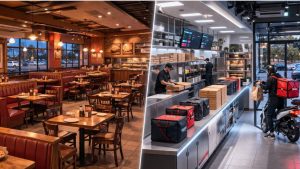 Pizza chains are not simply closing stores they are redesigning their business models.
Modernising the Footprint: From Dine-In to Delivery-Only Units
Traditional dine-in outlets are being replaced with compact kitchens designed exclusively for delivery and takeaway.
This shift reduces:
- Rent and property costs
- Staffing requirements
- Maintenance expenses
It also aligns more closely with modern consumer expectations.
The Technology Factor: Why Digital Transformation Matters
Digital capability is now essential for survival.
Stores that cannot integrate with platforms such as delivery apps or support seamless online ordering are increasingly being phased out.
This has created what some analysts describe as a “technology gap” within the industry.
Consumer Behaviour: The Rise of the Price-Sensitive Pizza Buyer
Understanding customer behaviour is key to explaining the current closures.
The Frozen Pizza Shift
Industry observations suggest a growing number of consumers are choosing supermarket options over takeaway.
This reflects a clear behavioural trend:
- Reduced discretionary spending
- Increased value-seeking
- Preference for cost control
Budget-Conscious Ordering Habits
Even when ordering takeaway, customers are adjusting their behaviour:
- Choosing smaller pizzas
- Reducing toppings
- Avoiding premium add-ons
This phenomenon is often described as “shrinkflation in demand”, where consumers spend less without abandoning the category entirely.
Regional Impact: Why Some US States Are Hit Harder?
Closures are not evenly distributed across the country.
The California Effect
States with higher wage policies have seen a greater number of closures.
Higher labour costs directly reduce profitability, particularly for franchise-operated stores.
Market Saturation in Key States
Regions such as Texas and Florida have experienced rapid expansion in previous years.
As a result, some areas now have:
- Too many outlets
- Overlapping delivery zones
- Reduced individual store performance
Closures in these regions are part of a market correction process.
Comparing the Big Three: Why Domino’s Is Still Growing
While some brands are retreating, others are expanding.
Domino’s has reported steady growth, supported by its strong digital infrastructure and efficient delivery model.
As one industry expert noted:
Domino’s success highlights the importance of:
- Technology integration
- Operational efficiency
- Strong brand positioning
Forecasting 2027: What Happens Next?
The future of the US pizza market remains uncertain but not pessimistic.
Potential Strategic Changes
There is ongoing industry discussion about further restructuring among major brands. While not confirmed, companies may continue reviewing their portfolios to improve profitability.
The Rise of Independent Pizzerias
Smaller, independent pizza businesses are gaining traction, particularly in urban areas.
Consumers are increasingly drawn to:
- Artisanal quality
- Unique flavours
- Premium dining experiences
This has created a “barbell effect”:
- Low-cost supermarket options on one end
- High-end independent pizzerias on the other
Mid-market chains are being squeezed in the middle.
Real-World Example: A Changing Friday Night Routine
Consider a typical household in 2026.
Instead of ordering a £25–£30 takeaway pizza, a family may now choose:
- A £6–£8 premium supermarket pizza
- Add-ons prepared at home
This shift may seem small individually, but at scale, it significantly impacts revenue for large pizza chains.
Conclusion
The decision behind why a major pizza chain closes US locations is ultimately rooted in financial sustainability.
These closures represent a strategic adjustment rather than a collapse. Brands are focusing on efficiency, profitability, and adapting to modern consumer expectations.
For UK readers and business leaders, the key takeaway is clear:
In a high-inflation environment, even globally recognised brands must evolve quickly. The future of the pizza industry will likely be defined by smaller footprints, stronger technology integration, and a sharper focus on value.
FAQs
What is causing pizza chain closures in the US?
The main causes include rising labour costs, food inflation, declining dine-in demand, and changing consumer spending habits.
Are pizza chains going out of business entirely?
No, most closures are part of restructuring strategies rather than complete shutdowns.
Why is dine-in pizza declining?
Consumers increasingly prefer delivery and takeaway options, making large dine-in spaces less efficient.
How does inflation affect pizza chains?
Inflation increases ingredient and labour costs, reducing profit margins for each store.
Are independent pizza shops benefiting from this trend?
Yes, many independent and artisanal pizzerias are gaining market share, especially in urban areas.
Will pizza prices continue to rise?
Prices may remain elevated due to ongoing cost pressures, although competition could stabilise them.
What can UK businesses learn from this?
UK businesses can learn the importance of cost control, adaptability, and aligning with changing consumer preferences.