







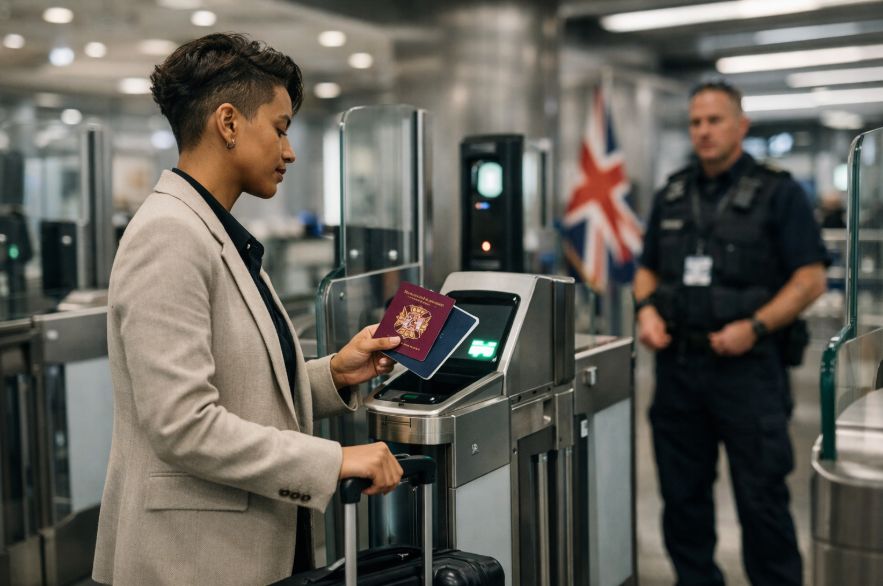
📌 Quick Snapshot: Home Office New Passport Rules 2026
The Home Office new passport rules for 2026 focus on improving UK border security and efficiency through digital systems and clearer passport usage expectations.
Dual nationals are not facing new legal restrictions, but they are strongly advised to use a UK passport when entering the UK to avoid delays or complications.
🔑 Key Takeaways
- Dual nationality remains fully legal under UK law
- British citizens should use a UK passport when entering the UK
- No new penalties, but incorrect passport use may cause delays
- Biometric checks and eGates are expanding across UK airports
- Carrying both passports is the safest travel approach
📊 2026 Passport Rules Overview
| Category | Details |
|---|---|
| Legal Status | Dual nationality remains allowed with no restrictions |
| Entry Requirement | Use UK passport when entering the UK |
| Main Changes | Biometric checks, eGates expansion, digital border systems |
| Risk Factors | Delays if using foreign passport instead of UK passport |
| Best Practice | Carry both passports and use them appropriately |
The Home Office new passport rules expected to shape travel in 2026 are becoming an increasingly important topic for UK citizens particularly those holding dual nationality. As border systems evolve and digital verification becomes more advanced, travellers are seeking clear answers about what is required and what remains unchanged.
For dual nationals, the situation can feel uncertain. Questions around which passport to use, how rules are enforced, and whether legal obligations have shifted are common. This guide provides a clear, structured explanation of the Home Office new passport rules, focusing on confirmed facts, practical implications, and how individuals can prepare confidently.
What Are the Home Office New Passport Rules for 2026?
 The Home Office new passport rules for 2026 primarily centre on modernising the UK’s border systems rather than introducing restrictive new laws. The focus is on efficiency, security, and accurate identification of travellers.
Key developments include the expansion of automated border systems, better use of biometric data, and clearer expectations around passport usage for British citizens.
What Has Officially Been Confirmed?
The following updates are supported by current UK government direction:
- Increased reliance on eGates and biometric verification
- Enhanced data matching between passports and border systems
- Reinforced expectation that British citizens use UK-issued passports
What Has Not Changed?
Despite speculation, several core principles remain intact:
- Dual nationality is still fully recognised and legal
- British citizens retain an absolute right to enter the UK
- There are no penalties for holding multiple passports
Who Is Considered a Dual National Under UK Law?
A dual national is an individual who holds British citizenship alongside citizenship of another country. The UK allows this without requiring individuals to renounce other nationalities.
Examples of Dual National Status
Common real-world scenarios include:
- A person born in the UK with parents from another country
- A UK citizen who later acquires citizenship abroad
- A foreign national who becomes British but retains original nationality
Rights and Responsibilities
Dual nationals enjoy the same rights as any British citizen, including:
- The right to live and work in the UK
- Access to public services
- The right to enter the UK without restriction
However, they must still follow passport and border control procedures when travelling.
Do Dual Nationals Need to Use a UK Passport to Enter the UK?
Yes, under the Home Office new passport rules, dual nationals are strongly expected to use their UK passport when entering the UK.
Why Is This Important?
UK border systems are designed to identify British citizens through UK-issued documentation. Using a foreign passport can disrupt this process.
Potential Issues When Using a Foreign Passport
Travellers may experience:
- Delays at border control
- Additional questioning
- Difficulty accessing automated eGates
Practical Recommendation
Dual nationals should carry both passports but prioritise the UK passport for entry into the UK.
What Has Actually Changed in the 2026 Passport Rules?
Confirmed Changes vs Speculation
Understanding the Home Office new passport rules requires separating fact from assumption. The table below provides a clear comparison:
Why This Distinction Matters?
Misinformation can lead to unnecessary stress or incorrect travel decisions. The UK government has not introduced restrictions on dual nationality, nor has it penalised the use of multiple passports.
How Do the New Passport Rules Affect Travel for Dual Citizens?
 Entering the UK
Dual nationals should use their UK passport for entry. This ensures compatibility with border systems and reduces delays.
Leaving the UK
There are generally no strict requirements on which passport to use when leaving, but consistency is recommended.
Travelling Internationally
Different countries apply their own rules. For example:
- Some countries require entry using their own passport if citizenship is held
- Airlines may enforce documentation checks before boarding
Travel Strategy for Dual Nationals
What Happens in a Real-Life Travel Scenario for Dual Nationals?
Consider a dual UK Australian citizen travelling from Sydney to London.
Using Only a Foreign Passport
At the UK border:
- The system may not immediately identify the traveller as British
- Additional checks may be required
- Entry is allowed, but the process may be slower
Using a UK Passport
- Access to eGates
- Faster processing
- No need for additional clarification
Key Insight
Preparation and correct documentation significantly improve the travel experience, even when legal rights remain unchanged.
What Documents Should Dual Nationals Carry When Travelling?
Essential Documentation
Dual nationals should carry:
- A valid UK passport
- A valid second passport (if applicable)
Additional Supporting Documents
In some cases, travellers may benefit from carrying:
- Proof of residence abroad
- Travel itinerary
- Additional identification
Best Practices for Compliance
Ensuring documents are valid, accessible, and consistent with travel plans helps avoid complications at borders.
Are There Any Legal Risks or Penalties Under the New Rules?
 Legal Position
There are no new penalties introduced under the Home Office new passport rules for dual nationals.
Possible Practical Risks
However, failure to follow recommended practices may result in:
- Delays at border control
- Increased scrutiny
- Missed travel connections
Important Clarification
British citizens cannot be refused entry into the UK. The issue is not legality but efficiency and clarity during travel.
How Can Travellers Stay Updated on Home Office Passport Rules?
Reliable Information Sources
To stay informed, travellers should refer to:
- Official UK government updates
- Home Office announcements
- Airline travel requirements
Avoiding Misinformation
Online speculation can create confusion. It is essential to rely on verified, official guidance rather than unconfirmed claims.
How Do Airline Checks Interact with Home Office Passport Rules?
Before a traveller even reaches UK border control, airlines act as the first checkpoint in the journey. They are responsible for verifying whether passengers have the correct documentation to enter their destination.
This means the Home Office new passport rules are indirectly enforced at the boarding stage.
What Airlines Typically Check
Airline staff review:
- Passport validity
- Matching details between ticket and passport
- Visa requirements (if applicable)
- Entry eligibility based on nationality
If something does not match or appears unclear, boarding may be denied.
Why This Matters for Dual Nationals
Dual nationals sometimes face issues when:
- Booking tickets with one passport but presenting another
- Having name differences across passports
- Not carrying both passports
Best Practice
To avoid complications:
- Use the same passport for booking and boarding
- Carry both passports when travelling
- Ensure names match across documents
How Do Passport Name Differences Affect Travel for Dual Citizens?
Why Name Differences Occur?
It is common for dual nationals to have slight differences in their names across passports. These may include:
- Missing middle names
- Different spellings
- Cultural naming variations
Potential Travel Issues
While legal, these differences can create confusion during:
- Airline check-in
- Security screening
- Border control verification
In some cases, travellers may be asked to provide additional clarification.
Real-World Impact
For example, a traveller whose middle name appears on one passport but not the other may face delays if the airline ticket matches only one version.
How to Manage Name Differences?
Key Insight
Consistency across documents is one of the simplest ways to avoid unnecessary delays under the Home Office new passport rules.
What Should Dual Nationals Do If Their UK Passport Expires Abroad?
An expired UK passport while abroad can create uncertainty, especially when planning a return to the UK.
Available Options
Dual nationals in this situation can:
- Apply for a passport renewal online
- Contact the nearest British embassy or consulate
- Request an emergency travel document if urgent travel is required
Emergency Travel Documents Explained
Emergency travel documents are temporary papers issued to allow British citizens to return to the UK or continue urgent travel.
They are typically used when:
- A passport is lost or stolen
- A passport has expired unexpectedly
What to Expect During the Process?
- Identity verification will be required
- Processing times may vary by country
- Additional supporting documents may be requested
Practical Advice
Travellers should:
- Check passport expiry dates well in advance
- Renew passports early, especially before peak travel seasons
- Keep digital and physical copies of important documents
Conclusion
The Home Office new passport rules for 2026 are designed to improve border efficiency rather than impose new restrictions. For dual nationals, the most important takeaway is straightforward: use a UK passport when entering the UK and carry both passports when travelling internationally.
By understanding confirmed updates, ignoring misinformation, and preparing properly, travellers can navigate the evolving system with confidence. Staying informed and organised ensures that international travel remains smooth, compliant, and stress-free.
FAQs About Home Office New Passport Rules
Can dual nationals renew a UK passport while living abroad?
Yes, dual nationals can renew their UK passport from outside the UK through the official online application process. Processing times may vary depending on the country.
Does holding two passports affect UK tax obligations?
No, passport ownership does not determine tax status. UK tax obligations depend on residency and income, not nationality alone.
Can dual nationals use eGates with either passport in the UK?
No, eGates in the UK are optimised for biometric passports, and British citizens should use their UK passport for seamless access.
Do dual nationals need to declare both citizenships at UK border control?
In most cases, declaration is not required if using a UK passport, but travellers should be prepared to clarify their status if asked.
Will future UK travel rules include digital ID or eVisas?
The UK is gradually introducing digital border systems, and future updates may include more advanced digital identity verification methods.
Can dual nationals face issues when names differ across passports?
Yes, differences in names, spellings, or personal details can cause delays or confusion at border control. Consistency across documents is recommended.
Are there special rules for dual nationals travelling for work or business?
There are no separate passport rules, but business travellers should ensure their documents align with visa or entry requirements in destination countries.
Can dual nationals use one passport for booking and another for travel?
Yes, but inconsistencies between booking details and travel documents can create issues. It is best to use the same passport throughout the journey where possible.