







London Green Party Resignations: Key Facts
- Four newly elected Green Party councillors resigned immediately after the local elections.
- Camden, Hackney, Haringey and Lambeth must now organise by-elections.
- Estimated taxpayer cost across the four boroughs is around £80,000.
- Critics have raised concerns over Green Party candidate vetting procedures.
- Residents in affected wards could face weeks without full council representation.
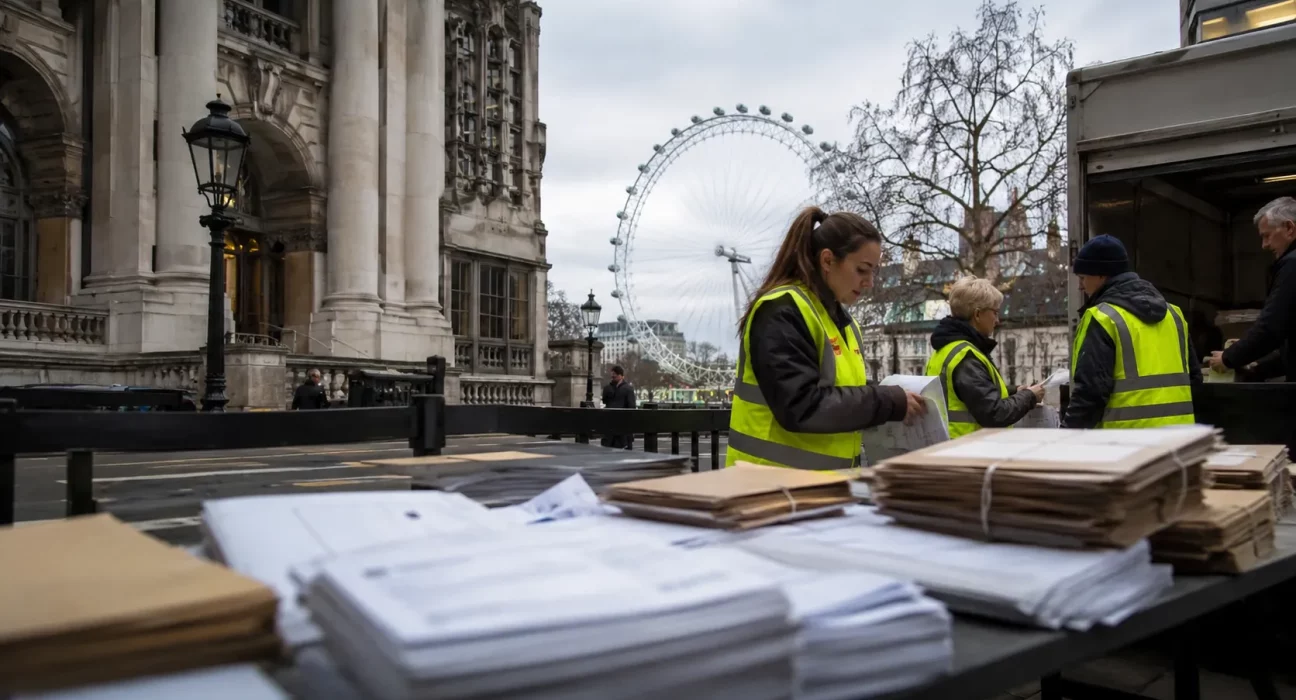
Four newly elected Green Party councillors have abruptly resigned immediately following the May 2025 local elections, vacating seats across four London boroughs: Camden, Hackney, Haringey, and Lambeth. Their departure from office within days of being elected has triggered a mandatory by-election process under local government rules, leaving taxpayers facing a combined bill of approximately £80,000 to fill the vacant seats. The resignations have drawn significant scrutiny over internal vetting processes within the Green Party and raised broader questions about council spending accountability across London.
What Caused the London Green Party Councillor Resignations?

Under the Local Government Act 1972 and subsequent legislation, a councillor who resigns from their seat creates an automatic vacancy that the relevant local authority is legally obliged to fill. Where the vacancy arises within a set period following an ordinary election, a by-election must be held if a requisition is submitted by a sufficient number of local government electors typically ten or more.
The trigger in this instance appears rooted in a failure of internal candidate vetting. The Green Party selects candidates through a local and national approval process, but critics argue the party did not adequately screen whether the four individuals were in a position professionally, personally, or logistically to serve full terms before standing for election.
Each of the four councillors stood as Green Party candidates, won their respective seats in the May 2025 local elections, and then resigned almost immediately after taking office. London Green Party councillor resignations of this nature occurring so rapidly after an election are highly unusual and place the full administrative and financial burden of replacement squarely on local councils rather than the party responsible for fielding the candidates.
Under existing rules, there is no mechanism to recover the cost of a triggered by-election from a political party whose candidate’s resignation caused the vacancy. The taxpayer bill falls entirely on the individual boroughs.
Which Boroughs Are Affected by the Green Party Councillor Resignations?
The four affected London councils each face the task of administering an unscheduled local vote, diverting staff resource and public funds at short notice.
Camden
A Green Party councillor elected to Camden London Borough Council in May 2025 resigned their seat shortly after taking office. Camden Council has confirmed the vacancy and is proceeding with the formal notification process ahead of scheduling a local by-election.
Hackney
In Hackney, a newly elected Green councillor similarly stepped down almost immediately following the local elections. Hackney London Borough Council is one of four authorities now required to organise an unscheduled poll, adding unanticipated pressure to its electoral services budget.
Haringey
Haringey was among the boroughs where the Green Party made notable gains in the 2025 local elections. The resignation of a newly elected Green councillor in Haringey has created a fresh vacancy in a borough already navigating significant housing and planning pressures.
Lambeth
Lambeth London Borough Council faces its own by-election cost burden following the resignation of its newly elected Green Party councillor. Lambeth, like the other three boroughs, has no discretion in whether to hold a by-election once the correct legal threshold for a requisition is met.
Why Do These Local By-Elections Cost Taxpayers £80,000?
The combined by-election cost of approximately £80,000 averaging roughly £20,000 per borough reflects the genuine operational complexity of running an election outside the standard scheduled cycle. Unlike ordinary local elections, where costs are absorbed across dozens of seats simultaneously, a council spending commitment for a single-seat by-election carries disproportionately high per-seat overheads.
The principal cost categories across each of the four boroughs include:
- Venue hire: Polling stations must be secured, often at short notice, across the ward. Community halls, schools, and public buildings all carry hire costs that cannot be negotiated down given the legally mandated timeframes.
- Staffing polling stations: Presiding officers, poll clerks, and support staff must be recruited and paid for the full duration of polling day, typically 7am to 10pm.
- Printing ballots and polling cards: Each eligible elector in the ward must receive a polling card. Ballot papers must be printed to a legally specified standard within a compressed timeline.
- Counting and administrative fees: Returning officer fees, count venue hire, verification staff, and the administrative overhead of managing postal vote processing all contribute to the final figure.
- Legal and notice costs: Statutory notices must be published in local newspapers and through official channels, carrying mandatory publishing fees that apply regardless of the scale of the election.
The £20,000-per-borough average is broadly consistent with figures reported by local government bodies for single-seat by-elections in inner London, where staffing and venue costs are higher than the national average. Had the four councillors served their terms, none of this expenditure would have been necessary.
How Do Sudden Council Resignations Impact Local Government Decisions?
Such London Green Party councillor resignations have practical ramifications that go far beyond the immediate financial expense. Each vacant seat represents a gap on scrutiny committees, planning committees, and full council, all of which have quorum requirements and decision-making responsibilities that cannot simply be paused.
Stalled planning committees are among the most immediate consequences. In boroughs such as Haringey and Lambeth, where large-scale housing developments and local plan reviews are ongoing, the loss of a committee member even temporarily can delay decisions on planning applications with significant economic implications for residents and developers alike.
Frozen decision-making on local services is a further concern. Council committees responsible for areas including adult social care, children’s services, and transport require full membership to function efficiently. Vacancies reduce political accountability and can delay the scrutiny of officer decisions.
The diversion of council spending towards an unscheduled by-election also has an opportunity cost. The approximately £80,000 required across the four boroughs represents funding that could otherwise have supported frontline services. In the context of the continued pressure on London councils following years of central government funding reductions, the expenditure is a significant and avoidable drain.
There is also a democratic deficit created by the period between resignation and the by-election result. Residents in the affected wards are effectively unrepresented for weeks, sometimes months, at a critical point in the local government calendar.
What Happens Next for Voters in Camden, Hackney, Haringey, and Lambeth?
Following a formal resignation, each council’s returning officer is responsible for publishing a notice of vacancy. Under the Representation of the People Act 1983 and related regulations, a by-election must be held if a requisition signed by ten or more local government electors in the ward is submitted within 35 working days of the notice of vacancy being published.
The process from resignation to polling day broadly follows this sequence:
- Notice of vacancy published by the returning officer following confirmation of the resignation.
- 35-working-day requisition window during which local electors may formally request a by-election.
- Notice of election published, triggering the formal timetable.
- Candidate nomination period opens, typically running for around one week.
- Polling day is set, usually falling several weeks after the close of nominations.
For voters in the affected boroughs, the key practical steps are:
- Check voter registration: Residents must be registered to vote at their current address to participate in the by-election. Registration can be completed at gov.uk/register-to-vote.
- Watch for polling cards: Eligible voters in the affected ward will receive a polling card by post ahead of election day.
- Apply for a postal vote if required: Postal vote applications must be submitted ahead of the statutory deadline, typically eleven working days before polling day.
- Monitor council and local news: By-election dates and candidate information will be published on each council’s official website and through electoral services notices.
The Green Party will face the question of whether to stand a replacement candidate in each ward, with local parties responsible for candidate selection. Other parties including Labour, the Liberal Democrats, and the Conservatives are expected to contest some or all of the vacated seats.
Conclusion
The London Green Party councillor resignations have created a political controversy that extends far beyond the immediate loss of four council seats. With Camden, Hackney, Haringey, and Lambeth now facing an estimated £80,000 combined by-election bill, the episode has reignited debate over candidate vetting standards, political accountability, and the financial pressures already facing London borough councils. Beyond the taxpayer cost, the temporary absence of elected representatives risks disrupting local decision-making, delaying committee work, and leaving residents without full democratic representation. As by-election dates are confirmed, voters and political parties alike will be watching closely to see how this unusual chapter in London local politics unfolds.
FAQs About the London Green Party Councillor Resignations
How much do by-elections cost local councils?
A single-seat by-election cost for a London council typically averages around £20,000. This figure covers staffing polling stations, venue hire, ballot and polling card printing, returning officer fees, and statutory notice publication. When four by-elections are triggered simultaneously as in the case of the current London Green Party councillor resignations the combined taxpayer bill reaches approximately £80,000. Costs in inner London boroughs tend to be higher than the national average due to elevated staffing and venue rates.
Can a newly elected councillor resign immediately?
Yes. Under local government law in England and Wales, there is no minimum service requirement for a councillor. A newly elected councillor may resign at any point after taking office, including immediately following the declaration of their result. Resignation takes effect upon receipt by the proper officer of the council. There is no legal obligation on a departing councillor to reimburse the costs of any resulting by-election, meaning the full council spending burden falls on the local authority and ultimately on the taxpayer.
What happens when a local councillor resignation occurs in London?
When a local councillor resignation occurs in London, the relevant borough council’s returning officer publishes a formal notice of vacancy. If ten or more local government electors in the affected ward submit a written requisition within 35 working days, the council is legally required to hold a by-election. The seat remains vacant throughout this period. Due to London politics, these openings may have an obvious impact on local decision-making and committee quorums, especially in boroughs with a close political balance. The by-election process follows the same legal framework as an ordinary local election, administered entirely at the council’s expense.