







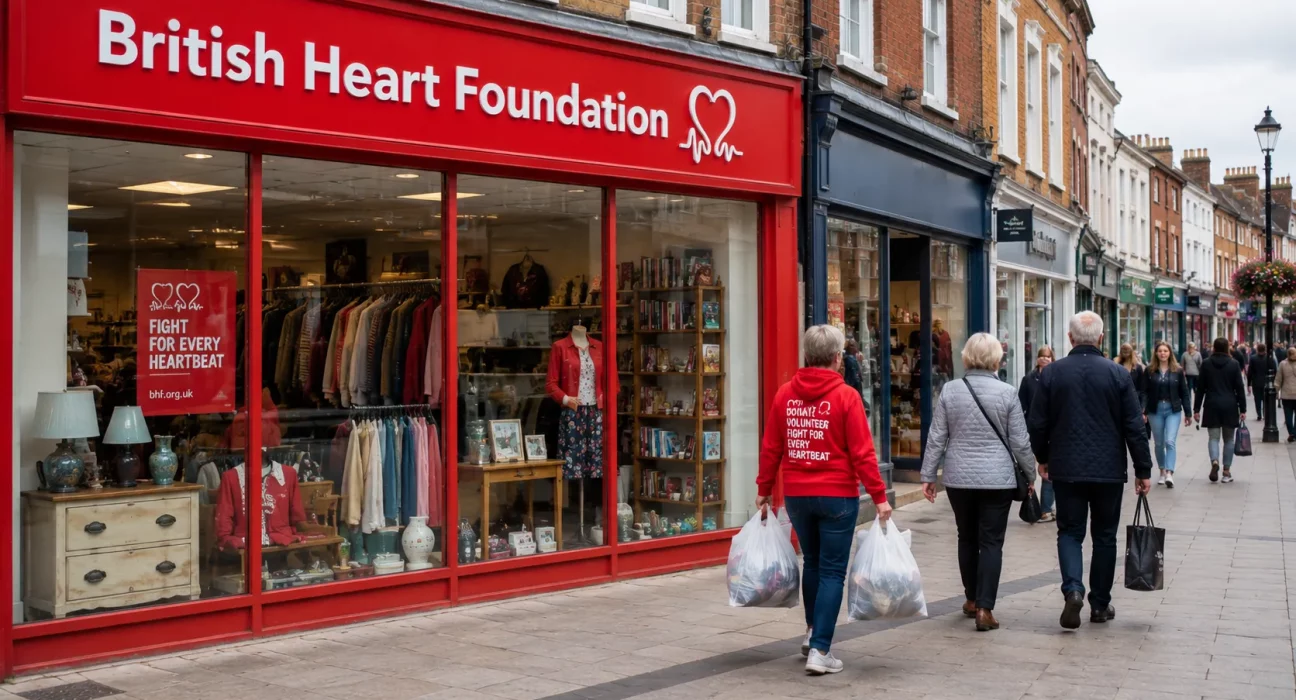
British Heart Foundation Shop Closures: Key Takeaways
What Has the British Heart Foundation Announced?

The British Heart Foundation (BHF) has announced plans to close approximately 150 charity shops across the UK by March 2028. The proposal forms part of a major restructuring programme designed to address rising operational costs and adapt to changing consumer behaviour.
The announcement, made on 4 June 2026, represents one of the most significant retail reviews in the charity’s history. If implemented as proposed, the closures will affect nearly a quarter of the British Heart Foundation’s retail estate, which currently consists of around 640 stores nationwide.
While the news has understandably raised concerns among employees, volunteers and local communities, the charity has stressed that its overall financial position remains stable. The goal of the restructuring is not to reduce research activity but to ensure that retail operations continue to support life-saving cardiovascular research in a sustainable way.
For decades, British Heart Foundation shops have played an important role in fundraising, community engagement and promoting sustainable shopping. However, like many organisations operating on the UK high street, the charity is facing a rapidly changing retail landscape.
Why Is the British Heart Foundation Closing 150 Stores?
The British Heart Foundation says the decision has been driven by a combination of economic pressures and changing consumer habits.
Although charity shops benefit from donated stock and volunteer support, they still face many of the same financial challenges as commercial retailers. Rent, energy bills, insurance, maintenance costs, transport expenses and staffing costs all contribute to the overall cost of operating a store.
Over recent years, these costs have increased significantly. At the same time, some locations have experienced reduced footfall as consumers increasingly choose to shop online.
The charity has concluded that some stores are no longer financially viable in the long term. By closing underperforming locations, the British Heart Foundation hopes to strengthen the sustainability of its wider retail network and maximise the funds available for research.
How Have Rising Costs Impacted Charity Retailers?
The retail sector has experienced significant disruption since the pandemic and subsequent inflationary pressures.
Several key factors have contributed to rising costs:
- Higher National Living Wage requirements
- Increased energy prices
- Rising business rates
- Property maintenance costs
- Supply chain expenses
- General inflation across the UK economy
For a charity operating hundreds of stores nationwide, these increases can have a substantial impact on profitability.
A shop that was financially sustainable five years ago may now face a very different operating environment. Even when customer demand remains relatively strong, rising costs can reduce the amount of money available to support charitable activities.
Why Are Some BHF Stores No Longer Financially Viable?
Every British Heart Foundation shop exists to generate funding for research and support services.
If a store’s operating costs consistently outweigh its contribution to fundraising objectives, the charity must consider whether those resources could be used more effectively elsewhere.
For example, a smaller shop located in a town centre with declining footfall may struggle to maintain profitability despite receiving regular donations. Higher utility bills, wage costs and property expenses can quickly erode margins.
Rather than continuing to operate unprofitable stores, the charity has chosen to review its network and focus investment on locations that offer stronger long-term potential.
How Is Online Shopping Changing the Charity Retail Sector?
One of the biggest changes affecting charity retail has been the rapid growth of online shopping.
Consumers increasingly browse, compare and purchase second-hand goods through digital marketplaces rather than visiting physical stores. Platforms such as eBay, Vinted, Depop and Facebook Marketplace have transformed how people buy and sell pre-owned items.
This shift has created both challenges and opportunities for charities.
On one hand, some physical shops have experienced declining footfall. On the other hand, online platforms allow charities to reach a much larger audience and sell higher-value donated items to buyers across the country.
The British Heart Foundation has embraced this trend by expanding its digital retail operations.
How Successful Are BHF’s Online Sales Channels?
The charity has reported significant growth through online sales channels, including:
- The BHF online shop
- The official BHF eBay store
- Postal donation services
- Home collection programmes
- Digital fundraising initiatives
Online sales have reportedly generated around £17 million, demonstrating the growing importance of digital retail to the organisation’s future strategy.
As consumer habits continue to evolve, online sales are expected to play an increasingly important role in supporting the charity’s mission.
What Did Dr Charmaine Griffiths Say About the Closures?
The British Heart Foundation’s Chief Executive, Dr Charmaine Griffiths, acknowledged the emotional impact of the announcement on staff, volunteers and local communities.
She said:
She added:
Dr Griffiths also highlighted the financial realities behind the decision:
The comments underline the difficult balance many charities face between maintaining a physical presence in communities and ensuring long-term financial sustainability.
What Is the BHF Store Closure Timeline?
The proposed closures will take place gradually rather than all at once.
The British Heart Foundation intends to implement the programme in two phases.
Phase One
The first phase is expected to involve approximately 90 stores closing by March 2027.
These locations are likely to include shops identified as financially underperforming or facing significant commercial challenges.
During this period, the charity will continue consultations with employees and volunteers while reviewing operational requirements.
Phase Two
The second phase will see the remaining 60 stores close by March 2028.
By spreading the process across two years, the charity aims to minimise disruption while providing support to affected staff and volunteers.
The phased approach also allows time for stock redistribution, lease negotiations and operational planning.
Which British Heart Foundation Shops Are Closing?

One of the most common questions people are asking is whether their local British Heart Foundation shop will be affected.
At present, the charity has not released a definitive public list of the stores expected to close.
The reason is that consultations are still underway and affected employees and volunteers must be informed directly before locations are publicly announced.
As a result, specific towns and cities have not yet been confirmed.
Readers who wish to stay informed should monitor official British Heart Foundation announcements and local media reports as updates become available.
Why Hasn’t the Full Store List Been Published Yet?
The charity has explained that it wants to communicate directly with employees and volunteers before making public announcements.
This approach ensures that individuals affected by the proposed closures receive accurate information and support before details are released more widely.
Because consultations remain ongoing, some aspects of the plan may also change before final decisions are made.
How Will Employees and Volunteers Be Affected by the BHF Closures?
The proposed closure programme is expected to affect both paid employees and volunteers across the British Heart Foundation’s retail network.
Although the charity has not disclosed the exact number of roles that may be impacted, it has confirmed that consultations are currently underway with affected teams.
The British Heart Foundation says it is exploring a range of options to support staff during the transition, including redeployment opportunities where possible.
These may include:
- Transfers to nearby BHF stores
- Opportunities within other retail locations
- Support roles across the organisation
- Alternative vacancies within the charity
For employees, the consultation period will provide an opportunity to discuss potential next steps and available support.
Why Are Volunteers So Important to BHF Shops?
Volunteers are at the heart of the British Heart Foundation’s retail operations.
Across the UK, thousands of people donate their time to help run charity shops, sort donations, assist customers and support fundraising activities.
Many volunteers contribute several hours each week, while others dedicate years of service to their local stores.
Their involvement helps the charity:
- Reduce operating costs
- Increase fundraising income
- Strengthen community engagement
- Provide valuable customer service
- Support environmental sustainability through reuse and recycling
For many individuals, volunteering also provides social interaction, work experience, confidence-building opportunities and a sense of purpose.
What Support Could Be Available for Volunteers?
The British Heart Foundation has acknowledged the importance of volunteers and says it will continue working with affected individuals throughout the consultation process.
Where possible, volunteers may be offered opportunities to:
- Move to nearby BHF stores
- Support fundraising events
- Assist with community campaigns
- Participate in digital fundraising initiatives
- Join alternative volunteering programmes within the charity
The charity has emphasised its gratitude for the contribution volunteers make to its mission.
How Important Are BHF Charity Shops to Local Communities?
British Heart Foundation shops are far more than fundraising outlets.
In many towns and cities, they have become important community spaces where people donate items, shop affordably and support charitable causes.
For many residents, these stores provide access to:
- Affordable clothing
- Low-cost furniture
- Household goods
- Electrical appliances
- Sustainable shopping options
- Volunteering opportunities
The shops also help reduce waste by giving unwanted items a second life.
This circular economy model has become increasingly important as consumers look for more sustainable alternatives to fast fashion and disposable household goods.
What Could the Closures Mean for Local High Streets?
The impact of closures will vary depending on location.
In larger towns and cities, shoppers may still have access to nearby British Heart Foundation stores.
However, in smaller communities, the loss of a local charity shop could reduce access to affordable goods and volunteering opportunities.
The closures may also affect footfall on some high streets, particularly where charity retailers play an important role in maintaining occupancy levels.
While the charity believes the restructuring is necessary, the changes are likely to be felt differently across different regions of the UK.
How Much Research Funding Does the British Heart Foundation Support?

The British Heart Foundation is one of the UK’s leading funders of cardiovascular research.
Every year, the charity invests significant resources into understanding, preventing and treating heart and circulatory diseases.
This work supports scientists, clinicians and researchers working to improve outcomes for millions of people.
According to the charity, more than 8 million people in the UK are currently living with heart and circulatory conditions.
What Research Does the British Heart Foundation Fund?
The charity supports research in several key areas, including:
- Heart disease prevention
- Stroke treatment and recovery
- Congenital heart conditions
- Heart failure
- Vascular diseases
- Medical technology innovation
- Public health initiatives
Research funded by the British Heart Foundation has contributed to major advances in cardiovascular medicine over several decades.
Why Is Retail Income Important to Research Funding?
Although the British Heart Foundation receives income from donations, fundraising campaigns and legacy gifts, retail operations remain an important revenue source.
Recent figures indicate:
The charity says the proposed restructuring is designed to protect future funding rather than reduce it.
By focusing on a more sustainable retail model, the organisation hopes to continue supporting groundbreaking research for years to come.
What Is the British Heart Foundation’s Digital Retail Strategy?
The proposed shop closures do not mean the British Heart Foundation is stepping away from retail.
Instead, the organisation is increasingly focusing on digital channels that align with changing consumer behaviour.
Online shopping has become a major part of the charity retail sector, and the British Heart Foundation has invested heavily in expanding its digital presence.
Digital Services Offer
The charity currently operates several online channels, including:
- BHF Online Shop
- Official BHF eBay Store
- Postal donation services
- Home collection bookings
- Online fundraising campaigns
These services allow supporters to continue contributing even if a local physical store closes.
Online Retail
Digital retail offers several advantages:
- Wider customer reach
- Lower operating costs
- Greater convenience for shoppers
- Access to national markets
- Improved scalability
As more consumers embrace online shopping, charities are increasingly adapting their retail strategies to meet demand.
The British Heart Foundation’s reported online sales growth demonstrates how digital channels can complement traditional fundraising activities.
Are Other UK Charities Facing Similar Challenges?
Yes. The British Heart Foundation is not alone in reviewing its retail operations.
Many charity retailers are responding to the same economic pressures affecting commercial businesses.
These challenges include:
- Inflation
- Rising wages
- Higher energy costs
- Reduced high street footfall
- Increased online competition
As a result, several major charities have reviewed their retail estates and invested more heavily in digital fundraising and e-commerce operations.
What Does This Mean for the Charity Retail Sector?
The sector is undergoing significant change.
While physical charity shops remain important, many organisations are now adopting a hybrid approach that combines:
- Traditional retail stores
- Online marketplaces
- Digital donation services
- Community fundraising initiatives
This evolution reflects broader changes across the retail industry and is likely to continue over the coming years.
What Has Been Confirmed About the BHF Shop Closures So Far?
While consultations are still ongoing, the British Heart Foundation has confirmed several key details about its proposed restructuring programme.
Confirmed Facts
The following information has been officially disclosed by the charity:
- The announcement was made on 4 June 2026.
- Approximately 150 charity shops are proposed for closure.
- The British Heart Foundation currently operates around 640 retail locations across the UK.
- Around 90 stores are expected to close during the first phase by March 2027.
- The remaining closures are expected to take place by March 2028.
- The restructuring is intended to improve the long-term sustainability of the charity’s retail operations.
- Funding for cardiovascular research remains a key organisational priority.
- The charity continues to invest more than £100 million annually in research projects and initiatives.
What Is Still Under Review?
Several aspects of the proposal remain subject to consultation.
These include:
- The final list of affected stores
- Individual closure dates
- Staff redeployment opportunities
- Volunteer transition arrangements
- Local operational planning
The British Heart Foundation has said that specific locations will only be announced after affected employees and volunteers have been informed directly.
As a result, the final details may evolve as consultations progress.
How Can People Continue Supporting the British Heart Foundation?

Although some physical stores may close, supporters will still have several ways to contribute to the charity’s work.
The British Heart Foundation has emphasised that fundraising and donations remain critical to supporting future research.
Can People Still Donate Items?
Yes.The charity offers multiple donation options beyond traditional shop drop-offs.
These include:
- Donations to remaining BHF stores
- Postal donation services
- Home collection bookings
- Specialist furniture collection services
Supporters can continue donating clothing, books, homeware, furniture and other eligible items.
Can People Still Shop With the British Heart Foundation?
Absolutely. The charity’s growing digital retail network allows shoppers to purchase donated items online from anywhere in the UK.
Options include:
- BHF Online Shop
- Official BHF eBay Store
- Online furniture listings
- Seasonal fundraising campaigns
These platforms help generate income while providing customers with access to quality second-hand products.
How Else Can People Support the Charity?
Supporters can also contribute by:
- Making direct financial donations
- Taking part in fundraising events
- Leaving a legacy gift
- Volunteering with the organisation
- Participating in awareness campaigns
Every contribution helps support research into heart and circulatory diseases.
What Does the Future Hold for British Heart Foundation Retail Operations?
The proposed closures represent a significant change, but they do not signal the end of British Heart Foundation retailing.
Instead, the charity appears to be moving towards a more focused and modern retail model.
Future operations are expected to combine:
- Remaining physical stores
- Online retail platforms
- eBay sales channels
- Home collection services
- Postal donation programmes
- Community fundraising activities
This hybrid approach reflects broader changes across the retail sector and aims to ensure the charity remains financially sustainable in a changing marketplace.
Will Digital Retail Continue to Grow?
Current trends suggest that digital retail will play an increasingly important role in the charity’s future.
As consumers become more comfortable buying second-hand goods online, charities are adapting their strategies to meet demand.
The British Heart Foundation’s reported online sales performance demonstrates the potential of these channels to complement traditional retail fundraising.
Rather than replacing physical stores entirely, digital platforms are expected to work alongside a streamlined shop network.
Could More Changes Happen in the Future?
Like any large organisation, the British Heart Foundation will continue reviewing its operations as market conditions evolve.
Future decisions are likely to depend on factors such as:
- Consumer behaviour
- Retail market conditions
- Economic performance
- Fundraising trends
- Operational efficiency
For now, the focus remains on completing the proposed restructuring while maintaining support for research and local communities.
Conclusion
The British Heart Foundation’s proposal to close approximately 150 charity shops nationwide marks one of the most significant changes to its retail network in recent years.
The decision reflects wider challenges affecting both commercial retailers and charitable organisations across the UK. Rising operating costs, inflationary pressures and changing consumer shopping habits have forced many organisations to rethink their high street presence.
Although the closures will affect stores, employees, volunteers and local communities, the British Heart Foundation has made clear that the objective is to strengthen long-term sustainability rather than reduce its charitable impact.
Cardiovascular disease continues to affect more than 8 million people across the UK. By creating a more efficient retail network and expanding digital fundraising channels, the charity aims to protect future funding for life-saving research while adapting to an evolving retail landscape.
As consultations continue over the coming months, supporters, volunteers and shoppers will be watching closely to see how the plans develop. Regardless of the final outcome, the British Heart Foundation’s mission remains unchanged: funding research that helps prevent, treat and ultimately defeat heart and circulatory diseases.
FAQs
Will all British Heart Foundation shops close?
No. The proposal affects approximately 150 stores out of a network of around 640 locations. The majority of BHF shops are expected to remain open.
When will the BHF shop closures take place?
The closures are expected to occur in two phases. Around 90 stores could close by March 2027, with the remaining closures expected by March 2028.
Has the British Heart Foundation released a full closure list?
No. The charity has not yet published a definitive list of affected locations because consultations with employees and volunteers are still ongoing.
Why is the British Heart Foundation closing shops?
The charity has cited rising operating costs, inflation, changing shopping habits and the need to maintain a sustainable retail network.
How many people in the UK live with heart and circulatory diseases?
More than 8 million people in the UK are currently living with heart and circulatory conditions.
Can I still donate if my local BHF shop closes?
Yes. Supporters can use alternative options such as postal donations, home collection services and nearby British Heart Foundation stores.
What happens to volunteers affected by the closures?
The charity says it will work with volunteers throughout the consultation process and explore alternative opportunities where possible.
Will the British Heart Foundation continue selling items online?
Yes. The charity plans to continue expanding its digital retail operations, including its online store and eBay marketplace.
Where can I find updates about the shop closures?
The latest information will be available through official British Heart Foundation announcements, local store communications and the charity’s website.