







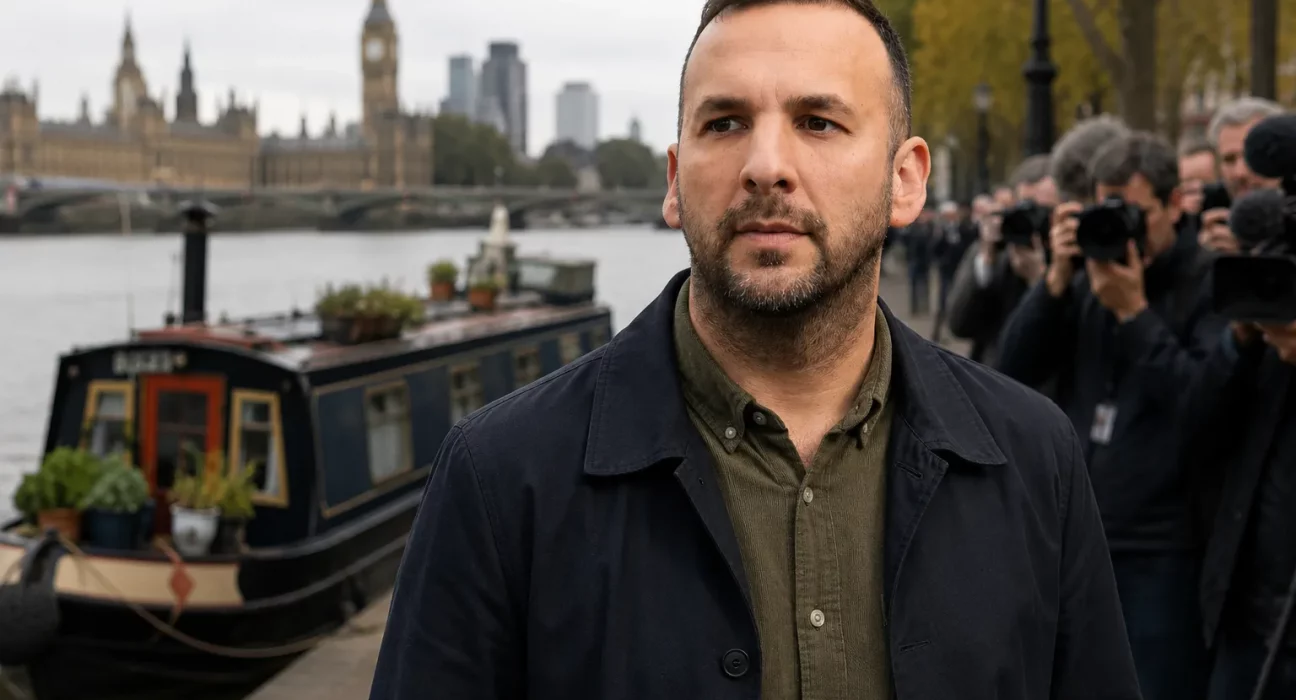
As political controversies go, few issues resonate more strongly with voters than taxation. When public figures become linked to questions about tax obligations, scrutiny inevitably follows. That is precisely what happened when Green Party co-leader and London Assembly Member Zack Polanski became the focus of allegations relating to council tax payments connected to his residence on a narrowboat in East London.
What began as a local dispute over council tax liability quickly evolved into a broader debate touching on political accountability, housing insecurity, the complexities of houseboat taxation, and the limits of ethics investigations within public institutions.
The controversy intensified after complaints were submitted to the Greater London Authority (GLA), prompting an official review of whether Polanski had breached the London Assembly Members’ Code of Conduct. However, the investigation concluded without sanctions, with the Monitoring Officer determining that the matter related to Polanski’s private living arrangements rather than his public duties.
Yet despite the closure of the ethics case, the wider discussion has not disappeared. Questions surrounding council tax liability, residential moorings, and alternative housing arrangements continue to attract attention, particularly as local authorities examine how existing regulations apply to increasingly unconventional forms of housing.
How Did the Zack Polanski Council Tax Controversy Begin?
The controversy centres on Polanski’s residence aboard a narrowboat moored at Lee Valley Marina in East London. Reports indicated that Polanski and his partner had been living on the vessel since 2022. Political opponents subsequently questioned whether council tax should have been paid during that period and whether the arrangement complied with local government regulations.
The issue gained public attention when media reports highlighted that Polanski was registered to vote using the marina address while no corresponding council tax account appeared to exist for the residence. That discrepancy triggered questions about whether council tax liability should have applied and whether any obligations had been overlooked.
While the initial reports focused on the absence of council tax payments, the dispute quickly expanded into a legal and procedural debate concerning how residential moorings are assessed and whether liability had ever been formally established.
Why Did the Allegations Reach the Greater London Authority?
The controversy escalated after formal complaints were submitted to the Greater London Authority.
Those complaints argued that Polanski’s circumstances potentially raised concerns under the London Assembly Members’ Code of Conduct. Critics suggested that if council tax had been owed but unpaid, questions could arise regarding compliance with public office standards.
Particular attention was directed towards Section 106 of the Local Government Finance Act 1992, a provision that restricts elected representatives from participating in certain budget-related votes if they are in council tax arrears.
Opponents argued that the circumstances warranted investigation.
The complaints ultimately prompted a review by the GLA Monitoring Officer, whose role includes assessing whether complaints against Assembly Members fall within the scope of the authority’s ethical standards framework.
Why Were the Ethics Complaints Dismissed?
The most significant development in the case came when the GLA Monitoring Officer decided not to pursue the complaints further.
The ruling concluded that the allegations related to Polanski’s personal living arrangements and did not have a sufficient connection to his official role as a London Assembly Member.
In practical terms, the investigation determined that the matter fell outside the jurisdiction of the Assembly’s Code of Conduct.
This distinction proved crucial.
The Monitoring Officer did not assess whether council tax was owed. Nor did the decision determine whether any future liability might exist. Instead, the ruling focused solely on whether the circumstances amounted to misconduct under the standards framework governing elected Assembly Members.
Because no breach of the Code of Conduct was identified, no sanctions were imposed and the ethics investigation was formally closed.
What Is Section 106 and Why Did It Become Central to the Debate?

Much of the public discussion surrounding the controversy centred on Section 106 of the Local Government Finance Act 1992.
The provision is designed to prevent elected representatives from participating in decisions relating to council tax if they are personally in arrears. At first glance, critics argued that the legislation could potentially apply. However, legal interpretation of Section 106 depends upon several conditions being met.
Most importantly, a person must have an established council tax liability and be formally in arrears. In other words, there must generally be an assessed obligation and a failure to pay following official billing procedures.
In Polanski’s case, the ethics investigation found no evidence that such conditions had been formally established by the relevant local authority at the time of the complaints. As a result, the argument that Section 106 had been breached failed to gain traction within the GLA review process.
Do Houseboat Residents Always Have to Pay Council Tax?
One reason the story generated so much debate is that council tax rules relating to houseboats are often misunderstood.
Unlike conventional residential properties, houseboats occupy a unique position within the UK’s taxation framework.
Whether council tax applies depends on several factors, including:
- The nature of the mooring.
- How long the vessel remains in one location.
- Whether the mooring has been assessed for council tax purposes.
- Whether the boat is considered a person’s sole or main residence.
In many situations, continuously cruising boats that do not remain permanently at a fixed location may not attract council tax liability.
By contrast, residential moorings that function as permanent homes can become subject to council tax assessments.
This distinction explains why disputes occasionally arise. Determining liability often requires detailed consideration by local authorities and the Valuation Office Agency.
As a result, the absence of straightforward rules creates room for genuine uncertainty, particularly for individuals transitioning between traditional housing and alternative living arrangements.
How Did Polanski Explain the Situation?
Polanski has consistently rejected suggestions that he intentionally sought to avoid tax obligations.
Instead, he has argued that the circumstances emerged from a complicated housing history and uncertainty regarding how council tax rules applied to his living arrangements.
According to statements submitted during the investigation, Polanski previously spent several years living as a property guardian in London.
Property guardianship typically involves occupying otherwise vacant buildings under licence agreements. In many cases, utilities, council tax, and other charges are incorporated into a single monthly payment.
Polanski stated that this arrangement shaped his expectations regarding housing-related payments and contributed to confusion when he later moved onto a narrowboat.
While acknowledging that greater care could potentially have been taken regarding administrative matters, he denied any deliberate attempt to avoid financial responsibilities.
The explanation formed a central component of his defence throughout the controversy.
Is Housing Insecurity Part of a Larger Story?

Beyond the immediate political dispute lies a broader question about housing affordability in London.
Over the past decade, rising rents, escalating property prices, and increasing living costs have encouraged many people to explore alternative forms of accommodation.
Houseboats, property guardianship schemes, co-living arrangements, and other non-traditional housing models have become increasingly common among individuals seeking affordable options within the capital.
Polanski’s argument that housing insecurity played a role in the situation therefore resonated with wider debates already taking place across London.
The issue extends beyond one politician.
Thousands of residents face challenges navigating complicated housing arrangements that do not fit neatly into regulatory frameworks originally designed around conventional residential properties.
As housing pressures continue to intensify, policymakers may face growing pressure to modernise rules governing alternative accommodation.
Why Does Waltham Forest Council’s Review Still Matter?
Although the ethics investigation has concluded, the wider issue has not been fully resolved.
The key reason is that the GLA investigation and the council tax assessment process are entirely separate matters. The GLA was concerned only with whether Assembly standards had been breached. Questions regarding council tax liability fall under the jurisdiction of the relevant local authority.
That means any determination regarding whether tax was payable, how much might be owed, and whether any retrospective assessment should be issued remains a matter for Waltham Forest Council and associated valuation processes.
Consequently, the conclusion of the ethics review should not be interpreted as a definitive resolution of all aspects of the dispute.
Instead, it represents the end of one process while another continues independently.
Could the Controversy Affect Polanski’s Political Future?
Political controversies rarely exist in isolation.
Even when formal investigations conclude without sanctions, public perception often continues to shape political fortunes. For Polanski, the controversy arrives at a significant moment in his political career. As one of the Green Party’s most prominent figures, he faces heightened scrutiny from both supporters and opponents.
Critics argue that public officials should be held to the highest standards regarding financial obligations and transparency. Supporters counter that the controversy demonstrates the challenges created by complex and sometimes outdated regulatory systems rather than evidence of misconduct.
Ultimately, voters are likely to form their own conclusions based on how the situation develops and whether further findings emerge from the ongoing local authority review.
What Does This Case Reveal About Accountability in Public Life?

Perhaps the most important lesson from the controversy lies beyond the immediate political headlines.
The case highlights the distinction between ethics investigations, legal liability, and public accountability. An ethics investigation examines whether an elected official has breached standards governing their conduct in office. A council tax assessment examines whether financial obligations exist under local taxation rules.
Public opinion often evaluates both questions simultaneously, but the processes themselves remain distinct. The controversy also demonstrates how modern political scrutiny increasingly intersects with complex policy areas such as housing regulation, taxation, and administrative compliance.
As alternative forms of housing become more common, similar disputes may become more frequent.
That reality places greater importance on ensuring that both residents and public authorities have clear guidance regarding rights, responsibilities, and obligations.
Conclusion
The Zack Polanski council tax row evolved from a local taxation question into a national political story involving ethics complaints, housing policy, and public accountability.
While the Greater London Authority’s Monitoring Officer dismissed complaints under the Assembly’s Code of Conduct, the decision did not determine whether council tax liability exists. Instead, it reflected a conclusion that the matter concerned private living arrangements rather than official conduct.
As a result, the ethics investigation has ended, but wider questions surrounding council tax liability remain subject to separate consideration by the relevant local authority.
Beyond the immediate controversy, the case has exposed broader issues surrounding housing affordability, alternative accommodation, and the challenges of applying traditional regulatory frameworks to increasingly diverse living arrangements. Whether viewed through a political, legal, or policy lens, the debate surrounding Zack Polanski unpaid council tax allegations is likely to remain a point of discussion long after the headlines fade.
FAQs
Was Zack Polanski found guilty of breaching the London Assembly Code of Conduct?
No. The Greater London Authority Monitoring Officer concluded that no breach of the Code of Conduct had occurred and decided not to pursue the complaints further.
Did the investigation determine whether council tax was owed?
No. The ethics investigation focused solely on conduct issues and did not determine whether council tax liability existed.
Why did Section 106 become relevant?
Critics argued that Section 106 of the Local Government Finance Act 1992 could apply if council tax arrears existed. However, the conditions required for the provision were not established during the ethics review.
Are residential houseboats subject to council tax?
They can be, depending on factors such as the nature of the mooring, residency arrangements, and assessments made by the relevant authorities.
What is a property guardian?
A property guardian is an individual who occupies vacant buildings under a licence agreement, often paying a reduced fee compared with traditional rental accommodation.
Is Waltham Forest Council still reviewing the matter?
The local authority’s assessment regarding council tax liability remains separate from the GLA ethics investigation.
Did Polanski admit wrongdoing?
Polanski acknowledged that greater care could potentially have been taken regarding administrative matters but denied intentionally avoiding tax obligations.
Why has the story attracted national attention?
The controversy combines issues of taxation, political accountability, housing affordability, and ethics oversight, all of which attract significant public interest.