








As of March 2026, the HM Passport Office has issued a clear “don’t risk it” alert following the full implementation of the UK’s Electronic Travel Authorisation (ETA) border system on 25 February 2026. The shift represents one of the most significant changes to UK travel procedures since the post-Brexit border framework was introduced.
Under the new digital system, airlines must verify whether passengers have permission to travel to the UK before they board a flight. This pre-departure verification means that travellers who cannot digitally prove their right to enter the UK may be denied boarding at the airport gate.
For UK business professionals who frequently travel internationally especially dual nationals holding multiple passports these changes introduce new compliance requirements. Understanding the 2026 passport rules, processing timelines, and document security practices is now essential to prevent travel disruption.
This guide explains the latest passport requirements, highlights common misunderstandings affecting executives and corporate travellers, and outlines the steps companies should take to ensure their staff remain compliant with UK travel regulations.
What Is the HM Passport Office Warning for 2026?
 The 2026 warning issued by HM Passport Office focuses on three major areas affecting travellers:
- Digital travel verification through the ETA system
- Stricter enforcement of passport validity rules for EU travel
- Increased risks associated with passport identity theft
The alert emphasises that travellers should check documentation well before departure, particularly if they hold multiple citizenships or frequently travel for business.
For corporate organisations managing employee mobility, this warning also highlights the importance of implementing internal travel compliance checks to ensure passports meet all requirements before booking international trips.
How Does the UK Electronic Travel Authorisation (ETA) System Affect Travellers?
The UK’s Electronic Travel Authorisation system introduces digital pre-screening for travellers entering the country. Under this system, airlines must confirm that passengers hold either:
- a valid visa
- an approved ETA
- or proof of British or Irish citizenship
If the airline’s system cannot detect valid entry permission, passengers may be prevented from boarding their flight.
Why this matters for business travellers
Previously, some issues with documentation could be resolved upon arrival at the UK border. The new digital process means eligibility is determined before departure, which significantly increases the importance of having the correct travel documents.
Companies sending employees abroad should therefore ensure that passport validity and citizenship status are verified during travel planning, not at the airport.
Why Are Dual Nationals Facing Boarding Problems in 2026?
One of the most significant impacts of the digital border system concerns British dual nationals travelling with foreign passports.
In the past, some dual nationals entered the UK by presenting a non-UK passport and explaining their citizenship status to border officials if necessary. With the ETA system now active, that flexibility has largely disappeared.
Airline systems must confirm a traveller’s right to enter the UK digitally before boarding. If the system does not identify valid permission, boarding may be refused.
“The 2026 digital border transition is the most significant shift for UK travel since Brexit. Business travellers, particularly dual nationals, must understand that the days of ‘explaining your status’ at the gate are over.”
— Julian Traves, Senior Global Mobility Consultant
This means dual nationals should normally travel using their British passport, or provide verified proof of their right to enter the UK.
What Documents Do Dual Nationals Need for UK Travel in 2026?
To prevent travel disruptions, dual nationals must ensure they have appropriate documentation linked to their travel records.
| Document Type | Requirement | Typical Online Cost |
|---|---|---|
| Valid British Passport | Recommended for all UK citizens travelling to the UK | £94.50 |
| Certificate of Entitlement (CoE) | Digital proof confirming Right of Abode in a foreign passport | £589 |
| Irish Passport | Allows unrestricted travel under the Common Travel Area agreement | Varies |
A valid British passport remains the simplest and most reliable way for dual nationals to confirm their right to enter the UK.
The Certificate of Entitlement, issued through the UK’s digital immigration system, provides an alternative solution for travellers who wish to use a non-UK passport.
How Long Does Passport Renewal Take in 2026?
 Passport processing times are an important factor for business travellers planning international trips.
According to guidance from HM Passport Office:
- Standard online passport renewals: approximately 3 weeks
- Postal applications: up to 10 weeks in busy periods
Demand increases significantly during Easter holidays, summer travel season, and major international conferences, which can extend waiting times.
For businesses, this means passport validity checks should be completed several months before planned travel to avoid last-minute delays.
Are Fast-Track Passport Services Available for Urgent Travel?
Yes. For travellers who need a passport urgently, the UK government offers two accelerated services through GOV.UK.
Online Premium Service
- Appointment-based service
- Passport issued during a 4-hour appointment
- Adult renewals only
- Cost: £222
One-Week Fast-Track Service
- Passport delivered within one week of appointment
- Available for renewals and some new applications
- Cost: £178
These services are frequently used by business travellers who must attend last-minute meetings, conferences, or international negotiations.
However, appointment availability may be limited during peak travel seasons.
What Is the “10-Year Passport Rule” for EU Travel?
One of the most common sources of confusion for business travellers involves the Schengen Area passport validity rules.
Many travellers assume that their passport remains valid until the printed expiry date. However, entry into most EU countries requires that passports meet two conditions:
- The passport must have at least three months of validity remaining after the departure date.
- The passport must be less than 10 years old on the day of entry.
These requirements apply to many European destinations used frequently by UK business travellers.
Corporate travel professionals report that misunderstanding the 10-year rule has become a major cause of travel disruption.
“Many executives believe their passport is valid until the expiry date printed on the page, but for the Schengen Area, if that document was issued more than 10 years ago, it is effectively void for entry.”
— Sarah Bennett, Director of Corporate Travel at London Lead Partners
Because of this rule, a passport may technically appear valid while still being ineligible for travel to certain destinations.
Why Is HM Passport Office Warning About Passport Identity Theft?
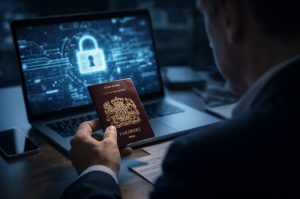 In March 2026, HM Passport Office launched a campaign highlighting the growing risk of passport-related identity theft.
Passports contain highly sensitive information including:
- full legal name
- date of birth
- nationality
- passport number
- biometric identifiers
If this information is exposed online or shared through insecure channels, criminals may attempt to use it for fraud or identity impersonation.
Cybersecurity specialists warn that digital risks are increasing in corporate travel environments.
“The HM Passport Office warning regarding identity theft isn’t just about losing a physical book; it’s about the digital footprint.”
— Mark Silverstone, Cybersecurity Lead & Identity Protection Expert
He notes that many organisations still exchange passport scans through unencrypted email systems, which creates unnecessary risk.
Businesses are increasingly adopting secure document management platforms to protect travel documents.
What Passport Checks Should Business Travellers Complete Before a Trip?
To reduce the risk of travel disruption, UK professionals should review the following passport checks before travelling internationally.
Passport Validity
- Passport must be less than 10 years old for many EU destinations
- Passport must have at least three months validity after return date
Dual National Compliance
- Travel with a valid UK passport, or
- Ensure a Certificate of Entitlement is digitally linked to your passport
Security Protection
- Avoid sharing passport images on social media
- Do not send passport copies through unsecured email
- Use secure corporate travel management systems where possible
These steps help ensure smooth travel and minimise the risk of boarding refusal or identity theft.
What Could Happen If Documentation Is Not Verified?
Consider a London-based consultant travelling from Paris to London for an urgent client meeting.
The traveller holds both British and Canadian citizenship but books the flight using their Canadian passport.
Because Canadian citizens normally require Electronic Travel Authorisation, the airline system searches for an ETA approval.
However, as a British citizen, the traveller cannot apply for an ETA, and the system cannot detect proof of their UK citizenship.
Without a linked British passport or Certificate of Entitlement, the airline may refuse boarding.
In this scenario, the traveller never reaches the UK border, illustrating how the 2026 digital border system now determines eligibility before departure.
Conclusion
The HM Passport Office warning for 2026 highlights how digital border controls are transforming international travel for UK citizens.
With the introduction of the Electronic Travel Authorisation system, airlines now verify passenger eligibility before departure, making correct documentation more important than ever.
For business travellers and corporate travel managers, the key steps are clear:
- ensure passports meet validity and age requirements
- confirm dual nationality documentation is properly linked
- protect sensitive passport data from identity theft risks
By reviewing travel documents early and adopting secure document-handling practices, organisations can minimise disruption and ensure their teams travel confidently in the evolving digital border environment.
FAQs About HM Passport Office Warning
What is the HM Passport Office warning about in 2026?
The warning highlights new risks related to digital border checks, passport validity rules, and identity theft, encouraging travellers to verify their documentation before travel.
Do British citizens need an ETA to enter the UK?
No. British citizens cannot apply for an ETA. They must travel using a British passport or proof of Right of Abode.
How long does it take to renew a UK passport?
Standard online applications typically take around three weeks, although busy periods may extend processing times.
What is a Certificate of Entitlement?
A Certificate of Entitlement confirms a traveller’s Right of Abode in the UK and can be linked to a foreign passport.
Can I travel to the UK with an expired British passport?
Some airlines may temporarily allow this in specific situations, but it is not guaranteed and should not be relied upon.
Why does the 10-year passport rule matter?
If a passport was issued more than 10 years before travel, some EU countries may refuse entry even if the passport has not expired.
How can companies protect passport data?
Businesses should store passport documents securely, limit access, and avoid sending passport scans through unsecured communication channels.