






Many London residents, businesses, landlords, and property managers are wondering whether a hosepipe ban is currently in force. With continued hot weather and increased pressure on water supplies, water conservation has become an important issue across parts of the UK.
As of July 2026, there is no confirmed Thames Water Temporary Use Ban (hosepipe ban) in London. However, Thames Water is urging customers to avoid using hosepipes and sprinklers during periods of high demand to help protect local water resources.
Key highlights:
- London is not currently under a formal Thames Water hosepipe ban.
- Thames Water is encouraging customers to avoid using hosepipes and sprinklers during heatwaves.
- Nearby areas, including parts of Kent, are already subject to formal Temporary Use Bans (TUBs).
- A Temporary Use Ban (TUB) is the official name for a hosepipe ban.
- Businesses should monitor updates, as future restrictions could affect cleaning, landscaping, hospitality, facilities management, and property maintenance.
Is There a Hosepipe Ban in London in 2026 Right Now?
No, London is not currently under a confirmed formal Thames Water hosepipe ban. The key distinction is between a legal ban and official water-saving advice. Although Thames Water has urged customers to reduce outdoor water use, it has not introduced a London-wide Temporary Use Ban (TUB).
According to the Thames Water dry weather update, daily water use reached 3 billion litres during the June heatwave, prompting the company to ask customers to avoid using hosepipes and sprinklers wherever possible to help reduce pressure on water supplies.
Current London position:
| Question | Current answer |
| Is there a formal hosepipe ban in London? | No confirmed Thames Water ban at the time of checking |
| Can residents legally use hosepipes? | No formal ban has been confirmed, but use is strongly discouraged |
| What is Thames Water asking? | Avoid hosepipes and sprinklers during heatwaves |
| Why is this happening? | Hot weather, dry conditions and very high demand |
| Could the position change? | Yes, if conditions worsen |
Londoners should therefore avoid reading “no ban” as “no concern”. The official message is to reduce non-essential outdoor water use now.
Why Are Londoners Asking About a Hosepipe Ban This Summer?
The question has become more common because water pressure is not only a London issue. Several areas across the South East have faced hot weather, dry ground conditions and high demand.
For London residents, the confusion comes from three factors:
- Some nearby areas have already introduced formal restrictions.
- Thames Water has issued strong water-saving advice for its customers.
- Headlines about hosepipe bans can cover different suppliers and regions.
This matters because water restrictions are usually based on the supplier and the supply area, not only the city name. A household in inner London may be in a different position from a property in Kent, Surrey or another nearby area.
For business readers, the issue is also operational. Outdoor cleaning, landscaping, hospitality, vehicle washing and property maintenance can all be affected if restrictions are introduced later.
What Has Thames Water Said About Hosepipes and Sprinklers?
Thames Water has not announced a formal London hosepipe ban at the time of checking. Its current message is a strong request for customers to cut avoidable outdoor use.
The company’s official wording says:
“we’re asking customers not to use hosepipes or sprinklers during heatwaves.”
That is a real official statement from Thames Water, and it should be reported as advice rather than as a confirmed legal ban.
Thames Water’s Latest Customer Advice
Thames Water is asking customers to make practical changes during hot weather.
Recommended water-saving actions
- Swap hosepipes for watering cans.
- Avoid sprinklers on lawns and gardens.
- Delay car washing until the hottest days have passed.
- Use a bucket instead of a hose if cleaning is necessary.
- Water plants early in the morning or late in the evening.
- Let lawns recover naturally after dry spells.
- Reuse suitable leftover water for plants where safe.
These steps are designed to reduce pressure at peak times, when many homes and businesses increase water use at once.
Why Outdoor Water Use Matters?
Outdoor water use is a major concern because a hose or sprinkler can use a large volume of treated drinking water quickly.
Thames Water says a hose or sprinkler can use up to 1,000 litres of water per hour. That is why the company is focusing on gardens, car washing, paddling pools and sprinklers.
The practical message for London is simple: essential water use should be prioritised, while non-essential outdoor use should be reduced.
How Is London Different from Areas Already Under Hosepipe Restrictions?
London is different because Thames Water has not confirmed a formal hosepipe ban for the capital, while some nearby areas have already entered legal restrictions.
South East Water has introduced a Temporary Use Ban for customers in its Kent region. The company says restrictions apply because of high temperatures and record demand for treated drinking water. Readers can check the official South East Water restrictions for the Kent position.
London compared with nearby areas:
| Area or supplier | Current position |
| Thames Water London | Strong advice to avoid hosepipes, no confirmed formal ban |
| South East Water Kent | Temporary Use Ban in place |
| Some wider South East areas | Customers may be asked to use water for essential purposes only |
| Outer London addresses | Supplier should be checked by postcode |
| Multi-site businesses | Each site should be checked separately |
This distinction is important for accuracy. A hosepipe ban in Kent does not automatically mean there is a hosepipe ban in London.
What Would a Formal Hosepipe Ban Mean for London Households and Businesses?
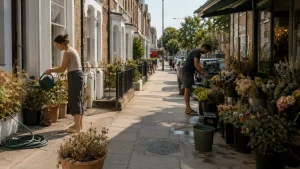
A formal hosepipe ban is known as a Temporary Use Ban. If introduced, it would place legal limits on certain uses of hosepipes.
Ofwat explains that hosepipe bans can restrict activities such as watering gardens, washing cars and filling paddling pools. The regulator also says breaking the rules can lead to a fine of up to £1,000. This is explained in the official Ofwat hosepipe ban guidance.
For households, a ban would mainly affect:
- Watering gardens with a hosepipe
- Washing private cars with a hosepipe
- Filling paddling pools or swimming pools
- Cleaning patios, walls and outdoor surfaces
- Using sprinklers connected to mains water
For businesses, the position can be more complex. Some activities may be treated differently depending on whether the restriction is a household Temporary Use Ban or a wider non-essential use restriction.
Business owners should not assume they are automatically exempt. The exact wording of any future Thames Water notice would matter.
Could a Hosepipe Ban Be Introduced in London Later in 2026?
Yes, it could be introduced later, but it should not be reported as active unless Thames Water or the relevant supplier formally confirms it.
London’s position can change if hot, dry weather continues and voluntary water-saving advice does not reduce demand enough.
Weather, Demand and Supply Pressure
Hot weather increases demand quickly. More people water gardens, fill paddling pools, wash cars and use sprinklers.
At scale, these activities put pressure on treated drinking water supplies. Thames Water says it is monitoring weather, rivers, groundwater and reservoirs while managing supplies across its network.
Temporary Use Ban Triggers
A water company may introduce a Temporary Use Ban when it needs to reduce non-essential demand and protect essential supply.
The usual aim is not to stop all water use. It is to reduce avoidable use so that homes, businesses, hospitals, care settings and essential services can continue to receive water.
What Readers Should Monitor?
Readers should monitor official sources, not only social media or broad headlines.
Where to check:
- Thames Water updates for London and Thames Water customers
- The reader’s own water supplier by postcode
- Ofwat guidance on hosepipe bans and non-essential use bans
- Local council or emergency updates if supply issues develop
- Reliable London news coverage for context
The best rule is to check by postcode before acting, especially near the edge of London.
What Should London Residents and Businesses Do Now?
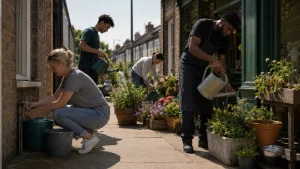
London residents and businesses should reduce avoidable outdoor water use now, even without a formal ban.
For residents, this means using common-sense water-saving steps. For businesses, it means preparing for possible operational changes if the situation escalates.
Actions for London Residents
Residents can help reduce pressure on water supplies by making a few practical changes to their daily routine, especially when temperatures are high.
- Avoid using hosepipes and sprinklers during heatwaves.
- Use watering cans for essential plants instead of a hosepipe.
- Delay washing cars unless it is necessary.
- Reuse suitable household water for gardens where possible.
- Check for leaks in taps, pipes, and outdoor connections.
- Follow official Thames Water updates rather than relying on social media or headlines.
Actions for London Businesses
Businesses should review their water use and ensure they are prepared if restrictions are introduced in the future. Planning ahead can help minimise operational disruption.
- Check the water supplier for each business location.
- Review outdoor cleaning and maintenance schedules.
- Brief facilities teams and contractors on water-saving measures.
- Reduce non-essential landscaping and irrigation.
- Prepare a plan in case formal restrictions are introduced.
- Keep customer communications accurate, clear, and based on official guidance.
Businesses should also think about reputation. Visible waste of water during a heatwave can attract public concern, even where no legal ban is in place.
What Does the Current London Hosepipe Ban Mean for You?
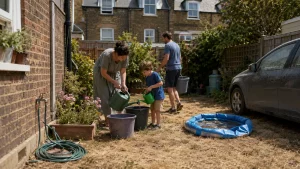
The main takeaway is that London is not currently under a confirmed Thames Water hosepipe ban, but water-saving advice is active and important.
The situation should be described carefully:
- Confirmed fact: no formal Thames Water hosepipe ban has been confirmed for London at the time of checking.
- Official advice: Thames Water is asking customers to avoid hosepipes and sprinklers during heatwaves.
- Nearby development: South East Water has introduced restrictions in Kent.
- Possible change: London restrictions could be introduced later if conditions worsen.
- Best next step: check the official supplier for the exact postcode.
For London Business Mag readers, the issue is not only domestic. It affects property, facilities, hospitality, cleaning, landscaping and business continuity planning.
Conclusion
London is not currently under a confirmed Thames Water hosepipe ban, but the pressure on water supplies remains important in 2026.
Residents and businesses should avoid unnecessary hosepipe use, follow official Thames Water updates, and check their supplier by postcode.
With nearby restrictions already in place, the safest approach is to save water now and monitor any formal announcement before making household or business decisions during hot dry weather periods.
FAQs
Can Londoners still water their gardens in 2026?
Yes, where no formal ban applies. However, Thames Water is asking customers to avoid hosepipes and sprinklers during heatwaves, so a watering can is the more responsible option.
Can people wash cars with a hosepipe in London?
There is no confirmed Thames Water hosepipe ban in London at the time of checking. However, Thames Water advises delaying car washing during the hottest days and using a bucket instead of a hose.
What is the difference between advice and a Temporary Use Ban?
Advice is a request to save water voluntarily. A Temporary Use Ban is a legal restriction that can make certain hosepipe uses unlawful.
Which water company covers London?
Most of London is served by Thames Water, but not every nearby or outer address should assume the same supplier. Residents and businesses should check by postcode.
Are businesses affected by hosepipe restrictions?
Some restrictions mainly affect household use, but businesses should check official notices carefully. Wider non-essential use restrictions can affect commercial activities.
Why do water companies ask people to stop using sprinklers?
Sprinklers can use a large amount of treated water quickly. During heatwaves, reducing sprinkler use helps protect supply for essential needs.
Where should readers check the latest update?
Readers should check Thames Water, their own supplier’s website and official regulator guidance. News reports are useful for context, but official sources should guide decisions.
Editorial Note:
This article is written as a professional public information and business news guide for UK readers. It avoids saying London has a legal hosepipe ban unless that has been formally confirmed by Thames Water or the relevant local supplier. It separates confirmed facts, official advice and possible future changes.
This is informational, not financial/legal advice. Households and businesses should check their own supplier and seek professional guidance where operational or legal decisions are involved.
Leave feedback about this