








Rachel Reeves’ Economic Policy UK: Quick Snapshot
A concise overview of Labour’s plan to reshape growth, investment, business confidence, and regional development across the UK.
Core Strategy
Labour aims to combine fiscal discipline with investment-led growth, regional development, and stronger public-private partnerships.
Business Impact
Businesses may benefit from infrastructure investment and industrial support, but higher labour costs remain a key concern.
Regional Focus
Green Book reforms and fiscal devolution aim to shift more investment power toward city regions and metro mayors.
Key Takeaways
- Rachel Reeves’ economic policy focuses on stability, public investment, and long-term productivity growth.
- The National Wealth Fund is designed to attract private capital into major UK infrastructure and industrial projects.
- Green Book reforms could redirect more public investment towards regions outside London and the South East.
- Planning reform and housing targets are central to Labour’s growth strategy.
- Employer National Insurance changes remain a major pressure point for larger businesses.
| Policy Area | What It Means | Likely Impact |
|---|---|---|
| Fiscal Rules | Balancing day-to-day spending discipline with borrowing for investment. | Could support infrastructure while protecting market confidence. |
| National Wealth Fund | Public capital used to attract private investment into strategic sectors. | May boost clean energy, manufacturing, ports, and infrastructure projects. |
| Green Book Reform | Changes how public investment projects are assessed. | Could increase funding for regional growth outside London. |
| Planning Reform | Aims to speed up housing, infrastructure, and development approvals. | May support construction, housing supply, and regional productivity. |
| Employer NICs | Higher employer National Insurance costs for many larger firms. | Could affect hiring, margins, and wage growth decisions. |
The UK economy is entering a new phase of economic policymaking under Chancellor Rachel Reeves. Following years of sluggish productivity growth, regional disparities, underinvestment in infrastructure, and ongoing cost-of-living pressures, Labour’s economic agenda aims to fundamentally reshape how economic growth is generated and distributed across Britain.
Rather than relying on a model that concentrates investment and prosperity in London and the South East, Reeves has outlined a strategy that seeks to empower regional economies, modernise infrastructure, attract private investment, and improve long-term economic resilience. Her approach combines fiscal discipline with targeted public investment, attempting to balance economic stability with growth.
For businesses, investors, local authorities, and households, understanding Rachel Reeves’ economic policy is essential because its success could influence everything from job creation and housing affordability to business confidence and regional prosperity.
What Is Rachel Reeves’ Economic Policy for the UK?

Rachel Reeves’ economic policy is built around the principle that government should play a more active role in supporting economic growth while maintaining credible fiscal rules.
Labour’s strategy focuses on:
- Increasing productivity
- Encouraging private investment
- Expanding infrastructure
- Supporting regional growth
- Strengthening industrial capacity
- Addressing housing shortages
- Improving living standards
Unlike previous economic approaches that often relied heavily on market forces alone, Reeves advocates an “active state” that works alongside businesses and investors to unlock growth opportunities.
The Core Objectives of Labour’s Economic Strategy
The government has identified three central economic priorities:
- Deliver sustainable economic growth.
- Improve living standards.
- Restore economic stability.
According to Treasury statements, economic stability is viewed as the foundation for attracting investment and creating jobs. This explains Labour’s emphasis on maintaining fiscal discipline while increasing productive investment.
Why Does This Matter?
The UK has faced several structural challenges over the past decade:
- Weak productivity growth
- Stagnant business investment
- Regional economic inequality
- Housing shortages
- Infrastructure constraints
- Skills gaps
Labour’s economic strategy is designed to tackle these issues simultaneously rather than treating them as separate problems.
What Does the Latest Economic Data Reveal About the UK Economy?
Recent economic indicators suggest that the UK economy is showing signs of resilience despite global uncertainty.
Latest UK Economic Indicators
GDP growth of 0.6% during the first quarter of 2026 exceeded many forecasts and highlighted stronger-than-expected performance in the services sector. Meanwhile, inflation eased to 2.8%, supported by lower energy costs following changes to Ofgem’s energy price cap.
However, challenges remain. Public debt remains historically high, business investment continues to face pressure, and unemployment has edged upward compared with previous years.
These mixed signals explain why Labour’s economic reforms focus heavily on boosting long-term productive capacity rather than relying solely on short-term demand measures.
How Is Rachel Reeves Rewiring the UK Economy?
Rachel Reeves frequently describes her strategy as a long-term plan to “rewire” the British economy.
At its core, this means changing where investment flows, how public money is allocated, and who controls economic decision-making.
Moving Away from a London-Centric Model
Historically, economic growth in the UK has been concentrated heavily within London and the South East.
Labour’s strategy aims to distribute growth more evenly by supporting:
- Northern growth corridors
- The Oxford-Cambridge growth corridor
- City-region investment clusters
- Regional innovation hubs
The objective is not to weaken London’s economy but to strengthen economic opportunities elsewhere.
Building an Active State
The government believes the state should actively help create conditions for growth rather than simply regulating markets.
This includes:
- Strategic investment
- Industrial policy
- Skills development
- Infrastructure delivery
- Planning reform
Supporters argue that this approach can help address market failures and unlock private-sector investment.
Why Do the Treasury Green Book Reforms Matter?

One of the most significant reforms introduced by Rachel Reeves involves changes to the Treasury’s Green Book.
What Is the Green Book?
The Green Book provides guidance on how public investment projects are evaluated.
For decades, critics argued that projects in economically successful regions often appeared more attractive under traditional assessment methods because they generated higher immediate financial returns.
What’s Changing?
The 2026 Green Book reforms introduced several important changes:
- A shorter and simplified framework
- Greater emphasis on place-based analysis
- Use of Net Present Social Value (NPSV)
- Reduced reliance on rigid Benefit-Cost Ratio thresholds
- Stronger consideration of regional development benefits
Why This Could Transform Regional Investment
The reforms are intended to ensure that projects delivering broader social and economic benefits receive greater consideration.
For example, infrastructure investments in former industrial areas may now receive stronger support even if their immediate financial returns appear lower than projects in already prosperous regions.
For regional leaders, these changes could significantly improve access to public investment funding.
What Is the National Wealth Fund and How Will It Drive Growth?
A central pillar of Labour’s economic strategy is investment-led growth.
The flagship vehicle supporting this objective is the National Wealth Fund (NWF).
What Is the National Wealth Fund?
The National Wealth Fund has been capitalised with £27.8 billion and operates as a strategic investment vehicle designed to attract private capital alongside public investment.
Rather than funding projects directly through traditional government spending, the fund seeks to crowd in institutional investment.
Major Investments Announced
Recent commitments include:
- £200 million for Associated British Ports
- £500 million university retrofit programme
- Up to £599 million for Rolls-Royce Small Modular Reactors
- £25 million investment in Rowden
The government aims to achieve a leverage ratio of approximately three pounds of private investment for every pound of public funding deployed.
Why Businesses Should Pay Attention
For businesses, the National Wealth Fund creates opportunities in:
- Energy infrastructure
- Advanced manufacturing
- Transport
- Technology
- Housing
- Regional development
It also signals a shift toward long-term investment partnerships between government and private capital.
How Will Labour’s Modern Industrial Strategy Shape the UK’s Future?
Labour’s Modern Industrial Strategy represents another major component of Rachel Reeves’ economic agenda.
Invest 2035
The government’s Invest 2035 consultation outlines a 10-year vision for industrial growth.
The strategy focuses on eight priority sectors:
- Advanced manufacturing
- Clean energy
- Creative industries
- Defence
- Digital technologies
- Life sciences
- Financial services
- Professional and business services
Why Industrial Policy Is Back
Labour argues that strategic industrial policy can help Britain compete globally by:
- Strengthening supply chains
- Increasing productivity
- Supporting innovation
- Creating high-quality jobs
- Encouraging investment
The government believes that targeted support can help industries overcome structural barriers and accelerate growth.
Early Examples
Examples already announced include:
- £700 million advanced manufacturing support
- British Business Bank growth capital programmes
- Electric vehicle battery investment support
- Regional innovation funding
These initiatives are intended to position the UK as a competitive destination for future industries.
How Planning Reform Could Unlock Housing and Infrastructure Growth?

One of the biggest barriers to UK economic growth has been the country’s planning system. Delays in approving housing developments, infrastructure projects, and commercial investments have constrained productivity and limited economic expansion.
Rachel Reeves has repeatedly argued that planning reform is essential if Britain is to increase growth, attract investment, and tackle housing shortages.
The Government’s Housing Ambition
Labour has reinstated mandatory housing targets aimed at delivering 1.5 million new homes during the current Parliament.
The objective is twofold:
- Address the UK’s housing shortage.
- Support economic growth by increasing housing supply near employment centres.
A lack of affordable housing has become a significant challenge for employers attempting to attract and retain workers, particularly in high-growth regions.
Development Corporations and New Towns
To accelerate delivery, the government is expanding the use of Development Corporations and supporting a New Towns programme.
These organisations are expected to:
- Coordinate large-scale developments.
- Improve infrastructure delivery.
- Streamline land acquisition processes.
- Increase affordable housing provision.
Current proposals include minimum affordable housing targets of up to 40% within designated new town developments.
Transport and Infrastructure Investment
Labour’s growth strategy depends heavily on improving connectivity between cities and regions.
Key projects include:
- Northern Powerhouse Rail
- New rail station developments
- Regional transport upgrades
- Wales rail investment programmes
- Alternative broadband network expansion
The government believes better connectivity can increase productivity, reduce regional inequalities, and attract private investment.
Why Planning Reform Matters for Businesses
For businesses, planning reform could result in:
- Faster project approvals
- Increased commercial development opportunities
- Greater labour mobility
- Improved housing availability
- Stronger regional economies
However, implementation will remain critical. Planning reform often encounters local opposition, making delivery one of the government’s biggest challenges.
How Will Fiscal Devolution Change the Role of Metro Mayors?
Another significant feature of Rachel Reeves’ economic policy is fiscal devolution.
The government believes regional leaders should have greater control over economic development decisions.
What Is Fiscal Devolution?
Fiscal devolution refers to transferring financial powers from central government to regional authorities.
Labour’s proposals include:
- Giving metro mayors greater budgetary control.
- Sharing portions of national tax revenues.
- Creating long-term investment funds.
- Allowing regions to make more independent economic decisions.
Income Tax Sharing Proposals
One of the most ambitious proposals involves allowing metro mayors to retain a share of income tax revenues generated within their regions.
Supporters argue that this would:
- Reward successful local growth strategies.
- Improve accountability.
- Encourage investment.
- Reduce reliance on Whitehall funding decisions.
New City Investment Funds
The government has already announced substantial devolved funding packages.
Long-term city investment funds and regional settlements are designed to give local leaders more flexibility to pursue growth opportunities aligned with regional priorities.
Potential Economic Benefits
Fiscal devolution could lead to:
- Faster infrastructure delivery.
- More responsive local policymaking.
- Increased regional competitiveness.
- Stronger investment attraction.
However, critics warn that success will depend on governance quality and the capacity of local authorities to manage larger financial responsibilities.
What Does Rachel Reeves’ Economic Policy Mean for UK Businesses?
For businesses, Labour’s economic strategy creates both opportunities and challenges.
Impact on SMEs
Small and medium-sized enterprises form the backbone of the UK economy.
Labour has introduced measures intended to make government procurement more accessible to smaller firms through digital and AI-enabled procurement reforms.
Potential SME benefits include:
- Simplified public procurement.
- Regional investment opportunities.
- Infrastructure-led demand growth.
- Expanded local economic development programmes.
However, SMEs also face challenges including:
- Rising wage costs.
- Higher employer National Insurance contributions.
- Elevated borrowing costs.
- Economic uncertainty.
For many small firms, managing these pressures remains a major concern.
Impact on Manufacturing
Manufacturing is one of the sectors most likely to benefit from Labour’s industrial strategy.
Strategic Support
Government support includes:
- Advanced manufacturing funding.
- Supply-chain resilience programmes.
- Clean technology investment.
- Battery production initiatives.
- Regional industrial development.
Why Manufacturing Matters?
Manufacturing contributes significantly to exports, innovation, and regional employment.
By supporting industrial growth, Labour hopes to strengthen economic resilience and reduce dependence on imported technologies and supply chains.
Example: Electric Vehicle Supply Chains
The government’s support for battery production and advanced manufacturing reflects a broader ambition to position the UK as a leader in next-generation technologies.
Impact on Construction
Construction sits at the centre of Labour’s growth strategy.
Strong Long-Term Demand
The combination of:
- Housing targets
- Infrastructure investment
- Planning reforms
- New towns development
creates a potentially strong pipeline of future projects.
Skills Challenges
However, the industry continues to face labour shortages.
To address this, government programmes are supporting:
- Construction apprenticeships
- Engineering training
- Skills development initiatives
Without sufficient skilled workers, housing and infrastructure targets may prove difficult to achieve.
Impact on Financial Services
The financial sector remains one of Britain’s most important industries.
A New Relationship Between Government and Finance
Labour’s approach does not seek to replace private finance. Instead, it aims to create structured opportunities for private capital to participate in national development projects.
Examples include:
- National Wealth Fund investments.
- Infrastructure financing partnerships.
- Pension fund mobilisation.
- Green investment programmes.
Opportunities for Investors
Financial institutions may benefit from:
- Long-term infrastructure assets.
- Public-private partnerships.
- Regional investment opportunities.
- Energy transition projects.
The challenge will be ensuring sufficient returns while meeting policy objectives.
Impact on Technology and AI Businesses
Technology firms are likely to play a central role in Labour’s growth agenda.
Digital Transformation
The government sees technology as critical for:
- Productivity growth.
- Public service efficiency.
- Business competitiveness.
- Innovation leadership.
AI and Economic Growth
Artificial intelligence is expected to influence:
- Public procurement systems.
- Business productivity.
- Workforce requirements.
- Regional innovation ecosystems.
However, organisations such as the British Chambers of Commerce have warned that rapid technological change may also affect entry-level employment opportunities.
Why Are Employer National Insurance Changes Causing Concern?
One of the most debated elements of Labour’s economic policy has been changes to Employer National Insurance Contributions (NICs).
What Changed?
For the 2026/27 tax year:
- Employer NICs remain at 15%.
- The secondary threshold remains £5,000.
- Employment Allowance increased to £10,500.
- Previous eligibility restrictions were removed.
Benefits for Smaller Businesses
Approximately 865,000 micro-employers are expected to pay little or no employer NICs because of the expanded Employment Allowance.
Challenges for Larger Employers
Larger employers face:
- Increased payroll costs.
- Higher labour expenses.
- Greater pressure on hiring decisions.
Combined with increases in the National Living Wage, these costs have become a major concern for labour-intensive industries.
What Does Labour’s Economic Strategy Mean for London Businesses?

Although Labour’s agenda focuses heavily on regional growth, London remains a crucial part of the UK economy.
Reduced Investment Concentration
Green Book reforms are specifically designed to reduce the historical concentration of public investment in London.
This does not mean less investment overall but rather a broader geographical distribution of economic opportunities.
Opportunities for London Firms
London businesses remain well-positioned to benefit from:
- Infrastructure financing opportunities.
- National Wealth Fund partnerships.
- Technology investment programmes.
- Professional services demand.
- Financial services growth.
Challenges for London Employers
Key concerns include:
- Rising labour costs.
- Employer NIC increases.
- Commercial property costs.
- Competition for skilled workers.
For many firms, productivity improvements will become increasingly important to offset these pressures.
How Could Labour’s Policies Affect UK Households?
Labour’s economic strategy ultimately aims to improve living standards.
Cost-of-Living Measures
Recent support measures include:
- Fuel duty freezes.
- Summer VAT reductions on selected attractions.
- Free bus travel initiatives for children.
- Energy bill support programmes.
- Food tariff reductions.
These interventions are designed to provide targeted relief without significantly increasing government borrowing.
Wages and Employment
The government points to:
- Rising real wages.
- Higher National Living Wage levels.
- Improving economic stability.
as evidence that living standards are beginning to improve.
However, households continue to face pressures from housing costs, energy prices, and wider economic uncertainty.
Housing Affordability
If planning reforms succeed, increased housing supply could help moderate long-term housing costs and improve affordability for future buyers and renters.
What Do Economists and Business Groups Think of Labour’s Economic Strategy?
Rachel Reeves’ economic agenda has generated significant debate among economists, business organisations, and policy experts. While there is broad support for restoring economic stability and increasing investment, questions remain about implementation, productivity growth, and the UK’s long-term competitiveness.
The Office for Budget Responsibility (OBR)
The OBR has acknowledged several positive aspects of Labour’s economic framework while maintaining cautious growth forecasts.
According to its Spring Forecast, real GDP per capita is expected to increase by 5.6% over the course of the Parliament. However, the OBR also forecasts that overall GDP growth will moderate to around 1.1% in 2026 before recovering in subsequent years.
This suggests that while structural reforms may improve long-term economic performance, the benefits are unlikely to be immediate.
The International Monetary Fund (IMF)
The IMF has broadly endorsed the government’s fiscal framework, describing it as a balanced approach that combines deficit control with growth-oriented investment.
However, the IMF has also warned that:
- Global economic uncertainty remains elevated.
- Energy market volatility continues to present risks.
- Geopolitical tensions could affect growth projections.
The IMF currently forecasts UK GDP growth of approximately 0.8% in 2026 and inflation averaging around 3.2%.
Confederation of British Industry (CBI)
The CBI has generally welcomed Labour’s commitment to policy stability.
Business leaders have particularly praised:
- Reduced fiscal uncertainty.
- Long-term industrial planning.
- Efforts to strengthen trade competitiveness.
- Infrastructure investment commitments.
However, concerns remain regarding productivity growth and the cumulative impact of tax changes on business confidence.
British Chambers of Commerce (BCC)
The BCC has highlighted concerns about:
- Weak business investment.
- Skills shortages.
- Rising operational costs.
- The impact of AI on entry-level employment.
The organisation believes that stronger support for workforce development and business investment will be essential if Labour’s growth ambitions are to be realised.
Federation of Small Businesses (FSB)
The FSB remains cautious.
While small business confidence has improved slightly, many firms continue to face pressure from:
- Labour costs.
- Energy prices.
- National Insurance changes.
- Cash-flow constraints.
The organisation continues to call for targeted support aimed at reducing operating costs and improving payment practices across supply chains.
What Are the Biggest Opportunities and Risks in Labour’s Economic Strategy?
Potential Opportunities
If Labour’s economic programme succeeds, it could generate several benefits.
Higher Productivity
Improved infrastructure, better transport connectivity, and stronger innovation ecosystems could help raise productivity growth.
Stronger Regional Economies
Fiscal devolution and targeted investment may help reduce regional disparities and unlock growth in areas that have historically received lower levels of investment.
Increased Private Investment
The National Wealth Fund and industrial strategy are designed to attract significant private-sector investment into strategic industries.
Improved Infrastructure
Housing, transport, energy, and digital infrastructure upgrades could strengthen the UK’s long-term competitiveness.
Key Risks
Despite these opportunities, significant challenges remain.
Global Economic Volatility
Energy prices, geopolitical tensions, and international trade disruptions continue to influence the UK’s economic outlook.
Public Debt Levels
With public debt exceeding 90% of GDP, maintaining fiscal credibility remains essential.
Skills Shortages
Several growth sectors continue to report shortages of skilled workers.
Without sufficient workforce development, investment programmes may struggle to deliver their full potential.
Delivery Risks
Large-scale infrastructure and housing programmes often face delays, cost overruns, and political opposition.
Successful implementation will be critical to Labour’s long-term credibility.
How Could Labour’s Economic Policies Affect a Real UK Business?
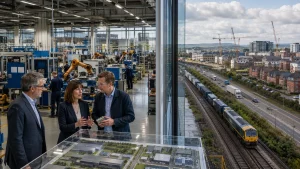
Consider a medium-sized advanced manufacturing company located in the Midlands.
Under Labour’s economic strategy, the business could benefit from:
- Improved regional transport links.
- Greater access to growth capital.
- Industrial strategy support programmes.
- Skills development initiatives.
- Supply-chain investment opportunities.
At the same time, the company may face:
- Higher payroll costs due to Employer NIC changes.
- Increased wage costs.
- Ongoing energy price uncertainty.
For many businesses, the overall impact of Labour’s policies will depend on whether growth opportunities outweigh rising operating costs.
What Could the Future Hold for the UK Economy?
Short-Term Outlook
Over the next 12 to 18 months, economic performance is likely to be influenced by:
- Inflation trends.
- Interest rate decisions.
- Global energy markets.
- Consumer confidence.
The government’s immediate focus remains maintaining stability while supporting investment.
Medium-Term Outlook
The medium-term success of Labour’s agenda depends heavily on:
- Planning reform implementation.
- Infrastructure delivery.
- National Wealth Fund performance.
- Business investment recovery.
These factors will determine whether productivity growth improves.
Long-Term Outlook
If Labour’s reforms achieve their intended objectives, the UK economy could become:
- More regionally balanced.
- More productive.
- More investment-driven.
- More resilient to external shocks.
However, long-term success will require sustained policy consistency and effective execution.
Conclusion
Rachel Reeves’ economic policy represents one of the most significant attempts in recent years to reshape the structure of the British economy.
Rather than focusing solely on short-term economic management, Labour’s strategy seeks to address long-standing structural weaknesses through infrastructure investment, planning reform, industrial policy, fiscal devolution, and regional development.
The combination of Green Book reforms, the National Wealth Fund, housing targets, and a modern industrial strategy demonstrates a clear ambition to create a more balanced and productive economy.
For businesses, the opportunities are substantial. Increased infrastructure spending, regional investment, and industrial support could unlock new markets and improve long-term competitiveness. However, challenges remain, particularly around labour costs, public debt, implementation risks, and global economic uncertainty.
Ultimately, the success of Rachel Reeves’ economic policy will be measured not by announcements but by outcomes. The coming years will reveal whether Labour’s vision can genuinely rewire the UK economy and deliver sustainable growth for businesses, workers, and communities across the country.
FAQs
What is Rachel Reeves’ economic policy?
Rachel Reeves’ economic policy focuses on combining fiscal discipline with investment-led growth through infrastructure spending, regional development, industrial strategy, and planning reform.
What is the National Wealth Fund?
The National Wealth Fund is a £27.8 billion public investment vehicle designed to attract private capital into strategic UK infrastructure and growth projects.
Why is the Treasury Green Book important?
The Green Book determines how public investment projects are assessed. Recent reforms aim to give greater weight to regional development and social value.
How will Labour’s economic strategy affect businesses?
Businesses may benefit from infrastructure investment, industrial support, and improved regional growth, although some firms face higher labour costs due to NIC changes.
What is fiscal devolution?
Fiscal devolution involves transferring greater financial powers and funding control from central government to regional authorities and metro mayors.
Which sectors are prioritised under Labour’s Industrial Strategy?
Priority sectors include advanced manufacturing, clean energy, life sciences, defence, financial services, digital technologies, professional services, and creative industries.
Will Labour’s policies increase taxes for businesses?
Some sectors face higher tax burdens, particularly through National Insurance changes and energy-related taxation. However, targeted support measures are also available.
Can Labour’s economic reforms reduce regional inequality?
Reducing regional inequality is one of the central objectives of the government’s economic strategy through investment, devolution, and infrastructure development.