







Key Takeaway
Spaghetti House’s closure marks the end of a 70-year London dining legacy and highlights the severe cost pressures facing mid-market hospitality businesses in central London.
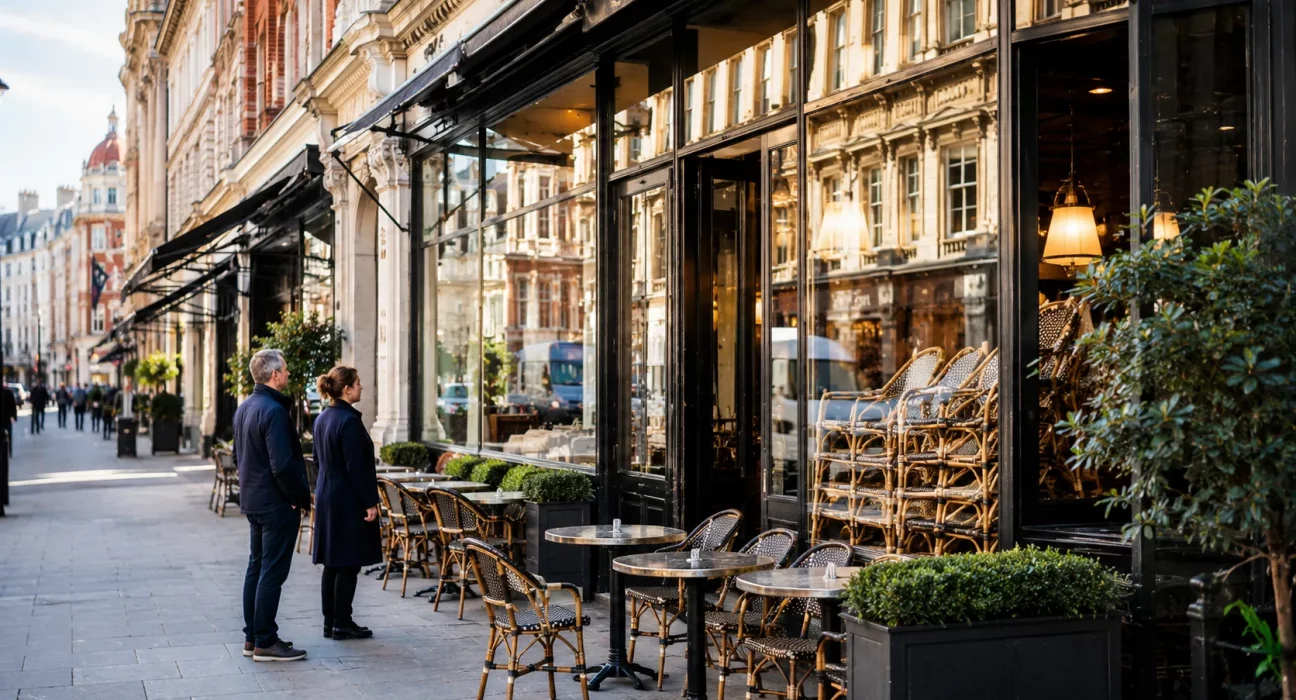
Spaghetti House, one of London’s most recognisable Italian restaurant chains, has ceased trading after seven decades, bringing a definitive end to a family-run institution that helped shape the capital’s casual dining landscape.
Lavval Restaurants Limited, the company that operated the Spaghetti House brand, entered administration on 6 May 2026, with insolvency specialists Asher Miller and Stephen Katz of BTG Begbies Traynor appointed as joint administrators. All remaining central London sites closed with immediate effect, leaving staff redundant and generations of loyal customers mourning the loss of a West End staple.
The Spaghetti House London closures mark one of the most emotionally charged business failures in recent British hospitality memory not merely because of the brand’s age, but because of what it represented: a post-war immigrant dream that became a permanent fixture of London life.
What Was Spaghetti House, and Why Did It Matter?
The Origins: A Trattoria Born in Post-War London
Founded in 1955 by friends Simone Lavarini and Lorenzo Fraquelli, Spaghetti House opened its first restaurant on Goodge Street in the heart of central London. The timing was deliberate. As a new generation of Italian immigrants brought espresso culture and la dolce vita to Britain’s capital, Lavarini and Fraquelli saw an opportunity to introduce Londoners to something entirely foreign to their palates: proper pasta, served without a tin in sight.
Their early marketing slogan “Spaghetti, but not on toast” captured the cultural moment perfectly. At a time when the British public’s familiarity with Italian food extended little beyond canned spaghetti hoops, the founders offered hand-rolled pasta, traditional Bolognese, and classic Minestrone prepared from daily market-fresh ingredients.
A West End Institution for Three Generations
Through the 1960s and 1970s, the chain expanded steadily across central London. New sites opened on Sicilian Avenue, Oxford Street, Victoria, Knightsbridge, and Cranbourn Street the latter positioned to serve the theatre-going crowds of the West End. By the 1980s, Spaghetti House had become embedded in London’s retail and leisure geography, drawing families, office workers, tourists, and shoppers as a reliable, affordable, and genuinely Italian dining destination.
The business remained resolutely family-owned throughout its history, with Luigi Lavarini later assuming the role of executive chairman and chief executive. It was a point of quiet pride in a city that has, over the decades, seen countless independent chains absorbed by corporate hospitality groups or swept away by shifting consumer tastes.
The chain even entered London lore in dramatic fashion: on 28 September 1975, nine members of staff were taken hostage by armed robbers in the basement of the Knightsbridge restaurant. The siege lasted five days. No one was harmed, but the episode became one of the most reported criminal events in 1970s London.
Why Did Spaghetti House Close? The Business Case
A Confluence of Compounding Pressures
The administration of Lavval Restaurants Limited was not the result of a single catastrophic event. It was the culmination of years of sustained financial attrition a slow-motion crisis that afflicted the entire central London casual dining sector. Luigi Lavarini stated the decision was made “with a heavy heart,” citing the impact of the pandemic, Brexit, successive government budgets, and wider global instability on trading conditions.
BTG Begbies Traynor was unambiguous in its assessment: “After a number of years of challenging market conditions worsened by soaring operational, employment, energy and tax costs affecting the hospitality industry, the directors approached BTG for advice on their available options.”
The Key Financial Pressures at a Glance
Cost Pressures Impacting Spaghetti House & the UK Hospitality Sector
Early Warning Signs
The business had been showing financial strain for some time before the final closure. In March 2024, Spaghetti House posted a pre-tax loss of £177,000, describing it as an “extremely difficult year” for the business. The original Goodge Street site where it all began in 1955 had already closed in 2025, representing both a financial and symbolic retreat.
At the point of administration, five remaining restaurants were still operational: Marble Arch, Carnaby Street, Oxford Street, Kensington High Street, and Cranbourn Street in Soho.
Why Central London Is Especially Unforgiving
Running a restaurant in Zone 1 London is, by any financial metric, one of the most challenging propositions in British hospitality. Business rates on prime West End sites are amongst the highest in the country. Landlords in the Carnaby and Oxford Street corridors command rents that many post-pandemic operators simply cannot sustain with reduced footfall and compressed margins.
Unlike suburban or regional operators, central London restaurants cannot offset high fixed costs through volume alone when consumer confidence is fragile. The cost-of-living crisis has caused diners to trade down or reduce the frequency of eating out a behavioural shift that disproportionately harms mid-market casual dining brands operating in expensive locations.
What Does This Tell Us About London’s Hospitality Industry?
A Sector in Structural Distress
The Spaghetti House London closures did not occur in isolation. They are the most high-profile casualty of a broader crisis engulfing the UK hospitality sector. According to NIQ’s Hospitality Market Monitor, the casual dining and restaurant segments recorded a combined 241 net closures in just three months during Q4 2025 equivalent to nearly 19 per week. By Q1 2026, hospitality was losing an average of 3.4 sites per day across Britain.
The casual dining restaurant sector recorded a 0.9% fall in outlet numbers in the first three months of 2026 alone the sharpest contraction of any hospitality channel.
The Specific Threats to Legacy Chains
Established mid-market chains like Spaghetti House face a particularly acute set of challenges that newer, leaner operators are sometimes better positioned to avoid:
- Long-term lease obligations negotiated under pre-pandemic market conditions leave legacy operators locked into rents that no longer reflect commercial reality.
- Brand positioning in the middle market not cheap enough to compete on price, not premium enough to justify higher spend when consumers are cautious creates a structural vulnerability.
- Staffing costs have escalated sharply. The April 2025 increase in employer National Insurance Contributions added a direct and significant burden to labour-intensive restaurant businesses.
- Energy costs remain elevated for businesses that operate large commercial kitchens across multiple central London sites.
Independent vs. Legacy: Who Survives?
The closure of Spaghetti House raises a fundamental question about which restaurant models are best equipped to navigate the current landscape. The data suggests a divergence is emerging.
Smaller, independent operators with shorter lease terms and lower fixed-cost bases can adapt more quickly pivoting menus, reducing opening hours, or consolidating to a single location. Some have survived precisely because they are too small to carry the overhead burden that brought Spaghetti House down.
Larger chains backed by institutional investors can absorb short-term losses or restructure debts more easily. It is the middle tier family-owned businesses of meaningful scale, carrying significant property obligations across prime urban locations that faces the greatest existential risk.
UKHospitality has warned that there are now 22.7% fewer independent restaurants than before the pandemic. Since 2020, the sector has seen 16,000 net closures nationally.
How Does Restaurant Administration Work?

Understanding the Legal Process
For those unfamiliar with the insolvency mechanics, the appointment of Begbies Traynor as administrators triggers a specific legal framework under the Insolvency Act 1986. A statutory moratorium comes into immediate effect, halting any legal actions against the company and providing a structured environment for the wind-down.
The administrators’ statutory duties in this case include:
- Realising available business assets to maximise returns for creditors
- Assisting former employees in making claims for redundancy and unpaid wages
- Completing required investigations into the company’s affairs
- Reporting to creditors and stakeholders in line with statutory obligations
All staff were made redundant upon the administration appointment on 6 May 2026.
Conclusion & Outlook: The End of an Era, and What Comes Next
A Farewell Written in 70 Years of Pasta
Spaghetti House’s final message to its customers was brief, gracious, and Italian in its warmth:
It was a fitting close to a story that began with two friends, a rented space on Goodge Street, and the ambition to show a sceptical London that pasta could be extraordinary. For 70 years, they succeeded.
What London’s Restaurant Scene Looks Like Now?
The disappearance of Spaghetti House is not a sign that London’s culinary culture is in terminal decline. The capital remains one of the world’s great dining cities. What it does signify is an accelerating structural change: the gradual erosion of the mid-market legacy chain and the reshaping of what survives in its place.
The hospitality businesses most likely to endure in post-2026 London share several characteristics smaller footprints, flexible leases, technology-enabled operations, and clear differentiation in either price or concept. The era of the large, multi-site, West End casual dining chain is under profound pressure.
London’s food scene will evolve. It always has. But it will not easily replace what Spaghetti House gave the city: a seven-decade commitment to honest Italian cooking, priced for everyone, in the heart of the capital.
FAQs
When did Spaghetti House close?
Lavval Restaurants Limited, trading as Spaghetti House, entered administration on 6 May 2026. All restaurants closed with immediate effect on that date.
Why did Spaghetti House go into administration?
The chain entered administration due to a combination of soaring operational, employment, energy and tax costs, combined with suppressed consumer spending linked to the cost-of-living crisis. The business had been trading at a loss since at least the financial year ending March 2024, and the sustained pressure of prime central London overheads proved insurmountable.
Which Spaghetti House restaurants closed?
At the time of administration, the five remaining Spaghetti House sites were: Marble Arch, Carnaby Street, Oxford Street, Kensington High Street, and Cranbourn Street (Soho). The original Goodge Street location had already closed in 2025.
Who founded Spaghetti House?
Spaghetti House was founded in 1955 by Simone Lavarini and Lorenzo Fraquelli, two friends who emigrated to London with the ambition of bringing authentic Italian casual dining to the British capital.
Who are the administrators handling the Spaghetti House closure?
Asher Miller and Stephen Katz of BTG Begbies Traynor LLP were appointed as joint administrators. They are managing the controlled wind-down, asset realisation, and creditor reporting process.
What happened to Spaghetti House staff?
All employees were made redundant immediately upon the company entering administration on 6 May 2026. The administrators have confirmed they will assist former employees with statutory claims for redundancy pay and other entitlements.
Is there any chance Spaghetti House could reopen?
As of the date of administration, the administrators are overseeing a controlled wind-down — not an active rescue or sale of the business. There is no publicly confirmed buyer or plan for the brand to continue trading.
What does Spaghetti House’s closure mean for London’s restaurant industry?
It is a significant case study in the pressures facing mid-market, legacy casual dining brands in central London. According to industry data, the UK hospitality business lost an average of 3.4 locations every day, and the casual dining sector shrank by 0.9% in Q1 2026 alone. Spaghetti House’s closure underlines the structural vulnerability of family-owned chains operating on prime London leases with high fixed costs and compressed margins.