







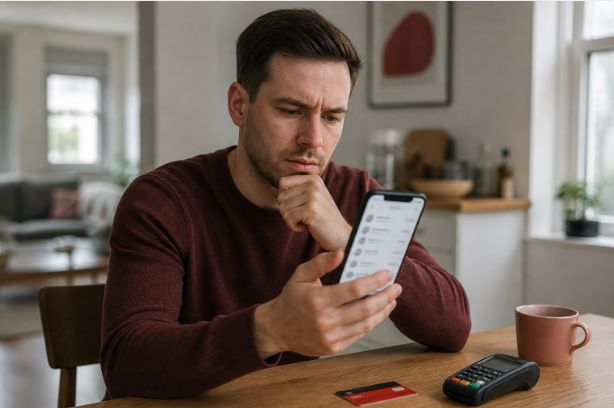
Quick Snapshot: What is Zettle on My Bank Statement?
If “Zettle”, “iZettle”, “IZ*”, or “PP*POS” appears on a bank statement, it usually means a card payment was made to a small business using a Zettle card reader. Zettle is a payment system owned by PayPal and is commonly used by cafés, market stalls, taxi drivers, pop-up shops, and other independent UK businesses.
What it usually means
A legitimate purchase from a business using Zettle to accept card or contactless payments.
Why it looks unfamiliar
Your bank may show the payment processor name instead of the actual shop or seller name.
What to do first
Check the date, amount, email receipts, and location history before assuming fraud.
Key Takeaways
- Zettle is not a shop: it is a PayPal-owned payment processor.
- The charge is often genuine: it may relate to a café, taxi, market stall, or mobile vendor.
- The shop name may be missing: some banks display only “Zettle” or “iZettle”.
- Fraud is still possible: if the payment does not match any activity, contact the bank.
Zettle Bank Statement Labels Explained
| Statement Label | What It Likely Means | What to Do |
|---|---|---|
| Zettle* | A card payment processed through Zettle. | Match the amount and date with recent purchases. |
| iZettle / IZ* | Older iZettle branding or older card reader system. | Search for receipts or partial business names. |
| SETL* | A shortened settlement label linked to card processing. | Check whether the payment matches a taxi, stall, or mobile vendor. |
| PP*POS | A PayPal point-of-sale transaction linked to Zettle. | Look for PayPal or Zettle receipt details. |
Bottom line: A Zettle charge is usually a normal card payment made to a small business. If the transaction still looks unfamiliar after checking receipts and location history, the safest next step is to contact the bank.
Reviewing a bank statement should be a simple task, but occasionally a transaction appears that raises questions. One of the most common examples in the UK today is a charge labelled “Zettle” or “iZettle.” For many people, this unfamiliar name creates immediate uncertainty. It does not resemble a shop, restaurant, or service they remember using, which can naturally lead to concern.
To clarify straight away, Zettle is a payment processing system owned by PayPal, widely used by small businesses to accept card and contactless payments. The reason it appears on a bank statement instead of the actual shop name is due to how modern payment systems are structured.
This article provides a clear and structured explanation of what Zettle means on a bank statement, why it appears in this way, how to identify the business behind the charge, and what steps should be taken if something does not seem correct. The aim is to remove confusion and help readers feel confident when reviewing their financial activity.
What is Zettle on My Bank Statement and What Does It Actually Represent?
 When “Zettle” appears on a bank statement, it represents a transaction that has been processed through a mobile card payment system rather than directly through the business’s own banking setup.
In practical terms, this means that a customer has made a payment to a business using a Zettle card reader. Instead of the business name appearing clearly, the bank records the transaction under the payment processor’s name.
Confirmed Facts
Zettle was originally launched as iZettle and later became part of PayPal after a major acquisition in 2018. Since then, it has become one of the most widely used mobile payment solutions across the UK and Europe.
The system is particularly popular with smaller businesses because it allows them to accept card payments without needing complex or expensive banking infrastructure. As a result, millions of everyday transactions from buying a coffee to paying a taxi fare are processed through Zettle.
Why Does Zettle Appear Instead of the Actual Business Name?
This is the core reason why many people search for “what is Zettle on my bank statement.”
The explanation lies in how payment processing works behind the scenes. Zettle operates as what is known as a payment aggregator. Instead of each business having a unique merchant account linked directly to a bank, many businesses share Zettle’s infrastructure.
How Small Business POS Systems Work
When a customer taps or inserts their card into a Zettle reader, the payment is routed through Zettle’s system first. The bank then records the payment using the processor’s identity rather than the individual business.
This process is efficient for businesses but can reduce transparency for customers reviewing their statements later.
Common Abbreviations You Might See (Zettle, iZettle, SETL)
Depending on the bank, device, or software version used, the transaction may appear in slightly different formats. These variations include shortened or coded labels, which are often limited by how many characters a bank statement can display.
This technical limitation is one of the main reasons why the full business name does not always appear clearly.
How Can Someone Quickly Identify a Zettle Transaction?
The most effective way to identify a Zettle transaction is to connect it with a real-world purchase. Although the label may look unfamiliar, the transaction itself is usually linked to a recent activity.
In many cases, the process of identifying the charge is straightforward once the right context is considered. For example, a small payment amount combined with a familiar location often points to a routine purchase such as a coffee, snack, or taxi journey.
Another reliable method is checking for a digital receipt. Many businesses using Zettle automatically send receipts via email or SMS. Searching for terms like “Zettle receipt” or “PayPal receipt” can quickly reveal the source of the transaction.
What Are the 5 Simple Steps to Identify a Zettle Charge?
Identifying a Zettle transaction does not require technical expertise, but it does benefit from a structured approach.
The first step is to carefully review the date and amount of the transaction. Even if the name is unfamiliar, the timing often aligns with a known activity. The second step is to check email inboxes for receipts, which frequently include the actual business name.
Next, reviewing location history can provide valuable insight. Many smartphones automatically track location data, which can be used to confirm where a person was at the time of the transaction. If the charge occurred while visiting a specific area, it becomes much easier to narrow down the possible businesses.
If the statement includes a partial business name or reference, searching that information online can also help identify the merchant. Finally, the official Zettle transaction lookup tool provides a direct way to retrieve merchant details using transaction data.
Is Zettle the Same as PayPal or Something Different?
 Zettle is closely connected to PayPal, but it serves a specific purpose within its broader ecosystem.
While PayPal is widely known for online payments, Zettle focuses on in-person transactions. It provides the hardware and software needed for businesses to accept card payments face-to-face.
Confirmed Facts
Zettle operates under the brand “Zettle by PayPal,” and its integration with PayPal has expanded its capabilities and reach.
Proposed Changes
In recent years, there has been a gradual shift in how transactions are labelled. Some bank statements now show “PayPal POS” or similar variations instead of “Zettle.” This reflects ongoing changes in branding and system integration.
What Types of Businesses Commonly Use Zettle in the UK?
Zettle is particularly popular among small, independent, and mobile businesses.
These include cafés, market stalls, food trucks, taxi drivers, and pop-up shops. Many of these businesses operate without permanent storefronts or widely recognised brand names, which adds to the confusion when their transactions appear under a generic label.
Because these businesses rely on flexible and portable payment systems, Zettle provides an ideal solution. However, this convenience for businesses can sometimes lead to uncertainty for customers reviewing their statements later.
How Does the Zettle Transaction Lookup Tool Work?
The Zettle transaction lookup tool is designed to help users identify the merchant behind a payment.
By entering basic transaction details such as the date, amount, and partial card number, users can retrieve information about the business that processed the payment. This tool is particularly useful when other methods, such as checking receipts or location history, do not provide clear answers.
From an AEO perspective, this tool serves as the most direct and reliable way to resolve uncertainty, especially when dealing with unfamiliar transaction labels.
Could a Zettle Charge Be Fraud or Just a Forgotten Purchase?
This is an important question, especially when dealing with financial transactions.
In most cases, a Zettle charge is simply a forgotten or unrecognised purchase. Everyday transactions, particularly small ones, are easy to overlook. A quick coffee, a taxi ride, or a market purchase may not stand out in memory but will still appear on a bank statement.
However, it is also important to remain cautious. If a transaction does not match any known activity, occurs in an unfamiliar location, or appears multiple times without explanation, it may require further investigation.
Misinformation Clarified
Zettle itself is a legitimate and secure payment processor. It is not a scam. However, like any payment system, it can still appear in cases where a card has been used without authorisation.
What Should Someone Do if They Do Not Recognise a Zettle Charge?
 If a transaction cannot be identified after basic checks, the next step is to take a calm and methodical approach.
Initially, it is advisable to wait a short period, as some transactions are updated with additional details once they move from pending to completed status. If the charge remains unclear, contacting the bank is the most appropriate course of action.
Banks can investigate transactions, provide additional details, and take action if fraud is suspected. In some cases, contacting PayPal or Zettle support directly can also help confirm the merchant involved.
Why Do Some Zettle Transactions Look Different on Bank Statements?
The appearance of a transaction depends largely on how individual banks format their statements.
Confirmed Facts
Banks often have character limits that restrict how much information can be displayed. As a result, longer business names may be shortened or replaced entirely by the processor’s name.
Proposed Changes
There is a growing effort within the financial industry to improve transaction transparency. Newer systems are beginning to display more detailed merchant information, although this is not yet consistent across all banks.
How Do Statement Descriptions Like Iz or Setl Relate to Zettle?
These variations are simply different representations of the same payment system.
Older devices and systems may still use the iZettle branding, resulting in prefixes such as “IZ.” Other abbreviations, such as “SETL,” may appear due to internal banking codes or settlement processes.
Although these labels may look unfamiliar, they typically refer to the same underlying payment infrastructure.
Does Zettle Charge Customers Any Additional Fees?
Customers are not charged directly by Zettle. The fees associated with the service are paid by the business using the system.
This means that the amount shown on a bank statement should match the amount paid at the time of purchase. Any differences would be related to the business itself rather than the payment processor.
How Can Someone Prevent Confusion With Future Zettle Transactions?
 Preventing confusion is largely about maintaining awareness of spending habits.
Keeping digital receipts, enabling transaction alerts, and regularly reviewing bank statements can all help ensure that transactions are easily recognised. These habits not only reduce confusion but also improve overall financial management.
What is the Difference Between Zettle, Square, and Sumup on Statements?
Zettle is not the only payment processor that appears on bank statements. Other providers, such as Square and SumUp, operate in a similar way.
Each system uses its own naming conventions, which can lead to similar confusion. However, the underlying principle remains the same: the name on the statement reflects the payment processor rather than the business.
What Real-life Situation Explains a Zettle Charge Clearly?
A simple example helps illustrate how this works in practice.
A person purchases a coffee from a small mobile café while commuting. The payment is processed through a Zettle card reader. Later, when reviewing their bank statement, they see a charge labelled “Zettle” instead of the café’s name.
At first, this may seem unfamiliar, but after checking their email receipt or recalling their purchase, the transaction becomes clear. This scenario reflects a common experience shared by many people across the UK.
Conclusion
In most situations, there is no need for concern when seeing “Zettle” on a bank statement. It is simply an indication that a payment was processed through a widely used system operated by PayPal.
By understanding how payment processors work and using available tools to verify transactions, individuals can confidently manage their finances and avoid unnecessary worry. When uncertainty remains, contacting a bank provides a reliable safety net.
FAQs
How can someone identify a Zettle charge without using the lookup tool?
They can review receipts, check location history, and match transaction details with recent purchases.
Why do Zettle transactions sometimes appear as pending first?
Transactions may initially show limited information and update once fully processed.
Can a Zettle transaction include the city name?
Yes, some banks include location data alongside the processor name.
Is Zettle widely used in the UK?
Yes, it is one of the most common payment systems for small businesses.
Can Zettle charges appear under PayPal branding?
Yes, newer transactions may appear as PayPal POS or similar labels.
What should be done if a Zettle charge looks suspicious?
The bank should be contacted immediately to investigate and prevent further issues.
Are Zettle payments secure?
Yes, Zettle uses secure payment processing technology backed by PayPal.