





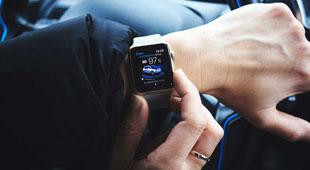

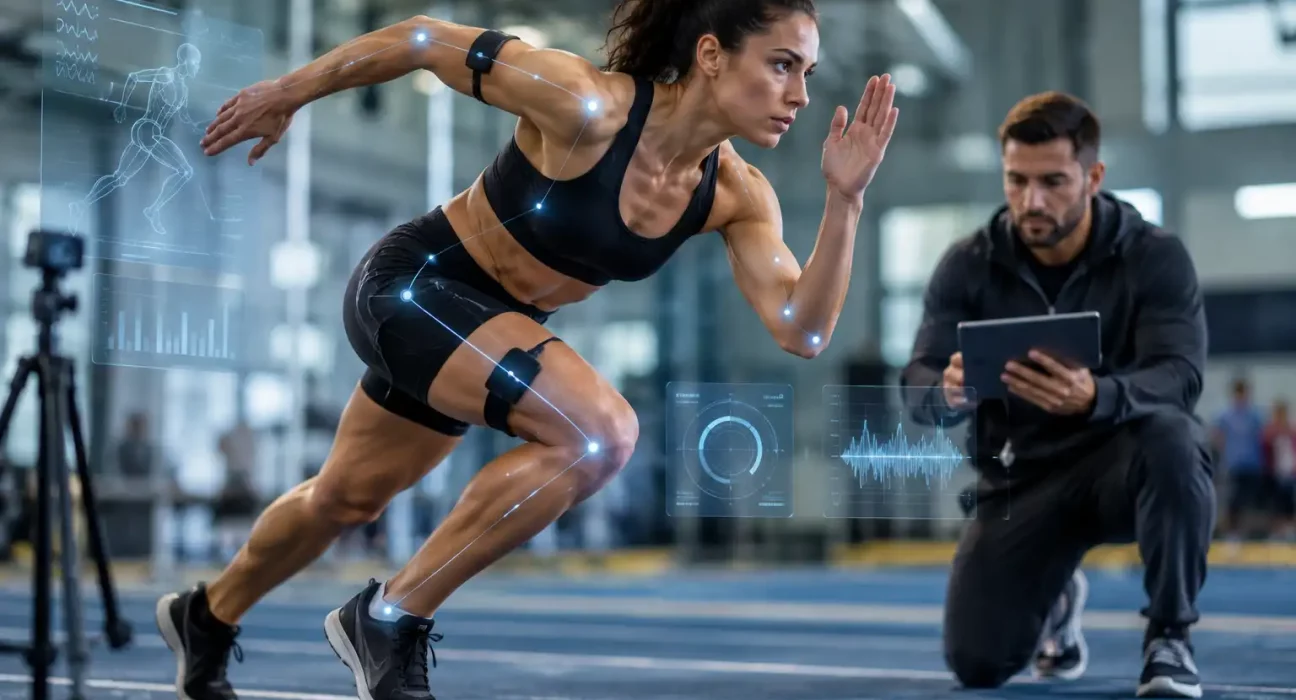
Harmonicode Sport is attracting attention online as a term associated with sport, artificial intelligence, movement analysis, sensors, sound and data-driven athletic training.
But there is an important problem for anyone researching it: Harmonicode Sport does not have one clear, universally established definition.
Some descriptions present it as a sports technology system that combines sensor and audio information with machine learning. Others describe Harmonicode Sport more broadly as a concept connecting rhythm, coordination and physical movement.
That distinction matters.
Instead of treating every online description as a confirmed product feature, this updated guide examines what Harmonicode Sport means in 2026, why descriptions differ, how its proposed technologies relate to existing sports technology and what athletes, coaches and businesses should check before relying on the claims surrounding it.
What Is Harmonicode Sport?
Harmonicode Sport can currently be understood as an emerging sports-technology concept centred on using data, movement, rhythm and digital analysis to understand or improve athletic performance.
The most recent material published by Harmonicode describes HarmoniCode Sports as connecting sound, sensor information and machine learning.
Under that interpretation, microphones and motion sensors collect information during athletic movements. Software then analyses the signals to identify events, assess technique and examine performance trends.
However, earlier descriptions of Harmonicode Sport were noticeably different.
They focused more heavily on synchronising athletic movements with rhythm and music, describing an activity in which coordination, timing and creative movement were important.
For that reason, readers should be cautious about treating Harmonicode Sport as if it already has the same fixed definition as an established sport, fitness programme or widely documented commercial sports platform.
Why Are There Different Definitions of Harmonicode Sport?
Search for Harmonicode Sport and you may encounter several interpretations.
Depending on the source, it can refer to:
| Interpretation | What It Generally Means |
|---|---|
| Sports technology | Digital tools used to analyse athletic performance |
| AI-assisted coaching | Algorithms analysing performance information |
| Sensor-based training | Motion data collected during exercises or drills |
| Sound analysis | Using audio generated by movement or sporting contact |
| Rhythm-based activity | Coordinating physical movements with musical or rhythmic cues |
| Performance analytics | Tracking changes and patterns across training sessions |
This variation is one of the most important facts readers need to understand.
The term does not appear to have a standard definition established by a major sporting governing body or a broadly recognised sports-science framework.
An independent 2026 explanation of the subject similarly notes that there is no single industry-standard definition and that the term is being applied to several combinations of AI, wearables and sports-performance analysis.
Therefore, context matters whenever someone uses the phrase “Harmonicode Sport.”
Is Harmonicode Sport a Sport or a Technology Platform?
At present, it is safer to describe Harmonicode Sport as an evolving concept rather than a conventional recognised sport.
Football, tennis and rugby have clearly established rules, competitions and governing structures. Harmonicode Sport does not currently have comparable widely documented structures.
There is also insufficient publicly verifiable information to confidently treat every mention of Harmonicode Sport as referring to one mature commercial platform with a fixed set of products, prices and integrations.
Recent Harmonicode material instead places considerable emphasis on technology.
Its 2026 description discusses combining audio and motion information, using accelerometers and gyroscopes, detecting sporting events and applying machine-learning models to analyse performance.
That makes the technology interpretation particularly relevant when discussing Harmonicode Sport in 2026.
How Could Harmonicode Sport Work?
The concept becomes easier to understand when separated into stages.
1. Capturing Movement
A sensor attached to an athlete or piece of equipment can capture information such as acceleration, direction and orientation.
This type of measurement is not unique to Harmonicode. Motion sensing is already widely used across consumer fitness devices and professional sports technology.
The purpose is to convert physical activity into measurable information.
2. Capturing Sound
The more unusual element in recent Harmonicode descriptions is audio.
Different sporting actions produce distinctive sounds.
A tennis racket striking a ball, a runner’s foot contacting the ground or sporting equipment making an impact can generate audio information that potentially reveals timing and consistency.
Rather than treating sound merely as background noise, a technology system could analyse it alongside movement data.
3. Synchronising the Information
Movement and audio become more useful when their timestamps can be matched.
A system could, for example, connect an impact sound with the motion immediately preceding and following that impact.
This creates a richer dataset than simply counting repetitions.
4. Identifying Events
Software can then attempt to identify specific events automatically.
Depending on the sport, these might include:
- steps
- jumps
- impacts
- swings
- throws
- catches
- changes in movement
This can reduce the need for coaches to manually record every event during a session.
5. Analysing Patterns
Once enough observations have been collected, software can compare them.
The useful question is not simply, “What happened?”
It is:
How does this movement compare with previous movements?
Repeated data may reveal changes in timing, consistency or movement characteristics that are difficult to spot from a single observation.
Where Does Artificial Intelligence Fit Into Harmonicode Sport?
Artificial intelligence is frequently mentioned alongside Harmonicode Sport, but “AI” should not be treated as a guarantee that a sports system understands an athlete perfectly.
Machine-learning systems are essentially looking for patterns within data.
In a sporting environment, algorithms might be trained to distinguish between different movements, recognise recurring events or flag unusual changes.
Imagine an athlete completing the same drill hundreds of times.
Instead of requiring a coach to analyse every repetition individually, software could group similar movements and highlight repetitions that differ substantially from the athlete’s normal pattern.
The coach still provides context.
An unusual movement might indicate fatigue, but it could also result from a deliberate technique change, an equipment adjustment or simply an inaccurate measurement.
That is why useful sports analytics should support human judgement rather than automatically replace it.
What Could Harmonicode Sport Measure?
The answer depends on the actual hardware and software being used.
Recent Harmonicode descriptions mention areas including event counts, technique scores, load indicators, asymmetry and contact variation.
Conceptually, a sound-and-motion sports system could examine metrics such as:
| Data Type | Possible Insight |
|---|---|
| Movement timing | How consistently an action is performed |
| Acceleration | How rapidly movement changes |
| Orientation | Direction or position of a sensor |
| Impact timing | When contact occurs |
| Audio characteristics | Differences between repeated impacts |
| Repetition count | Number of detected movements |
| Consistency | Variation between repeated actions |
| Trend data | How measurements change over time |
However, a metric appearing on a dashboard does not automatically make it scientifically meaningful.
Athletes and coaches need to know how the metric is calculated, whether the equipment has been validated and whether the measurement actually relates to the performance question they are trying to answer.
How Is Harmonicode Sport Different From a Fitness Tracker?
The proposed approach is somewhat different from everyday activity tracking.
A typical consumer fitness tracker may concentrate on broad personal metrics such as steps, heart rate, distance, sleep or estimated energy expenditure.
The Harmonicode concept described in 2026 is more focused on analysing specific sporting events and movements.
| Typical Fitness Tracking | Harmonicode Sport Concept |
|---|---|
| Daily activity | Specific athletic actions |
| Steps and distance | Event detection |
| General exercise monitoring | Technique analysis |
| Heart-rate trends | Movement and impact patterns |
| Personal fitness | Athlete/coaching feedback |
| Primarily sensor based | Sensor plus audio analysis |
There can naturally be overlap between the two.
The important difference is the intended purpose of the information.
Could Sound Really Be Useful in Sports Analysis?
Potentially, yes.
Sound contains information about physical events.
Think about how experienced athletes and coaches sometimes recognise a clean strike without seeing it. A well-hit cricket ball, tennis shot or golf strike can sound noticeably different from poor contact.
Computers can potentially analyse differences in those audio signals more systematically.
An audio-processing system could examine characteristics such as the timing, duration or frequency content of an impact.
When combined with movement sensors or video, this creates another information source that may help classify an event.
However, usefulness depends heavily on the sport and environment.
Background noise, equipment differences, recording quality and sensor placement can all affect results.
How Could Coaches Use Harmonicode-Style Technology?
The strongest potential use is not replacing the coach. It is giving the coach another way of observing performance.
Technique Development
Repeated drills generate large amounts of information.
Technology can help identify whether an athlete is performing an action consistently and highlight unusual repetitions for closer inspection.
Training Progress
Individual sessions provide only snapshots.
Longitudinal information is often more valuable because coaches can examine how performance measurements change across days, weeks or training blocks.
Comparing Drills
Coaches could compare measurements from different exercises to understand which training activities produce the desired movement patterns.
Rehabilitation Monitoring
Objective measurements can potentially help practitioners monitor changes during rehabilitation.
However, return-to-play decisions are medical and sporting decisions involving multiple factors. A technology platform should not be treated as a substitute for appropriately qualified healthcare and sports professionals.
Can Harmonicode Sport Prevent Injuries?
Claims about injury prevention require particular care.
Technology can help monitor training loads, movement patterns and changes in performance. That information may contribute to broader injury-risk management.
But predicting whether an individual athlete will be injured is much more complicated.
Injuries can be influenced by training exposure, previous injury, biomechanics, playing conditions, contact with other athletes and many other factors.
Therefore, it would be misleading to suggest that Harmonicode Sport or any single sports technology can simply “prevent injuries.”
A more realistic role is helping coaches and practitioners obtain additional information that can form part of their overall decision-making.
What Does Harmonicode Sport Mean for Sports Businesses?
The topic is also interesting from a business perspective.
Sports technology increasingly sits at the intersection of software, hardware, data science, coaching and healthcare.
A Harmonicode-style system could potentially involve several commercial layers:
- Hardware: sensors, microphones or connected equipment.
- Software: dashboards and applications used to interpret information.
- Data infrastructure: systems for storing and processing training records.
- Analytics: algorithms for detecting and comparing sporting events.
- Professional services: implementation, calibration, training and technical support.
That means the commercial opportunity in sports technology extends beyond selling a wearable device.
Businesses can create value through the interpretation and usability of the information collected.
What Should Sports Organisations Check Before Adopting This Technology?
Clubs, academies and athletes should look beyond impressive terminology such as “AI-powered” or “predictive.”
The practical questions are more important.
Before investing in a Harmonicode-style platform, an organisation should establish what is actually being measured, how accurate the hardware is, whether the underlying methods have been independently validated and how the information improves an existing coaching decision.
Data ownership also matters.
Athletic data can potentially include information about a person’s physical performance or health. Organisations should therefore understand what information is collected, where it is stored, who can access it and what happens when the relationship with the technology provider ends.
What Claims About Harmonicode Sport Should Be Treated Carefully?
This is where the updated understanding differs most significantly from many older online explanations.
Readers should not automatically assume that Harmonicode Sport:
- is widely adopted by UK sports clubs;
- integrates with every major wearable;
- has clinically proven injury-prediction capabilities;
- provides dedicated UK customer support;
- has independently validated accuracy;
- offers a particular free trial;
- has a confirmed pricing advantage over competitors.
These claims require evidence from the provider, independent testing or identifiable customers.
This does not mean that every such claim is necessarily false. It means that claims should not be presented as established facts without adequate evidence.
That distinction makes the information considerably more useful for athletes and businesses making real purchasing decisions.
Is Harmonicode Sport Being Used Across the UK?
There is not enough reliable public evidence to conclude that Harmonicode Sport itself has achieved widespread adoption across UK schools, academies, professional clubs or sporting institutions.
That is different from saying sports technology is absent from UK sport.
Wearables, video analysis, GPS tracking, performance analytics and other data-driven technologies are already familiar parts of modern training environments.
Harmonicode Sport fits into this broader technological direction conceptually, but readers should distinguish the growth of sports technology generally from documented adoption of Harmonicode Sport specifically.
Why Could This Type of Sports Technology Become More Important?
Modern sport produces enormous quantities of information.
The challenge is increasingly not collecting data but deciding which information is useful.
A sensor can produce thousands of measurements. A camera can record every movement. A microphone can capture an entire training session.
None of that automatically improves performance.
The valuable technology is the technology that turns raw information into something a coach or athlete can understand and act upon.
This is where concepts associated with Harmonicode Sport become interesting.
Combining several information sources—such as movement, sound and historical performance—could potentially provide a richer picture than examining one measurement in isolation.
What Are the Limitations of Harmonicode Sport?
There are several limitations worth considering.
The Definition Is Still Unclear
The biggest limitation is conceptual.
Different sources continue to use Harmonicode Sport in different ways. Until terminology, products and methods become clearer, readers need to check exactly what a particular source means by the term.
More Data Does Not Automatically Mean Better Coaching
Collecting dozens of metrics can create information overload.
A simple reliable measurement linked to a specific coaching objective can be more useful than an elaborate dashboard filled with poorly understood scores.
Algorithms Need Appropriate Data
Machine-learning results depend heavily on the information used to build and test the model.
A system developed using one population of athletes may not necessarily perform identically for another population, age group or sport.
Sensors Can Produce Errors
Placement, calibration, environmental conditions and hardware quality can all affect measurements.
Human Context Still Matters
An algorithm sees patterns in recorded information.
A coach understands tactics, motivation, training goals, competition schedules and the individual athlete.
The strongest approach is therefore likely to combine technology with professional judgement.
Harmonicode Sport vs Traditional Coaching
Harmonicode-style technology should not necessarily be viewed as a replacement for traditional coaching.
The two approaches provide different strengths.
| Traditional Coaching | Technology-Assisted Coaching |
|---|---|
| Human observation | Quantitative measurements |
| Experience and intuition | Repeatable data collection |
| Immediate personal communication | Large-scale pattern analysis |
| Tactical context | Historical comparisons |
| Understanding the athlete | Automated event detection |
| Flexible decision-making | Consistent measurement |
Combining both may be more valuable than choosing one over the other.
Technology can identify a pattern.
The coach decides what that pattern means and whether anything needs to change.
What Could Harmonicode Sport Look Like in the Future?
The future of Harmonicode Sport depends partly on whether it develops into a clearly defined product ecosystem or remains a broader label for technology-assisted athletic analysis.
Several directions are technically plausible.
Better wearable sensors could capture increasingly detailed movement information. Edge computing could process information near the athlete rather than sending everything to distant servers. Computer vision could add video information to sensor and audio analysis.
Artificial intelligence could also become better at comparing individual athletes against their own historical baselines instead of relying primarily on population averages.
The key development, however, will be evidence.
For any emerging sports technology to gain lasting credibility, it needs more than ambitious features. Coaches and organisations need transparent methodology, reliable measurements, useful outcomes and evidence that the system works in real sporting environments.
Is Harmonicode Sport Worth Watching in 2026?
Yes—from a sports-technology perspective, the concept is worth following.
It brings together several important areas of innovation: AI, sensor technology, signal processing, athletic analytics and data-assisted coaching.
But readers should separate technological potential from verified product capability.
The underlying ideas are plausible and many related technologies already exist elsewhere in sports science and performance analysis.
What remains less clear is the exact scope, adoption and independent validation of Harmonicode Sport itself.
That uncertainty should be part of the story rather than hidden from readers.
Conclusion
Harmonicode Sport is best understood in 2026 as an evolving concept connecting athletic performance with sound, sensors, movement data and artificial intelligence.
Recent descriptions emphasise capturing audio and motion signals, identifying sporting events and using machine learning to turn those observations into feedback. Earlier descriptions, however, focused more heavily on rhythm, musicality and coordinated athletic movement.
Those differing explanations show why readers should be careful about treating Harmonicode Sport as a fully standardised sporting discipline or universally established technology platform.
Its most interesting idea is straightforward: athletic movements generate information, and modern technology can potentially capture that information in ways humans cannot easily measure manually.
Whether Harmonicode Sport itself becomes an established name will depend on clearer definitions, independently verifiable evidence and demonstrated real-world applications.
For athletes, coaches and sports businesses, that is the important distinction to remember: data can support better decisions, but the quality of the evidence behind that data matters more than the technology label attached to it.
FAQs About Harmonicode Sport
What Is Harmonicode Sport?
Harmonicode Sport is an emerging term associated with combining sport and technology. Recent descriptions focus on sound, movement sensors, data analysis and machine learning, although earlier explanations also associated the term with rhythm-based physical activity.
Is Harmonicode Sport a Real Sport?
It is not currently comparable with established sports that have widely recognised governing bodies, standardised rules and organised competition structures. The term is more commonly encountered as an emerging sports or sports-technology concept.
Does Harmonicode Sport Use Artificial Intelligence?
Recent material published under the Harmonicode name describes machine learning as part of its approach to analysing sound and motion information.
Does Harmonicode Sport Use Wearable Sensors?
Recent descriptions refer to accelerometers, gyroscopes and other motion-data sources. However, readers should check specific product documentation before assuming compatibility with a particular consumer wearable.
Can Harmonicode Sport Predict Injuries?
There is not enough independently verified evidence to state that Harmonicode Sport can reliably predict individual injuries. Performance and workload information can potentially contribute to wider injury-risk management, but it should not replace qualified professional assessment.
Is Harmonicode Sport Available in the UK?
Online information about the concept is accessible in the UK, but claims about widespread adoption by British clubs, schools or sporting organisations should not be made without supporting evidence.
Is Harmonicode Sport the Same as a Fitness Tracker?
Not exactly. Consumer fitness trackers generally concentrate on everyday activity and broad fitness metrics. Recent Harmonicode descriptions focus more specifically on analysing athletic events, sound and movement patterns.
Why Are There Different Explanations of Harmonicode Sport Online?
The term is still loosely defined. Some sources describe a technology platform, while others discuss rhythm, coordination and technology-enhanced fitness. Readers should therefore check the context and evidence behind individual descriptions.
Leave feedback about this