







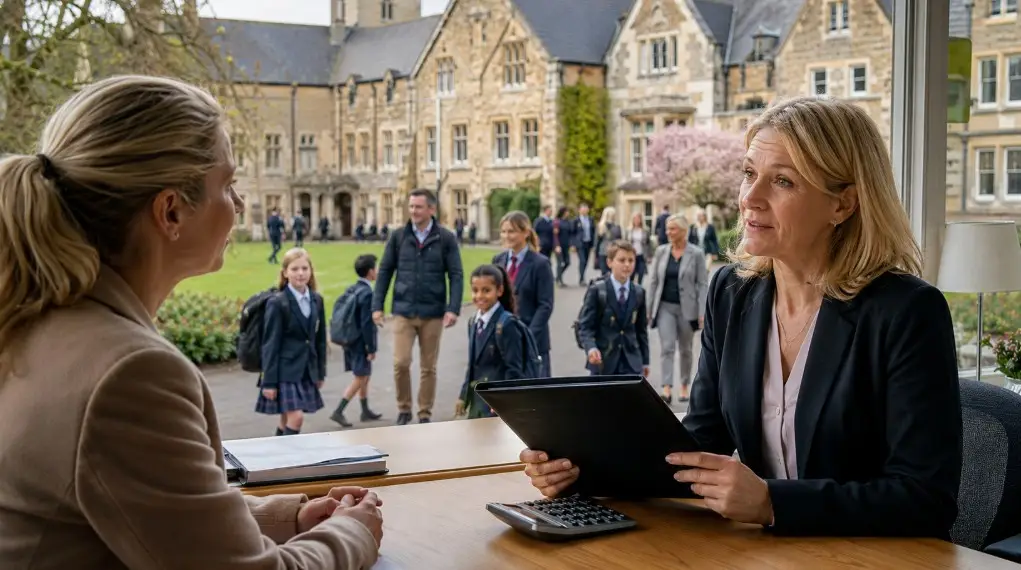
Independent school tax changes are continuing to push up costs for schools and parents in 2026. An analysis of 424 schools reports that average fees will rise by 4.5% from September, following the introduction of 20% VAT and other cost increases during 2025. However, the reported rise is not compulsory or uniform, each school sets its own fees.
The changes involve separate policies with different geographical scopes. VAT applies across the UK, the loss of charitable business-rates relief affects qualifying schools in England, and higher employer National Insurance applies to employers generally.
What Are the Independent School Tax Changes Affecting UK Schools?

The term independent school tax changes covers three distinct cost pressures rather than a single levy. Education, vocational training and closely related boarding services supplied for a charge by private schools have been subject to standard-rate VAT since 1 January 2025, according to the official private-school VAT guidance.
| Change | Effective Date | Scope | Principal Effect |
| 20% VAT on eligible education and boarding | 1 January 2025 | UK-wide | Tax became chargeable on relevant school services |
| Loss of charitable business-rates relief | 1 April 2025 | England | Higher property-related costs for affected schools |
| Employer National Insurance changes | 6 April 2025 | UK-wide | Increased payroll costs for many employers |
These policies interact with wages, pensions, energy, maintenance and regulatory expenses, but they should not be presented as one school-specific tax package.
Why Are Independent School Fees Rising Again in 2026?
Schools are reviewing their prices after operating for more than a year under the new VAT rules. They are also facing higher payroll costs: the employer National Insurance rate rose from 13.8% to 15%, while the annual secondary threshold fell from £9,100 to £5,000 from April 2025 under the employer National Insurance rules.
Factors Behind 2026 Fee Reviews
- Schools may be correcting fees that did not fully cover their first year of VAT-related costs.
- Higher salaries, pension contributions and National Insurance have increased staffing expenditure.
- Some schools are absorbing part of their additional costs to limit the amount passed to parents.
- Falling enrolment can spread fixed costs across fewer fee-paying pupils.
- Inflation continues to affect food, energy, insurance, maintenance and contracted services.
The reported 4.5% increase is an average derived from the sampled schools, not a nationwide requirement. Some institutions may freeze fees, while others may impose larger increases.
Which Taxes and Employment Costs Are Increasing School Expenses?

The three principal pressures affect school finances in different ways. Understanding those distinctions is essential when assessing whether a particular fee rise is proportionate.
20% VAT on Tuition and Boarding
Standard-rate VAT applies to chargeable private-school education and to boarding services closely related to that education. Relevant advance payments made from 29 July 2024 for terms beginning on or after 1 January 2025 can also fall within the rules.
VAT-registered schools can reclaim qualifying input VAT on purchases, reducing the effective cost. Parliamentary analysis notes that the government initially modelled an effective VAT burden of approximately 15% of fee income after allowing for recoverable tax.
How Did the Business-Rates Change Affect Charitable Schools in England?
Affected charitable schools in England lost their mandatory 80% business-rates relief from 1 April 2025. The charitable rates relief policy estimates that 1,024 schools would lose relief, with an average 2025–26 increase of £308 per pupil.
This measure did not abolish schools’ charitable status. A 2019 proposal associated with Lucy Powell reportedly contemplated removing charitable status more broadly, with an estimated £3bn tax effect, but that is not the policy implemented in 2025.
Employer National Insurance and Staffing Costs
Independent schools are labour-intensive organisations, so changes to employer contributions can materially affect their budgets. Although the National Insurance increase was not designed specifically for schools, it arrived alongside VAT and business-rates changes.
Reflecting the government’s position, the Chancellor said in June 2025:
“I ended the tax loophole which exempted private schools from VAT and business rates.”
How Much Have Independent School Fees Actually Increased?
The supplied competitor analysis reports that average fees rose by 17% in the previous year after VAT was introduced. Its latest findings are based on 424 schools and should be kept separate from official census averages, which exclude VAT.
Reported Fee Changes
| Measure | Reported Figure |
| Average September 2026 increase | 4.5% |
| Average Year 13 day fee | £26,550 to £27,734 |
| Average sixth-form boarding increase | About 6% |
| New average sixth-form boarding fee | £48,920 |
| Comparable boarding fee in 2022–23 | £37,251 |
| Largest individual increases identified | Up to 12% |
| Cumulative rise since 2022–23 | 43% boarding; 39% day |
The report names Cardiff Sixth Form College as the most expensive boarding school, charging £77,250 for 2026–27. Westminster School is listed at £69,282, compared with £45,432 four years earlier.
It also says Eton College, Gordonstoun School, Dulwich College and Radley College are among 96 boarding schools charging more than £50,000 annually, no schools exceeded that threshold in 2022.
By comparison, the 2026 sector census recorded average termly fees excluding VAT of £14,980 for boarders, £8,611 for day pupils at boarding schools and £6,226 at day schools. The corresponding underlying increases were 4.2%, 4% and 4.4%.
The two datasets measure different school samples, age groups and periods, so their percentages should not be added together.
Why Does 20% VAT Not Always Produce a 20% Fee Increase?
A 20% tax rate does not necessarily mean that the final invoice rises by exactly 20%. Before 2025, schools generally made VAT-exempt supplies and could not recover much of the VAT incurred on related costs; VAT registration now permits recovery of eligible input tax.
A previous termly fee of £6,000 would become £7,200 if the full 20% were passed on without any adjustment. A school could instead reduce its underlying fee, use reserves, make savings or offset part of the liability through input VAT recovery.
Conversely, a family’s total increase could exceed the VAT effect where a school also raises its underlying price to cover employment, property or operating costs. Parents therefore need to establish whether a percentage refers to the pre-VAT fee, the VAT-inclusive invoice or the combined change since an earlier year.
Are Pupil Numbers and School Finances Changing After the Tax Reforms?

Evidence shows a contraction in mainstream independent-school enrolment. It does not, however, establish that taxation caused every departure, financial problem or closure.
What the Latest Pupil Data Show?
The 2026 census recorded 526,611 pupils at 1,455 member schools, down 19,029 or 3.5% from 2025. On a like-for-like basis, the reduction was 3.8%, despite a net increase of 32 participating schools.
The supplied competitor report calculates that 43,000 pupils have left the English independent sector, compared with a government expectation of 14,000 by that point.
Parliamentary analysis uses a different full-time-equivalent measure: it identifies 26,300 fewer mainstream independent pupils between January 2025 and January 2026 and 41,900 fewer than in January 2024. Those reductions were 4.9% and 7.5% respectively.
Boarding experienced a sharper fall, with official analysis recording approximately 5,500 fewer boarders in one year, a reduction of 8.8%.
Limits of Cause-and-Effect Claims
Fee increases may influence admissions and withdrawals, particularly at lower-cost schools and younger entry points. Demographic change, household affordability, international recruitment, existing fee inflation and local school choices can also affect the figures.
Julie Robinson said in the supplied report:
“Schools are doing all they can to keep fees as low as possible for parents.” She also highlighted falling pupil numbers and the three additional cost pressures.
The report records 87 independent-school closures over two years, including the 147-year-old St Lawrence College and Ruthin School, founded in 1284.
For context, official modelling says England historically averaged 74 closures and 83 openings annually and projected that the tax policy could contribute to about 100 additional closures over three years.
What Do the Independent School Tax Changes Mean for Parents?
Families should compare each school’s complete VAT-inclusive cost rather than relying on a national percentage or headline average.
Questions for Parents to Check:
- Does the published tuition fee include VAT?
- When will the next fee increase take effect?
- Are meals, transport, examinations and activities charged separately?
- Have bursaries, sibling discounts or payment terms changed?
- What notice period applies before withdrawing a pupil?
- Is the fee quoted for a day pupil, day boarder or full boarder?
- Could changing schools disrupt an examination course or SEND support?
Some schools are creating lower-cost arrangements. The supplied report says Bradfield College, Cranleigh School and Sherborne have differentiated conventional day places from “day boarder” options that include occasional access to boarding facilities.
Fee assistance remains significant: approximately one in three pupils at member schools receives support from at least one source, while means-tested assistance was valued at £538.5m in the 2026 census. Those figures are indicative because support categories can overlap.
How Do the Rules Affect SEND, Bursaries and Advance Payments?

The tax position can depend on who commissions the placement, the age of the pupil and how a payment or discount is structured.
SEND and EHCP-Funded Placements
Where a local authority funds a necessary independent placement named in an Education, Health and Care Plan, the school may charge VAT and the authority can reclaim it. Where parents independently choose and fund the placement, VAT may still form part of their bill.
Schools wholly or mainly serving pupils with EHCPs may retain charitable business-rates relief in England. That exemption is separate from the VAT treatment of an individual placement.
Are Bursaries, Scholarships and Hardship Awards Treated Differently?
Bursaries and scholarships reduce the amount charged to a family, but they do not automatically make the educational supply VAT-exempt. VAT is generally calculated by reference to the consideration received for the pupil’s education, including certain externally funded bursaries.
Schools may continue offering means-tested bursaries, scholarships, hardship awards and sibling reductions. Parents should check both the award’s value and whether it is applied before or after the school calculates VAT.
Advance Payments, Deposits and Fee Notices
Fees paid after 29 July 2024 for education or boarding supplied from January 2025 can be taxable. Earlier payments may also be affected where arrangements did not create a sufficiently specific tax point or were subject to anti-forestalling provisions.
Refundable security deposits can be treated differently from non-refundable registration fees or part-payments. The contract and payment purpose therefore matter as much as the date.
What Could Happen Next to Independent Schools and Their Fees?
The September 2026 fee cycle will provide further evidence of how schools are responding to costs and falling enrolment.
Developments to Monitor:
- Further fee freezes, increases or restructuring.
- More mergers, acquisitions and closures.
- Changes to staffing, subjects and extracurricular provision.
- Greater use of day-boarder and flexible-boarding packages.
- Revised bursary and scholarship budgets.
- New pupil, workforce and state-school admissions data.
- Future tax or spending announcements.
The government originally projected a long-run reduction of about 35,000 to 37,000 pupils, while estimating that the VAT measure would raise £1.51bn in 2025–26. The combined VAT and business-rates policies were expected to raise around £1.8bn annually by 2029–30.
A Department for Education spokesperson quoted in the supplied report said: “Ending tax breaks for private schools will raise more than £1.8bn a year by 2029-30.” The statement added that the funding was intended to support services and the 94% of children attending state schools.
The same report contrasts a pledge to recruit 6,500 additional teachers with a claimed reduction of 4,754 teachers since the government took office. More recent official workforce statistics show 466,400 full-time-equivalent teachers in 2025–26, a year-on-year fall of 1,900, illustrating why the comparison depends on dates, phases and workforce definitions.
Conclusion
Independent school tax changes are affecting fees through several channels, not VAT alone. The 20% VAT regime applies across the UK, business-rates relief was removed from affected charitable schools in England, and higher National Insurance has increased employment costs.
The reported 4.5% September increase indicates continued pressure, but it does not apply uniformly. Fee levels, enrolment and financial resilience vary widely, making school-specific VAT-inclusive figures more useful to parents than sector averages.
Frequently Asked Questions
Are School Meals and Transport Subject to VAT?
Meals or transport included within a single education package may follow that package’s VAT treatment. Separately charged services can have a different liability where the relevant conditions are met.
Can Independent Schools Reclaim VAT on Purchases?
VAT-registered schools can reclaim eligible input VAT connected with their taxable supplies. Recovery may be restricted where expenditure also supports exempt or non-business activities.
Did Independent Schools Lose Their Charitable Status?
No, the 2025 measure removed business-rates charitable relief from affected private schools in England. It did not automatically remove their underlying charitable status.
Are Independent-School Nursery Fees Taxable?
Classes made up wholly or almost wholly of children below compulsory school age can remain VAT-exempt. Official guidance uses a class containing 90% younger children as an example.
Is VAT Charged on School Deposits?
A refundable security deposit is not necessarily treated in the same way as a payment towards tuition. Non-refundable registration fees required for attendance are normally taxable.
Can Parents Still Prepay School Fees?
Prepayment remains possible, but it does not guarantee exemption from VAT. The payment date, contractual terms and period of education covered determine the treatment.
Are Donations to Independent Schools Subject to VAT?
A genuine voluntary donation may fall outside VAT where nothing is received in return and no conditions are attached. A payment linked to admission, education or another service may be treated differently.
Note: The 4.5% September 2026 increase, 424-school sample, 17% previous rise, named-school fees, 43,000-pupil estimate, 87 closures and 4,754-teacher figure originate from the supplied competitor report. They have been attributed or compared with official data because their methodologies and definitions are not identical to national statistics.
Leave feedback about this