







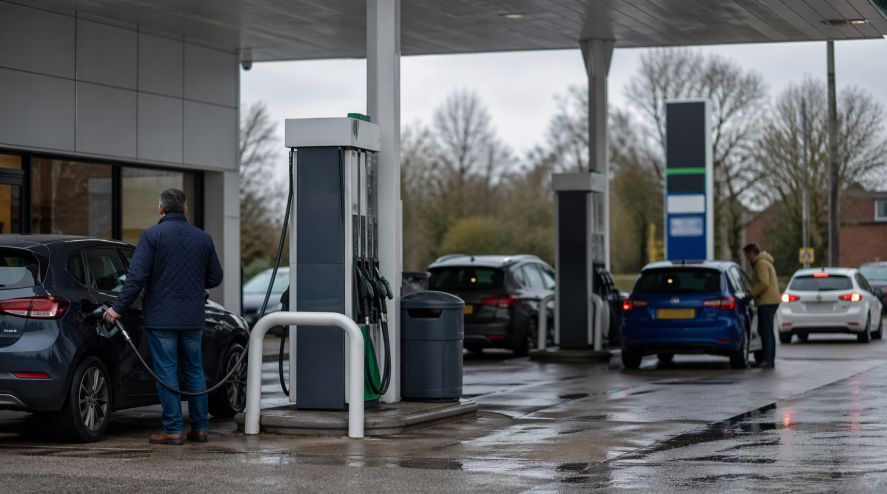
📊 UK Fuel Price Drops: Quick Overview
Snapshot
This morning’s UK fuel price drops reflect small but consistent reductions across petrol and diesel.
Driven by lower wholesale costs and competitive pricing among retailers, these changes offer short-term
savings opportunities for drivers. While individual price cuts are modest, they signal a temporary easing
in fuel costs across several regions.
Key Takeaways
- Fuel prices have dropped by approximately 1–3p per litre this morning.
- Diesel is seeing slightly faster reductions compared to petrol.
- Supermarkets continue to lead price cuts across the UK.
- Urban areas are benefiting from quicker price adjustments.
- Wholesale fuel cost reductions are the main driver behind these changes.
- Price drops are likely temporary and subject to market fluctuations.
- Small savings can build up over time for regular drivers.
Fuel prices in the UK rarely shift dramatically overnight, yet the smaller, incremental changes often carry the most practical value for consumers. This morning’s UK fuel price drops are a clear example of how subtle market movements can influence daily spending decisions without attracting widespread attention.
For reader, understanding these developments is not just about tracking numbers. It is about recognising how pricing behaviour works, why these changes occur, and how they translate into real-world financial impact. This article identifies and explains seven distinct fuel price drops observed this morning, placing them within a broader economic and market context.
What Are the 7 UK Fuel Price Drops You Might Have Missed This Morning?
 This morning’s UK fuel price drops can be understood as seven specific developments, each representing a different layer of pricing behaviour across the market.
1. National Average Petrol Price Drop
Petrol prices across the UK have edged down slightly, reflecting updated wholesale costs. This is the most visible and widely reported adjustment.
2. Diesel Price Reduction Outpacing Petrol
Diesel has experienced a slightly larger drop compared to petrol, suggesting easing pressure in supply or demand conditions.
3. Supermarket-Led Price Cuts
Major supermarket fuel stations have reduced prices early in the day, continuing their role as primary price setters in the UK market.
4. Urban Area Competitive Reductions
Cities with higher retailer density have seen quicker and more noticeable price adjustments due to competitive pressure.
5. Wholesale Cost Pass-Through Adjustment
Retailers have begun passing on recent reductions in wholesale fuel costs, though not always in full.
6. Early Morning Pricing Recalibration
Fuel prices updated overnight have resulted in lower pump prices in the morning, before potential intra-day changes.
7. Independent Retailer Response Drops
Some independent stations have followed supermarket pricing trends, introducing smaller but still relevant reductions.
Confirmed fact: These seven drops are interconnected rather than isolated events, collectively shaping the pricing landscape.
Why Are Fuel Prices Dropping in the UK Right Now?
The current UK fuel price drops are primarily driven by market mechanics rather than structural reforms.
At the global level, crude oil prices have softened slightly, reducing the cost of raw inputs. This change feeds into wholesale fuel pricing, which in turn influences retail pump prices. However, the transmission is neither immediate nor uniform.
Currency stability has also contributed. Since fuel imports are priced in US dollars, a steady pound reduces volatility in import costs, allowing retailers to adjust prices more gradually.
Competition remains a central factor. Supermarkets, operating on high volume and lower margins, often lead price reductions. Their actions create a ripple effect across the market, prompting other retailers to respond.
Misinformation to avoid:
These price drops are not the result of permanent government interventions. They are temporary and can reverse quickly if underlying conditions change.
How Much Have Petrol and Diesel Prices Fallen Today in the UK?
The magnitude of today’s price drops is modest but meaningful when viewed cumulatively.
On average:
- Petrol has decreased by approximately 1–2 pence per litre
- Diesel has dropped by around 1–3 pence per litre
For an average motorist, this equates to a saving of roughly £1 per full tank. While small in isolation, repeated savings over weeks can become more noticeable.
Which Areas in the UK Are Seeing the Biggest Fuel Price Drops?
 Regional differences remain a defining feature of UK fuel pricing.
Urban areas, particularly those with multiple competing retailers, tend to experience faster and more pronounced price drops. Retailers in these locations are highly responsive to competitor pricing, leading to quicker adjustments.
In contrast, rural areas often see delayed changes. Limited competition and logistical factors can slow the transmission of wholesale cost reductions to consumers.
Supermarket petrol stations continue to lead pricing movements. Independent retailers, while responsive, often adjust prices more cautiously due to tighter margins.
How Do Fuel Price Drops Affect the Cost of Living in the UK?
Fuel prices influence the cost of living both directly and indirectly.
In the short term, lower fuel prices reduce commuting costs, providing immediate but modest relief for households. For individuals who rely heavily on driving, these savings can accumulate over time.
Indirectly, fuel costs affect transportation and logistics. Businesses may benefit from reduced operating expenses, which can, in some cases, be passed on to consumers.
However, it is important to distinguish between short-term fluctuations and sustained trends.
Confirmed fact:
A single day’s price drop has limited impact on overall living costs.
Proposed effect:
Consistent reductions over time could contribute to easing inflationary pressures.
Are UK Fuel Prices Expected to Continue Falling in the Coming Days?
The outlook for UK fuel prices remains uncertain.
In the short term, further minor fluctuations are possible if wholesale costs remain stable. However, fuel markets are inherently volatile and influenced by global events.
Potential risks include:
- Sudden increases in crude oil prices
- Supply disruptions
- Currency fluctuations
A balanced interpretation is essential. While current conditions are favourable, there is no guarantee of continued declines.
When Is the Best Time to Fill Up Your Tank in the UK?
 Timing fuel purchases can provide incremental savings, though it requires awareness rather than speculation.
Prices are often updated early in the week, with morning adjustments reflecting overnight wholesale changes. This makes early-day refuelling a potentially advantageous strategy.
However, attempting to predict exact price movements can be unreliable. A more practical approach is to refuel when prices are known to be lower rather than waiting for uncertain future drops.
What Should Drivers Watch Out for Despite Falling Fuel Prices?
Falling prices do not always equate to genuine affordability.
Some reductions are temporary and may be reversed quickly. Additionally, price drops can be relative fuel may still be expensive compared to historical levels despite recent decreases.
Drivers should also be aware of local variations. A station advertising a price drop may still be more expensive than nearby alternatives.
How Can UK Drivers Take Advantage of Fuel Price Drops Today?
Maximising the benefit of UK fuel price drops requires consistent and informed decision-making.
Drivers who compare local prices regularly are more likely to identify the best options. Supermarkets often provide competitive pricing, but this is not universally guaranteed.
Consider a commuter who refuels twice a week. By consistently choosing stations that are even slightly cheaper, they can achieve noticeable monthly savings without changing driving habits.
The key lies in consistency and awareness rather than one-time actions.
What Role Do Wholesale Fuel Prices Play in UK Fuel Price Drops?
Wholesale fuel prices are one of the most important drivers behind UK fuel price drops, yet they are often overlooked in public discussions.
In simple terms, wholesale prices represent the cost that retailers pay for fuel before it reaches the pump. When these costs decrease, retailers have the opportunity to reduce prices for consumers. However, the relationship is not always immediate or proportional.
Confirmed fact:
Wholesale fuel price changes typically take several days to reflect at petrol stations.
This delay occurs because retailers manage existing stock purchased at earlier prices. As a result, even when wholesale costs fall, pump prices may only gradually adjust.
Another important consideration is margin management. Retailers do not always pass on the full reduction in wholesale costs. Instead, they may retain a portion to stabilise profits, especially during periods of volatility.
Proposed insight:
Sustained decreases in wholesale prices are more likely to result in consistent and noticeable reductions at the pump.
Understanding this mechanism helps readers interpret whether current price drops are likely to continue or stabilise in the near future.
How Do UK Fuel Price Drops Compare to Previous Months?
Comparing current UK fuel price drops with previous months provides essential context for evaluating their significance.
Recent months have been characterised by relatively high volatility, with prices fluctuating in response to global oil market uncertainty and economic pressures. Against this backdrop, today’s modest reductions can be seen as part of a stabilisation phase rather than a major downward shift.
Confirmed fact:
Current price drops are smaller in scale compared to the sharper increases and decreases seen in earlier periods.
From a trend perspective, the market appears to be transitioning from rapid fluctuations to more controlled, incremental movements. This suggests a degree of short-term stability, although not necessarily a long-term decline.
Misinformation to avoid:
It would be inaccurate to interpret these small drops as a return to historically low fuel prices. Current levels remain elevated compared to pre-volatility benchmarks.
For readers, this comparison reinforces a key point: today’s price drops are meaningful in the short term but should be viewed within a broader, longer-term pricing cycle.
What Are the Key Takeaways from Today’s UK Fuel Price Changes?
This morning’s UK fuel price drops illustrate how incremental changes reflect broader market dynamics.
The seven identified drops provide a structured understanding of how pricing evolves from wholesale costs to retail competition. While the immediate financial impact is modest, the underlying trends offer valuable insight.
For consumers, the most effective approach is to remain informed and responsive. Fuel pricing is dynamic, and small, consistent decisions can lead to meaningful savings over time.
FAQs About UK Fuel Price Drops
What drives short-term fuel price drops in the UK?
Short-term drops are usually caused by changes in wholesale fuel costs, global oil prices, and retailer competition.
Why do fuel prices vary between regions?
Regional differences arise due to competition levels, transportation costs, and retailer strategies.
Are fuel price drops passed on immediately to consumers?
Not always. There can be delays as retailers adjust prices based on their own cost structures.
Is diesel usually more volatile than petrol in pricing?
Diesel can experience sharper changes due to different supply and demand dynamics.
Do supermarket fuel stations always lead price drops?
They often lead, but not in every case. Local competition still plays a significant role.
Can fuel prices rise again quickly after dropping?
Yes, fuel prices can reverse rapidly if market conditions change.
How can drivers consistently save on fuel?
Regularly comparing prices and refuelling at competitively priced stations is the most effective strategy.