







England Pavement Parking Ban 2026: Quick Snapshot
Key Takeaway
The England pavement parking ban 2026 is expected to give local councils stronger powers to restrict and enforce pavement parking outside London. While London already has strict rules, drivers across the rest of England may face clearer local restrictions, increased enforcement, and fines if their vehicle blocks pedestrian access.
Main Change
Councils may gain wider powers to enforce pavement parking restrictions without relying on slow street-by-street processes.
Expected Fine
Drivers outside London could face fines around £70, while London penalties may reach £130.
Who Enforces It?
Local authority Civil Enforcement Officers are expected to take a greater role in daily pavement parking enforcement.
Reader note: Pavement parking rules can vary by local authority. Drivers should always check local signage, road markings, and council guidance before parking.
Is Your Usual Parking Spot About to Cost You £70?
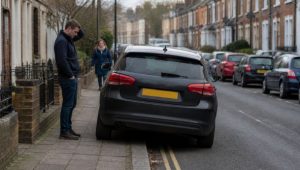 As England enters 2026, the long-standing uncertainty around pavement parking is finally being addressed with greater clarity and intent. For decades, outside London, motorists have operated within a loosely defined system one where parking partly on the pavement was often seen as a practical compromise rather than a legal risk.
That era is ending.
The evolving England pavement parking ban signals a decisive shift in how public space is prioritised. Pavements are no longer being treated as flexible extensions of the road but as essential infrastructure for pedestrians. With the Department for Transport (DfT) empowering local authorities to act more decisively, enforcement is becoming both more consistent and more visible.
For drivers, this change is not simply about avoiding fines. It represents a broader adjustment in expectations where awareness, responsibility, and compliance are becoming central to everyday parking decisions.
What Is the England Pavement Parking Ban 2026 and Why Does It Matter?
The England pavement parking ban 2026 is not a single blanket prohibition across the country. Instead, it introduces a more structured legal framework that allows local councils to restrict pavement parking across wider areas without the delays and complexity that previously limited enforcement.
A Transition from Informal Practice to Formal Regulation
Historically, pavement parking outside London existed in a grey area because enforcement depended heavily on specific legal orders applied to individual streets. This meant that in many areas, drivers could park partially on pavements without immediate consequences, even if the practice created inconvenience or risk.
The 2026 framework changes this dynamic by enabling councils to act more efficiently and decisively. Instead of reacting to individual complaints, authorities can proactively define zones where pavement parking is restricted or prohibited.
Why This Change Has Wider Implications
This is not just a parking issue it reflects a broader shift in urban policy. Public spaces are increasingly being designed and regulated with pedestrians in mind, reinforcing the idea that pavements should remain consistently accessible and safe for all users.
Why Is Pavement Parking Being Restricted Across England?
The tightening of rules is driven by real-world challenges that affect everyday mobility and safety.
The Accessibility Challenge in Practical Terms
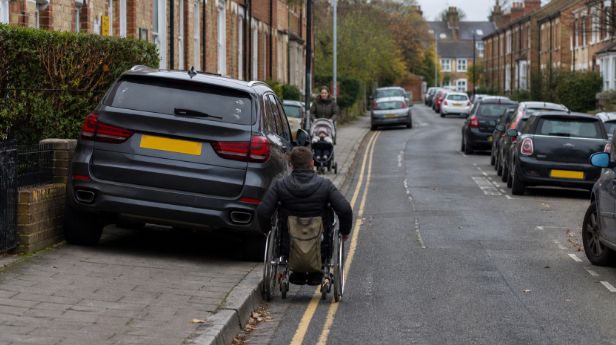
When a vehicle occupies part of the pavement, it reduces usable space in ways that are not always immediately obvious to the driver. A gap that appears sufficient for an able-bodied pedestrian may be entirely unsuitable for a wheelchair or mobility scooter.
For parents with pushchairs, even a slight narrowing of the pavement can make navigation difficult. In many cases, the only alternative is to step into the road an option that carries clear safety risks.
The Hidden Risks Beyond Obstruction
Pavement parking also affects sightlines, particularly at junctions and crossings. A vehicle positioned partly on the pavement can obstruct views for both pedestrians and drivers, increasing the likelihood of collisions.
Additionally, repeated mounting of kerbs can weaken pavement structures over time, leading to uneven surfaces that pose further hazards.
What Changes Have Been Introduced in the 2026 Pavement Parking Rules?
 The 2026 updates focus on making enforcement more practical, scalable, and consistent.
Simplifying Legal Processes for Councils
Previously, implementing restrictions often required lengthy administrative procedures. Councils had to justify and formalise each restriction individually, which limited their ability to respond quickly to local concerns.
The updated system removes much of this complexity, allowing authorities to introduce broader restrictions that reflect real-world usage patterns rather than isolated issues.
A Stronger Focus on Obstruction Rather Than Technicality
One of the most important developments is the emphasis on whether a vehicle causes obstruction, rather than whether it violates a narrowly defined rule. This approach aligns enforcement more closely with the actual impact on pedestrians.
Clearer Communication Through Signage and Markings
Drivers will increasingly rely on visible indicators such as road markings and signage to determine where pavement parking is permitted. This reduces ambiguity but also places greater responsibility on motorists to pay attention to their surroundings.
How Much Will Drivers Be Fined for Pavement Parking in 2026?
The financial penalties associated with the England pavement parking ban are designed to act as a deterrent while remaining proportionate to the offence.
The Real Cost Beyond the Fine
While the headline figure may seem manageable, repeated penalties can quickly add up. More importantly, consistent violations may draw closer scrutiny from enforcement officers, increasing the likelihood of further fines.
Who Enforces the England Pavement Parking Ban in 2026?
Enforcement responsibility has shifted in a way that significantly affects how rules are applied on a day-to-day basis.
The Rise of Civil Enforcement Officers
Civil Enforcement Officers (CEOs) now play a central role in monitoring parking behaviour. Their presence ensures that enforcement is not limited to serious incidents but becomes part of routine oversight.
Continued Role of Police in Serious Cases
Police involvement remains relevant in situations where obstruction creates immediate safety risks, particularly where emergency access or traffic flow is compromised.
How Do Pavement Parking Rules Differ Between London and the Rest of England?
Understanding regional differences is essential for drivers who travel between areas.
London’s Established and Predictable System
London operates under a long-standing blanket ban, which provides clarity and consistency. Drivers know that pavement parking is generally not allowed unless explicitly permitted.
The Gradual Standardisation Outside London
In the rest of England, the approach is evolving toward greater consistency, but variation remains. This transitional phase requires drivers to be more attentive and adaptable.
When Is Pavement Parking Still Legally Permitted?
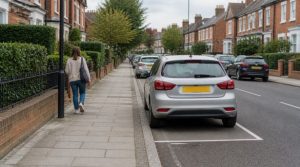 Despite stricter enforcement, there are still circumstances where pavement parking is allowed.
Controlled and Clearly Defined Exceptions
Permissions are typically linked to specific functions, such as emergency response or essential maintenance work. In some areas, councils may designate marked bays that allow partial pavement parking to maintain traffic flow.
The Declining Role of Personal Judgement
Drivers can no longer rely on subjective assessments of whether their parking is acceptable. The emphasis is shifting toward clearly defined rules and designated areas.
How Does Pavement Parking Affect Disabled and Vulnerable Road Users?
The human impact of pavement parking is central to the policy’s development.
A Matter of Independence and Safety
For individuals with mobility challenges, an obstructed pavement is not a minor inconvenience it can be a barrier that limits independence and increases risk.
A Practical Example from Everyday Life
Imagine a visually impaired pedestrian navigating a familiar route. The presence of a vehicle on the pavement introduces an unexpected obstacle, disrupting their mental map and increasing the chance of confusion or injury.
How Are Councils Applying These Rules in Residential Areas?
Local authorities are expected to strike a balance between enforcement and practicality.
Addressing the Reality of Narrow Streets
In areas where road width is limited, completely banning pavement parking may not be feasible. Councils are therefore exploring solutions that allow limited parking while preserving pedestrian access.
Ensuring Fair and Proportionate Enforcement
Guidance from the DfT emphasises that enforcement should reflect local conditions, avoiding overly rigid application in situations where flexibility is necessary.
How Can Drivers Adapt to the England Pavement Parking Ban Without Risk?
Adapting successfully requires a shift in mindset rather than drastic changes in behaviour.
Developing Awareness as a Daily Habit
Drivers should treat pavement space as a protected area unless clearly indicated otherwise. This means actively checking for signage, observing markings, and considering the impact of their vehicle on others.
Moving Away from Assumptions
Practices that were once widely accepted may now carry financial risk. Staying informed is key to avoiding unnecessary penalties.
How Can You Appeal a Pavement Parking Fine in 2026?
 The appeals process provides an important safeguard for drivers.
Building a Strong Case
Successful appeals typically rely on clear evidence, such as photographs showing unclear signage or unusual circumstances.
Understanding the Limits of Appeals
Appeals based purely on personal judgement such as believing enough space was left are less likely to succeed under the new framework.
What Does the ‘Unnecessary Obstruction’ Rule Mean in Practice?
This rule broadens the scope of enforcement in a meaningful way.
Focusing on Impact Rather Than Intent
A driver may not intend to cause a problem, but if their vehicle restricts pedestrian movement, it can still result in a penalty.
How Does the ‘Two-Wheel’ Parking Habit Fit Into the New Framework?
Parking with two wheels on the pavement has long been seen as a compromise solution.
The ‘Two-Wheel’ Rule and Visual Obstruction
Even partial encroachment can reduce visibility and usable space, making it a focus of enforcement.
Delivery Drivers and the 20-Minute Loading Grace Period
Short-term loading remains a grey area and depends heavily on local rules and signage.
Emergency Vehicle Access Requirements in Residential Areas
Maintaining clear access for emergency vehicles is non-negotiable, and any obstruction can result in immediate penalties.
Will England Move Toward a Nationwide Pavement Parking Ban?
The possibility remains under consideration.
Learning from Scotland’s Model
Scotland’s nationwide ban demonstrates how a uniform system can operate, but England is currently testing a more flexible approach.
A Gradual Path Toward Consistency
The 2026 framework may serve as a stepping stone toward more standardised national rules.
What Should Drivers Expect Beyond 2026?
The direction of policy suggests increasing clarity and enforcement.
A More Predictable System
As councils refine their approaches, drivers can expect fewer grey areas and more consistent application of rules.
Conclusion
The England pavement parking ban 2026 represents a significant and necessary evolution in how parking is managed across the country. It reflects a growing recognition that pavements must remain safe, accessible, and reliable for all users.
For drivers, the key to navigating this change lies in awareness and adaptability. By understanding the rules, observing local guidance, and reconsidering long-standing habits, motorists can avoid penalties while contributing to a safer and more inclusive environment.
FAQs
Can I receive multiple fines for pavement parking in the same location?
Yes, it is possible. If a vehicle remains parked in violation over multiple days, councils may issue separate Penalty Charge Notices for each offence period, depending on local enforcement policies.
Does pavement parking affect car insurance in the UK?
Generally, a single parking fine does not impact insurance premiums. However, repeated penalties or offences involving obstruction or damage could potentially be considered by insurers when assessing risk.
Are there different rules for electric vehicles or hybrid cars?
No, the England pavement parking ban applies equally to all vehicle types, including electric and hybrid vehicles. There are no exemptions based on fuel type.
Can businesses be fined if their employees park on pavements?
Yes. If a company vehicle is involved, the registered keeper—often the business—may initially receive the fine. Responsibility can then be transferred depending on who was driving at the time.
Do private car parks and driveways fall under pavement parking rules?
No, these rules generally apply to public highways and pavements. Private land, including driveways and private car parks, is not subject to the same enforcement unless local bylaws apply.
How do tourists or non-UK drivers get informed about these rules?
Tourists are expected to follow UK road laws regardless of origin. Rental companies and local signage play a key role, but lack of awareness is not typically accepted as a defence against fines.
Can dashcam footage be used to challenge a pavement parking fine?
Yes, in some cases. If the footage clearly shows unclear signage, temporary circumstances, or incorrect enforcement, it may support an appeal.
Are there time-based restrictions for pavement parking in certain areas?
Some councils may introduce time-specific rules, allowing pavement parking during off-peak hours. These restrictions will usually be clearly indicated through signage.
What happens if road markings are faded or unclear?
If markings are significantly unclear or missing, this may form part of a valid appeal. However, drivers are still expected to act cautiously and not rely solely on markings.
Can residents request their street to allow pavement parking?
Yes, residents can raise requests with local councils. Authorities may review road conditions and decide whether to introduce designated bays or exemptions.