







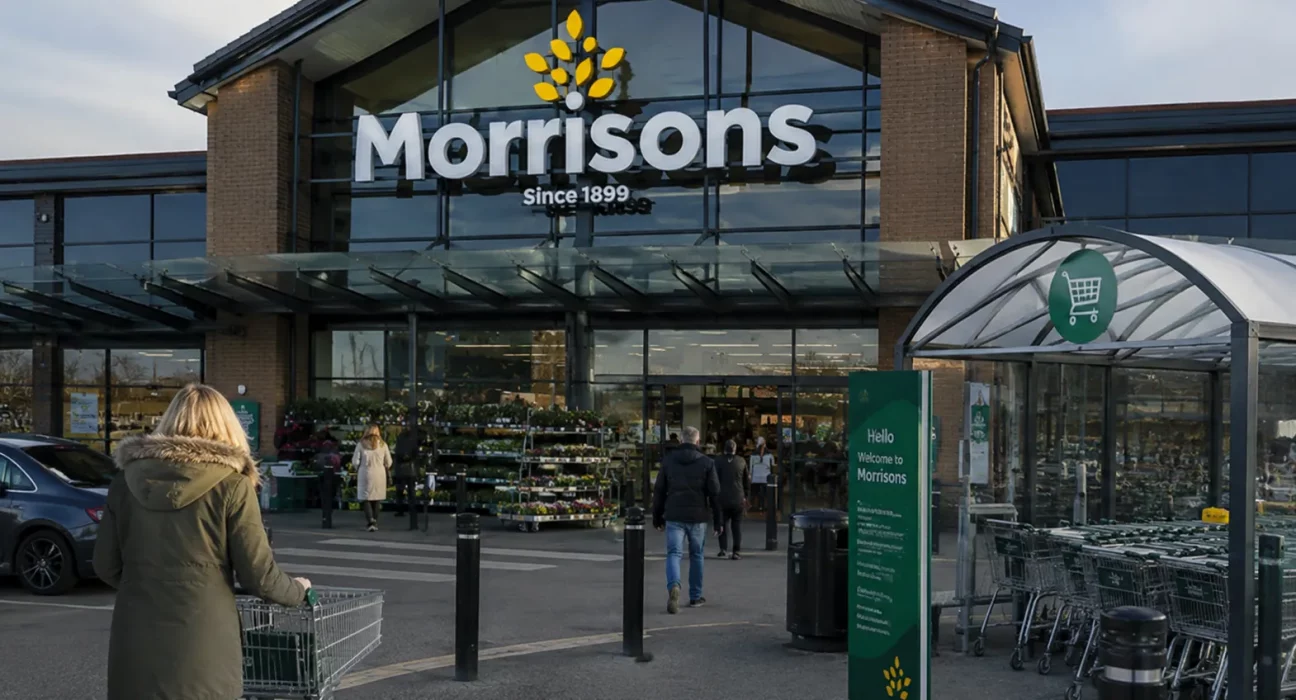
Recent headlines about the so-called “Morrisons toilet rule” have prompted widespread curiosity among UK shoppers, with many wondering whether the supermarket has introduced a controversial new customer policy.
The phrase itself sounds dramatic. It suggests restrictions, access rules, or perhaps some unexpected store policy that directly affects the public. That framing has understandably driven clicks and sparked online discussion.
But the reality is quite different.
The “Morrisons toilet rule” is not an official rule restricting customer access to supermarket toilets. Rather, it refers to a broader accessibility initiative introduced by Morrisons to improve toilet facilities across its UK stores. These changes are designed to better support customers living with medical conditions such as urinary incontinence or those managing life with a stoma.
In an era where public discussions around accessibility often focus on broad corporate statements, this particular story stands out because it centres on practical changes that can make everyday life easier for real people.
For shoppers, the story is less about controversy and more about inclusion, dignity, and how major retailers are adapting to evolving public expectations.
What Is the Morrisons Toilet Rule?
The term “Morrisons toilet rule” is not an official policy title used by Morrisons itself. Instead, it has emerged through media reporting and public discussion as shorthand for a set of accessibility-related toilet upgrades across the supermarket’s UK estate.
At the centre of the story are two significant changes.
First, Morrisons has introduced male sanitary bins in men’s toilets across its stores. Second, it has rolled out stoma-friendly accessible toilet facilities designed to better support customers with specific health needs.
The phrase “toilet rule” has caused understandable confusion because the word rule implies limitation or enforcement. In practice, these changes do the opposite. Rather than restricting access, they expand the functionality and usability of customer facilities.
This distinction matters.
Search behaviour shows that many people encountering the phrase assume it refers to a ban, restriction, or unusual customer requirement. In reality, it reflects a supermarket accessibility initiative rather than a behavioural policy.
That difference is important not only for clarity, but for responsible reporting.
Why Has Morrisons Introduced This Toilet Rule In UK Stores?
The short answer is customer need.
Public toilet facilities have traditionally been designed around general assumptions about customer use. While that may work for many people, it does not adequately account for those living with specific health conditions or accessibility requirements.
For some customers, visiting a supermarket is a simple routine errand. For others, it can require detailed planning.
A person managing urinary incontinence, for example, may need discreet disposal facilities that have historically been absent in many public male toilets. Someone living with a stoma may require practical space to manage medical equipment privately and hygienically while away from home.
These are not niche issues.
Prostate cancer treatment, bowel conditions, age-related continence challenges, and long-term health conditions affect substantial numbers of people across the UK. Yet public facilities have not always evolved quickly enough to reflect those realities.
Morrisons’ decision appears to recognise that accessibility is not only about ramps, lifts, or wider doors. It also includes smaller but highly practical adjustments that directly affect whether people feel confident leaving their homes and participating in everyday life.
This is where the story becomes more meaningful than the headline suggests.
Rather than introducing symbolic inclusion messaging, Morrisons has implemented infrastructure changes that solve real-world problems.
That is a materially different kind of corporate action.
What Changes Have Morrisons Made To Customer Toilets?
The updates introduced by Morrisons focus on practical accessibility improvements rather than cosmetic redesign.
One of the most widely discussed changes is the installation of male sanitary bins in men’s toilets.
At first glance, this may seem like an unusual news story to those unfamiliar with the issue. However, healthcare organisations and accessibility advocates have highlighted for years that many men require discreet disposal facilities for continence-related products.
This need can arise for multiple reasons, including post-prostate cancer treatment, incontinence conditions, age-related health changes, or other medical circumstances.
Without suitable facilities, something as ordinary as a shopping trip can become stressful.
A man managing urinary leakage may feel anxious about being unable to dispose of hygiene products privately. That concern may sound minor to someone unaffected, but for the individual involved, it can shape decisions about whether to leave home at all.
The second major change relates to stoma-friendly accessible toilets.
For those unfamiliar, a stoma is a surgically created opening in the abdomen that allows bodily waste to leave the body, often requiring an external pouching system. People living with a stoma may need occasional access to suitable facilities for changing or managing equipment.
Traditional public toilets are often poorly equipped for this.
Simple additions such as shelves, hooks, mirrors, and discreet disposal arrangements can make a substantial difference.
This is precisely why accessibility campaigners have long argued that public facilities need to reflect the practical realities faced by people managing health conditions.
Morrisons’ upgrades suggest an acknowledgement of that need.
When Did Morrisons Introduce These Toilet Changes?
The changes were introduced in phases rather than as a single announcement.
Morrisons first announced the rollout of stoma-friendly accessible toilets as part of a broader accessibility initiative. Shortly afterwards, it expanded its public-facing efforts by introducing male sanitary bins across its UK supermarket estate.
This sequencing matters because it indicates a strategic accessibility programme rather than a reactive public relations move tied to a single news cycle.
That distinction is relevant in assessing corporate credibility.
When businesses implement one isolated headline-grabbing change, public scepticism is understandable. When changes form part of a wider accessibility effort, the initiative appears more substantive.
For readers trying to understand whether this is a temporary media story or a genuine operational shift, that context is useful.
Is The Morrisons Toilet Rule A Restriction On Customers?
No.
This is the single most important clarification surrounding the story.
Despite the phrase “Morrisons toilet rule” suggesting some kind of customer restriction, there is no evidence that Morrisons has introduced a rule limiting who can use customer toilets in the way many readers may initially assume.
The confusion stems largely from headline framing.
Terms such as rule, change, or new policy naturally create assumptions about restrictions or behavioural expectations. In reality, the reported changes concern facility upgrades, not customer limitations.
This distinction is especially important in the current digital media environment, where curiosity-driven headlines often spread faster than contextual explanations.
A reader scanning social media or search results may understandably conclude that Morrisons has introduced controversial toilet access rules.
That interpretation would be inaccurate.
The changes are additive rather than restrictive.
Why Are Shoppers Talking About The Morrisons Toilet Rule?
Part of the reason is linguistic.
The phrase “toilet rule” immediately suggests controversy, and stories involving supermarkets tend to attract strong public interest because they relate to everyday routines.
People care about changes affecting places they regularly visit.
But there is another reason.
Accessibility-related changes increasingly attract public attention because they reflect broader cultural conversations around inclusion, healthcare awareness, and corporate responsibility.
Retailers are no longer judged purely on pricing and convenience. Increasingly, customers also notice how businesses respond to practical social needs.
The online discussion around Morrisons reflects that shift.
It also reflects a wider media dynamic in which unusual-sounding headlines generate significant engagement, even when the underlying story is comparatively straightforward.
How Does Morrisons Compare With Other UK Supermarkets On Accessible Toilets?
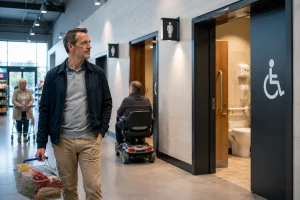
Morrisons has positioned itself prominently in this area, particularly through its public communication around these initiatives.
That does not necessarily mean other supermarkets have ignored accessibility.
Some retailers have introduced selected accessibility improvements over time, although implementation often varies significantly between store locations. National consistency can be a challenge in large retail estates, especially where facilities differ by building age, size, or refurbishment history.
What makes Morrisons noteworthy is the visible scale of the rollout and the clear framing of the initiative as an accessibility commitment.
This matters because consistency is often one of the biggest frustrations for customers with additional needs.
An accessibility feature that exists in one store but not another can create uncertainty and reduce confidence.
From a customer trust perspective, nationwide implementation is meaningful.
What Does Prostate Cancer UK Have To Do With Morrisons’ Toilet Changes?
This aspect adds important credibility to the story.
The rollout of male sanitary bins aligns with accessibility guidance developed through initiatives involving Prostate Cancer UK and broader public hygiene partners.
That connection matters because it shifts the discussion away from novelty and towards evidence-based need.
For men undergoing or recovering from prostate cancer treatment, urinary incontinence can be a genuine and ongoing challenge. Public infrastructure has not always reflected that reality, particularly in male toilet design.
This is one example of how health advocacy can influence practical improvements in public spaces.
It also reinforces why dismissing the story as merely a quirky supermarket headline misses the broader context.
Behind the news cycle is a genuine healthcare and accessibility issue.
Could More UK Supermarkets Follow Morrisons’ Toilet Policy?
It is entirely possible.
Retail businesses often monitor competitor initiatives, especially when they generate positive public attention or align with evolving customer expectations.
Accessibility is also becoming a more commercially relevant issue.
An ageing population, increased public awareness around hidden disabilities, and stronger expectations around inclusive design mean retailers face growing pressure to improve customer facilities.
If Morrisons’ approach is seen as successful, whether reputationally or operationally, it would not be surprising to see similar measures adopted elsewhere.
That said, implementation decisions depend on factors such as store design, refurbishment budgets, and corporate priorities.
So while imitation is plausible, it is not guaranteed.
What Should UK Shoppers Know About The Morrisons Toilet Rule?
For most shoppers, the practical takeaway is simple.
Nothing about ordinary customer behaviour needs to change.
There is no controversial access restriction, no unusual toilet policy, and no requirement affecting routine supermarket visits.
The real significance lies in improved accessibility for people whose needs are often overlooked in public infrastructure discussions.
That includes people living with continence issues, stoma users, and others managing health-related challenges that can make everyday errands more complicated than they appear from the outside.
Good accessibility often goes unnoticed by those who do not personally need it.
That does not make it unimportant.
In many cases, the most effective public infrastructure changes are the ones that quietly remove barriers without fanfare.
What Misinformation Is Circulating About The Morrisons Toilet Rule?
As with many trending consumer stories, some misleading interpretations have emerged.
The most common misunderstanding is that Morrisons has introduced some form of restrictive toilet access rule aimed at customers.
That is incorrect.
Another misleading narrative is that the story is purely a publicity exercise without meaningful practical impact.
That interpretation overlooks the real healthcare and accessibility issues these changes are intended to address.
Responsible reporting requires distinguishing between headline framing and operational reality.
In this case, the underlying story is considerably more practical and less sensational than some initial impressions may suggest.
Conclusion
The phrase “Morrisons toilet rule” may sound like the beginning of a supermarket controversy, but the reality is much more constructive.
Rather than restricting customers, Morrisons has introduced accessibility-focused improvements intended to make shopping more manageable for people living with specific health needs.
In practical terms, this is not a story about rules.
It is a story about design, dignity, and the often-overlooked ways public infrastructure shapes everyday confidence.
For UK shoppers, that is the real takeaway.
FAQc
Can non-customers use Morrisons toilets in the UK?
Toilet access policies can vary by store, but Morrisons customer facilities are generally intended for shoppers and visitors using the premises. Individual store arrangements may differ depending on location and available amenities.
Why are public toilet accessibility changes becoming more common in UK supermarkets?
UK retailers are facing growing expectations around accessibility, inclusive design, and customer wellbeing. As awareness increases around hidden disabilities and long-term health conditions, supermarkets are updating facilities to better reflect real customer needs.
What is The Bog Standard campaign?
The Bog Standard is a UK initiative focused on improving public toilet standards, particularly for men living with urinary incontinence or health conditions requiring better hygiene facilities. It has influenced conversations around more inclusive toilet design.
How do hidden health conditions affect shopping experiences?
Hidden conditions such as Crohn’s disease, ulcerative colitis, incontinence, and stoma-related health needs can make ordinary shopping trips stressful if suitable toilet facilities are unavailable. Improved access can significantly increase confidence and independence.
Are supermarkets legally required to provide customer toilets in the UK?
There is no blanket UK legal requirement forcing all supermarkets to provide public customer toilets, although accessibility obligations may apply in certain circumstances depending on store facilities and customer access arrangements.
Why are more retailers focusing on inclusive customer facilities?
Customer expectations have evolved beyond pricing and convenience. Businesses are increasingly judged on accessibility, practical inclusivity, and how well they support diverse customer needs in real-world environments.
Could Morrisons’ toilet changes influence other UK retailers?
Major retail operational changes often influence competitors, particularly when they generate public attention or align with broader consumer expectations. Accessibility improvements introduced by one national supermarket can create momentum across the sector.
What should shoppers do if suitable toilet facilities are unavailable?
Customers with accessibility or medical needs may wish to contact stores in advance, check facility availability locally, or use recognised accessibility schemes that help identify suitable public toilets nearby.