








Last Updated on 15.09.2026
Investors searching for the top 10 best stocks to buy now in the UK are dealing with a very different market from a few years ago. Interest rates, energy prices, defence spending, pharmaceutical pipelines and changing consumer demand are all influencing UK-listed companies.
Rather than including commodities, futures contracts or volatility indices, this list focuses exclusively on real shares listed on the London Stock Exchange. The ten companies were selected using their latest 2026 financial results, business momentum, valuation, dividends, sector diversification and relevance to UK investors.
What Makes A Stock Worth Considering In 2026?
There is no single factor that makes a stock a good investment. Investors normally assess a combination of business performance, valuation, financial strength and future growth potential.
Key areas to consider include:
- Revenue Growth: Whether sales are increasing consistently
- Profitability: Whether earnings and margins are improving
- Cash Flow: Whether the business generates sufficient cash
- Debt Levels: Whether borrowing remains manageable
- Valuation: Whether the share price is reasonable compared with earnings
- Dividend Strength: Whether shareholder payments appear sustainable
- Market Position: Whether the company has a competitive advantage
- Future Outlook: Whether there are realistic opportunities for long-term growth
A strong business can still be an expensive investment if its share price already reflects very high expectations, which is why valuation should be considered alongside company quality.
Is Now A Good Time To Invest In UK Stocks?
Whether now is a good time to invest depends on an investor’s goals, time horizon and tolerance for market volatility.
UK-listed companies provide exposure to sectors including banking, energy, pharmaceuticals, defence, utilities and consumer goods. Some UK shares also attract investors because of their dividend income, established businesses and comparatively reasonable valuations.
However, there is no guaranteed perfect time to enter the market. Share prices can move quickly after company results, interest-rate decisions, economic data or geopolitical developments.
For long-term investors, gradually building a diversified portfolio can be more practical than trying to predict the exact best day to buy shares.
Top 10 UK Stocks To Watch In 2026
| Company | Ticker | Sector | Market Cap* | P/E* | Dividend Yield* | 2026 YTD Return* |
| Rolls-Royce Holdings | RR. | Aerospace & Defence | £117.9bn | 39.7 | 0.8% | 24.4% |
| HSBC Holdings | HSBA | Banking | £269.7bn | 15.2 | 3.5% | 32.0% |
| Shell | SHEL | Energy | £200.5bn | 10.5 | 3.3% | 28.9% |
| AstraZeneca | AZN | Pharmaceuticals | £181.6bn | 23.7 | 2.0% | 15.1% |
| Lloyds Banking Group | LLOY | Banking | £65.1bn | 14.1 | 3.6% | 14.5% |
| GSK | GSK | Pharmaceuticals | £74.2bn | 15.7 | 3.7% | 1.6% |
| National Grid | NG. | Utilities | £57.8bn | 17.7 | 4.2% | 0.7% |
| Tesco | TSCO | Consumer Defensive | £29.2bn | 17.4 | 3.1% | 6.2% |
| Legal & General | LGEN | Financial Services | £15.9bn | 25.4 | Around 7% | 18.0% |
| Unilever | ULVR | Consumer Defensive | £103.0bn | 21.9 | 3.4% | 1.6% |
*Market capitalisation, P/E ratios, yields and returns are delayed market-data snapshots from early to mid-September 2026.
Prices and valuation ratios change continually. YTD figures are provider-reported returns and can differ from price-only performance, particularly where dividends are included.
How We Selected These UK Stocks?
The list is not a ranking from safest to riskiest or best to worst. Each company was assessed using several factors:
- Latest Results: Preference for businesses with meaningful 2026 financial data
- Business Quality: Revenue, profitability, cash generation and balance-sheet position
- Valuation: P/E ratios and the market’s existing expectations
- Shareholder Returns: Dividends and share buybacks where relevant
- Sector Diversification: Exposure across banking, energy, healthcare, utilities, aerospace and consumer goods
- Investor Interest: Trading activity and popularity among UK investors
- Risks: Company-specific, economic, regulatory and sector risks
Indices, commodities, volatility measures and futures contracts have deliberately been excluded because they are not individual stocks.
What Are The Top 10 Best Stocks To Buy Now In The UK?
The following UK-listed companies stand out for different reasons, including earnings growth, dividends, defensive characteristics, cash generation and exposure to long-term industry trends. None should be viewed as an automatic buy, but each offers characteristics that may make it worth researching further in 2026.
1. Rolls-Royce Holdings

Rolls-Royce remains one of the most closely watched FTSE shares after a substantial operational turnaround.
In the first half of 2026, underlying operating profit increased 46% to £2.53 billion, while free cash flow reached £1.96 billion. Management subsequently raised full-year guidance to £4.7 billion to £4.9 billion of underlying operating profit and £3.8 billion to £4.0 billion of free cash flow.
Its civil aerospace, defence and power systems businesses provide several growth channels. However, the strong share-price performance has also pushed the valuation higher, meaning investors are paying considerably more for future growth than they once were.
Key Risk: A high valuation leaves less room for operational disappointment.
2. HSBC Holdings

HSBC offers exposure to banking, wealth management and Asian economic growth.
For the first half of 2026, profit before tax excluding notable items reached $20.4 billion, while revenue excluding notable items rose to $38.2 billion. Banking net interest income increased to $22.9 billion and wealth-related fee and other income reached $5.5 billion.
HSBC also announced a second interim dividend of $0.10 per share and a share buyback of up to $1 billion. Its annualised return on tangible equity stood at 18.2%.
Key Risk: HSBC remains sensitive to interest rates, Asian economic conditions and geopolitical developments.
3. Shell

Shell combines a mature oil and gas business with LNG, trading and investment in the changing energy system.
Its Q2 2026 shareholder distributions totalled $5.2 billion, comprising roughly $3 billion of share buybacks and $2.2 billion of cash dividends. Shell declared a quarterly dividend of $0.3906 per share and launched another $3 billion buyback programme.
That level of cash distribution helps explain why Shell remains prominent among UK income investors.
Key Risk: Earnings and cash flow remain heavily influenced by oil and gas prices.
4. AstraZeneca

AstraZeneca offers a different investment case built around oncology, rare diseases and other specialist medicines.
First-half 2026 total revenue reached $30.67 billion, up 6% at constant exchange rates, while core earnings per share increased 11% to $5.21. The company maintained its full-year outlook for mid-to-high single-digit revenue growth and low-double-digit core EPS growth.
Drug development also creates uncertainty. On 11 September, AstraZeneca reported that its SERENA-4 Phase III study did not achieve its primary objective of a statistically significant improvement in progression-free survival.
Key Risk: Clinical trial failures and regulatory decisions can quickly affect pharmaceutical valuations.
5. Lloyds Banking Group

Lloyds provides concentrated exposure to UK households and businesses.
First-half 2026 net income increased 9% to £9.7 billion, statutory profit after tax rose 23% to £3.1 billion and return on tangible equity reached 17.1%.
The bank increased its interim dividend by 30% to 1.58p per share and announced a share buyback worth up to £1 billion.
Its UK focus can be an advantage during a strong domestic economy but also creates concentration risk.
Key Risk: Mortgage conditions, consumer credit performance and the UK economy can materially affect earnings.
6. GSK

GSK combines vaccines, specialty medicines and general medicines. Q2 2026 sales reached £8.41 billion, rising 5% at constant exchange rates. Specialty Medicines delivered £3.8 billion of sales, up 14%, while free cash flow reached approximately £2 billion.
GSK maintained 2026 guidance for turnover growth of 3% to 5% and core EPS growth of 7% to 9%. It expects a 2026 full-year dividend of 70p per share.
However, pharmaceutical development costs remain significant, including a £1.3 billion impairment linked to camlipixant during the quarter.
Key Risk: Pipeline setbacks can offset growth from successful medicines.
7. National Grid
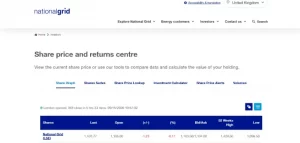
National Grid is a more defensive choice than many businesses on this list because much of its earnings come from regulated electricity and gas networks.
For 2025/26, underlying operating profit increased 8.8% to £5.68 billion, while underlying EPS rose to 78p. Capital investment reached £11.58 billion, up more than 21%, as the company expands and modernises energy infrastructure. The full-year dividend increased 3.8% to 48.49p per share.
Key Risk: Large infrastructure programmes require substantial capital and expose the business to financing and regulatory risks.
8. Tesco
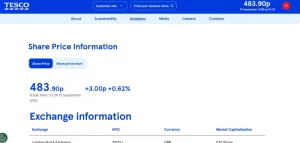
Tesco offers exposure to a relatively defensive area of consumer spending. For 2025/26, sales excluding VAT and fuel increased 4.6% to £66.59 billion. Adjusted operating profit reached £3.15 billion and free cash flow increased 11.8% to £1.96 billion. The annual dividend increased 5.8% to 14.5p per share.
Its scale, Clubcard ecosystem and strong UK grocery position remain important advantages.
Key Risk: Supermarket price competition and higher operating costs can squeeze margins.
9. Legal & General
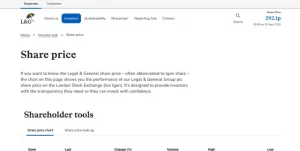
Legal & General remains especially relevant for investors seeking income alongside exposure to pensions, retirement solutions and asset management. First-half 2026 core operating profit increased 7% to £918 million, while core operating EPS rose 11%. Assets under management stood at approximately £1.2 trillion.
The interim dividend increased 2% to 6.24p per share, while a £1.2 billion share-buyback programme was underway. Its dividend yield is considerably higher than many FTSE 100 companies, although investors should never treat a high yield as guaranteed income.
Key Risk: Investment-market movements, capital requirements and changes in retirement markets can affect results.
10. Unilever

Unilever adds global consumer exposure through household, personal care, beauty and food brands. For the first half of 2026, underlying sales increased 4.8%, driven primarily by 4.2% underlying volume growth. Q2 underlying sales growth accelerated to 5.8%, while underlying operating margin reached 20.3%.
The company also completed its €1.5 billion share-buyback programme and increased its quarterly dividend by 3%. Management subsequently lifted its 2026 underlying sales-growth expectation to 4% to 6%.
Key Risk: Currency movements, consumer demand and execution around portfolio changes can affect returns.
Which Shares Are Popular With UK Investors In September 2026?
Popularity should never be confused with investment quality, but actual investor activity provides useful market context.
Interactive Investor data covering ISA holdings by value at 31 August 2026 placed Rolls-Royce first, Lloyds second, Legal & General third and Shell fourth among its five most-held shares.
Rolls-Royce and Lloyds have also repeatedly appeared in the platform’s most-traded lists during September. This supports their relevance to UK investors, but heavy trading can reflect both buying and selling and does not itself indicate future returns.
How To Buy UK Shares?
Buying individual shares generally involves the following process:
- Set Your Investment Goal: Decide whether you are seeking income, long-term capital growth or a combination
- Choose An FCA-Authorised Platform: Compare dealing charges, platform fees, foreign-exchange fees and available account types
- Select Your Account: A Stocks & Shares ISA can provide tax-efficient investing
- Research The Company: Review results, debt, cash flow, valuation and major business risks
- Place Your Order: Search using the company’s ticker and choose the amount you want to invest
- Diversify: Avoid relying excessively on one company, industry or country
- Review Periodically: Focus on business fundamentals rather than reacting to every daily price movement
Investors building their portfolio gradually may find a regular approach such as investing £500 per month in the UK easier to manage than attempting to time a perfect entry point.
For the 2026/27 tax year, the overall ISA subscription allowance remains £20,000, and investment income and capital gains inside an ISA are generally tax-free. Those comparing wrappers can also consider other tax-efficient investment options in the UK.
Individual share selection is not the only approach. Investors wanting broader exposure may instead consider a globally diversified equity fund rather than building a portfolio entirely from individual companies.
Final Thoughts
The top 10 best stocks to buy now UK should not simply be the companies whose share prices have risen the fastest. Rolls-Royce offers strong momentum but a higher valuation. HSBC and Lloyds provide banking exposure. Shell remains a major cash-generating energy company.
AstraZeneca and GSK provide healthcare exposure, while National Grid adds regulated infrastructure. Tesco and Unilever bring defensive consumer businesses, and Legal & General offers a higher-income investment profile.
The strongest portfolio will depend on risk tolerance, investment horizon and existing holdings. Diversification matters more than finding a single supposedly perfect stock.
FAQs About The Best UK Stocks To Buy
What Are The Top 10 Stocks To Buy Right Now In The UK?
There is no universally correct top ten. Rolls-Royce, HSBC, Shell, AstraZeneca, Lloyds, GSK, National Grid, Tesco, Legal & General and Unilever currently provide a diversified list of large UK-listed companies worth researching based on 2026 results.
Is The UK Stock Market A Good Investment In 2026?
UK shares can provide access to global businesses, dividends and several relatively low valuations, but suitability depends on an investor’s objectives, time horizon and ability to accept losses.
Which UK Stocks Pay High Dividends?
Legal & General currently offers one of the higher indicated yields among the companies covered here. National Grid, GSK, Lloyds, HSBC and Shell also pay dividends. Dividends can always be reduced or cancelled.
How Much Money Do I Need To Start Investing In Shares?
There is no single required amount. Minimum investment levels depend on the platform, share price and whether fractional investing is available. Fees should also be considered when making small purchases.
Should I Use A Stocks & Shares ISA To Buy UK Shares?
A Stocks & Shares ISA can be attractive because qualifying investment income and gains are sheltered from UK tax. The overall ISA allowance is £20,000 for 2026/27, although individual tax circumstances differ.
Important: This material is general information and not a personal recommendation to buy or sell any security. Share prices and dividends can fall as well as rise. Investors should conduct their own research and seek independent financial advice where appropriate.
Leave feedback about this