







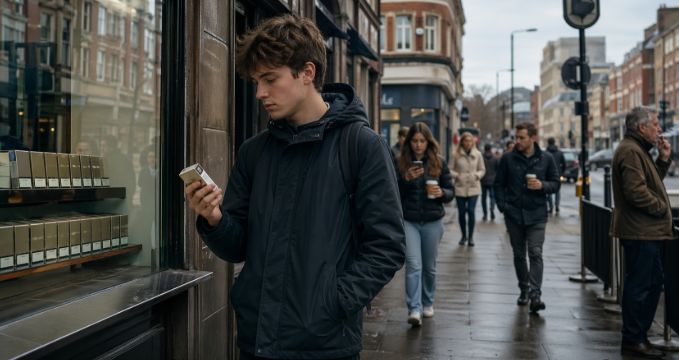
UK Smoking Ban 2026 – Quick Overview
A generational shift in public health and British culture
Key Takeaways
Policy Snapshot
| Area | Key Details |
|---|---|
| Policy Type | Generational smoking ban |
| Coverage | All UK nations and tobacco products |
| Vaping Rules | Flavour limits, vape-free zones, tax duty |
| Retail Impact | Licensing + strict ID verification |
| Long-Term Outcome | Declining smoking rates across generations |
The United Kingdom has entered a defining moment in its approach to public health. With the passing of the Tobacco and Vapes Bill UK, the UK smoking ban 2026 signals more than just another regulatory change it represents a long-term shift in how society approaches smoking, health, and personal responsibility.
For generations, smoking has been embedded in British life. It has shaped social habits, workplace culture, and even the rhythm of daily routines. Yet, behind this familiarity lies a significant cost. The pressure on the National Health Service, combined with the broader economic burden of smoking-related illness, has made reform unavoidable.
Rather than introducing a sudden prohibition, the government has taken a measured and strategic approach. By focusing on future generations, the law aims to reduce smoking gradually without disrupting the lives of current smokers. This balance between regulation and practicality is what makes the policy both unique and globally significant.
What Is the UK Smoking Ban 2026?
 The UK smoking ban 2026 is a long-term legislative strategy designed to phase out smoking over time. It does not remove tobacco products from circulation immediately, nor does it criminalise existing smokers. Instead, it prevents younger generations from ever legally accessing tobacco.
A Shift From Reaction to Prevention
Historically, smoking policies have focused on managing the consequences through taxation, warning labels, and public restrictions. This law changes that approach entirely. It addresses the root of the issue by ensuring fewer people start smoking in the first place.
Why This Policy Was Necessary?
Smoking continues to have a measurable impact on both individuals and the economy. Beyond health risks, it contributes to:
- Long-term strain on healthcare services
- Reduced workplace productivity
- Increased demand for social care
By targeting the starting point of smoking behaviour, the government aims to create a lasting reduction in these pressures.
How the “Smoke-Free Generation” Policy Works?
The defining feature of the UK smoking ban 2026 is the introduction of a “smoke-free generation.” This concept represents a fundamental departure from traditional age-based restrictions.
The Generational Cut-Off
Anyone born on or after 1 January 2009 will never legally be able to purchase tobacco. This rule is permanent and does not change over time.
The Rolling Age System
Each year, the legal purchasing age increases by one year. This creates a moving boundary that gradually reduces access to tobacco across the population.
Why This Model Is Effective
This system avoids the sudden disruption of a full ban while still achieving the same long-term outcome. It allows society to adapt gradually, reducing resistance and improving compliance.
Is Smoking Illegal Under the New Law?
Despite widespread discussion, the UK smoking ban 2026 does not make smoking illegal.
The Legal Distinction
The law targets the sale of tobacco, not its use. Individuals who are already legally allowed to purchase tobacco can continue to do so.
Why This Approach Matters
By focusing on supply rather than behaviour, the government avoids criminalising individuals. This makes the policy more socially acceptable and easier to enforce.
Common Misunderstandings
There is ongoing confusion about what the law actually does. To clarify:
- Smoking itself remains legal
- Existing smokers are not affected
- Enforcement applies to retailers only
The Expanding Scope of Vaping Regulations
While tobacco remains the primary focus, vaping has become an equally important area of concern. Its popularity among younger people has prompted stricter oversight.
Addressing Youth Appeal
Flavoured products and colourful packaging have been identified as key factors attracting younger users. The government now has the authority to restrict these elements.
Creating Vape-Free Environments
The expansion of vape-free zones reflects a broader effort to normalise smoke-free public spaces. These restrictions are designed to protect children and reinforce changing social norms.
The End of Disposable Culture
The ban on single-use vapes marks a significant shift, not only for health reasons but also for environmental concerns. It signals a move towards more controlled and sustainable alternatives.
The Financial Impact: Understanding the New Vape Tax
The introduction of a vaping products duty represents one of the most immediate changes under the new legislation.
How the Tax Works?
A flat-rate duty is applied to all e-liquids, increasing the cost of vaping products across the board.
Real-World Cost Implications
| Product Type | Estimated Price Increase |
|---|---|
| Small (10ml) | £2.64 |
| Medium (50ml) | £13.20 |
| Large (100ml) | £26.40 |
Behavioural Impact
Higher prices are expected to:
- Reduce frequent usage
- Limit accessibility for younger consumers
- Encourage more cautious consumption habits
How the Law Is Reshaping British Businesses?
 The UK smoking ban 2026 is already beginning to influence how businesses operate, particularly on the high street.
Increased Responsibility for Retailers
Retailers must now take greater care when verifying customers. This includes checking birth years rather than simply confirming age.
Operational Challenges
For many small businesses, this introduces new complexities. Staff training, compliance checks, and record-keeping all become more demanding.
Long-Term Commercial Shifts
As tobacco sales decline, businesses may begin to shift focus towards alternative products. This could gradually reshape the retail landscape across the UK.
Enforcement, Penalties, and Legal Structure
The effectiveness of the UK smoking ban 2026 depends heavily on enforcement.
Financial Penalties
Retailers who fail to comply may face immediate fines. Repeated violations can lead to more serious consequences, including temporary bans.
Closing Legal Gaps
The inclusion of a ban on products like snus ensures that alternative tobacco products do not undermine the policy.
A Preventative Legal Model
By placing responsibility on sellers, the law maintains a preventative focus rather than punitive enforcement.
Economic and Public Health Outcomes
The long-term impact of the UK smoking ban 2026 extends far beyond individual behaviour.
Reducing Economic Burden
Smoking currently costs the UK economy significantly more than it generates in tax revenue. Reducing smoking rates could help rebalance this equation.
Improving National Health
Fewer smokers means fewer smoking-related illnesses. This has direct implications for healthcare demand and overall quality of life.
A Generational Health Shift
Over time, entire age groups may grow up without exposure to smoking as a norm, leading to a lasting transformation in public health outcomes.
Cultural Transformation: A Gradual Redefinition of Social Norms
The most profound impact of the UK smoking ban 2026 may be cultural rather than legal.
From Common to Uncommon
Smoking, once a routine part of daily life, is gradually becoming less visible. This shift changes how younger generations perceive it.
Learning from the Past
The 2007 UK indoor smoking ban demonstrated how quickly social norms can evolve. What was once controversial is now widely accepted.
The Future Social Landscape
As smoking becomes less accessible, it may also lose its social relevance. Future generations may view it as outdated rather than aspirational.
This the Blueprint for a Global Smoke-Free Future?
The global response to the UK smoking ban 2026 suggests that its influence may extend far beyond national borders.
The London Ripple Effect
Countries across Europe are closely observing the UK’s approach. Some are already exploring similar frameworks.
International Recognition
The World Health Organization has acknowledged the UK’s leadership in tobacco control, suggesting that the model could inform future global standards.
Emerging Global Trends
- Consideration of generational bans in other countries
- Increasing restrictions on vaping products
- Greater emphasis on preventative health policies
Ongoing Challenges
Despite its potential, the policy is not without risks. Concerns about illicit markets and enforcement remain central to the debate.
What Should People and Businesses Do Now?
As the UK smoking ban 2026 begins to take effect, adapting to the new environment is essential.
For Businesses
Understanding compliance requirements and updating internal processes will be critical.
For Families and Educators
Clear communication about the law can help younger individuals understand its long-term implications.
For the General Public
Awareness of changing rules and expectations will make the transition smoother and reduce confusion.
How Will the UK Smoking Ban 2026 Affect Young People and Future Generations?
 The long-term success of the UK smoking ban 2026 largely depends on how it shapes the behaviour and mindset of younger generations. Unlike previous policies that focused on limiting access, this law removes the option entirely for those born after 2008.
A Permanent Shift in Choice
For young people growing up under this system, smoking is no longer a decision they will face as adults. This changes the conversation from “whether to smoke” to “why smoking was ever common in the first place.”
Over time, this could reduce curiosity and peer pressure, both of which have historically played a role in smoking uptake.
Impact on Social Identity
Smoking has often been linked to identity, rebellion, or social belonging, especially among teenagers and young adults. By removing access, the law may gradually weaken these associations.
Instead, healthier alternatives and lifestyles may become more dominant in shaping identity and social behaviour.
Education and Awareness
Schools and parents now play an important role in reinforcing the purpose behind the law. Explaining that the restriction is lifelong not temporary helps young people understand its significance.
This also opens the door to more meaningful conversations about addiction, health, and long-term wellbeing.
What Are the Risks and Criticisms of the UK Smoking Ban 2026?
While the UK smoking ban 2026 has been widely supported from a public health perspective, it has also raised important questions and concerns that continue to be debated.
Concerns Around Personal Freedom
One of the most common criticisms is that the policy limits personal choice. Critics argue that adults should have the right to decide whether or not to smoke, regardless of their birth year.
This raises broader questions about the role of government in influencing individual behaviour.
The Risk of Illicit Markets
There are concerns that restricting access for a growing segment of the population could lead to an increase in illegal tobacco sales.
If younger adults cannot legally purchase tobacco, some may turn to unregulated sources. This could create challenges for enforcement and public safety.
Practical Challenges for Retailers
Retailers may face increasing difficulty in applying a rolling age system over time. Unlike a fixed legal age, the moving boundary requires ongoing awareness and careful verification.
For small businesses, this adds complexity to everyday operations and increases the risk of accidental non-compliance.
Balancing Public Health and Practicality
Supporters argue that these risks are manageable and outweighed by the long-term health benefits. However, the true effectiveness of the policy will depend on how well these challenges are addressed in practice.
Conclusion
The UK smoking ban 2026 represents a carefully designed shift towards a healthier future. By focusing on prevention rather than prohibition, it avoids many of the challenges associated with more aggressive policies.
Its success will depend on time, public acceptance, and effective enforcement. However, its potential is clear. If the policy achieves its intended outcomes, it could redefine not only British culture but also global approaches to smoking and public health.
In the years ahead, the UK may well become the model for how societies transition away from smoking quietly, gradually, and permanently.
FAQs About UK Smoking Ban 2026
Will the legal smoking age eventually apply to everyone?
No, the law only affects those born after 2008.
Can someone give cigarettes to a restricted individual?
The law focuses on sales, but other regulations may apply.
Are vape flavours completely banned?
Not entirely, but restrictions are increasing.
How will enforcement be monitored?
Through local authorities and compliance checks on retailers.
Will tobacco shops disappear completely?
Not immediately, but demand is expected to decline over time.
Is this policy reversible?
Future governments could review it, but it is designed as a long-term strategy.
Why is the UK taking a gradual approach?
A gradual system is more practical and easier for society to accept.