







Executive Snapshot: What UK Exporters Need to Know
Key Takeaway
Trump’s UK tariff warning is not just a political headline it directly affects pricing, contracts, and profitability.
British exporters should immediately review Incoterms, assess quota exposure, and ensure supply chain compliance to avoid unexpected costs as trade conditions evolve.
What Does Trump’s UK Tariff Warning Mean for British Exporters?
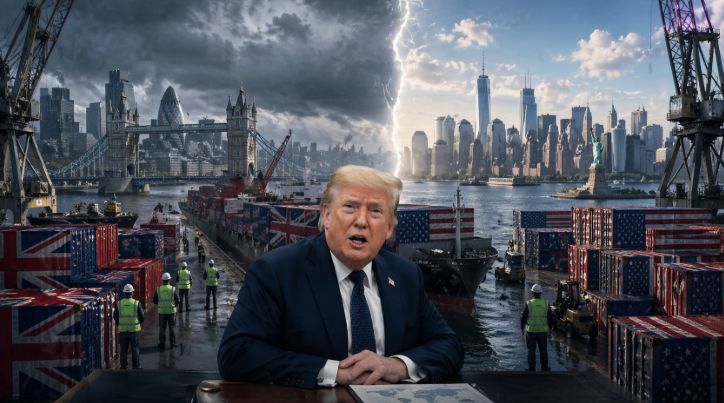
 Trump’s UK tariff warning represents more than a routine policy adjustment it signals a structural shift in how the United States approaches trade with even its closest allies. For decades, the transatlantic relationship has been described as a “bedrock” of British exports. That assumption is now being tested.
For UK exporters, the implications are immediate and practical. A tariff, even when applied on the US side, rarely stays there. It moves through the supply chain, affecting pricing, demand, and ultimately profitability. British firms must now decide whether to absorb the cost, renegotiate contracts, or risk losing market share in one of their most important export destinations.
What makes this moment particularly significant is not just the financial burden, but the uncertainty surrounding it. Businesses are no longer operating within a predictable trade framework. Instead, they are navigating a landscape where tariffs can be introduced, adjusted, or escalated based on political developments.
Why Now? The Policy Shift Behind the Tariffs
The current tariff framework is rooted in a critical legal development in the United States. In early 2026, the US Supreme Court ruled against the use of emergency powers that had previously allowed the administration to impose tariffs under the International Emergency Economic Powers Act (IEEPA). This decision forced a rapid policy pivot.
The administration’s response was to invoke Section 122 of the Trade Act of 1974, a provision that allows for temporary tariffs to address trade imbalances. Under this mechanism, a 15% baseline tariff was introduced, replacing the earlier 10% structure.
From a legal standpoint, this is a confirmed and well-documented shift. However, from a strategic perspective, it reflects a broader trend: the increasing use of trade policy as a flexible tool of economic and political influence.
It is important to separate fact from speculation here. The confirmed fact is that the legal basis for tariffs has changed. The proposed trajectory is that these tariffs could become permanent if politically advantageous. The misconception to avoid is that this represents a complete breakdown of trade exports continue, but under more challenging conditions.
What Are Tariffs and How Do They Affect UK Exports?
At their core, tariffs are taxes imposed on imported goods. While simple in definition, their real-world impact is far more complex.
When a US importer brings in goods from the UK, the tariff is applied at the border. Although the importer technically pays the duty, the cost often flows backward through the supply chain. This can lead to renegotiated contracts, reduced order volumes, or pressure on UK exporters to lower their prices.
A Practical Example
Consider a British engineering firm exporting specialised components to the US. Before the tariff increase, its pricing may have been competitive within the American market. With a 15% tariff added, the final cost to the buyer rises significantly. If a competitor from another country faces a lower tariff or none at all the UK firm may quickly lose its competitive edge.
This is how tariffs influence behaviour. They do not simply generate revenue; they reshape trade patterns, often in subtle but powerful ways.
The 15% Baseline: What Has Actually Changed?
 The shift from a 10% to a 15% tariff may appear incremental, but in global trade terms, it is substantial. Margins in many export sectors are relatively thin, and even a small increase can alter the viability of a deal.
The new baseline applies broadly to goods not covered by specific agreements or exemptions. This means that a wide range of UK exportsfrom manufactured goods to certain consumer productsare now subject to higher entry costs in the US market.
From a financial perspective, the estimated £2–£3 billion impact reflects not only direct tariff payments but also indirect effects such as reduced demand and operational adjustments.
Sector Heatmap: Who Is Most at Risk?
To understand the uneven impact of these tariffs, it is helpful to examine how different sectors are positioned:
This table highlights a critical point: tariffs do not affect all exporters equally. Businesses operating in highly regulated or politically sensitive sectors face significantly greater risk.
Which UK Sectors Are Most Exposed to US Tariffs?
Automotive and Transport
The automotive sector illustrates the complexity of the current arrangement. Under the Economic Prosperity Deal (EPD), the UK secured a quota allowing up to 100,000 vehicles to be exported at a reduced tariff rate. However, once that threshold is exceeded, tariffs can rise sharply, in some cases reaching 25%.
This creates a scenario where success selling more vehicles can paradoxically lead to higher costs.
Steel and Aluminium
These sectors remain under strict scrutiny. Tariffs of around 25% continue to apply, with additional requirements related to origin and production processes. UK firms must demonstrate that their products meet specific criteria, such as being “melted and poured” domestically.
Pharmaceuticals
Pharmaceutical exports, valued at approximately £11 billion annually, are currently protected to some extent. However, ongoing investigations by US authorities introduce a layer of uncertainty. The possibility of future tariffs, potentially justified on national security grounds, cannot be ignored.
Small and Medium-Sized Exporters
SMEs often face the greatest challenges in adapting to tariff changes. Unlike large corporations, they may lack the resources to absorb costs, restructure supply chains, or navigate complex regulatory requirements. The removal of low-value shipment exemptions further compounds these difficulties.
Trump’s Trade Message: A Shift Towards “Reciprocity”
These statements encapsulate a broader strategic approach. Trade policy is no longer framed solely in economic terms but as part of a wider negotiation toolkit.
The concept of “reciprocity” suggests that tariffs are being used to counter policies perceived as unfavourable, such as the UK’s Digital Services Tax. While this approach may resonate domestically within the US, it introduces a high degree of unpredictability for trading partners.
The Economic Prosperity Deal (EPD): Protection or Partial Shield?
 The Economic Prosperity Deal remains a central component of the UK’s trade position with the US. It provides certain advantages, including reduced tariffs and sector-specific quotas.
However, it is important to view the EPD as a partial shield rather than a comprehensive solution. Its protections are conditional and subject to political interpretation. Moreover, as an executive agreement rather than a fully ratified treaty, it can be modified with relatively short notice.
This creates a situation where businesses must plan for both the benefits and the limitations of the deal.
Practical Guide: What UK Businesses Should Do Now
Why Incoterms Matter More Than Ever?
In the current environment, contractual details have taken on heightened importance. Incoterms, which define the responsibilities of buyers and sellers in international trade, can significantly influence how tariffs are managed.
Under Delivered Duty Paid (DDP) terms, the exporter assumes responsibility for all duties and taxes. With tariffs rising, this arrangement can quickly become financially unsustainable. Many firms are now reconsidering their use of DDP, exploring alternatives that shift some of the burden to the buyer.
How to Manage Export Quotas Effectively?
Quota systems, particularly in sectors like automotive, require careful monitoring. Exceeding a quota can trigger a sharp increase in tariffs, turning profitable sales into loss-making transactions.
Businesses must therefore adopt a more strategic approach to export volumes, coordinating closely with distributors and tracking shipments in real time.
Can You Reclaim Previous Tariffs?
One of the more positive developments is the possibility of reclaiming tariffs paid under the previous legal framework. Following the Supreme Court ruling, many UK firms may be eligible for refunds on duties paid in 2025.
The process, however, is not straightforward. Claims must be filed correctly, and administrative backlogs are common. Engaging with trade specialists or legal advisers can improve the likelihood of a successful outcome.
Supply Chain Compliance: A Hidden Risk
Supply chains have become a focal point of US trade policy. Particular attention is being paid to the origin of components and the involvement of third countries.
UK exporters must ensure that their supply chains are fully transparent and compliant with US requirements. Failure to do so could result in additional tariffs or restrictions, even if the final product is manufactured in the UK.
Should UK Exporters Look Beyond the US?
The United States remains a critical market, but the current environment highlights the importance of diversification. Exploring alternative markets can reduce exposure to US policy shifts.
Opportunities exist within the European Union, as well as in regions covered by agreements such as the Comprehensive and Progressive Agreement for Trans-Pacific Partnership (CPTPP). While diversification requires investment and planning, it can provide greater long-term stability.
Strategic Outlook: What Happens Next?
The current tariff framework is subject to a 150-day review period, during which the US Congress will assess its continuation. This introduces a degree of uncertainty, as the outcome could range from extension to modification or removal.
Political developments will play a decisive role. Diplomatic relations, domestic economic priorities, and broader geopolitical considerations will all influence the direction of US trade policy.
For UK businesses, the key is to remain adaptable, recognising that the situation may evolve rapidly.
The Bigger Picture: Trade as a Political Tool
Recent developments underscore a broader trend: the integration of trade policy into geopolitical strategy. Issues such as digital taxation and international disputes have become intertwined with economic decisions.
This shift means that businesses must pay closer attention not only to market conditions but also to political signals. Understanding the broader context can provide valuable insights into potential risks and opportunities.
Conclusion
Trump’s UK tariff warning marks a significant moment in the evolution of transatlantic trade. While the immediate focus is on costs and compliance, the deeper challenge lies in navigating an increasingly complex and unpredictable environment.
British exporters have demonstrated resilience in the face of change before. By adopting a proactive approach reviewing contracts, strengthening supply chains, and exploring new markets they can continue to compete effectively on the global stage.
The path ahead may not be straightforward, but it is manageable with the right strategies and a clear understanding of the risks involved.
FAQs About Trump’s UK Tariff Warning and British Exports
How do tariffs affect UK exporters in practical terms?
They increase the cost of goods entering the US, often reducing competitiveness and affecting demand.
Are all sectors equally impacted by the 15% tariff?
No, sectors like automotive and metals face higher risks due to quotas and additional duties.
Can UK firms avoid paying tariffs entirely?
In most cases, no, but strategic use of trade agreements and contract terms can reduce exposure.
What is Section 122 of the Trade Act?
It is a legal provision allowing temporary tariffs to address trade imbalances.
Are refunds for previous tariffs guaranteed?
Eligible firms can apply, but the process may be slow due to administrative backlogs.
Is the Economic Prosperity Deal permanent?
No, it is not a fully ratified treaty and can be adjusted or withdrawn.
Should UK businesses exit the US market?
Not necessarily, but they should reassess risk and consider diversification.