







Article Snapshot
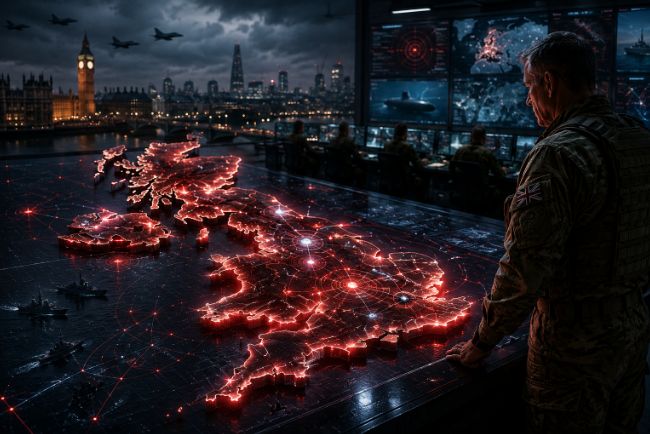
The UK is not expected to enter an imminent direct war with Russia, but defence experts warn that the risk of NATO-related escalation, cyberattacks, hybrid warfare, and infrastructure disruption has increased significantly in 2026.
Key Takeaways
- A full-scale UK-Russia war remains unlikely, but the risk of indirect confrontation has increased.
- NATO Article 5 is the most realistic route through which the UK could become involved in conflict.
- Cyberattacks, undersea cable threats, and infrastructure sabotage are already major concerns.
- Military leaders warn the UK must improve readiness, stockpiles, and deterrence.
- Preparation does not mean war is inevitable; it is intended to reduce the chance of escalation.
2026 Conflict Risk Table
For decades, the possibility of direct conflict between the United Kingdom and Russia was largely viewed as a Cold War memory rather than a realistic modern threat. In 2026, that perception has changed dramatically.
Senior military leaders, NATO officials, intelligence advisers, and geopolitical analysts are now openly discussing the possibility of a broader European confrontation involving Russia and NATO allies. While experts continue to stress that a full-scale invasion of Britain remains extremely unlikely, concerns about cyber warfare, sabotage, Arctic tensions, and NATO escalation have intensified across Westminster and Europe.
The debate is no longer centred on whether tensions exist. Instead, the focus has shifted to how serious the risks have become, whether Britain is adequately prepared, and what forms a future conflict could realistically take.
Importantly, most defence experts still believe a direct UK-Russia war can be avoided. However, they also argue that preparation, deterrence, and military readiness are now essential parts of national security planning.
This article examines the latest expert forecasts, military warnings, NATO concerns, and the real-world implications for the UK in 2026.
Why the UK-Russia Conflict Debate Has Intensified in 2026?
 The current debate surrounding Russia is being driven by several overlapping developments:
- The continuing geopolitical consequences of the war in Ukraine
- NATO expansion and military positioning
- Increased cyberattacks across Europe
- Russian military activity in the Arctic and North Atlantic
- Concerns about undersea infrastructure sabotage
- Growing fears of “hybrid warfare”
What makes 2026 different from previous years is the tone being used by senior defence officials.
Lord Robertson, former NATO Secretary-General and head of the UK’s Strategic Defence Review, delivered one of the most widely discussed warnings when he stated:
The remark reflected growing concern that Britain and its allies may have underestimated the pace at which global security conditions have deteriorated.
Similarly, Dr Rob Johnson, former Director of the Secretary of State’s Strategy Unit, warned:
Such language would have been considered extraordinary only a few years ago. Today, it has become part of mainstream defence discussions.
Military planners increasingly believe Europe is entering a prolonged period of strategic instability where traditional assumptions about peace can no longer be guaranteed.
What Are the Actual Odds of the UK Going to War with Russia?
One of the biggest reasons this topic has entered public discussion is the publication of modern geopolitical forecasting models.
In 2026, the AI-driven forecasting platform Cassi reportedly estimated a:
- 25% probability that the UK could become involved in a major conflict within the next decade
- 17% probability that Russia would be the direct adversary in such a conflict before 2036
These numbers do not mean war is expected or inevitable. Instead, they reflect scenario modelling based on military movements, alliance obligations, economic tensions, and escalation trends.
Many analysts emphasise that the nature of modern conflict has evolved significantly. A future confrontation may not begin with tanks crossing borders or conventional invasions.
Instead, conflict could emerge gradually through:
- Cyberattacks
- Infrastructure disruption
- Economic coercion
- Proxy conflicts
- Maritime incidents
- NATO escalation scenarios
This distinction is important because many citizens still associate war with traditional battlefield invasions. Modern security experts increasingly describe conflict as “multi-domain” and “continuous”.
Why Experts Believe the Security Environment Has Fundamentally Changed?
Several senior military figures believe the current decade represents a major geopolitical turning point.
General Sir Roly Walker, Chief of the General Staff, warned Britain may have only a limited timeframe to strengthen its deterrence capabilities.
Walker identified the period leading to 2027 as a potential “window of vulnerability” where geopolitical crises involving Russia, China, Iran, and North Korea could overlap.
His concerns are not solely focused on Ukraine. Instead, he argues that Russia’s long-term hostility toward NATO is likely to continue regardless of how the current war eventually ends.
Walker stated:
This reflects a wider belief among NATO planners that Europe has entered a period where deterrence and readiness must once again become central strategic priorities.
Grant Shapps, the former Defence Secretary, reinforced this view when he argued:
The phrase gained significant attention because it suggested the post-Cold War “peace dividend” era may now be ending.
Would Russia Directly Attack the UK?
Most military analysts still consider a direct invasion of Britain highly improbable.
The United Kingdom remains protected by:
- NATO collective defence
- Advanced intelligence networks
- Nuclear deterrence
- Geographical advantages
- Strong allied military partnerships
However, experts increasingly warn that the greater danger lies elsewhere.
The most realistic path toward direct UK involvement would likely involve NATO obligations triggered by conflict in Eastern Europe or the Baltic region.
Understanding NATO Article 5
Under NATO’s Article 5 agreement, an attack on one member state is considered an attack on all members.
If Russia attacked countries such as:
- Estonia
- Latvia
- Lithuania
- Poland
Britain would likely be required to participate in a collective response.
This is why NATO’s eastern flank remains one of the most sensitive geopolitical areas in the world today.
James Appathurai, NATO Deputy Assistant Secretary-General, warned:
This statement reflects growing concern that perceived Western weakness could encourage future escalation.
Is the UK Already Facing a Form of “Hybrid War”?
 A major theme throughout the 2026 defence debate is the idea that conflict no longer starts with formal declarations of war.
Instead, many experts argue that Britain is already experiencing forms of “hybrid warfare”.
Hybrid warfare refers to hostile actions designed to weaken a country without triggering conventional military retaliation.
These tactics can include:
- Cyberattacks
- Espionage
- Election interference
- Energy pressure
- Infrastructure sabotage
- Maritime disruption
- Online disinformation campaigns
Lord West, former First Sea Lord, warned:
In practical terms, this means modern conflict may target systems that ordinary citizens rely upon every day.
Potential targets include:
- Banking systems
- Internet infrastructure
- Undersea communication cables
- Power grids
- Airports
- Transportation networks
In April 2026, reports emerged suggesting Russian submarine activity near critical undersea infrastructure in UK waters had become a growing concern for the Royal Navy.
Admiral Sir Tony Radakin summarised the issue clearly:
This shift explains why cybersecurity and infrastructure resilience have become national defence priorities.
How Prepared Is the British Military for a Major Conflict?
One of the most controversial aspects of the current debate involves the readiness of Britain’s armed forces.
Many defence experts believe the UK military remains highly professional and technologically advanced. However, they also warn that years of reduced spending and procurement delays have created vulnerabilities.
Defence Secretary John Healey acknowledged these concerns when describing the inherited British Army as:
Reports throughout early 2026 highlighted several capability concerns:
UK Defence Challenges & Capability Concerns (2026)
Sir Richard Barrons, former Commander of Joint Forces Command, warned:
These comments have intensified political pressure on the government to accelerate defence investment.
Why Defence Spending Has Become a Central Political Issue?
A growing number of defence analysts argue that Britain must significantly increase military spending to maintain credible deterrence.
Many experts now support raising defence spending to at least 3% of GDP.
Supporters believe this funding would strengthen:
- Drone warfare capability
- Air defence systems
- Cybersecurity
- Arctic readiness
- Munitions manufacturing
- Naval operations
- Intelligence infrastructure
Lord Robertson criticised what he described as years of strategic complacency.
He also warned that weak defences may encourage adversaries to test NATO’s resolve.
Some forecasts suggest that stronger military preparedness could substantially reduce long-term conflict risks by increasing deterrence credibility.
Why the Arctic and High North Are Becoming Strategic Flashpoints
Although much public attention remains focused on Ukraine, military strategists increasingly view the Arctic and High North as future pressure points.
Russia has continued expanding military infrastructure across Arctic territories, including:
- Airfields
- Naval bases
- Missile systems
- Radar installations
- Submarine patrol routes
The region is strategically important because it affects:
- Global shipping routes
- Energy access
- Naval positioning
- NATO northern defence operations
Experts from the Royal United Services Institute (RUSI) warned in 2026 that Britain faces a serious capability gap in Arctic operations that may not fully close until the 2030s.
Professor Caroline Kennedy-Pipe warned that tensions in the High North are becoming “extremely likely” sources of confrontation.
This does not mean war in the Arctic is expected. However, it does illustrate how geopolitical competition is expanding into new regions.
How a UK-Russia Conflict Could Affect Everyday Life in Britain?
 For many UK citizens, the greatest concern is not battlefield warfare itself, but how modern conflict could affect daily life.
Even limited escalation could have economic and social consequences.
Potential impacts include:
Potential Effects on UK Citizens During Rising Geopolitical Tensions
A Realistic Example Scenario
Imagine a coordinated cyberattack targeting payment systems and energy distribution networks during winter.
There may be:
- Delays in card transactions
- Temporary fuel shortages
- Internet disruptions
- Increased panic buying
- Pressure on emergency services
This type of disruption would not resemble traditional warfare, yet it could still create serious national instability.
That is why many defence experts now describe cyber resilience as equally important as conventional military strength.
What Experts Believe Is Most Likely to Happen Next
Despite the alarming headlines, most analysts still believe a direct UK-Russia war remains unlikely.
Instead, experts expect continued pressure through:
- Hybrid warfare
- Cyber operations
- Proxy conflicts
- Economic competition
- Strategic military posturing
- Arctic rivalry
- Intelligence activity
The majority of Western defence policy is currently focused on deterrence rather than preparing for immediate offensive war.
NATO leaders continue to believe that unity, military readiness, and economic pressure remain effective ways to discourage escalation.
At the same time, defence planners argue that underestimating risk would be dangerous.
This explains why military preparedness has become a central political issue across Europe in 2026.
Could Diplomacy Still Prevent a Wider Conflict?
Yes, and most international relations experts believe diplomacy remains the most likely long-term outcome.
Several powerful deterrents continue discouraging direct war:
- Nuclear weapons
- NATO collective defence
- Economic interdependence
- Global political pressure
- Massive military costs
Even many of the strongest warnings from defence officials are intended to strengthen deterrence rather than predict unavoidable conflict.
The UK government continues to pursue:
- Sanctions
- Intelligence cooperation
- NATO coordination
- Diplomatic pressure
- Cyber defence partnerships
While tensions are undeniably high, the existence of preparation does not mean war is inevitable.
Final Verdict: How Likely Is War Between the UK and Russia?
As of 2026, Britain is not preparing for an imminent invasion or planning a direct war against Russia.
However, the country has clearly entered a period of heightened military awareness and strategic caution.
The greatest risks identified by experts involve:
- NATO escalation
- Hybrid warfare
- Cyberattacks
- Infrastructure disruption
- Arctic tensions
- Strategic miscalculation
The overall consensus among most defence analysts remains balanced:
A full-scale UK-Russia war is still considered unlikely, but the risks of indirect confrontation and prolonged geopolitical hostility are now significantly higher than they were a decade ago.
The central message from Britain’s military leadership is therefore not panic, but preparedness.
Expert Forecasts & Conflict Probability Overview
Expert & Organisation Warnings on UK Security Risks (2026)
FAQs
Could Russia realistically invade Britain?
Most experts believe a direct invasion is extremely unlikely due to NATO, geography, and nuclear deterrence.
Why are military chiefs warning about 2027?
Several defence leaders believe geopolitical tensions may peak around 2027, creating a potential period of vulnerability.
Is Britain already under cyberattack?
The UK regularly faces cyber threats from hostile actors, including state-linked operations targeting infrastructure and digital systems.
What is hybrid warfare?
Hybrid warfare combines cyberattacks, misinformation, espionage, economic pressure, and sabotage rather than relying solely on traditional military attacks.
Could NATO trigger a wider war?
If a NATO member were attacked, Article 5 obligations could increase the risk of broader military involvement.
Is the British Army strong enough for modern conflict?
The British military remains highly capable, but experts have raised concerns about stockpiles, recruitment, and long-term readiness.
Why is the Arctic becoming important?
The Arctic is strategically valuable for military positioning, shipping routes, and energy resources, making it a growing area of geopolitical competition.
Should ordinary UK citizens be worried?
Experts encourage awareness and resilience rather than panic. Most analysts still believe diplomacy and deterrence make full-scale war unlikely.