






Last Updated on 15.09.2026
DVLA vehicle tax, officially known as Vehicle Excise Duty or VED, must normally be in place when a vehicle is used or kept on a public road in the UK.
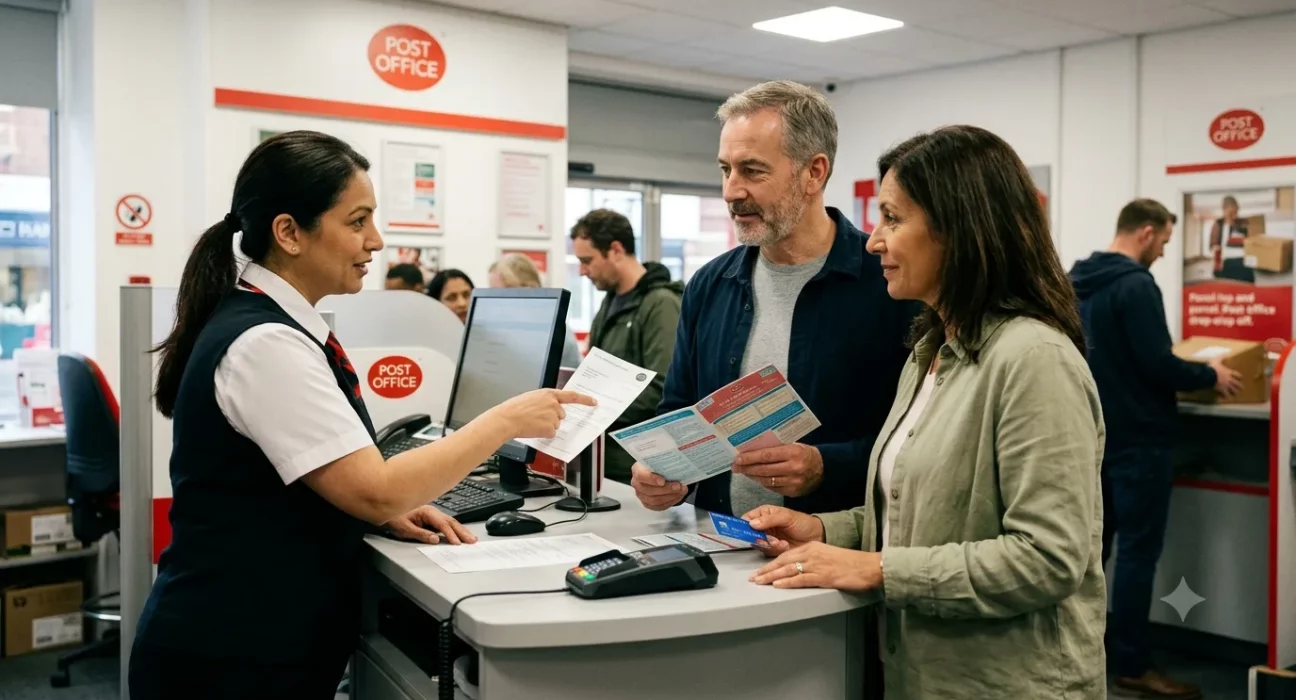
Drivers can check their tax status online, pay through the official government service, use the DVLA’s automated telephone service or visit a Post Office branch that handles vehicle tax.
The rules become more important when buying a used vehicle, losing the V5C, taking a vehicle off the road or managing cars and commercial vehicles for a business.
What Is DVLA Vehicle Tax?
DVLA vehicle tax is the charge commonly called car tax, road tax or Vehicle Excise Duty (VED).
These terms are generally used to describe the same vehicle taxation system, although the official name is Vehicle Excise Duty.
A vehicle used or kept on a public road generally needs either:
- Valid Vehicle Tax
- An Applicable Tax Exemption
If a vehicle is kept completely off public roads, the registered keeper may instead need to make a Statutory Off Road Notification (SORN).
Vehicle tax should not be confused with fuel duty, company car Benefit-in-Kind tax, the Congestion Charge or Clean Air Zone charges.
Drivers wanting a fuller breakdown of current tax bands can compare the latest Vehicle Excise Duty rates for 2026.
How Can You Check Your DVLA Vehicle Tax Status?
The government’s vehicle enquiry service lets you check whether a vehicle is taxed or has been declared SORN using its registration number.
This is useful when:
- Buying A Used Vehicle
- Returning A Car To The Road
- Checking A Company Vehicle
- Managing A Shared Vehicle
- Moving House And Missing A Reminder
- Using A Vehicle After A Long Period Of Inactivity
Do not assume that the online record will always change immediately after payment.
Once an application for vehicle tax or SORN has been approved, DVLA states that its online records can take up to two working days to update.
MOT information can also take up to two days to appear after a test, which may temporarily prevent a vehicle from being taxed.
How Do You Pay DVLA Vehicle Tax?
The main ways to tax a vehicle are online, by phone or through a Post Office branch that deals with vehicle tax.
You will normally need a reference from one of the following:
| Situation | Document |
| Existing Keeper | V5C log book |
| Renewal | V11 reminder or last-chance notice |
| Just Bought Vehicle | V5C/2 green new keeper slip |
| Current Keeper Without V5C | V62 application may be used in qualifying circumstances |
The V5C provides an 11-digit reference number, while the green new keeper slip contains a 12-digit reference number.
Payment can normally be made using a debit or credit card or through Direct Debit.
The automated DVLA vehicle tax telephone service is available on 0300 123 4321, although Direct Debit cannot be set up over the telephone.
Drivers who want more detail on expiry dates and automatic payments can also check how vehicle tax renewal works.
How Do You Tax a Car You Have Just Bought?
This is one of the most important DVLA vehicle tax rules for used-car buyers.
Vehicle tax does not transfer to the new keeper.
Even if the seller had taxed the vehicle for another ten months, that tax ends for them when DVLA is told about the change of keeper. The buyer must arrange their own tax before using the vehicle on the road.
When buying a vehicle, the seller should normally give you the green V5C/2 New Keeper Supplement.
The 12-digit reference number on this slip can be used to tax the vehicle before the new V5C arrives.
For businesses buying vehicles for company fleets, delivery operations or employee use, this means tax should form part of the handover process rather than being dealt with days later.
Can You Tax a Vehicle Without a V5C or Reminder?
Yes in some circumstances, but the exact route depends on whether you are already recorded as the current keeper.
If you are the current registered keeper but do not have a V5C or suitable reminder, you can apply for a replacement log book. DVLA allows eligible current keepers to tax the vehicle at the same time rather than simply waiting several weeks for the replacement document.
A replacement V5C normally costs £25.
There is an important difference for someone who has just bought the vehicle.
If you are the new keeper and have neither a V5C in your name nor the green new keeper slip, you cannot simply tax it online without a reference. You will generally need to apply for a new V5C by post using form V62.
That distinction is important because the V62 route does not create an automatic workaround for every buyer who has been given no documents.
Does a Vehicle Need Insurance Before It Can Be Taxed?
Insurance and vehicle tax are separate legal requirements.
In Great Britain, a vehicle being driven on public roads must normally have at least the legally required motor insurance. Continuous insurance enforcement also means that a vehicle generally needs to be insured unless it has been declared SORN or another exception applies.
Drivers can check whether their vehicle appears on the Motor Insurance Database through askMID.
However, it is misleading to say that every Great Britain DVLA vehicle tax application requires the driver to provide an insurance certificate.
Northern Ireland has different requirements.
When taxing a vehicle at a Post Office in Northern Ireland, motorists need additional evidence, including a paper insurance certificate or cover note.
Do You Need an MOT Before Paying Vehicle Tax?
If a vehicle legally requires an MOT, it generally needs a valid MOT when the new tax starts.
There are exceptions for vehicles that are legally MOT-exempt.
If a vehicle has just passed an MOT but the DVLA tax service is not accepting the application, the electronic MOT record may still be updating.
Businesses managing several vans or company cars should therefore avoid leaving MOT testing and tax renewal until the final day.
How Much Is DVLA Vehicle Tax in 2026?
The amount depends on factors including:
- Registration Date
- CO₂ Emissions
- Fuel Type
- Vehicle Type
- Original List Price
- Tax Class
For cars first registered on or after 1 April 2017, the standard annual rate from the second tax payment is £200 for 2026/27.
First-year rates depend on emissions and can range from £10 for zero-emission cars to £5,690 for cars emitting more than 255g/km of CO₂.
Some higher-value cars also attract a £440 Expensive Car Supplement for five years from the second tax payment.
The current list-price thresholds are more than £40,000 for petrol and diesel cars and more than £50,000 for qualifying electric vehicles.
A wider breakdown of the UK car tax changes in 2026 explains how the rates affect different vehicle types.
Do Electric Cars Pay Vehicle Tax in 2026?
Yes.
Electric vehicles are no longer generally exempt from VED. The exemption ended on 1 April 2025.
For 2026/27:
| Electric Car | Vehicle Tax |
| Registered From 1 April 2025 | £10 first year, then £200 standard rate |
| Registered 1 April 2017–31 March 2025 | £200 standard rate |
| Registered 1 March 2001–31 March 2017 | £20 |
Higher-value EVs can also fall within the Expensive Car Supplement rules.
Businesses running electric fleets should therefore include VED in whole-life vehicle costs rather than assuming EVs remain tax-free.
How Does Direct Debit for Vehicle Tax Work?

DVLA vehicle tax can be paid by Direct Debit annually, every six months or monthly where the option is available.
Automatic renewal reduces the risk of accidentally allowing tax to expire, but the keeper still needs to make sure the vehicle meets the necessary requirements.
If a Direct Debit payment fails, DVLA normally attempts to collect it again. If repeated attempts fail, the Direct Debit can be cancelled and the vehicle may become untaxed.
Do not simply cancel a vehicle-tax Direct Debit through the bank because you have sold or stopped using the vehicle. Tell DVLA about the underlying change so its vehicle record is also updated.
What Happens If You Do Not Tax Your Vehicle?
The registered keeper is responsible for ensuring a vehicle is taxed or appropriately declared SORN.
For an untaxed vehicle, DVLA can issue a £80 Late Licensing Penalty, reduced to £40 if paid within 33 days.
More serious consequences can follow where an untaxed vehicle is used or kept unlawfully, including:
- Additional Financial Penalties
- Debt Collection
- Wheel Clamping
- Vehicle Impoundment
- Court Proceedings
- Possible Disposal Of The Vehicle
Receiving no V11 reminder is not normally accepted as a reason for failing to tax the vehicle.
How Does SORN Affect Vehicle Tax?
SORN is used when a vehicle is taken off the public road.
A SORN vehicle must be kept on private land, such as a garage, driveway or private storage facility.
Once a vehicle is taxed again, the SORN is automatically cancelled.
SORN also does not transfer between keepers. If someone buys a vehicle that the previous keeper had declared SORN, the new keeper must either tax it or make their own SORN.
Can You Cancel Vehicle Tax and Get a Refund?
Yes. DVLA can cancel vehicle tax when it is told that the vehicle has been:
- Sold Or Transferred
- Declared SORN
- Written Off
- Scrapped
- Stolen
- Permanently Exported
- Moved Into An Exempt Tax Class
Any vehicle-tax Direct Debit is normally cancelled automatically once DVLA processes the relevant change.
Refunds are calculated for full remaining months only. Part of a month is not refunded.
DVLA sends the refund cheque to the name and address recorded on the V5C. If a refund has still not arrived after eight weeks, the keeper should contact DVLA.
How Do Disabled Vehicle Tax Classes Work?
Some vehicles used by disabled people can qualify for an exemption or reduction depending on eligibility.
Changing a car into or out of the disabled tax class is different from an ordinary online tax renewal and is normally handled at a Post Office branch that deals with vehicle tax.
Relevant evidence of entitlement may be required.
This is particularly important when a vehicle is sold because a new keeper cannot simply continue using the previous keeper’s disabled tax status.
How Do HGV And Commercial Vehicle Tax Rules Differ?
Businesses operating larger commercial vehicles should not assume that ordinary passenger-car VED rules apply.
HGVs weighing more than 3.5 tonnes when loaded have separate vehicle-tax arrangements. Form V85 is used for certain HGV tax applications, while V85/1 is a tax reminder used for relevant vehicles.
Commercial operators may also need annual-test documentation or evidence of an exemption. Buses, coaches, recovery vehicles and other goods vehicles also have their own tax classes and VED rate tables.
There is an important temporary rule in 2026. From 1 July 2026 to 30 June 2027, most eligible HGVs can qualify for a temporary £1 VED rate for 12 months. Where the HGV levy applies, that levy continues separately.
Fleet operators should therefore check the exact tax class shown on each V5C rather than applying passenger-car figures across the fleet.
What Are The Vehicle Tax Rules In Northern Ireland?
Several parts of the DVLA vehicle tax process work differently in Northern Ireland.
When taxing a vehicle at a Post Office in Northern Ireland, drivers generally also need:
- Paper Insurance Certificate Or Cover Note
- Valid MOT Evidence
Where a Temporary Exemption Certificate applies, suitable evidence of the TEC can be used.
Northern Ireland motorists should therefore check the specific document requirements before travelling to a Post Office rather than relying only on the rules applying in England, Scotland and Wales.
How Can You Contact DVLA About Vehicle Tax Problems?
Different contact routes serve different purposes.
| Service | Contact |
| Automated Vehicle Tax Payment | 0300 123 4321 |
| Vehicle Tax, Registration And SORN Enquiries | 0300 790 6802 |
| Online Support | DVLA webchat/contact service |
| Postal Enquiries | Vehicle Customer Services, DVLA, Swansea |
The automated vehicle-tax service operates 24 hours a day.
The published vehicle-enquiries line is available Monday to Friday, 8am to 7pm, and Saturday, 8am to 2pm.
Webchat can be useful for general enquiries or problems with online services, while actual tax payments and Direct Debit arrangements should be completed through the appropriate DVLA transaction service.
Conclusion
Managing DVLA vehicle tax is straightforward in most cases, but buying a vehicle, losing the V5C, declaring SORN, changing a tax class or operating commercial vehicles can introduce additional requirements.
The most important rule for used-car buyers is that vehicle tax does not transfer between owners. New keepers should normally use the green V5C/2 slip to tax the vehicle immediately.
Drivers should also remember that electric cars are now within the VED system, online tax records can take up to two working days to update and refunds only cover complete unused months.
For businesses, regular checks of tax, MOT, insurance and keeper information across every fleet vehicle can reduce the risk of unexpected penalties and operational disruption.
FAQs
Can I Tax A Car Immediately After Buying It?
Yes. If you have the green V5C/2 new keeper slip, you can normally use its 12-digit reference to tax the vehicle. The previous owner’s tax does not transfer to you.
Can I Tax My Car Without A V5C?
A current registered keeper can apply for a replacement V5C and may be able to tax the vehicle at the same time. A new keeper without a V5C or green slip generally needs to apply for a V5C by post.
How Long Does DVLA Vehicle Tax Take To Show Online?
DVLA says an approved vehicle-tax or SORN application can take up to two working days to appear in the online vehicle record.
Can I Drive A SORN Vehicle To An MOT?
A SORN vehicle can generally be driven on a public road to or from a pre-booked MOT or other permitted testing appointment, provided the applicable legal requirements are met.
Does Road Tax Transfer When I Sell My Car?
No. Vehicle tax does not transfer to a new keeper. The buyer must arrange their own tax.
Do Electric Cars Pay DVLA Vehicle Tax?
Yes. Electric vehicles became liable for VED from 1 April 2025. The rate depends on when the vehicle was registered and, in some cases, its original list price.
Will DVLA Refund My Tax If I Sell My Car?
Yes. Once DVLA is notified of the sale, tax is cancelled and eligible full unused months are normally refunded automatically.
Leave feedback about this