







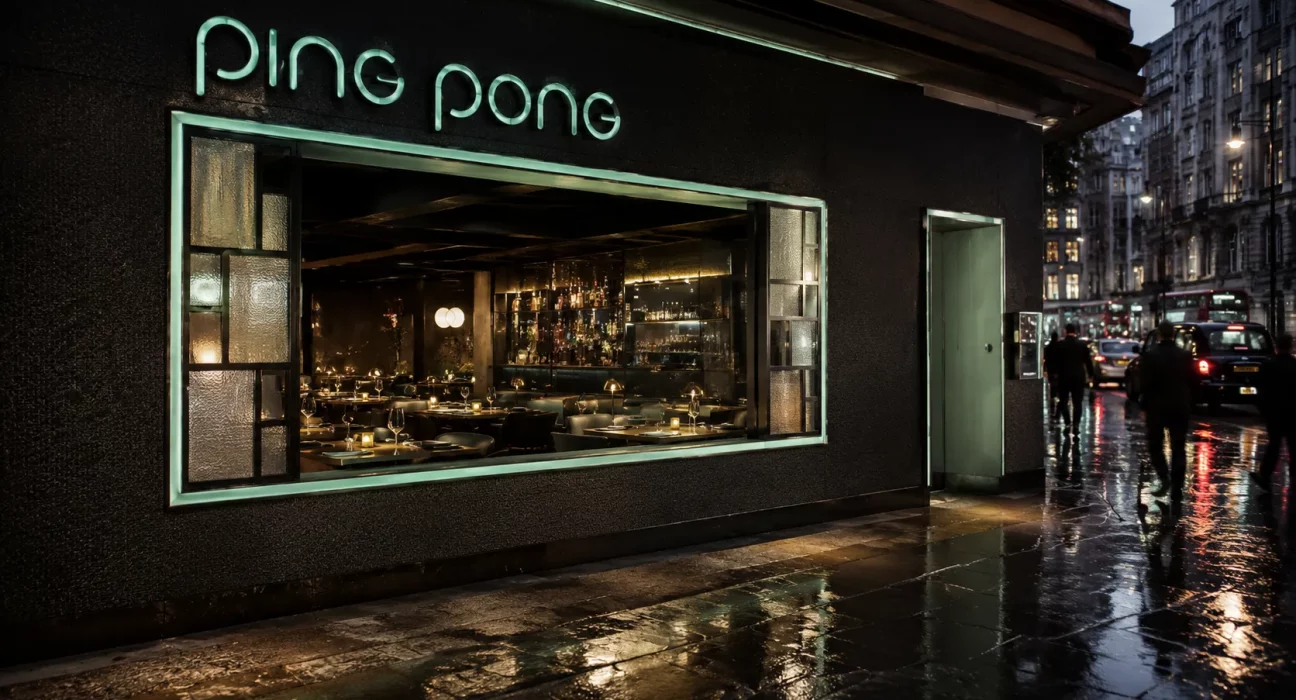
For two decades, Ping Pong occupied a distinctive place in London’s casual dining scene. It helped introduce a broader mainstream audience to accessible dim sum dining, wrapped in a contemporary brand aesthetic that felt equally suited to after-work gatherings, casual dates, and central London socialising. For many consumers, Ping Pong was not simply another restaurant chain; it was part of the city’s dining culture.
That era has now ended.
The final Ping Pong restaurant closures in the UK mark the complete disappearance of a once recognisable hospitality brand that had weathered expansion, pandemic disruption, restructuring, and public controversy before ultimately exiting the market altogether.
Yet the closure of Ping Pong is not simply a restaurant story.
It reflects the wider economic strain facing Britain’s hospitality industry, where rising labour costs, inflationary pressure, rent obligations, weaker discretionary spending, and increasingly fragile operating margins are forcing even established brands into difficult decisions.
For business observers, hospitality professionals, and London consumers alike, Ping Pong’s closure offers a revealing case study in how a recognisable restaurant business can gradually lose commercial viability.
This analysis explains what happened, why the chain ultimately failed, what its collapse says about the UK hospitality sector, and where diners seeking a similar experience may now turn.
What Happened to Ping Pong Restaurants in the UK?
Ping Pong has permanently closed all of its UK restaurants, ending its 20-year presence in the British hospitality market.
The final four London branches to shut were Soho, Southbank, Bow Bells House, and St Christopher’s Place. The closure was confirmed publicly through the brand’s farewell statement on social media:
For many casual diners, the announcement felt abrupt. Ping Pong remained a visible brand in central London, and its restaurants still attracted recognisable footfall. However, the final shutdown was not a sudden collapse. It represented the last stage of a financial deterioration that had been unfolding for several years.
The chain had already entered administration, reduced its estate, changed ownership structure, and faced mounting commercial pressure long before the final closures occurred.
Viewed in that context, the final shutdown was less a surprise and more the inevitable conclusion of a struggling business model operating in an increasingly hostile market.
Why Did Ping Pong Dim Sum Close?
The most direct explanation is that Ping Pong could no longer operate sustainably.
That answer, however, only scratches the surface.
Restaurant failures are rarely caused by a single event. In Ping Pong’s case, the collapse appears to have emerged from a convergence of long-term losses, pandemic disruption, structural cost increases, strategic pressure, and reputational challenges.
The hospitality sector is particularly vulnerable because restaurants operate with inherently tight margins. Even modest shifts in labour costs, supplier pricing, or customer traffic can materially alter viability.
Ping Pong faced precisely that environment.
The business had already been under financial strain before the pandemic. COVID then intensified those weaknesses by eliminating dine-in revenue for extended periods while fixed obligations such as rent and staffing commitments remained.
Although the business showed a short-lived financial recovery, it ultimately proved insufficient.
The issue was not merely recovery from one crisis. It was the inability to recover while simultaneously absorbing multiple new ones.
How Serious Were Ping Pong’s Financial Problems?
The financial record reveals a much clearer explanation than vague references to “challenging trading conditions.”
Ping Pong’s losses were substantial and persistent.
These figures matter because they challenge the misconception that Ping Pong’s closure was driven solely by recent events.
The pre-pandemic losses indicate that the business already had underlying weaknesses before COVID created widespread disruption.
The 2022 profit might appear encouraging at first glance, but isolated recovery does not necessarily indicate long-term health. Businesses emerging from crisis often carry debt, deferred liabilities, rent obligations, and operational instability that accounting profitability alone does not solve.
The administration event in November 2022 was especially significant. Administration can buy time, but it often reflects deep structural distress.
Ping Pong secured that time.
It simply could not convert it into long-term survival.
How Did Ping Pong Rise and Then Collapse?
When Ping Pong launched in 2005, its market positioning appeared commercially astute. At the time, London already offered premium Asian dining experiences, but the concept of accessible, stylish dim sum served within a casual chain environment remained relatively underdeveloped.
Ping Pong successfully occupied that middle ground, offering a dining experience that felt contemporary, approachable, and distinct from more traditional dim sum venues. Its modern branding, sleek interiors, and broadly appealing menu allowed it to attract both adventurous diners and customers seeking familiar yet fashionable casual dining.
This positioning supported rapid expansion, particularly during a period when central London footfall was strong, office worker demand was consistent, after-work dining culture was thriving, and consumers showed growing enthusiasm for branded casual hospitality experiences. However, expansion also introduced significant vulnerabilities.
A larger restaurant estate brought increased fixed costs, greater rent exposure, higher payroll obligations, more operational complexity, and heightened sensitivity to economic downturns. When COVID struck, those weaknesses became far more difficult to manage.
The pandemic fundamentally disrupted restaurant economics, as lockdowns halted dine-in service, office workers disappeared from city centres, tourism collapsed, and customer habits changed dramatically.
Even after restrictions eased, the operating environment remained fundamentally different. Consumers became more price-conscious, hybrid working permanently reduced commuter-driven dining, inflation eroded disposable income, and labour shortages intensified operational pressure.
Ping Pong was far from the only hospitality brand facing these challenges, but unlike some competitors, it never fully regained the commercial momentum needed for long-term recovery.
Did the 15% Brand Charge Contribute to Ping Pong’s Collapse?
What Did Ping Pong’s Founder Say About the Closure?
Founder Kurt Zdesar offered a notably direct assessment:
His remarks resonate because they reflect concerns widely shared across the hospitality sector.
Operators are confronting a markedly harsher commercial environment than existed when Ping Pong first launched.
The combination of inflation, labour pressure, taxation, rent commitments, supply chain cost increases, and weaker consumer demand has materially changed the economics of restaurant operation.
For founders and investors, survival increasingly depends not merely on brand appeal but on operational resilience.
Zdesar’s statement captures that broader reality.
What Does Ping Pong’s Closure Reveal About the UK Hospitality Sector?
Ping Pong’s closure should not be viewed as an isolated business failure, but rather as part of a broader pattern of financial strain affecting the British hospitality sector. Restaurants across the UK are currently grappling with multiple overlapping pressures, many of which compound one another and make sustainable operation increasingly difficult.
Food inflation has significantly increased supplier costs, while energy bills remain materially higher than historic levels, adding further pressure to already tight margins. At the same time, National Living Wage increases have pushed payroll expenses upward, with Employer National Insurance contributions creating an additional burden for labour-intensive businesses.
Beyond operational costs, changing consumer behaviour has also become a major challenge, as households facing higher mortgage repayments, rising rents, and wider cost-of-living pressures have become far more selective about discretionary spending, including dining out.
What Happened to Ping Pong Soho and the Final London Sites?
Where Can London Diners Go Instead of Ping Pong?
Could More UK Restaurant Chains Face Similar Closures?
Final Thoughts on the Ping Pong Restaurant Closures UK Story
FAQs
Is Ping Pong permanently closed in the UK?
Yes. All remaining Ping Pong restaurants in the UK have permanently closed.
Why did Ping Pong close?
The business faced sustained financial pressure, including historical losses, pandemic disruption, inflation, labour cost increases, and changing consumer behaviour.
Did Ping Pong go into administration?
Yes. The company entered pre-pack administration in November 2022.
Who founded Ping Pong?
Ping Pong was founded in 2005 by Kurt Zdesar.
Did the 15% brand charge cause Ping Pong to fail?
There is no confirmed evidence proving direct causation, although it contributed to public controversy.
What were Ping Pong’s final London locations?
The final closures included Soho, Southbank, Bow Bells House, and St Christopher’s Place.
Are more UK restaurant chains at risk?
Some operators remain vulnerable, particularly those facing high fixed costs and weak margins.