







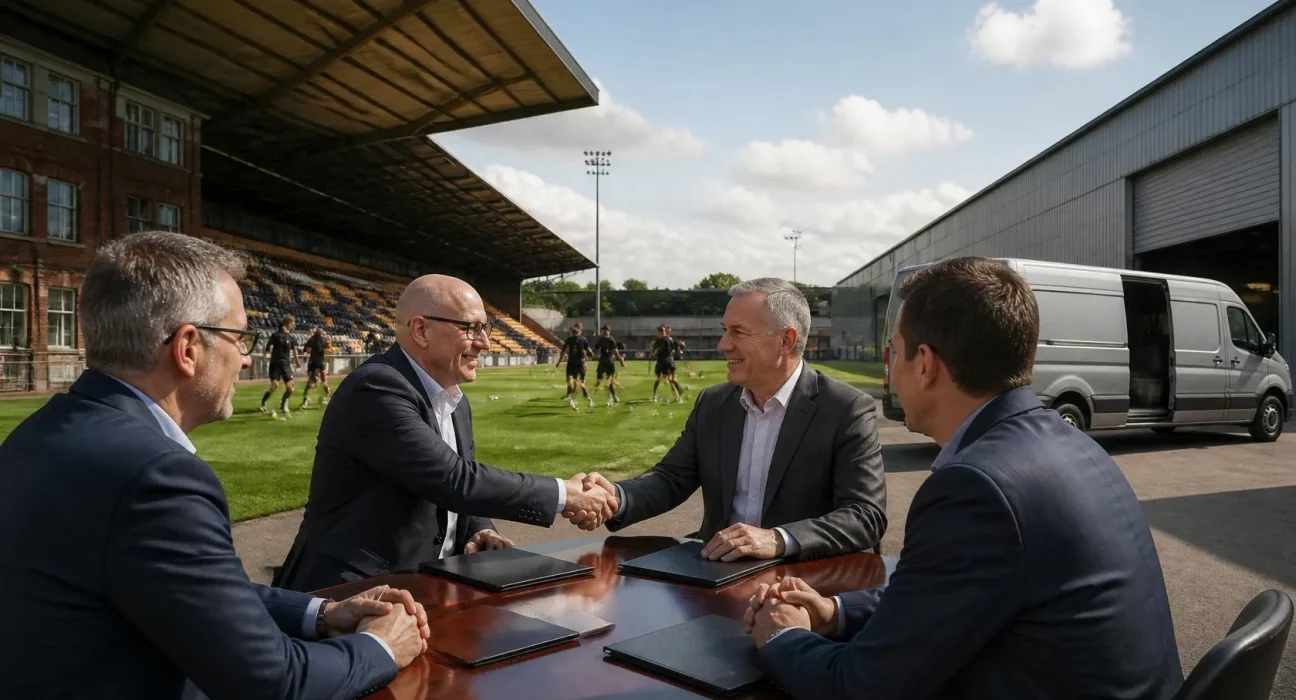
West Bromwich Albion has agreed a multi-year commercial partnership with parcel delivery company DPD, bringing together two organisations with deep roots in the Black Country.
Under the DPD West Bromwich Albion deal, the logistics business has become the club’s Official Delivery Partner and Back of Shirt Partner. Its logo will appear on the match shirts worn by Albion’s men’s team, women’s team and academy sides.
Supporters will also begin to see DPD branding around The Hawthorns from the start of the 2026/27 season.
West Bromwich Albion confirmed the agreement in a club announcement published on 15 July 2026. However, neither party disclosed the financial value of the sponsorship or the exact number of seasons covered by the term “multi-year”.
The undisclosed value is an important point because some subsequent reports described DPD as a “£216 million company”. That description should not be interpreted as meaning DPD is paying West Bromwich Albion £216 million.
No publicly available announcement reviewed for this article establishes that figure as the value of the sponsorship.
Instead, the deal should be understood as a new commercial, branding, delivery and community partnership between a football club and a major logistics employer located less than a mile away.
What Has Been Confirmed About the Dpd West Bromwich Albion Deal?

The agreement gives DPD two formal positions within West Bromwich Albion’s commercial structure.
It has been appointed the club’s Official Delivery Partner, linking the company’s core logistics business with Albion’s commercial and operational activities. DPD has also secured the Back of Shirt Partner position, which will place its branding prominently on the club’s match kits.
The shirt rights extend beyond the senior men’s squad.
| Confirmed element | Partnership detail |
| Duration | Multi-year agreement |
| Exact contract length | Not disclosed |
| Financial value | Not disclosed |
| Main commercial status | Official Delivery Partner |
| Kit sponsorship status | Back of Shirt Partner |
| Men’s team | DPD logo to appear on match shirts |
| Women’s team | DPD logo to appear on match shirts |
| Academy teams | DPD logo to appear on match shirts |
| Stadium branding | Due to appear from the beginning of the 2026/27 season |
| Community activity | Programmes involving The Albion Foundation are planned |
The agreement therefore offers DPD visibility across the wider football club rather than limiting the company to the first team.
That distinction matters commercially. Exposure through women’s football, academy matches, club media, supporter content and community programmes gives the brand access to different audiences throughout the West Midlands.
It also enables Albion to present the arrangement as a club-wide partnership rather than a single advertising placement.
Why the Partnership Has a Strong Black Country Connection?
The local connection is the clearest reason why the two organisations describe the agreement as a natural fit.
DPD’s UK headquarters is on Roebuck Lane in Smethwick, close to The Hawthorns. The company’s official Companies House record confirms that DPDgroup UK Ltd is an active business registered at that address.
West Bromwich Albion said the parcel business was founded in Smethwick in 1970 and initially built its name by delivering vinyl records to high-street record shops.
Companies House records show that the legal entity now called DPDgroup UK Ltd was incorporated earlier, on 21 August 1962. It previously operated under names including Mayne Nickless (U.K.) Limited and GeoPost UK Limited.
Those dates refer to different parts of the company’s history and are not necessarily contradictory. The 1970 date reflects the operating history presented by DPD and West Bromwich Albion, while the 1962 date records the formal incorporation of the legal company that now carries the DPDgroup UK name.
The geographical proximity gives the sponsorship an authenticity that many national football deals lack. DPD is not simply purchasing advertising space at a distant club. Its headquarters, employees and operating history are directly connected to the area represented by West Bromwich Albion.
DPD chief executive Justin Pegg said The Hawthorns was on the company’s doorstep and that many members of its workforce were lifelong Albion supporters.
That link could support more than external advertising. The partnership may also create opportunities involving employee engagement, recruitment, corporate hospitality and regional business relationships.
West Bromwich Albion chief business officer Sam Jeffery said the two organisations had a shared ambition to operate in the right way and that there was “real scope for this relationship to grow”.
The longer-term value of the agreement will depend on how that potential is converted into visible activity.
DPD is the Back-of-shirt Sponsor, Not Albion’s Principal Sponsor
The DPD West Bromwich Albion deal does not replace the club’s existing principal shirt sponsor.
Ideal Heating continues to occupy Albion’s main front-of-shirt position. In December 2023, the club announced that the heating business had agreed a further three-year extension, taking its principal sponsorship through the 2026/27 campaign.
That extension of Albion’s principal sponsorship was described by the club as a record-breaking agreement that would take the relationship into a ninth season.
The distinction between the two partners is straightforward:
- Ideal Heating remains the principal sponsor displayed on the front of the shirt.
- DPD becomes the partner displayed on the back of the shirt.
- Macron remains responsible for manufacturing Albion’s playing kits.
- Other companies can hold separate sleeve, supplier, hospitality or category partnerships.
Football clubs increasingly divide their commercial inventory into several individual assets. These can include front-of-shirt branding, shirt sleeves, the rear of the shirt, training clothing, stadium areas, digital content, match sponsorship and official supplier categories.
This approach allows a club to work with several non-competing companies while generating income from different parts of its brand and physical assets.
For DPD, the back of the shirt remains a prominent position. The logo may be visible during live matches, highlights, interviews, photographs, social media clips and supporter activity throughout the season.
The placement is particularly useful when players are facing away from broadcast cameras, celebrating goals or being shown in match photography.
What Does West Bromwich Albion Gain From the Agreement?

The most immediate benefit for Albion is a new multi-year commercial relationship with an established business from the local region.
The financial contribution cannot be calculated because the sponsorship fee has not been published. However, the arrangement gives the club another commercial revenue stream without displacing its principal sponsor.
This helps Albion monetise a separate area of its playing kit while retaining the Ideal Heating agreement on the front.
A multi-year partnership also offers more continuity than a one-season contract. It gives both parties time to plan campaigns, introduce community projects and build recognition among supporters.
The logistics category could have practical value as well.
Football clubs manage regular deliveries of replica clothing, retail orders, promotional materials, office supplies, equipment and hospitality items. Albion has not disclosed whether DPD will directly handle all or part of those operations, but the Official Delivery Partner title creates a clear connection with the company’s everyday business.
The partnership could therefore combine a sponsorship payment with operational services, although no breakdown of the commercial consideration has been released.
For supporters interested in the wider consumer delivery market, London Business Magazine’s guide to comparing affordable parcel services in the UK explains how courier prices can vary according to parcel size, destination, collection method and delivery speed.
Albion also gains the reputational benefit of working with a recognised employer from its own area.
Regional relevance does not guarantee a successful partnership, but it provides a stronger foundation for storytelling and community activity than a sponsorship based solely on logo exposure.
What Does DPD Gain From Sponsoring West Bromwich Albion?
DPD gains a prominent route into football audiences across the West Midlands and beyond.
West Bromwich Albion has a long-established supporter base, extensive digital channels and regular television and media coverage. Branding on match shirts can generate repeated exposure throughout a season, particularly when the club appears in broadcast fixtures and widely distributed match photography.
The partnership also gives DPD opportunities to connect with supporters away from matchdays.
Possible activations could include competitions, parcel-related promotions, hospitality, employee events, supporter experiences and community campaigns. These activities have not yet been confirmed, but they are common ways for commercial partners to build value beyond a static logo.
The deal may also strengthen DPD’s employer brand.
Delivery and logistics companies depend on drivers, warehouse employees, technology teams, customer service staff, managers and contractors. A partnership with a nearby football club can support recruitment and retention by creating benefits that are meaningful to local workers.
The chief executive’s reference to Albion supporters within DPD’s workforce indicates that employee engagement was part of the rationale behind the deal.
DPD may also benefit from the trust created by an established local institution. Football clubs often hold a cultural importance within their communities that conventional advertising channels cannot easily reproduce.
However, sponsorship visibility does not automatically change consumer perceptions. The success of the relationship will depend on whether DPD combines its branding with relevant services, reliable customer experiences and meaningful community participation.
For readers dealing with the company as a courier, the publication’s explanation of how DPD handles standard redelivery covers missed deliveries, alternative collection arrangements and the warning signs associated with fraudulent payment requests.
How Large is DPD’s Delivery Network?

DPD operates as part of Geopost, an international parcel delivery group with services across Europe and other major markets.
According to DPD’s international company overview, the wider network operates in more than 50 countries, uses approximately 57,000 delivery specialists and handles more than eight million parcels a day.
The network includes brands such as DPD, Chronopost, SEUR, BRT, Speedy and Jadlog.
This international scale means the Albion partnership is being undertaken by a local UK operation that belongs to a much larger logistics group.
DPDgroup UK’s registered business activity is freight transport by road. Its Smethwick headquarters gives the UK organisation a direct presence in the region surrounding The Hawthorns.
Parcel delivery companies have become increasingly important to the UK economy because of the growth of ecommerce, home delivery, marketplace selling and flexible retail fulfilment.
Consumers may see the final delivery driver, but every parcel also depends on sorting hubs, depot operations, route-planning systems, tracking technology, vehicles and retailer integrations.
A football partnership gives DPD a public-facing platform through which it can promote that wider operation.
It may also help the company communicate new services to both consumers and business customers. Retailers consider factors such as reliability, delivery visibility, customer communication, returns management and collection networks when selecting a carrier.
In that context, the West Bromwich Albion relationship is not just a consumer advertising exercise. It may also support DPD’s profile among regional businesses requiring delivery and logistics services.
Is the Sponsorship Really Worth £216 Million?
There is no evidence that the DPD West Bromwich Albion deal is worth £216 million.
The club has not published a sponsorship fee, annual payment or total contract value. DPD has not issued a financial statement attributing that amount to the partnership either.
The figure appeared in a headline describing the size or financial status of the company involved. It did not establish that Albion would receive £216 million.
Several different financial concepts can be confused when a business is described using a large monetary figure:
- Annual revenue measures the income generated by a company.
- Operating profit reflects earnings after certain business costs.
- Net profit is calculated after additional expenses and taxation.
- Net assets represent the difference between assets and liabilities.
- Company valuation estimates what an organisation or ownership interest may be worth.
- Sponsorship value records what a company pays or provides under a specific commercial agreement.
These figures are not interchangeable.
Even where a company has revenue or assets worth hundreds of millions of pounds, that does not mean a football sponsorship carries the same value.
Until either West Bromwich Albion or DPD releases more information, the accurate description is an undisclosed multi-year agreement.
It would also be unsafe to estimate the fee using sponsorships at other football clubs without knowing the contract term, included services, performance clauses, hospitality rights and additional activation commitments.
Why Do the Community Programmes Matter?
West Bromwich Albion has said that further information about community programmes involving DPD and The Albion Foundation will be announced in due course.
The Albion Foundation is the football club’s official charity. It uses football and the club’s local reach to support wellbeing, active lifestyles, education, careers and community development.
This part of the sponsorship could determine whether the partnership creates a lasting impact beyond advertising.
Community projects can offer genuine value when they have clear objectives, sufficient funding and measurable outcomes. They can also strengthen the relationship between a commercial partner, supporters and residents who may not regularly attend matches.
DPD’s local workforce and logistics expertise could potentially support projects involving employment, careers, workplace skills, community deliveries or environmental awareness.
No specific programme has been confirmed, so these possibilities should not be described as commitments.
The important questions will be:
- What projects will be delivered?
- Which communities or age groups will benefit?
- How much funding or staff support will DPD provide?
- How long will each programme operate?
- How will the partners measure participation and results?
- Will progress be reported publicly?
A sponsorship can generate significant visual exposure without producing substantial community benefits. Clear reporting from the partners would therefore help supporters assess the wider value of the arrangement.
Could Sustainability Become Part of the Partnership?
Sustainability is an increasingly important issue for delivery companies because their operations depend heavily on road transport, vehicle fleets and last-mile distribution.
Electric vans, alternative fuels, route optimisation and out-of-home collection points are among the methods being used across the logistics sector to reduce emissions and improve delivery efficiency.
The transition creates opportunities but also introduces new operational considerations. Businesses managing delivery fleets must account for vehicle range, charging infrastructure, acquisition costs, maintenance, loading capacity and changing transport regulation.
London Business Magazine has separately examined regulatory changes affecting electric vans, an issue relevant to businesses replacing conventional commercial vehicles with electric alternatives.
Neither Albion nor DPD has announced an environmental programme as part of the sponsorship. It would therefore be speculative to claim that sustainability will form a central element.
However, the topic could provide a relevant future activation if the company wants to demonstrate how its delivery operations are changing.
Stadium deliveries, supporter ecommerce and community logistics could offer practical examples, but any environmental claims would need to be backed by measurable information rather than general marketing language.
Why Regional Sponsorships Can Offer More Than National Advertising?

Football partnerships are often assessed according to media reach, television visibility and the size of a club’s digital audience.
Those measures are important, but they do not capture the full value of a genuinely local agreement.
A neighbouring business can use a club partnership to engage employees, customers, suppliers, public bodies and community organisations within the same economic area.
For West Bromwich Albion, the DPD agreement reinforces the club’s Black Country identity. That identity is also reflected in the design of Albion’s 2026/27 away kit, which was inspired by the area’s industrial and glassmaking heritage.
For DPD, the deal connects a nationally recognised parcel brand with the place where its UK headquarters and a significant part of its history are located.
This gives both organisations a clear narrative:
DPD delivers parcels across the country but remains connected to Smethwick and the Black Country. West Bromwich Albion competes in national football while retaining its identity as a community institution.
The partnership will be strongest when its activities consistently support that narrative.
What Happens Next?
The first visible change will be the addition of DPD branding to Albion match shirts and areas of The Hawthorns.
The club said supporters would begin seeing DPD’s presence from the start of the new season. The branding is expected to cover the men’s, women’s and academy teams.
Further announcements are likely to explain the community programmes planned with The Albion Foundation.
The partners may also reveal supporter promotions, employee activities, delivery arrangements or other commercial activations. None of those details has been publicly confirmed at the time of writing.
The sponsorship fee may remain confidential. Financial terms in football partnerships are frequently kept private unless one of the parties chooses to release them.
The exact contract length is another unanswered question. “Multi-year” confirms that the agreement is intended to last longer than a single season but does not indicate whether it covers two, three or more years.
These details should remain described as undisclosed unless the club or company publishes an update.
Final Thoughts on the Dpd West Bromwich Albion Deal
The DPD West Bromwich Albion deal brings together two organisations with authentic connections to the Black Country.
DPD will become Albion’s Official Delivery Partner and Back of Shirt Partner under a multi-year agreement. Its branding will appear across the men’s, women’s and academy match shirts, with a wider presence at The Hawthorns from the beginning of the 2026/27 season.
For Albion, the deal creates a new commercial relationship and an additional source of sponsorship value without replacing Ideal Heating as principal sponsor.
For DPD, it provides football-led brand exposure, access to a large regional audience and opportunities to engage employees and local communities close to its UK headquarters.
The main unanswered questions concern the fee, the exact contract length, the delivery services included and the details of the planned Foundation programmes.
Most importantly, the reported £216 million description should not be presented as the value of the agreement. No official evidence establishes that figure as the sponsorship fee.
The deal’s longer-term success will be judged not only by the visibility of DPD’s logo, but by whether the two organisations develop useful services, credible community programmes and a partnership that reflects their shared Black Country roots.
FAQs
What is the DPD West Bromwich Albion deal?
The deal is a multi-year commercial partnership making DPD West Bromwich Albion’s Official Delivery Partner and Back of Shirt Partner. DPD branding will appear on the men’s, women’s and academy match shirts.
When was the DPD West Bromwich Albion partnership announced?
West Bromwich Albion announced the partnership on 15 July 2026. The branding is due to become visible from the beginning of the 2026/27 season.
How long will the DPD sponsorship last?
The club has described the agreement as multi-year, confirming that it will continue beyond one season. The exact number of years has not been disclosed.
How much is the DPD West Bromwich Albion deal worth?
Neither West Bromwich Albion nor DPD has published the financial value of the agreement. Any figure presented as the sponsorship fee should therefore be treated as unconfirmed unless released by either party.
Is the DPD sponsorship worth £216 million?
There is no evidence that DPD is paying West Bromwich Albion £216 million for the sponsorship. That figure has been used to describe the company’s financial size and should not be confused with the value of the deal.
Will DPD replace Ideal Heating as West Bromwich Albion’s main sponsor?
No, Ideal Heating remains West Bromwich Albion’s principal front-of-shirt sponsor. DPD has secured the separate back-of-shirt sponsorship position.
Which West Bromwich Albion teams will carry DPD branding?
DPD branding will appear on shirts worn by Albion’s men’s team, women’s team and academy sides. This gives the company exposure across several parts of the football club.
Why is DPD’s partnership with West Bromwich Albion considered a local deal?
DPD’s UK headquarters is in Smethwick, less than a mile from The Hawthorns. Both organisations have strong historical and business connections to the Black Country.
Will DPD work with The Albion Foundation?
West Bromwich Albion has confirmed that community programmes involving DPD and The Albion Foundation are planned. Specific projects, funding details and launch dates have not yet been announced.
What does Official Delivery Partner mean?
The title links DPD’s parcel and logistics services with West Bromwich Albion’s commercial operations. The club has not yet confirmed which deliveries or fulfilment services will be handled by DPD.
Where will supporters see DPD branding?
Supporters will see the company’s logo on the back of Albion match shirts and in areas around The Hawthorns. The club may also use DPD branding across digital content and partnership campaigns.
What happens next in the DPD West Bromwich Albion partnership?
The first major step will be the introduction of DPD branding during the 2026/27 season. Further announcements are expected about community activities and other partnership initiatives.
Leave feedback about this