







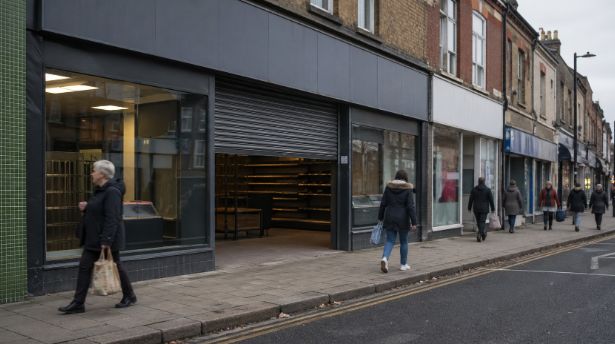
📌 Snapshot: Southern Co-op Crisis
Current Status: On the brink of insolvency
Stores Affected: 300+ locations across southern England
Members Involved: 340,000
Projected Loss: Over £20 million
Critical Decision: Merger vote in May 2026
🔑 Key Takeaways
- Southern Co-op faces possible administration without a merger.
- Three consecutive years of losses have weakened financial stability.
- A cyberattack and rising operational costs accelerated the crisis.
- Hundreds of stores and thousands of jobs could be at risk.
- Member votes in May 2026 will determine the company’s future.
📊 Crisis Overview Table
| Category | Details |
|---|---|
| Company | Southern Co-op |
| Status | At risk of insolvency |
| Stores | 300+ across southern England |
| Key Issue | Financial losses, rising costs, cyberattack impact |
| Critical Dates | 6 May & 21 May 2026 |
| Possible Outcome | Merger or administration |
The conversation around a British supermarket chain collapse has become far more real and far more urgent following a stark warning from Southern Co-op. In a message sent directly to its 340,000 members, the organisation made it clear that its future is hanging by a thread.
This isn’t just another retail update. It’s a moment that could reshape parts of the UK’s grocery landscape, affect thousands of livelihoods, and leave entire communities without essential local services. At the centre of it all is one critical question: can Southern Co-op survive what comes next?
A Business on the Edge
Southern Co-op is not a small or insignificant player. With more than 300 food stores, alongside funeral homes and coffee shops spread across southern England, it has been part of local communities for generations.
But despite its long-standing presence, the organisation is now facing a serious financial crisis.
In their letter dated 22 April 2026, CEO Ben Stimson and Chair Janet Paraskeva did not soften the message. They stated plainly that the business is on the brink of insolvency and will most likely enter administration if a proposed merger is not approved.
After three consecutive years of losses and with expectations that operating losses will exceed £20 million in the coming year the situation has reached a point where there are no easy fixes left.
The Two Dates That Could Decide Everything
The future of Southern Co-op now rests in the hands of its members, and more specifically, on two key votes.
The first will take place on 6 May 2026, where members will decide whether to move forward with the merger proposal. If approved, a second confirmation vote will follow on 21 May 2026.
These dates are more than procedural steps they are effectively the last opportunity to prevent the business from falling into administration.
How Did It Get to This Point?
It’s easy to assume that one single issue caused this situation, but the reality is more complex. The challenges facing Southern Co-op have been building over time.
First, there are the financial losses. Three years of sustained deficits have weakened the organisation’s ability to operate independently. Support from banks and suppliers, which once provided breathing room, has now reached its limits.
Then there was the cyberattack on the national Co-op Group last year. While it may seem like a separate issue, its impact was significant. It disrupted operations, slowed trading, and hit profitability at a time when stability was already fragile.
At the same time, day-to-day costs have continued to rise. Energy bills, wages, and supply chain expenses have all increased, placing additional strain on already tight margins.
Another growing challenge is retail crime, which has quietly become a major issue across the UK. Losses from theft, combined with the need for increased security, have added further pressure.
What makes this situation more serious is that Southern Co-op has already tried to fix it. Recruitment has been frozen, office space has been reduced by 40%, and underperforming stores have been sold. These are not small adjustments they are significant changes. And yet, they haven’t been enough.
What If the Merger Doesn’t Go Ahead?
 If members decide not to approve the merger, the outcome is likely to be immediate and difficult.
The business would almost certainly enter administration, meaning an external party would step in to manage its affairs. In most cases, this leads to the sale of assets, and often, the closure of stores.
For employees, this creates uncertainty around jobs. For communities, it could mean losing local stores that people rely on daily.
Some areas have already been identified as particularly vulnerable. In Bristol and Somerset, at least 15 stores are considered at risk, including locations in Bath, Taunton, and Burnham-on-Sea. In Devon, five stores are under immediate threat.
These are not just numbers they represent real places, real jobs, and real communities.
What If the Merger Is Approved?
On the other hand, if members vote in favour, the outcome could look very different.
The proposed merger would bring Southern Co-op together with the national Co-op Group, creating a much larger organisation with around 2,500 stores and annual sales of approximately £11.5 billion.
The leadership describes this as a way to create a “co-operative powerhouse” one that could provide immediate financial stability and protect jobs.
However, it’s important to understand that this is a proposed solution, not a guaranteed success. While it may stabilise the situation in the short term, long-term performance will still depend on how effectively the combined organisation adapts to the challenges facing the retail sector.
A Bigger Picture: The Changing UK Supermarket Landscape
What’s happening to Southern Co-op is not happening in isolation. It reflects a wider shift across the UK supermarket industry.
Costs are rising for everyone. At the same time, shoppers are changing how they spend. Many are turning to discount retailers or shopping more carefully due to ongoing cost-of-living pressures.
Larger supermarket chains are often better equipped to handle these changes because they have scale and resources. Smaller and regional businesses, however, don’t always have that advantage.
That’s why situations like this are becoming more common and why the phrase British supermarket chain collapse is being used more frequently.
The Human Impact Behind the Headlines
It’s easy to focus on the financial side of this story, but the human impact is just as important.
If a local supermarket closes, it’s not just about losing a place to shop. For some people especially in smaller towns it’s about losing access to essential goods without travelling long distances.
It’s also about jobs. Supermarkets employ thousands of people, from shop floor staff to delivery drivers and suppliers. When a store closes, the effects ripple far beyond the building itself.
What Happens Next?
Right now, everything depends on the outcome of the upcoming votes.
If the merger is approved, Southern Co-op may get the chance to stabilise and rebuild within a larger structure. If it isn’t, administration becomes the most likely path forward.
Either way, this moment is significant not just for Southern Co-op, but for how the UK retail sector evolves in the coming years.
What Role Has Technology Played in the Supermarket Crisis?
 While rising costs and consumer behaviour are often discussed, technology has quietly become a major factor in the British supermarket chain collapse.
In Southern Co-op’s case, the impact of a malicious cyberattack on the national Co-op Group shows how vulnerable modern retail operations can be. Supermarkets today rely heavily on digital systems for stock management, payments, logistics, and customer data. When those systems are disrupted, even temporarily, the financial consequences can be significant.
But the issue goes beyond one incident. Many smaller and regional supermarket chains struggle to keep up with the level of investment required for secure and efficient technology. Larger competitors are able to spend more on cybersecurity, automation, and data systems, giving them a clear advantage.
So, while technology can improve efficiency, it also creates a gap one that smaller retailers may find increasingly difficult to bridge.
Could Government Support Prevent Further Supermarket Collapses?
As the risk of supermarket closures grows, an important question emerges: should there be more support for the sector?
At present, there is no single policy designed specifically to prevent supermarket failures. However, there are broader economic measures such as business rate relief or energy support schemes that can indirectly help retailers manage costs.
Confirmed Reality:
- Government support exists, but it is limited and not targeted specifically at supermarket chains
Ongoing Discussion:
- Whether additional support should be introduced for essential retail services
- How to balance market competition with community needs
Some argue that supermarkets, particularly in rural or underserved areas, should be treated as essential infrastructure. Others believe that market forces should determine which businesses survive.
There is no simple answer, but the conversation is becoming more relevant as cases like Southern Co-op come into focus.
How Can Local Communities Respond to Supermarket Closures?
When faced with the possibility of losing a local supermarket, communities are not always powerless. In some cases, local action can make a meaningful difference.
Across the UK, there have been examples where communities have:
- Supported local branches through increased usage
- Encouraged co-operative ownership models
- Worked with local councils to retain essential services
In a co-operative structure like Southern Co-op, members already have a voice. Their votes and engagement directly influence the future of the organisation.
However, it’s important to be realistic. While community support can help, it may not always be enough to overcome larger financial challenges. Still, awareness and local involvement can play a role in shaping outcomes, especially when decisions are finely balanced.
Conclusion
The situation facing Southern Co-op is a clear example of how challenging the retail environment has become. Rising costs, shifting consumer habits, and unexpected disruptions have all combined to create a difficult reality.
The coming weeks will determine whether this story becomes one of recovery or one of closure.
For now, it stands as a reminder that even long-established organisations are not immune to change and that the future of the UK supermarket sector is still being shaped.
FAQs
What does it mean for a business to enter administration?
It means an external administrator takes control to manage debts, often leading to restructuring or selling parts of the business.
Is Southern Co-op definitely going to close?
No, but it faces a high risk of insolvency if the merger is not approved.
Why is the merger so important?
Because the company has stated there is no other financially viable option left.
Will all stores shut if things go wrong?
Not necessarily all, but many could close depending on how assets are handled.
How does this affect local communities?
Closures can reduce access to groceries, impact jobs, and affect nearby businesses.
Are other supermarkets facing similar issues?
Yes, especially smaller or regional chains dealing with rising costs.
What role do members play in this decision?
Members vote on major decisions like mergers, so their approval is essential.