







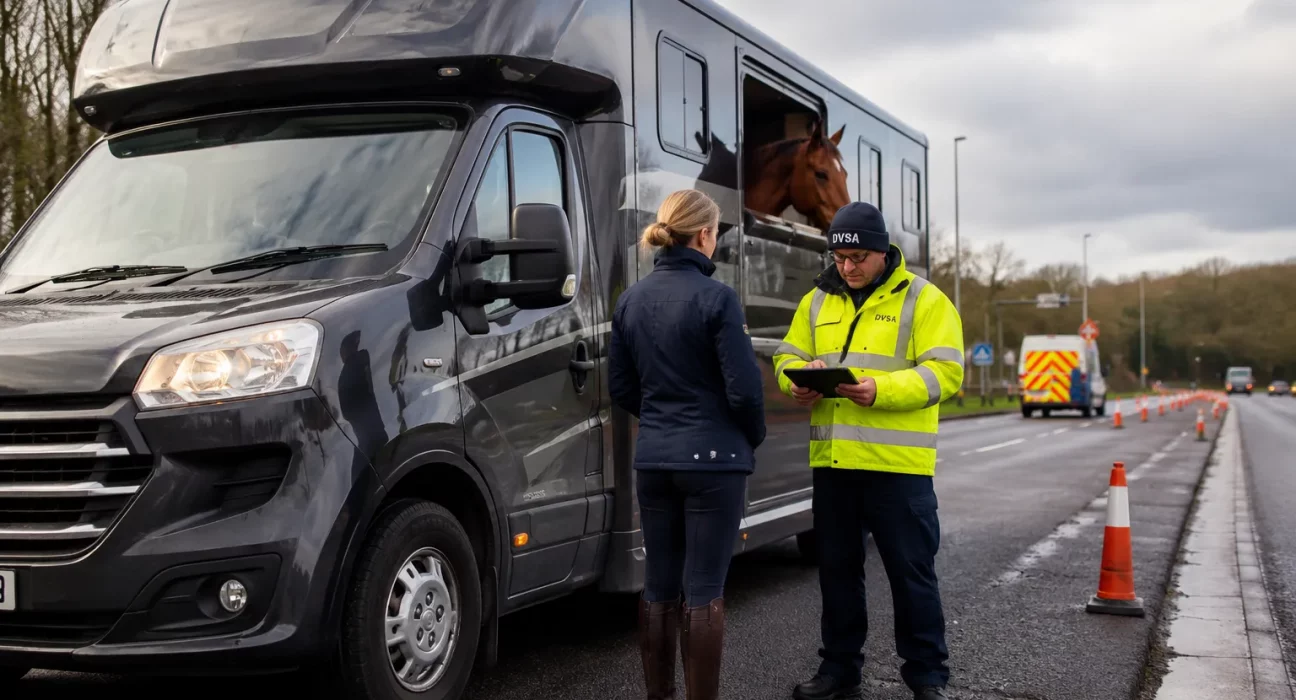
DVSA Horse Transport Tachograph Rules 2026: Quick Snapshot
The DVSA horse transport tachograph rules mainly depend on vehicle weight, whether the journey is commercial or private, and whether the horsebox is used for UK-only or international transport.
Key Takeaway
Not every horsebox needs a tachograph, but commercial horse transport and larger vehicles over 3.5 tonnes often fall under stricter DVSA rules.
Most Important Rule
Private use may be exempt, but sponsorship, payment, branding, or business activity can change the legal position.
2026 Focus
Smart Tachograph 2, international journeys, driver hours, and operator licence checks are key compliance areas in 2026.
At-a-Glance Compliance Table
Exemptions should never be assumed. Horsebox owners should check vehicle weight, journey purpose, commercial involvement, and official DVSA guidance before travelling.
Transporting horses in the UK has become increasingly regulated, particularly for owners using larger horseboxes or operating within the equestrian industry. In 2026, DVSA horse transport tachograph rules continue to create confusion for many horse owners because the legal requirements vary depending on vehicle size, journey purpose, and whether the activity is considered commercial.
Many people incorrectly assume that all horse transport qualifies for exemption. However, DVSA inspections across the UK increasingly focus on horseboxes, driver hours, operator licensing, and tachograph compliance.
This guide explains the current rules in simple and practical terms. It covers tachograph requirements, exemptions, operator licences, Smart Tachograph 2 updates, drivers’ hours regulations, penalties, and the differences between private and commercial horse transport.
What Are DVSA Horse Transport Tachograph Rules?
DVSA horse transport tachograph rules are legal regulations that govern how certain horse transport vehicles are operated.
A tachograph is a recording device installed in qualifying vehicles to monitor:
- Driving time
- Rest periods
- Vehicle movement
- Driver activity
The rules are enforced by the Driver and Vehicle Standards Agency to improve road safety, reduce driver fatigue, and ensure transport compliance.
The legal requirements depend on:
- Vehicle weight
- Commercial or private use
- Journey distance
- Domestic or international travel
Why Horsebox Compliance Matters More in 2026
Horse transport enforcement has become stricter in recent years.
DVSA roadside checks increasingly target:
- Commercial horse transport vehicles
- Large horseboxes
- International journeys
- Improper exemption claims
The rise in enforcement is linked to growing concerns around:
- Driver fatigue
- Vehicle overloading
- Road safety
- Animal welfare
Non-compliance can lead to serious financial and legal consequences, especially for equestrian businesses.
Which Horseboxes Require a Tachograph?
Not every horsebox legally requires a tachograph.
In general, tachograph rules are more likely to apply when:
- The vehicle exceeds 3.5 tonnes
- The journey involves business activity
- Horses are transported for financial benefit
- International transport is involved
Horseboxes Over 3.5 Tonnes Explained
Vehicles over 3.5 tonnes fall into a more regulated category under transport law.
This often includes:
- 7.5-tonne horseboxes
- Professional equestrian transport vehicles
- Larger commercial horse transport units
Once a vehicle exceeds this threshold, operators may need to consider:
- Tachograph installation
- Drivers’ hours compliance
- Operator licensing
- Vehicle maintenance records
Vehicle size alone does not always determine legal obligations, but it is a major factor.
Do Private Horse Owners Need a Tachograph?
Many private horse owners may qualify for exemptions if journeys are genuinely recreational and non-commercial.
Examples may include:
- Travelling to local riding events
- Leisure riding activities
- Personal horse ownership with no business connection
However, exemptions are not automatic.
DVSA may examine whether the journey involves:
- Sponsorship arrangements
- Advertising
- Business promotion
- Prize-money-related activity
Even indirect financial benefit can sometimes affect legal classification.
Understanding Commercial Horse Transport
Commercial horse transport is one of the most important factors in tachograph law.
A journey may be considered commercial when it involves:
- Payment
- Business activity
- Professional equestrian operations
- Financial gain
This applies even if horse transport is not the operator’s main business.
Common Examples of Commercial Horse Transport
Professional Competition Transport
Professional riders attending sponsored events may fall under commercial transport rules.
Riding Schools and Livery Businesses
Horseboxes connected to equestrian businesses may require full compliance with tachograph regulations.
Paid Horse Transport Services
Businesses transporting horses for clients almost always operate commercially.
What Counts as Non-Commercial Horse Transport?
Non-commercial transport usually refers to private recreational use without financial gain.
Situations That May Qualify for Exemption
Leisure Riding Activities
Transporting a horse for personal leisure purposes may qualify for exemption.
Local Non-Professional Competitions
Some amateur riding events may remain outside commercial classification.
Personal Horse Ownership
Ownership alone does not create commercial status if no business activity exists.
However, every case depends on the overall circumstances.
Drivers’ Hours Rules for Horse Transport
Drivers operating vehicles covered by tachograph law must comply with regulated driving hours rules.
EU Drivers’ Hours Rules
These rules commonly apply to:
- Commercial vehicles over 3.5 tonnes
- International journeys
- Professional transport operators
GB Domestic Drivers’ Hours Rules
Some UK-only journeys may operate under GB domestic rules instead of EU regulations.
These rules are generally less restrictive but still require safe driving practices and proper rest.
Why Driver Fatigue Is a Major Concern?
Horse transport often involves:
- Long-distance travel
- Early starts
- Heavy vehicles
- Stressful driving conditions
Driver fatigue creates risks for both road users and transported animals.
When Is an Operator Licence Required?
An operator licence may be required when:
- Vehicles exceed 3.5 tonnes
- Transport is commercial
- Horses are carried in connection with business activity
Under transport regulations, horses are treated as goods while being transported.
Businesses Commonly Affected
Equestrian Centres
Professional riding and training centres often fall within operator licensing requirements.
Breeding Operations
Horse breeding businesses using transport vehicles commercially may require licences.
Racehorse Transport Businesses
Commercial racehorse transport operators normally require full compliance.
Smart Tachograph 2 Rules in 2026
One of the biggest developments affecting horse transport in 2026 is the expansion of Smart Tachograph 2 requirements.
These systems provide:
- GPS monitoring
- Border crossing records
- Remote enforcement capability
- Enhanced compliance tracking
Why Smart Tachographs Matter?
International Horse Transport
Cross-border journeys increasingly require advanced compliance monitoring.
Improved DVSA Enforcement
Digital inspection systems make roadside enforcement faster and more accurate.
Better Journey Records
Modern systems provide more detailed driving and movement records.
How DVSA Roadside Checks Work?
DVSA roadside inspections can happen anywhere across the UK.
Officers may inspect:
- Tachograph records
- Driver activity
- Vehicle condition
- Weight limits
- Operator licence documents
Where Horseboxes Are Commonly Inspected?
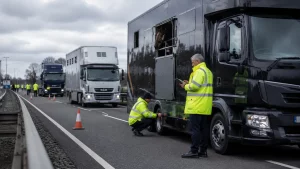
Motorways and Main Roads
Large transport routes are common inspection points.
Equestrian Events
Horseboxes travelling to competitions are often monitored.
Ports and International Routes
International journeys face stricter compliance checks.
Common Tachograph Mistakes Horsebox Owners Make
Many compliance issues happen because owners misunderstand the rules.
Misunderstanding Private Use Exemptions
Some owners assume all private horse transport is automatically exempt.
Incorrect Driver Records
Missing or incomplete records are frequently identified during inspections.
Ignoring Vehicle Weight Limits
Many horseboxes become overloaded once horses, tack, and equipment are included.
Failing to Maintain Tachograph Systems
Poor maintenance or outdated equipment may still result in penalties.
Penalties for Breaking Tachograph Rules
DVSA penalties can vary depending on the seriousness of the offence.
Possible enforcement action includes:
- Financial penalties
- Vehicle prohibition notices
- Court prosecution
- Licence suspension
- Operator licence revocation
Repeated offences can significantly affect business operations and insurance arrangements.
Horsebox Weight Limits and Compliance Risks?
Vehicle weight is one of the most important factors in horse transport compliance.
Why Overloading Happens Frequently?
Horsebox owners often underestimate the combined weight of:
- Horses
- Tack
- Water
- Passengers
- Equipment
Risks of Overloaded Horseboxes
Increased Stopping Distance
Heavier vehicles require more braking distance.
Insurance Problems
Overloading may affect insurance validity.
Greater DVSA Attention
Overweight vehicles are more likely to face enforcement action.
International Horse Transport Rules UK Owners Should Understand
International horse transport now involves additional administration and compliance requirements.
Depending on the journey, operators may require:
- Animal health certificates
- Border documentation
- Transport authorisations
- Tachograph compliance records
Post-Brexit Compliance Challenges
Additional Border Checks
Horse transport vehicles now face more detailed inspections.
Document Verification
Incorrect paperwork can delay journeys significantly.
Smart Tachograph Requirements
International transport increasingly depends on digital compliance systems.
How Digital Tachographs Work in Modern Horseboxes?
Digital tachographs automatically record vehicle activity and driver behaviour.
Modern systems can track:
- Driving time
- Break periods
- Vehicle movement
- GPS location
Driver Responsibilities
Using Driver Cards Correctly
Drivers must operate tachograph cards properly.
Downloading Data
Records should be downloaded and stored regularly.
Recording Manual Entries
Missing manual records may still create compliance problems.
Real-Life Example of a DVSA Horsebox Inspection
A UK rider travelling in a 7.5-tonne horsebox believed their journey qualified for private recreational exemption.
During a DVSA roadside inspection, officers identified:
- Sponsorship branding
- Competition-related financial activity
- Missing tachograph records
The driver could not provide evidence supporting exemption status.
As a result:
- The vehicle received a prohibition notice
- Financial penalties were issued
- Further investigations followed
This demonstrates how commercial classification depends on the overall circumstances rather than personal assumptions.
How Horsebox Owners Can Stay Compliant?
The safest approach is preventative compliance.
Horsebox operators should:
- Understand vehicle classifications
- Verify whether journeys are commercial
- Keep accurate records
- Review DVSA guidance regularly
- Maintain tachograph equipment properly
Professional advice may also help when legal classification is unclear.
Conclusion
DVSA horse transport tachograph rules remain one of the most important compliance areas affecting UK horsebox owners in 2026.
The rules depend on several factors, including:
- Vehicle weight
- Commercial activity
- Journey purpose
- Driver hours regulations
- International travel requirements
Many horse owners mistakenly assume exemptions apply automatically, but DVSA enforcement increasingly focuses on verifying genuine compliance.
Whether operating a private horsebox or managing a professional equestrian business, understanding the rules is essential for avoiding penalties, protecting safety, and maintaining legal transport operations.
As regulations continue evolving, especially around Smart Tachograph 2 systems and international transport requirements, horsebox owners should stay informed through official DVSA and GOV.UK guidance.
FAQs About DVSA Horse Transport Tachograph Rules
Do all horseboxes need a tachograph?
No. Requirements depend on vehicle size, commercial activity, and journey type.
Are private horse owners exempt from tachograph rules?
Some genuinely recreational journeys may qualify for exemptions.
Can sponsorship make horse transport commercial?
Yes. Financial benefit or business activity may affect legal classification.
Do horse transport businesses need operator licences?
Many commercial operators using larger vehicles do require operator licences.
What happens during a DVSA roadside check?
Officers may inspect tachograph records, vehicle condition, driver hours, and documentation.
What is Smart Tachograph 2?
It is an advanced tachograph system designed to improve transport monitoring and enforcement.
Can overloaded horseboxes lead to penalties?
Yes. Overloaded vehicles create both safety and compliance risks.