







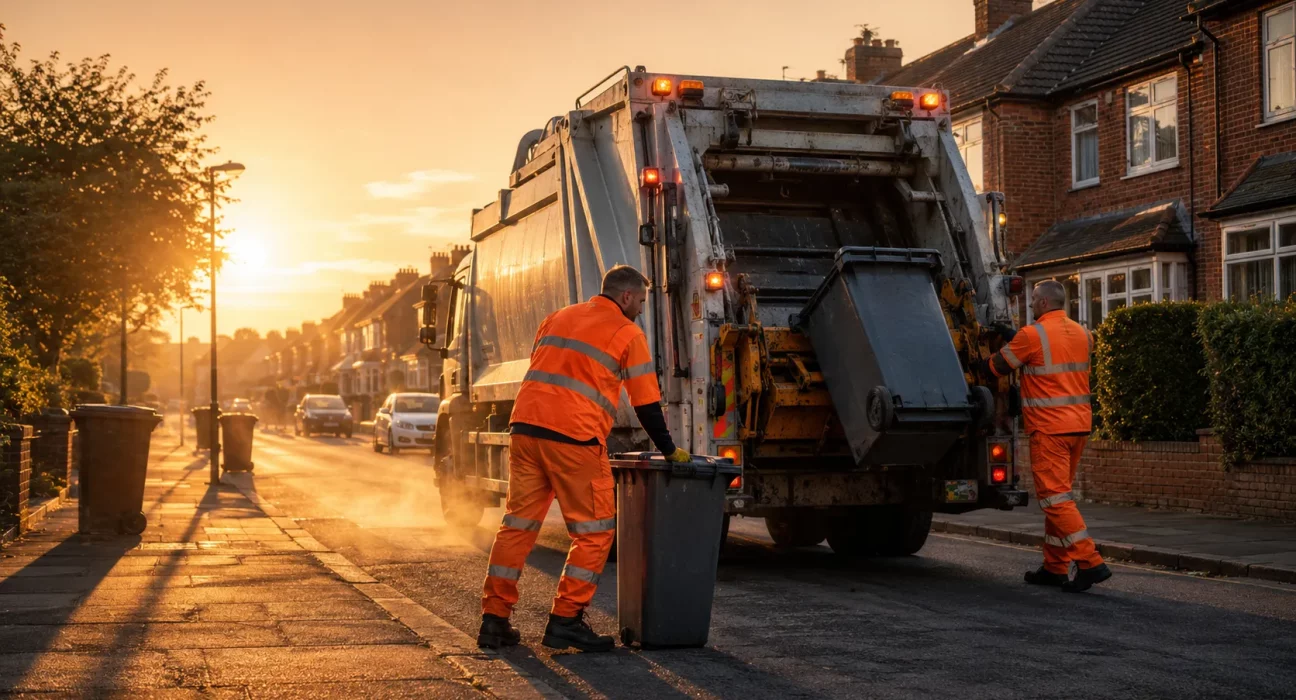
Heatwave Bin Collection Changes: At a Glance
Key Takeaways
- UK councils are introducing heatwave bin collection changes to protect frontline waste collection crews.
- Many authorities are starting collections between 4am and 6am to avoid dangerous afternoon temperatures.
- Residents are being advised to put bins out the night before collection day.
- Waste vehicles and operational schedules are also being affected by prolonged extreme heat.
- The move could signal a long-term shift towards seasonal dawn collections during future summers.
What Residents Need To Know
| Issue | What It Means | Recommended Action |
|---|---|---|
| Earlier Collections | Collection crews may arrive several hours earlier than usual. | Place bins outside the evening before collection day. |
| Missed Collections | Late bin presentation may result in collections being missed. | Check local council guidance and report missed collections if necessary. |
| Hot Weather Waste | Higher temperatures can increase odours and attract pests. | Keep lids closed and double-bag food waste where appropriate. |
| Temporary Measures | Most schedule changes are linked to specific heatwave periods. | Monitor official council updates for further announcements. |
Why Are UK Councils Moving Bin Collections to Dawn?

A growing number of UK councils are bringing forward waste collection schedules as the country faces increasingly intense heatwaves. Local authorities are modifying operating hours to safeguard frontline workers from prolonged exposure to high heat while ensuring important public services continue without interruption, as temperatures are predicted to rise to 38°C in certain locations.
The shift to dawn collections marks a significant change in how councils manage waste services during severe weather events. In many affected areas, collection crews are beginning their routes between 4am and 6am, allowing the majority of work to be completed before temperatures reach their peak later in the day.
While residents may view the changes as a temporary inconvenience, they represent a broader response to the growing challenge of climate-related disruption. Local authorities are increasingly recognising that traditional working patterns may no longer be suitable during prolonged periods of extreme heat.
What Is Driving These Heatwave Bin Collection Changes?
The primary factor behind these adjustments is worker safety.
Refuse collection is one of the most physically demanding roles within local government operations. Collection crews spend long hours outdoors, repeatedly lifting bins, walking significant distances and working around heavy vehicles. During extreme temperatures, these activities can increase the risk of dehydration, heat exhaustion and heat stroke.
The challenge becomes even greater when workers wear protective clothing, high-visibility garments and safety footwear designed to shield them from workplace hazards. While essential for safety, this equipment can trap heat and make physically demanding tasks more difficult in hot weather.
Councils are therefore adopting earlier start times as a practical risk-management measure. By completing the majority of collections before midday, authorities can significantly reduce employee exposure to the most dangerous conditions.
Which Councils Have Introduced Early Morning Bin Collections?
Several local authorities and waste service providers have already implemented revised collection schedules during the current heatwave.
Examples include councils and contractors operating in:
| Authority or Service Provider | Revised Collection Start Time |
|---|---|
| Bristol Waste Company | 5:00am |
| Somerset Council | 6:00am |
| Cheltenham Borough Council | 6:00am |
| Thurrock Council | Early morning collections |
| Sevenoaks District Council | 6:00am |
| London Borough of Hounslow | 6:00am |
Many councils have advised residents to place bins outside the evening before collection rather than waiting until the morning. This helps ensure crews can complete routes efficiently and reduces the risk of missed collections.
The exact arrangements vary between authorities, making it important for residents to monitor local council announcements and service updates.
How Does a 4am or 5am Collection Schedule Benefit Waste Crews?
Starting work before sunrise offers several advantages for waste collection teams.
Temperatures are typically at their lowest during the early morning hours. This provides a safer working environment and reduces the likelihood of heat-related illnesses.
Earlier schedules also help councils maintain productivity levels. Collection crews can often complete a significant proportion of their routes before conditions become uncomfortable or potentially hazardous.
In addition, dawn collections allow authorities to avoid a common operational problem associated with extreme heat: midday service disruption. When temperatures rise sharply, councils may be forced to suspend outdoor activities altogether. By working earlier, crews can finish essential tasks before such measures become necessary.
For many authorities, dawn collections are proving to be one of the most effective ways to balance public service delivery with employee welfare.
Has Climate Change Changed the Way Councils Manage Essential Services?
Increasingly, the answer appears to be yes.
Historically, early morning bin collections were typically reserved for exceptional circumstances. Today, they are becoming a more common feature of local government planning during the summer months.
Climate scientists continue to report rising average temperatures and more frequent extreme weather events across the UK. As a result, councils are being forced to rethink how services are delivered during periods of heat, flooding and severe storms.
Waste collection is often one of the first services affected because it relies heavily on outdoor labour and vehicle operations. However, similar changes are beginning to appear across other council functions, including:
- Street cleansing
- Grounds maintenance
- Parks management
- Cemetery services
- Highway maintenance
These developments suggest that climate adaptation is becoming a practical operational issue rather than simply a long-term environmental policy objective.
What Challenges Do Heatwaves Create for Waste Management Operations?
The impact of extreme temperatures extends beyond frontline workers.
Waste collection vehicles themselves can struggle in prolonged heat. Modern refuse trucks rely on complex hydraulic systems, mechanical components and electronic controls that operate under demanding conditions.
Higher temperatures can increase wear on equipment, place additional strain on engines and reduce overall reliability. Fleet managers must therefore consider both workforce welfare and vehicle performance when planning operations.
There are also logistical challenges.
When collection windows are shortened to avoid the hottest part of the day, route planning becomes more complicated. Councils and contractors must carefully coordinate staffing levels, vehicle availability and collection priorities to ensure services continue as smoothly as possible.
In some cases, unfinished routes may need to be completed the following day, creating additional pressure on already stretched resources.
Could Dawn Bin Collections Become the New Normal?
Whether these actions will just be temporary is one of the most important problems raised by the current heatwave.
Many industry observers believe that seasonal dawn collections could become increasingly common if high temperatures continue to occur more frequently.
Rather than introducing emergency changes each time a heatwave arrives, councils may eventually adopt formal summer operating schedules covering June, July and August.
Such an approach would provide greater certainty for residents, employees and contractors. It would also allow local authorities to plan staffing, budgets and communications more effectively.
While no widespread permanent shift has yet been announced, the current heatwave may accelerate discussions about how public services should operate in a warmer climate.
What Are the Financial Implications for Councils?
Heatwave response measures can create unexpected costs.
Earlier start times may trigger additional wage premiums, overtime payments or revised shift arrangements depending on local employment agreements.
Councils must also invest in worker welfare measures such as:
- Additional hydration facilities
- Enhanced rest arrangements
- Heat safety training
- Operational planning resources
For authorities already facing budget pressures, repeated heat-related disruptions could place further strain on public finances.
Private contractors face similar challenges. Service agreements often include performance targets, and disruptions caused by extreme weather can create operational and financial risks if collection schedules are not successfully maintained.
As climate events become more frequent, managing these costs is likely to become an increasingly important issue for local government leaders.
What Should Residents Do During Early Morning Collections?
When it comes to managing updated collection schedules, residents are crucial.
The most important step is to place bins outside the night before collection. Waiting until the usual morning time may result in a missed collection if crews have already passed through the area.
Households should also take extra care with waste storage during hot weather.
Higher temperatures accelerate the decomposition of food waste and can increase the likelihood of unpleasant odours, flies and pest activity.
Simple measures include:
- Keeping bin lids closed securely
- Double-bagging food waste where appropriate
- Cleaning food containers before recycling
- Storing bins in shaded locations where possible
Following local council guidance can help minimise problems while ensuring collections proceed efficiently.
What Does This Mean for the Future of Public Services?
The move towards dawn collections reflects a wider transformation taking place across local government.
Extreme weather is no longer viewed as an occasional operational challenge. Instead, it is becoming a recurring factor that influences workforce planning, infrastructure management and service delivery decisions.
For councils, the current heatwave serves as a reminder that climate resilience is increasingly linked to everyday operations. Decisions about collection schedules, staffing patterns and public communications are now part of a broader effort to adapt essential services to changing environmental conditions.
As temperatures continue to rise and weather patterns become more unpredictable, the lessons learned from today’s dawn collection programmes may shape how local authorities deliver services for years to come.
Conclusion
Heatwave bin collection changes are becoming an increasingly visible example of how councils are adapting to extreme weather conditions. By moving collections to the early morning hours, local authorities can protect frontline workers, reduce operational risks and maintain essential waste services during periods of intense heat.
Although these changes may require residents to adjust their routines, they highlight a much larger shift taking place across local government. Climate resilience is no longer a future planning exercise; it is becoming a practical requirement for maintaining public services in a changing environment.
As councils continue to respond to hotter summers and more frequent heatwaves, dawn collections may evolve from an emergency measure into a standard feature of seasonal service delivery.
FAQs
Why are bin collections starting earlier during heatwaves?
Councils move collections to the early morning to reduce workers’ exposure to extreme temperatures and lower the risk of heat-related illnesses.
Should residents put bins out the night before?
Yes. Most councils introducing dawn collections advise residents to place bins outside the evening before collection day.
Can heatwaves cause missed bin collections?
They can. Route changes, shortened working windows and operational disruptions may occasionally affect collection schedules.
Are recycling collections affected as well as general waste?
In many areas, both recycling and household waste collections are subject to the same revised schedules.
Do bin lorries operate differently during extreme heat?
Fleet operators often adjust schedules and maintenance procedures to minimise the impact of high temperatures on vehicles and equipment.
Will councils continue using dawn collections after the heatwave?
Most current arrangements are temporary, although some authorities may consider seasonal early-morning schedules in future.
How can residents check whether their collection time has changed?
The best source of information is the local council website, official social media channels or waste service notifications.